

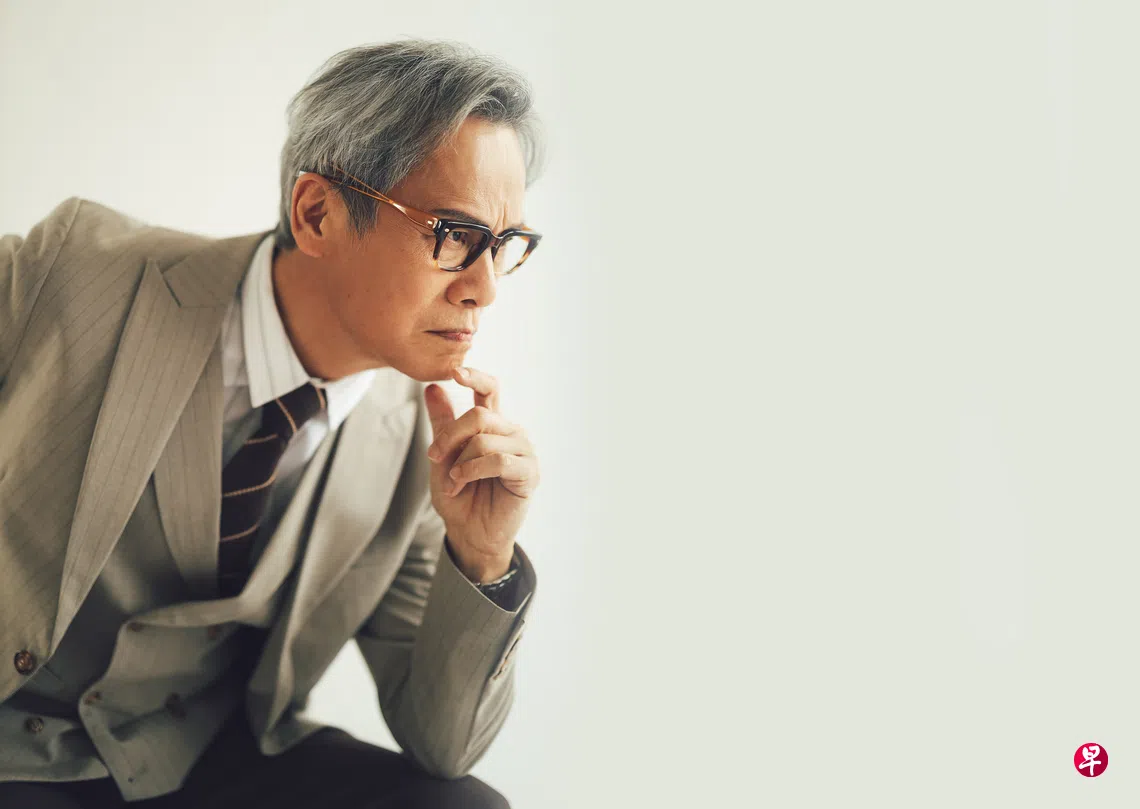
Given his title as the “godfather of Mandarin pop”, I had expected a serious interview. But beyond all the labels others have bestowed on him, the Lo Ta-yu I got to know over an overseas phone call was a music nerd who still talks eagerly about chords and rhythm.
In 1977, Lo, then a 23-year-old medical student, wrote the theme song for the film The Golden Age, formally launching a music career that has now spanned nearly half a century. In an interview with Lianhe Zaobao (LHZB), he asked bluntly, “Don’t you think people in show business are all rather abnormal?”
By “abnormal”, he meant their completely inverted working hours. Upon graduating from medical school, while deciding if he wanted to enter the music industry, Lo asked himself a clear-eyed question: could he accept a life of working while others were on holiday?
He continued, “Eventually, I made up my mind to accept it. When everyone else is at work, I practise, spend time with children or exercise. When I was younger, I wrote songs at night and only went to bed in the morning…
“That is an upside-down way of life. Don’t you think people in show business are all rather abnormal? They may seem glamorous, famous and wealthy, but the race for fame, fortune and chart positions is also a very hard-nosed business. To be 72 and still here — I thank God for watching over me!”
Coincidentally, in 1983, Lo wrote his famous song “72 Transformations”, drawing together three references: the 72nd year of the Republic of China, the Monkey King’s 72 transformations and Confucius’s 72 disciples.
Now that he himself has turned 72, the number seems to him an exquisite echo of fate. With humorous, mounting emphasis, he said: “I keep telling people all day long: I’m 72, I’m 72, I’m 72!”
Don’t you think people in show business are all rather abnormal? They may seem glamorous, famous and wealthy, but the race for fame, fortune and chart positions is also a very hard-nosed business.
His high point was not in the 1980s
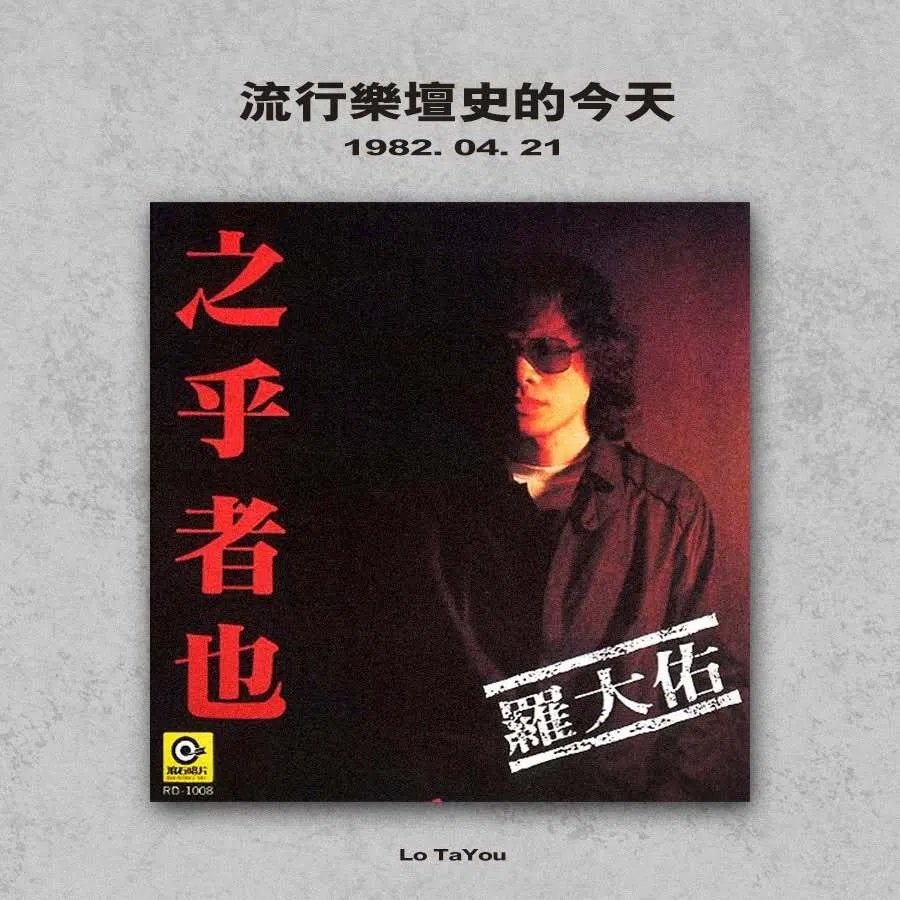
Few Mandarin songs endure across more than three generations, but Lo’s have. His countless classics, including “Childhood”, “Home”, “Love Song 1980, “Lukang Town”, “The Story of Time” and “Zhi Hu Zhe Ye”, were not merely hits in their day. They have stood the test of time and are still sung today, influencing several generations of Mandarin music listeners.
Asked to choose the high point of his career in entertainment, he gave an answer true to his longstanding “rebel” image: “When performers or songwriters talk about their high points, they usually start with their early years, roughly between the ages of 20 and 30.
“I see it differently. Although many people know Lo Ta-yu through songs from the 1980s, I actually think my high point came when COVID-19 began in 2020. At that time, I thought: I must do something different.”
During COVID-19, almost all live performance venues closed, while masks also kept people apart. Lo and his team went against the grain, taking a large crew out of the cities and setting up outdoor stages with audiences on all four sides in Lukang, Taitung, Hualien and Yilan. They embarked on their Yi Hua Dong Lu tour, streaming the performances online for free.
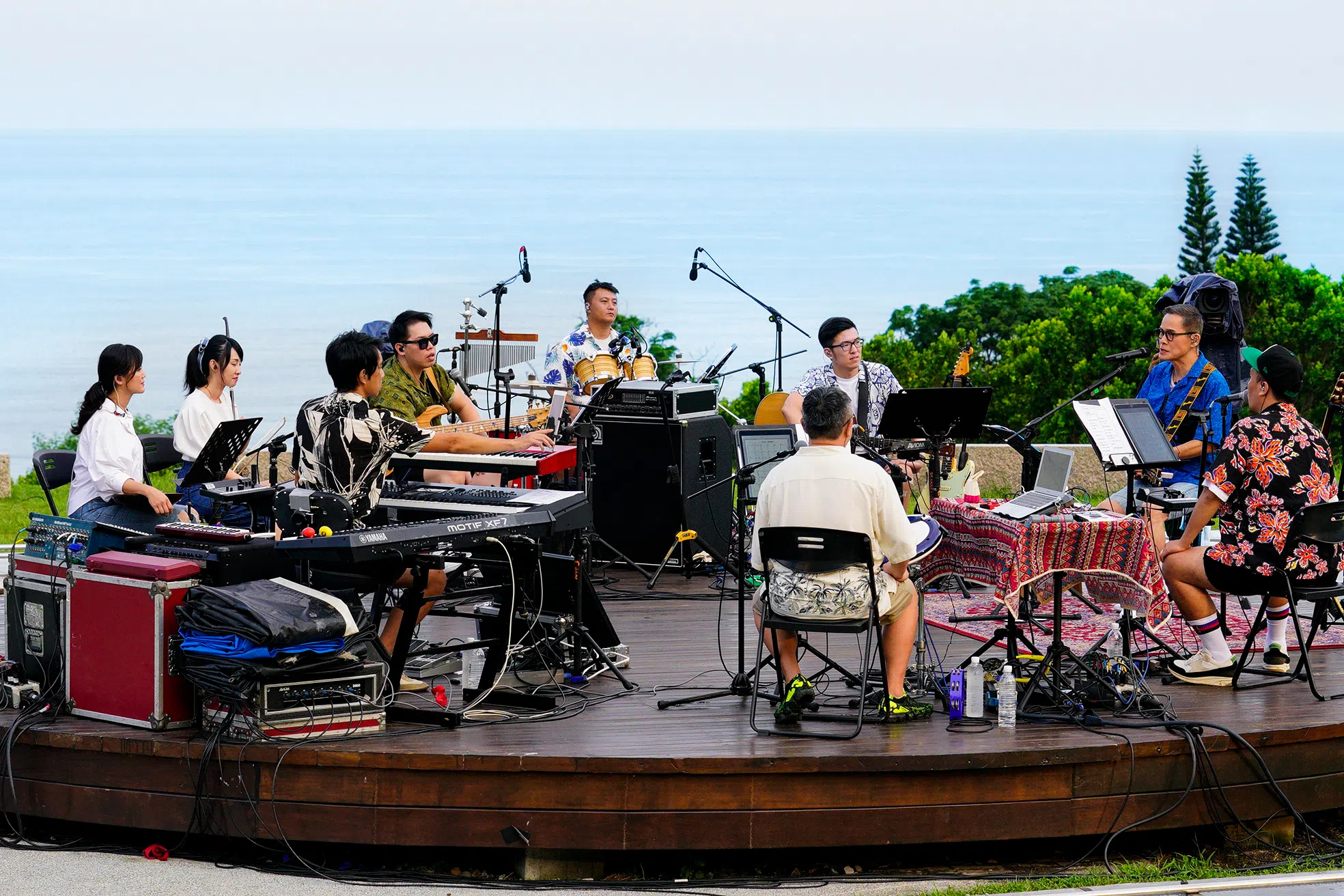
The stage was a long way from the audience, and the team reminded passers-by watching the show to “avoid contact”. That unusual tour left a profound impression on him.
Lo added: “Lo Ta-yu became more interesting from that point on, because I was genuinely doing things that almost nobody else in the world was doing.”
During that period, Lo also rearranged and rerecorded his earlier song “Companion”. Written during the SARS outbreak in 2003, it still felt relevant during another pandemic many years later. He sees this form of expression as an instinctive human response to extreme adversity and the struggle to adapt.
Those experiments during the pandemic also became a turning point in his music career. But before returning to that, let us hear about his low points.
Finding inspiration in life’s low points
Lo’s father died of illness in 1998. The loss hit him hard, forcing him to re-examine life and death and plunging him into a low period that lasted more than a decade. He considered changing careers, thinking of opening a restaurant and bar with friends in New York and creating a performance space.
In an earlier interview, he revealed that he briefly retired for three or four years during that period, only to feel disconnected from the world. “My father died around that time. I felt the older generation had gone and the next generation could not carry on. It felt as though so many things in my life were winding down, and gradually I felt myself shrinking.”
In 2008, Lo formed the band Superband with Jonathan Lee, Wakin Chau and Chang Chen-yue, touring widely. “But for a while after Superband, I still wasn’t doing that well.”
His life took a turn for the better only with the birth of his daughter Gemma in 2012. He said: “Only after that did I find a new drive in life and climb out of that low point.”
Looking back now, Lo sees those years as an opportunity that forced him to confront his problems. “Later, I moved back to Taipei because of my daughter and ‘picked up’ some material for songs, which became the album Home III.
“Then came the performances during the pandemic. These things are all connected. Creativity is closely tied to the low points you experience in life. The nourishment those periods give you is something you simply cannot get when you are constantly performing, popular and enjoying a smooth ride.”
Leaving sports arenas for purpose-built theatres
It was his breakthrough during the pandemic that gave Lo the idea of “putting on shows that others would not”. In 2024, he and his musicians launched the Lo Ta-yu Chun Long Symphony Night concert series.
On the coming 29 and 30 December, he will bring Lo Ta-yu Chun Long Symphony Banquet — Tomorrow Will Be Better to the Esplanade-Theatres on the Bay’s theatre in Singapore.
Over his career, Lo has played countless concerts in major sports arenas around the world. This time, however, he and his team have chosen concert halls and purpose-built theatres.
He acknowledged that, commercially, not performing in the usual sports venues meant “a substantial loss”, but he felt the acoustics made it all worthwhile. “Sports arenas were built for sports, but concert halls were designed for music. In a concert hall, the audience can hear everything clearly from every seat.”
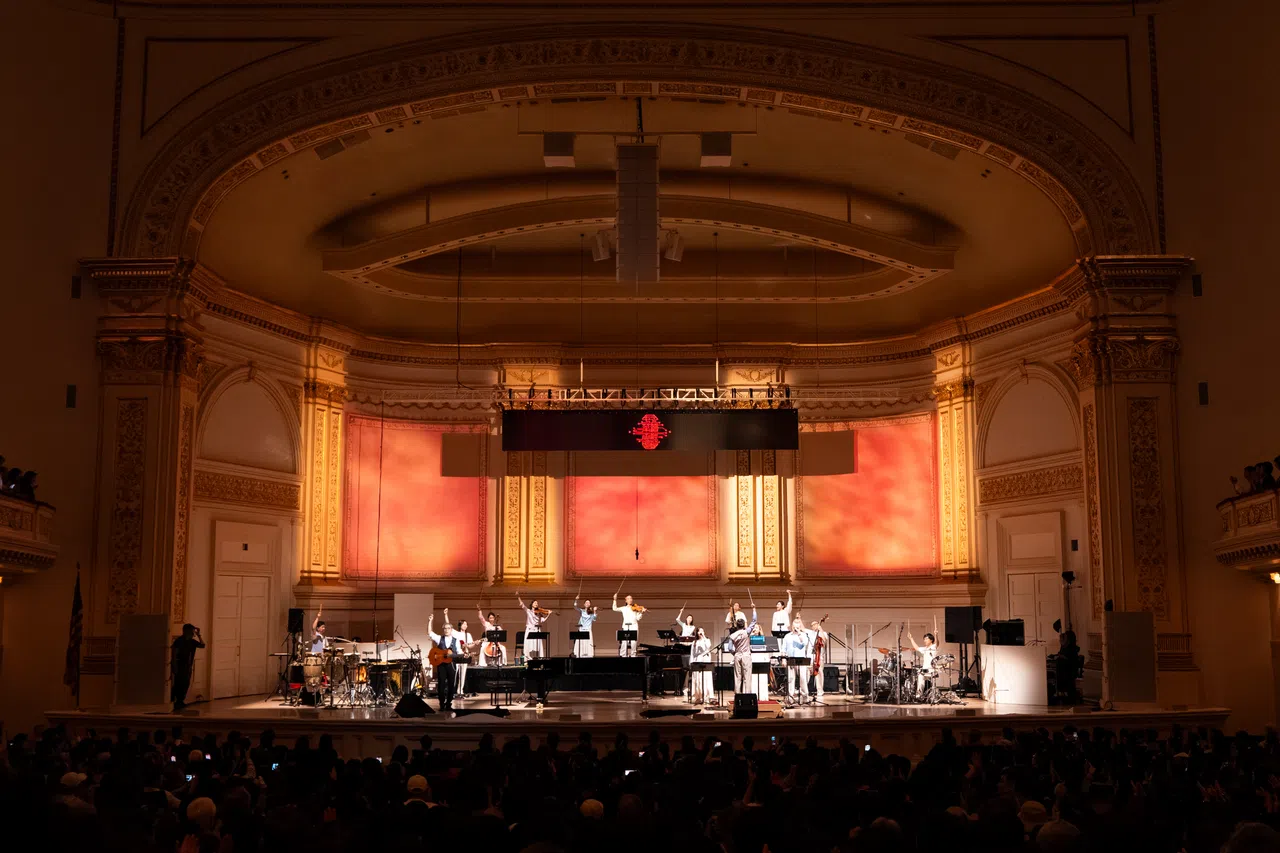
Speaking enthusiastically about the new approach, Lo said: “We work on the music in great detail. It does not have to be very loud for the audience to feel its power naturally. But they have to make an effort — to prick up their ears and listen.
“We do not blast music into their ears to make them think it is very energetic and the singer is working very hard. That is not what we do. Audiences have to listen with their souls and their ears. That is real communication.”
There is another purpose behind the choice. Lo hopes that bringing Mandarin pop and classical music together will help the music market. He has observed that the classical music market is shrinking, while the weak economy has made staging pop concerts in sports arenas quite challenging too.
“I would rather do it on a smaller scale and earn less. It’s all right — there’s enough for my child to grow up and for school fees…”
He also hopes such collaborations will extend musicians’ careers. “I hope everyone will feel more excited and be more willing to devote more years of their lives to the instruments they play well. I hope musicians do not enter the industry just to work for three or five years. There is still so much room for us to improve, and so much left to do.”
Reflecting on his age, Lo, now in his 70s, said: “I cannot give up songwriting. The day I give it up, I will feel there is no point going on stage. At most, I would only carry on for another year or two.
“From the first song I wrote in my career, ‘The Golden Age’, to my first album, I wrote the material myself. So songwriting is completely bound up with my life as a performer. The two cannot be separated.”
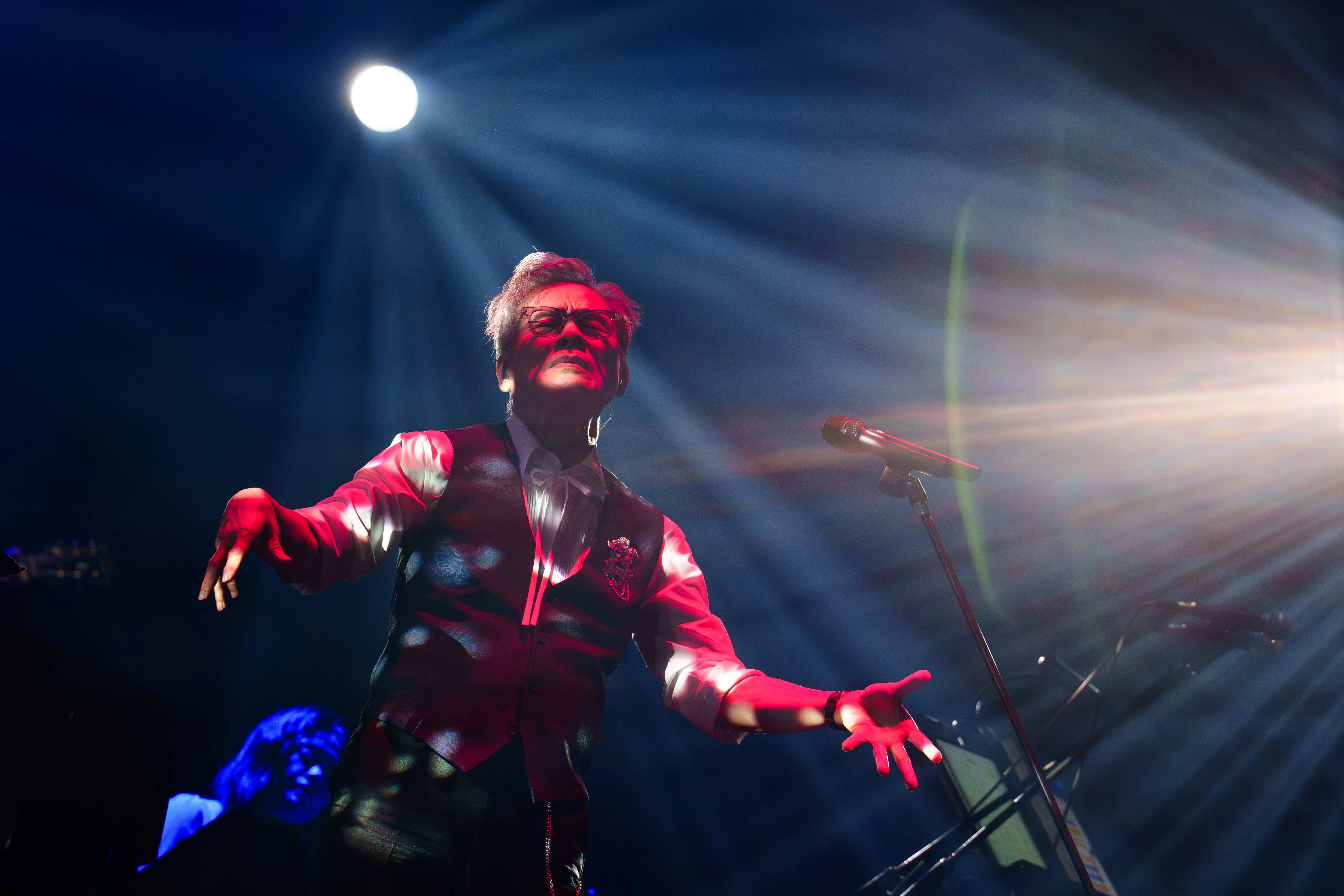
Though now in his 70s, Lo is in excellent form, speaking with vigour and continuing to perform. Of the young musicians working with him on tour, he said: “It is wonderful to work with young people. You feel new energy from them and learn new ways of playing. Their attitudes towards music allow me to refresh my own views.
“I also hope to teach them some approaches that may seem old-fashioned but are sound. It is a process of mutual influence.”
He remains committed to learning. “I’m 72 today, 73 next year, then 74, 75… I can keep learning more, bit by bit. As long as I am alive and healthy, I hope to keep creating and maintain good communication with young people and my peers. That is what I want to do.”

His greatest fear: looking out of shape on stage
When asked for his secrets to staying well, Lo humorously listed what not to do: “The worst thing is to sit down and watch television straight after dinner. Your belly is guaranteed to keep growing!
“As musicians, what we fear most is making people think on stage: this person sings very well, but why has he got so little hair? Why is his belly so big? He seems to be limping as he walks on stage. Everyone seems to feel sorry for him — should we quickly call an ambulance to help?… No! Musicians must have energy on stage.”
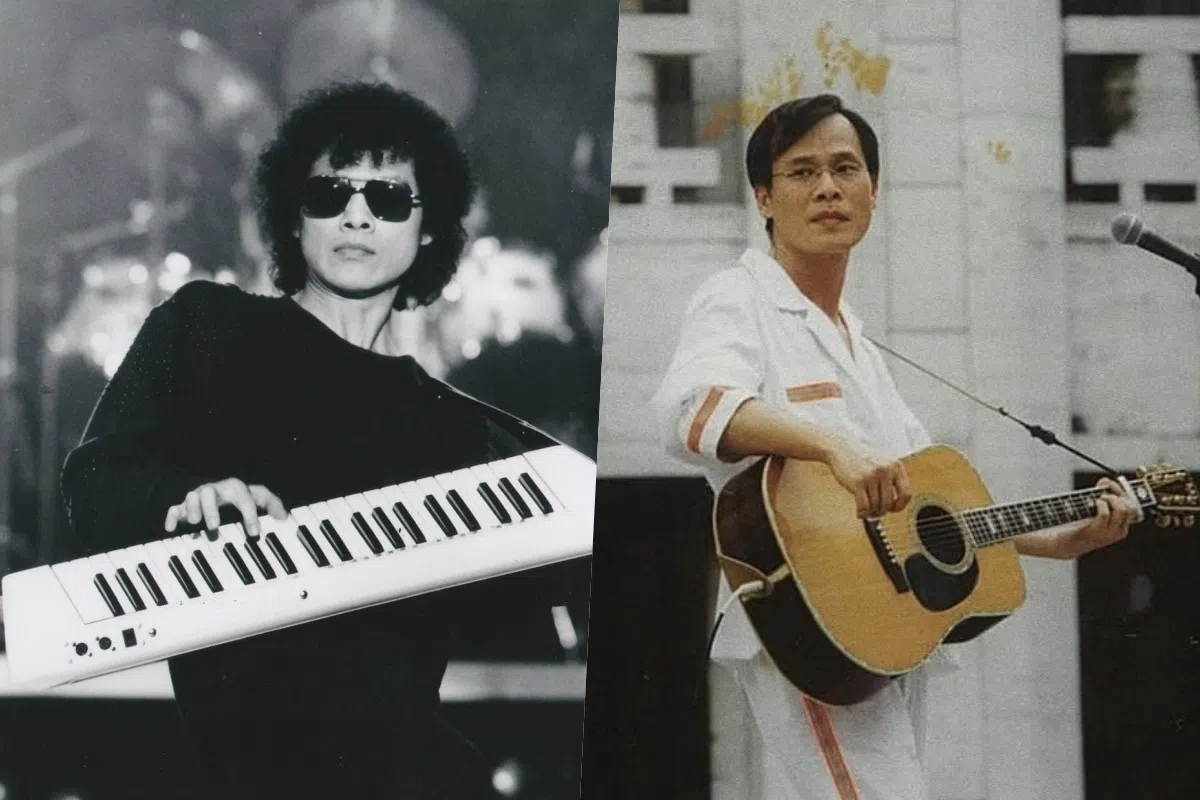
Lo, who started playing the piano at five, believes musicians are fortunate because playing an instrument can be a form of exercise. Rather than rushing to have breakfast when he wakes up, he spends 30 minutes playing piano scales to wake up his fingers, arms, brain and, indeed, his whole body. He says he struggles with insomnia, and also plays quiet pieces on the piano or acoustic guitar before bed to help him sleep.
Not telling his daughter how to listen to music
Having lived through vinyl, cassettes and CDs into today’s streaming era, Lo observes that people now have more musical choice than at any other time in history. “The biggest problem in our era is that, after opening a music platform, we do not know how to choose songs that suit us.”
He said he does not offer his 14-year-old daughter, now in adolescence, any advice on listening to music. “At this stage, children really want to connect with their own idols. She likes some K-pop acts and young Mandarin pop singers.”
For those seeking a career in music, however, Lo advises first finding their own style and genre, then exploring both the “most popular” and “most profound” examples within it. “Because when we make music, we still hope people will embrace it.”
He also encourages musicians to listen to more classical music, because it contains the most intricate rhythms and musical elements. “Once you have listened to more of it and internalised it, you will know how to move between chords in ways you once thought impossible, then move back again.
For example, I have been playing Chopin recently. There are many important pieces among his works. They are beautiful to listen to, but actually very difficult. If you do not listen carefully, you will only hear their beauty without knowing where the difficulty lies. I think this is something musicians must explore for themselves.”
As for the artificial intelligence (AI) wave, Lo said: “Of course AI must develop, but we cannot rely on it completely. Within this new AI environment, we need to find a way for people and AI to communicate.”
