

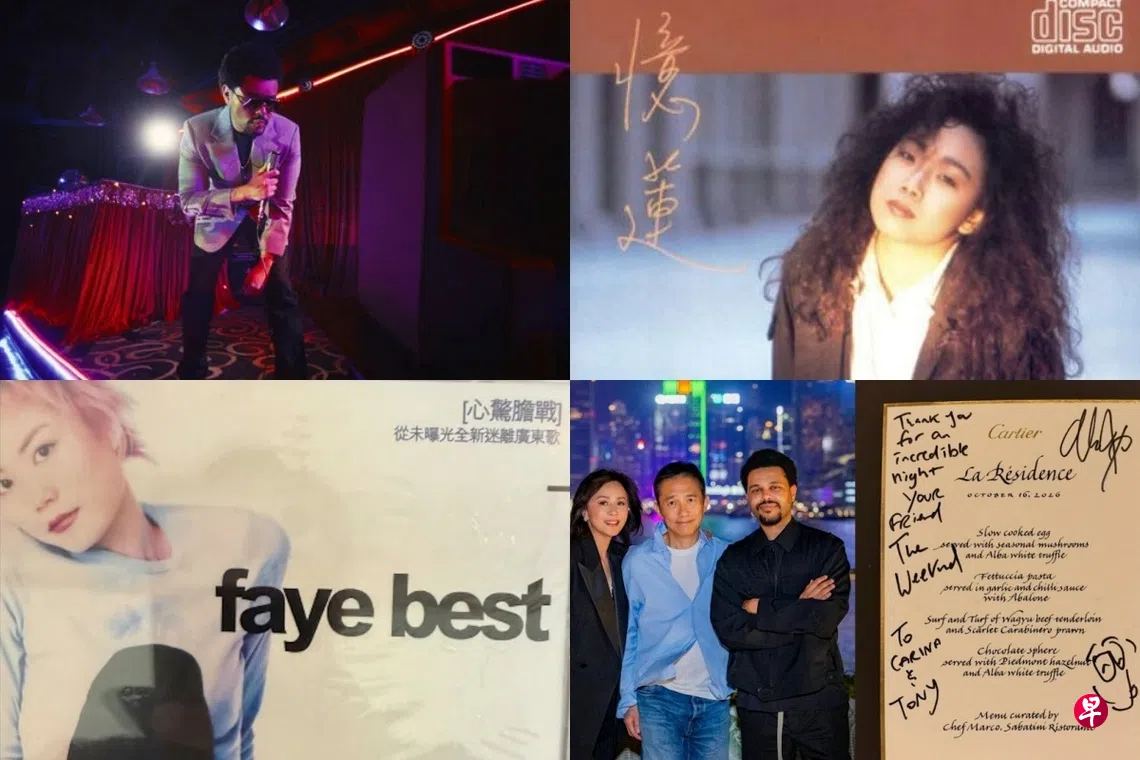
(Hong Kong) Canadian superstar The Weeknd held four concerts at Hong Kong’s Kai Tak Stadium last month, sparking a scramble for tickets. He also created a new song, “Hong Kong”, especially for the shows. Incorporating Faye Wong’s “Monsoon” (《季候风》), the song blends their voices seamlessly and quickly went viral on social media.
“Monsoon” is a Cantonese song from Wong’s 1993 album No Regrets (《执迷不悔》). It is adapted from the Mandarin song “Someday I Will” (《有一天我会》), composed by Chen Hsiao-hsia. Its resurgence has prompted social media users to rediscover works from the 1990s.
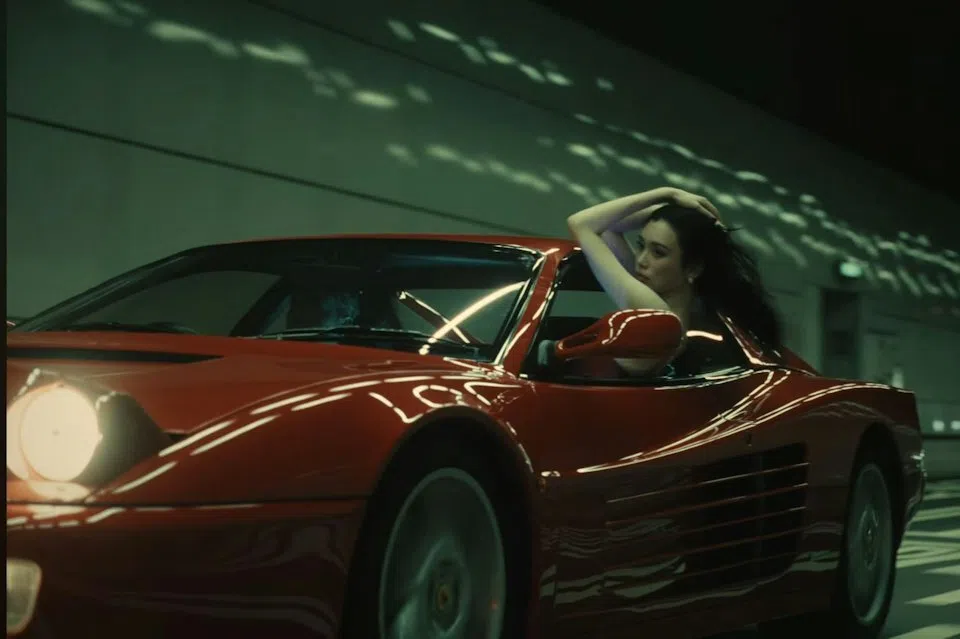
The music video for “Hong Kong” was shown on the big screens at The Weeknd’s concerts in the city. When it officially debuted on YouTube, it retained the concert version’s sense of urban loneliness, but model Wang Liuwen had been replaced as its female lead by supermodel Ming Xi, who married into a Hong Kong family. She rides through tunnels at night in a striking red sports car, her long hair flying in the wind, in scenes that evoke the dreamlike romance of Wong Kar-wai’s Hong Kong films. The scene then shifts to The Weeknd, wearing his signature sunglasses, singing soulfully to a screen in a retro karaoke bar. He ends up alone on a balcony, sipping a drink in the night breeze — a perfect visual echo of the song’s glamorous yet lonely urban atmosphere.
The video went online in the early hours of 13 November. By press time, just four days after its release, it had surpassed 1.5 million views and topped YouTube’s global music trending chart.
The Weeknd’s tour, which began in 2022 and runs until November 2026, spans 176 shows in 67 cities. It has sold more than nine million tickets and grossed over US$1.3 billion (about S$1.7 billion), making him the highest-grossing male touring artist of all time. Along the way, he created songs dedicated to four cities, naming each after its inspiration: “Tokyo”, “São Paulo”, “Rio”, after Rio de Janeiro, and “Hong Kong”.
The Weeknd has spoken publicly about his love for Hong Kong, but his particular fondness for Cantopop came as a surprise. Just how much does he love it? Lianhe Zaobao has tracked four successive gestures of affection for the genre. If “Monsoon” was the first, here are the other three.
Second, before his Hong Kong shows, he met Tony Leung and Carina Lau for dinner. The rare sight of the three together delighted fans. The Weeknd later shared a photograph with the couple on social media and left a handwritten message on a menu card thanking them for their hospitality. He then posted a photograph of himself talking to Leung on another account, setting it to one of his favourite Faye Wong classics, “Dream Lover” (《梦中人》). It was an apt choice: the song is also the theme song of Chungking Express (《重庆森林》), which stars Leung.
Third, after releasing “Hong Kong”, The Weeknd used a photograph of Hong Kong from cinematographer Christopher Doyle’s collection for the single’s cover. In a post on his private secondary account, “gene.hackerman”, he thanked Doyle, describing him as “essential to Hong Kong cinema and a huge inspiration to me personally”. He then reshared the post on his main account, continuing to express his love for Cantopop by accompanying it with Sandy Lam’s 1987 song “Passion” (《激情》), an adaptation of “Take My Breath Away”, the hit from the Hollywood film Top Gun (《壮志凌云》). Lam’s song also featured in Wong Kar-wai’s 1988 film As Tears Go By (《旺角卡门》).
Fourth, he also posted a photograph of the late Hong Kong director Ringo Lam on his secondary social media account, accompanied by the opening of Dave Wang’s 1989 Cantonese song “Perhaps” (《可能》).
Some social media users noted that The Weeknd has expressed his love for Hong Kong film, television and culture on several occasions. He previously shared Wong’s 1996 classic “Restless” (《浮躁》) on social media.
Even as he set a box-office record, he did not forget to give back. The tour raised US$8.5 million (about S$10.95 million) for charity, all of which was donated to the XO Humanitarian Fund and Global Citizen to support hunger relief worldwide and help disadvantaged children around the world gain access to quality education, demonstrating his considerable influence as a superstar.
In an article on the song, lawyer Li Yingzhang wrote that the lesson of “Hong Kong” was not that the city could only sustain its relevance through memories of the past. Rather, it reaffirmed that the cultural influence Hong Kong had built up over many years could still transcend geography, language and generations, continuing to attract international attention and recognition. Hong Kong’s most precious asset has never been any one song, film, group of stars or unrepeatable golden age. Its true strength lies in its ability to connect China with the world, blend tradition with modernity, and turn diverse cultural resources into new creative works. This capacity for openness, diversity and innovation is the foundation on which Hong Kong’s culture can continue to develop.
