

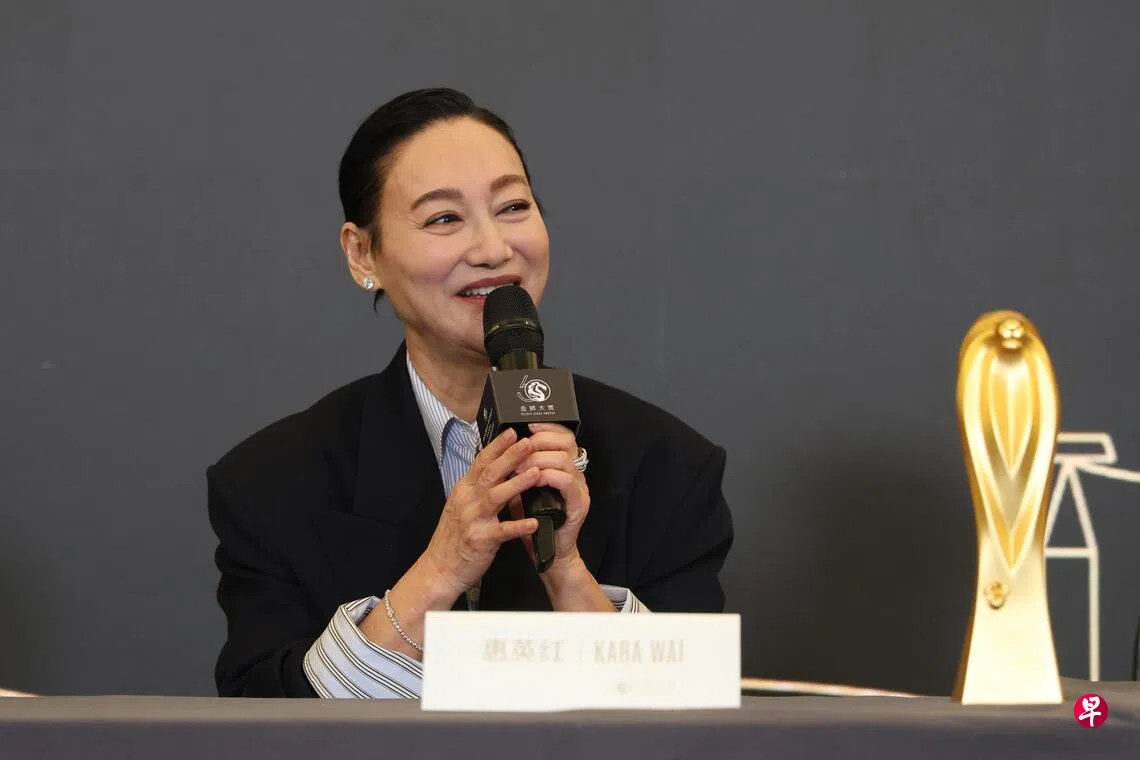
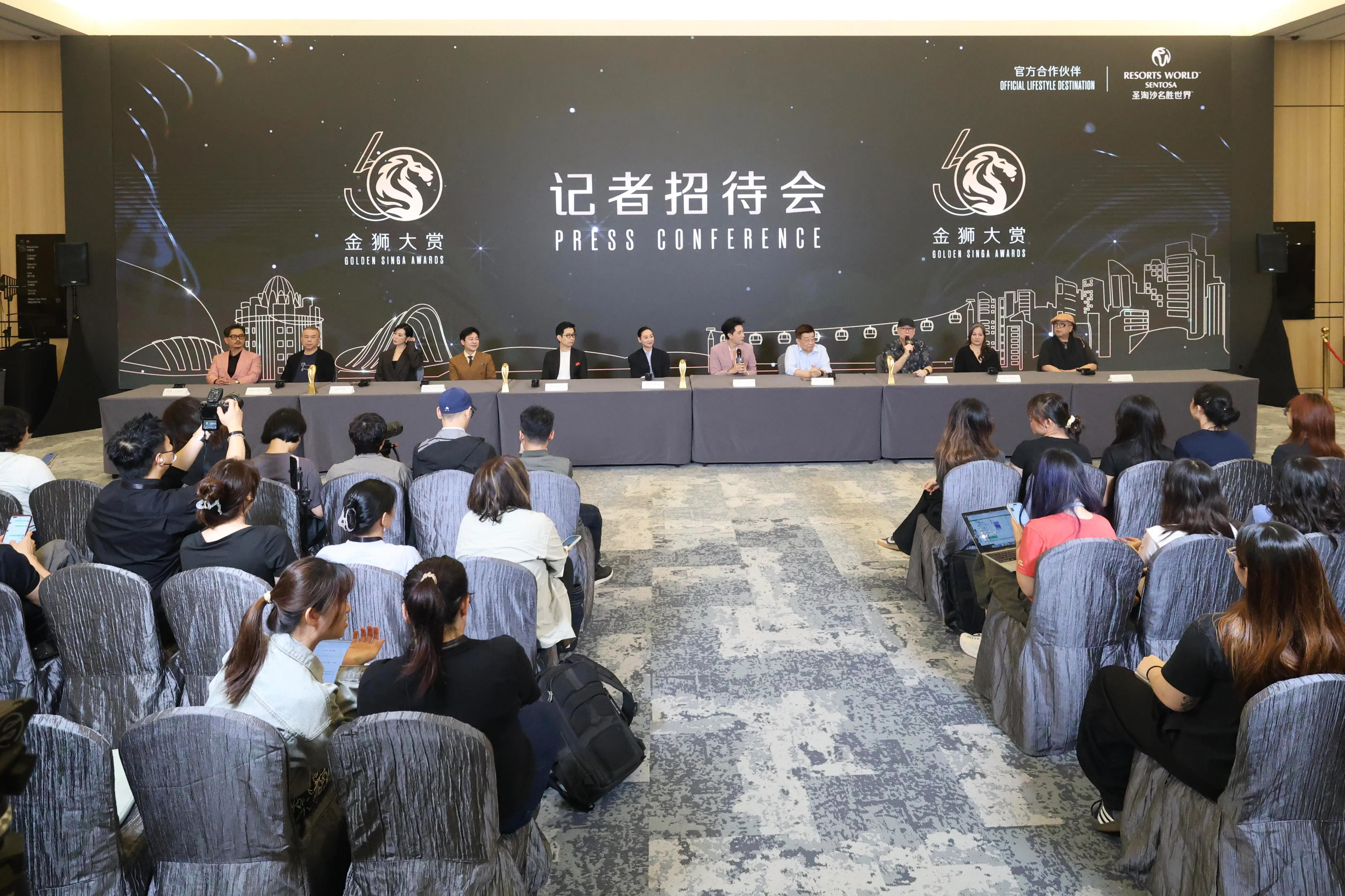
The winners of the second Singapore Golden Lion Awards were announced on the evening of 28 November. Ahead of the ceremony, award-winning actress Kara Hui led the final jury at a noon press conference at Resorts World Sentosa. Fellow jurors Shannon Lee, Peter Pau, Chris Babida, Tse Kwan-ho, Yu Nan, Zhang Songwen, Lee You-ning and Chen Yu-hsun also attended, alongside organising committee chairman Dasmond Koh and vice-chairman Wu Bei.
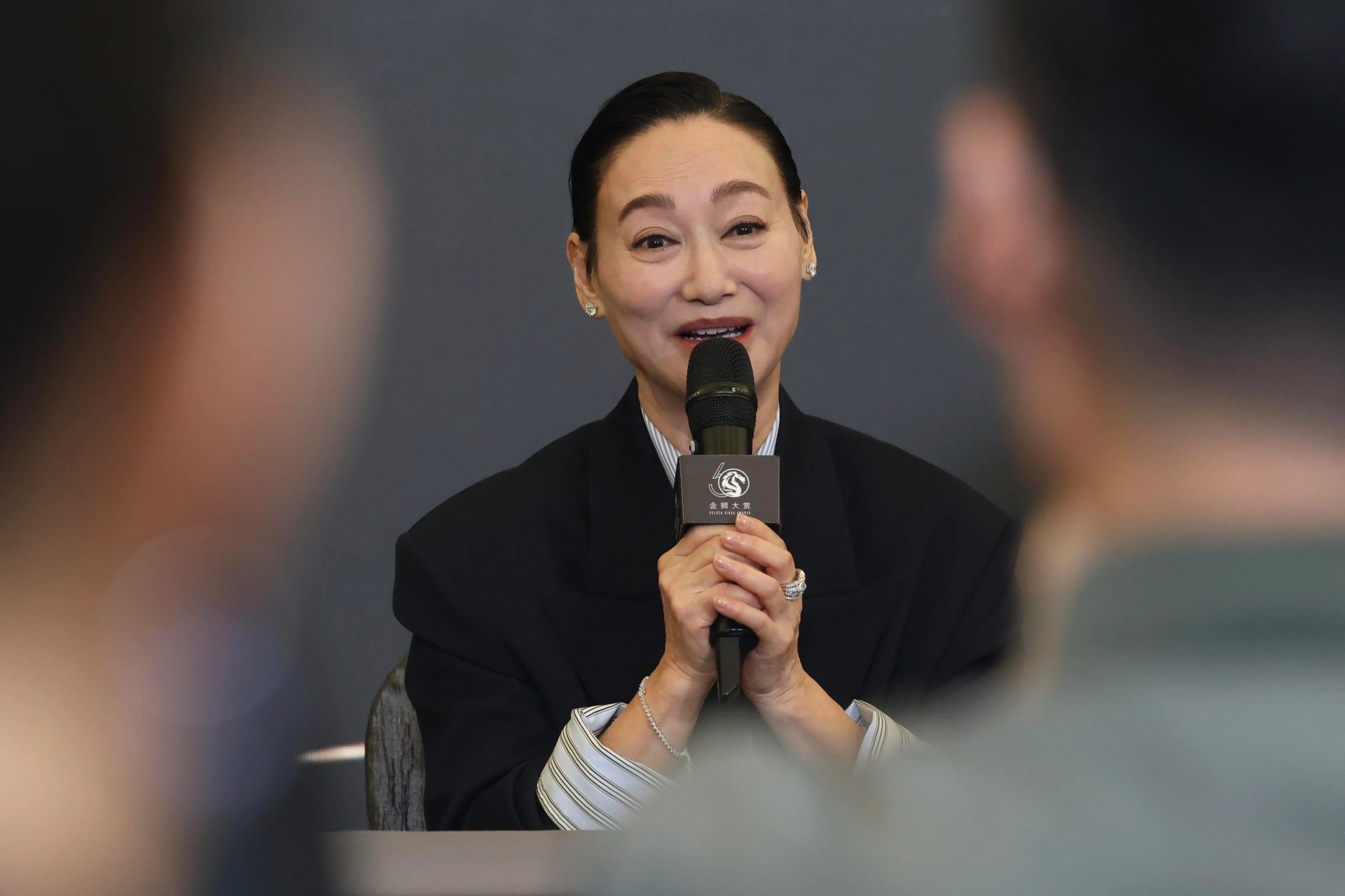
At every awards ceremony, some go home with trophies while others miss out. Responding to a question from Lianhe Zaobao, final jury chair Hui said film awards were like a competition: there would always be winners and losers, and jurors had their own preferences. A performance she liked might not appeal to another juror. She hoped the winners would cherish the honour and keep working hard. She also urged actors who missed out not to lose confidence over a single result, as there would be other opportunities to win.
The final jury deliberated behind closed doors for six hours on the eve of the ceremony. Hui revealed that the most hotly contested category was perhaps an unexpected one: best visual effects, which took three rounds of voting to settle. Best actor was decided in one round, while best actress took two.
She explained that visual effects involved technical expertise, and jurors focused on different aspects. The details she valued, for instance, differed from those that mattered to veteran filmmaker Peter Pau. Between rounds of voting, the jurors discussed the contenders at length and tried to win one another over. To persuade fellow jurors, she said, they had to offer concrete reasons for their choices.
Fellow juror Zhang Songwen then shared an episode from the closed-door deliberations. After a winner had been chosen for one award, he asked the organising committee whether the recipient would attend the ceremony. He was told that as long as the jury reached a fair decision, the award would be presented even if the winner was absent. Zhang said he was moved by that response, which showed the committee’s respect for the jury’s decisions.
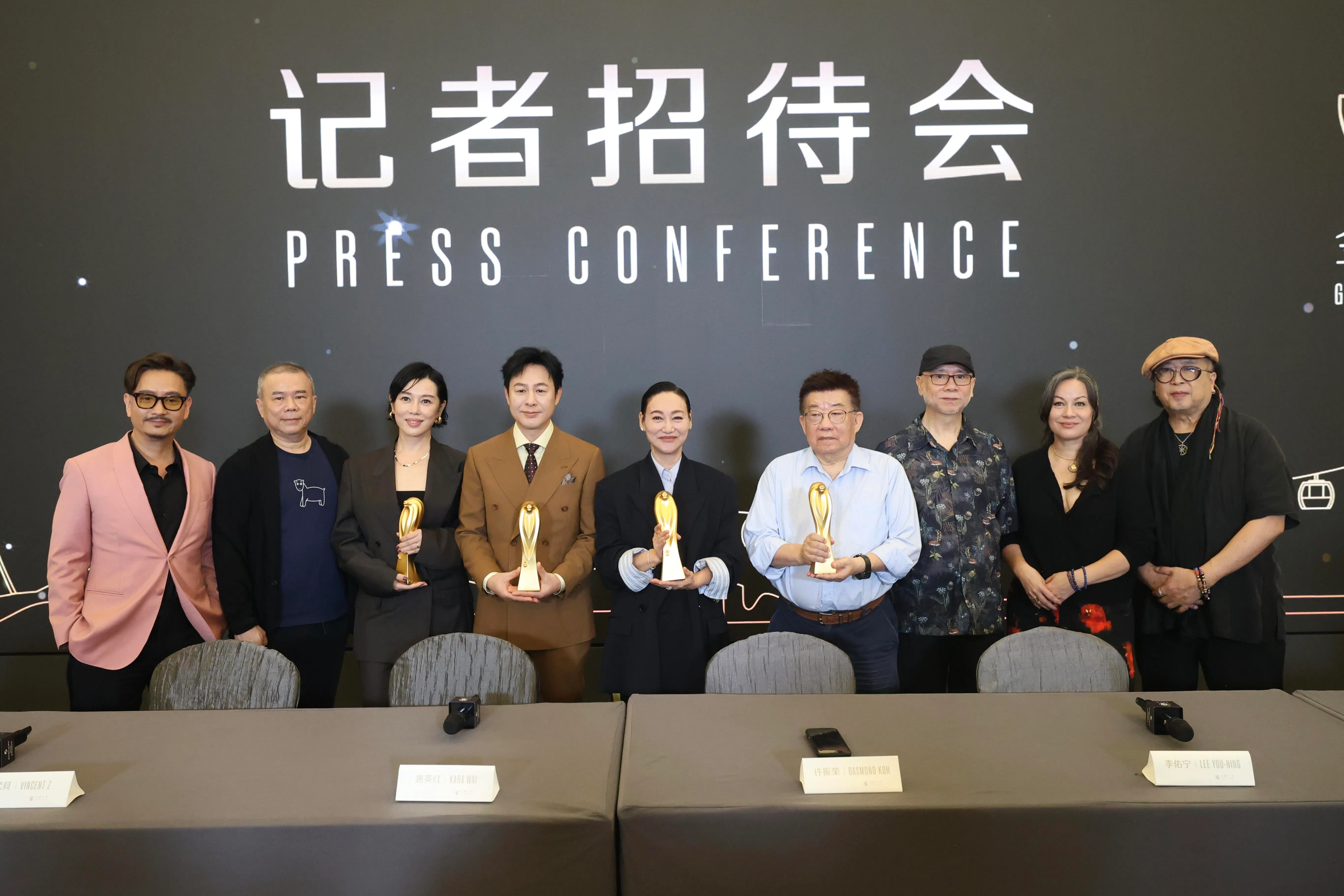
Taiwanese director Chen Yu-hsun joked that he had thought coming to Singapore as a juror would be easy — all he would have to do was vote. He had not expected the discussions to last six hours. Despite having spent more than 30 years in the industry, he realised on arrival that he was still relatively junior among the jurors: fellow director Lee You-ning had taught him at university. He also praised jury chair Hui for her decisiveness.
Hong Kong award-winning actor Tse Kwan-ho was serving on a jury for the first time. Having always been the one being judged, he said taking a seat on the panel had given him an understanding of how the process worked. Mainland Chinese award-winning actress Yu Nan said choosing the best actor and actress had resonated particularly strongly with her, and she looked forward to the two winners’ future performances.
Zhang Songwen discusses backup plans, jokingly asks Tse Kwan-ho for a role
The Golden Lion Awards held three forums on 27 November. At “The Performing Arts: Challenges of Our Times” (《表演艺术的时代挑战》), mainland Chinese actor Zhang Songwen and Hong Kong actor Tse Kwan-ho discussed the impact of artificial intelligence (AI) on actors and shared what keeps them acting.
Zhang said some AI-generated short dramas were so realistic that he thought he was watching real people act, sometimes even thinking, “This actor is quite good.” But the more he watched, the more he found he could predict what an AI actor would do next. Citing theatre as an example, he noted that audiences still snapped up theatre tickets despite the advent of film and television dramas. He believed AI dramas and live performers could each find their own audiences in future, and actors need not be pessimistic about AI.
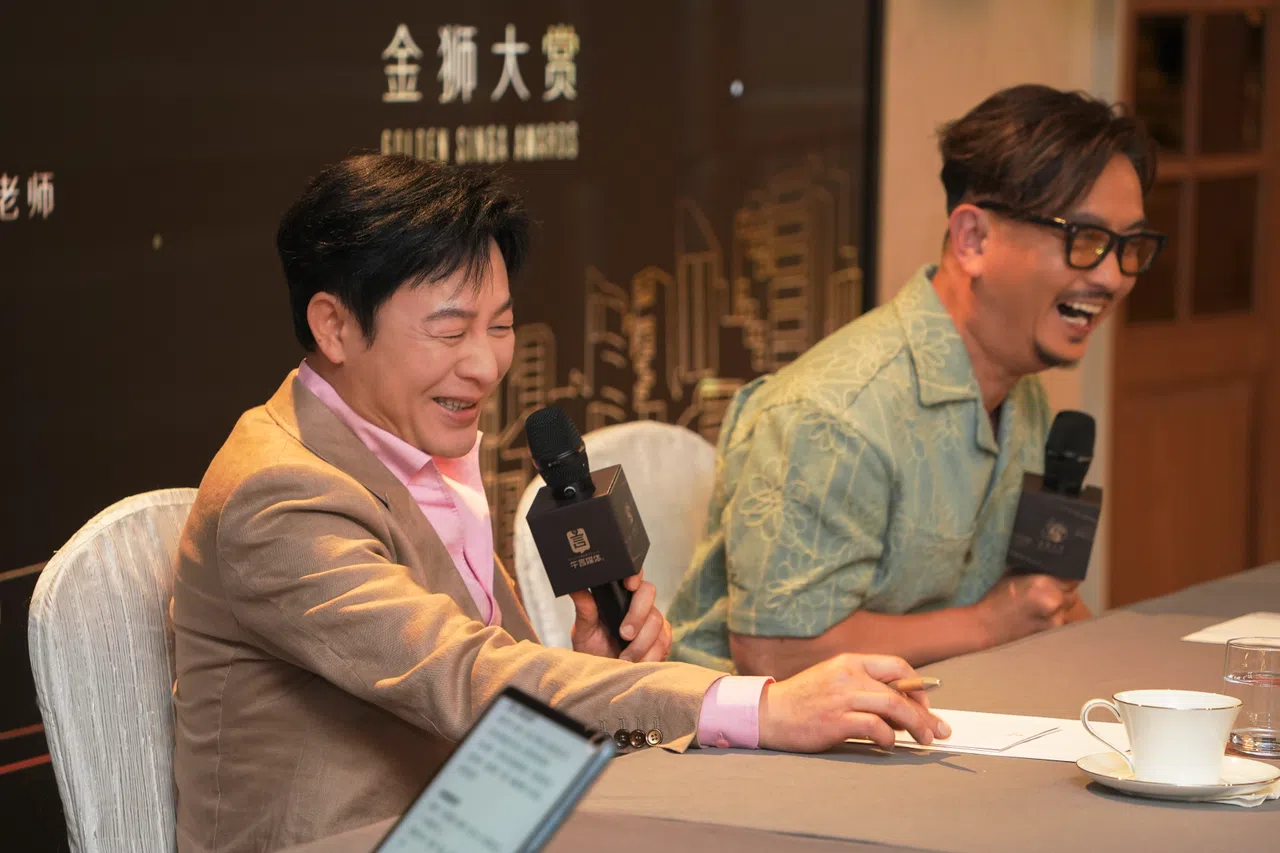
Tse said that if actors relied solely on stock techniques, “AI will definitely surpass you”. In his view, what made actors valuable was their ability to bring their own vulnerabilities, aesthetic sensibilities and outlook on life to a role. But tight filming schedules and the pressure to attract views often left them little time to explore their characters, forcing them to fall back on familiar approaches. He had once filmed dozens of scenes in a single day, knowing there were aspects he could improve but having no time to work on them. He hoped the industry would collectively make more room for acting, giving performers time to understand their characters fully.
What keeps the two men going in show business? Zhang joked that changing careers at his age would be rather troublesome. He then listed his backup plans: return to his former job as a tour guide, open a flower shop, or head to Hong Kong and ask Tse for a small role in the play The Mad Phoenix (《南海十三郎》). “I have backup plans, so I’m not afraid,” he said with a laugh.
Asked what motivated him to keep acting, Tse recalled performing in four shows over a weekend. By the final performance, everyone was exhausted, but he was moved by one actor who remained completely focused. At that moment, he felt that everyone onstage and backstage had temporarily set aside their personal worries to devote themselves to the play. Moments like that made acting meaningful to him.
Zhang Songwen recalls chance meeting with Alan Tam at Clarke Quay, says AI could not have predicted hilarious encounter
Zhang also shared a memory of Singapore publicly for the first time. About 30 years ago, he was strolling around Clarke Quay when he saw a street artist drawing exaggerated caricatures of passers-by. Amused, he asked the artist to draw one of him. Afterwards, he took the portrait to an open-air noodle shop by the quay. When he looked up from his noodles, he was astonished to find Hong Kong star Alan Tam sitting opposite him.
Flustered, Zhang handed his freshly drawn portrait to Tam and asked him to hold it up, then raised his camera and took a photograph, thinking that counted as a picture “together”. Tam returned the drawing and offered to ask a passer-by to take a photograph for them, so they finally had a proper picture together. The two have not had a chance to meet since, but Zhang said he still felt a particular warmth whenever he saw Tam on a programme. He joked that AI probably could not have predicted that real-life experience.
The other two forums were “The Future of Asian Cinema” (《亚洲电影的未来》), featuring Lee You-ning and Chris Babida, and “Mandarin Cinema in the Age of AI” (《人工智能时代下的华语电影》), featuring Peter Pau, Shannon Lee and Wu Bei.
Answer six questions about entertainment hot topics in 2026 to find out which fruit you are!
