


PoliticaLupin (《政界怪盗》)
Available on Netflix
Satomi Ishihara reunites with screenwriter Akiko Nogi eight years after Unnatural (《法医女王》). The phantom thief premise is merely a wrapper: the real focus is a satirical look at the inner workings of politics. The story opens with an election, and some scenes bear uncanny echoes of elections in Taiwan. Those who spot the parallels may find them particularly resonant.
Set in the fictional country of Nipponia, the story imagines a nation long ruled by the Kokujito party, but with an economy so dire that there is no money left to steal. Phantom thief Yayoi Kisaragi (Ishihara) therefore plots to raid a secret Cabinet treasury. She finds a pretext to approach Miyabi (Yuumi Kawai), the daughter of the Kobayakawa political dynasty. With help from a mysterious political fixer, Kan (Atsuro Watabe), she puts this supposedly dim-witted heiress up for election against her older brother Hayate (Kanichiro) in the same constituency. Masaki Natsume (Issey Takahashi), a rising Cabinet star, sees through the thief’s ulterior motives, beginning a relationship in which the two test each other and collaborate as both friends and foes.
Japanese dramas about elections and political skulduggery are hardly in short supply. The recent Fixer series, starring Toshiaki Karasawa, was gripping. Nogi’s script is plainly taking aim at real-world targets, seeking to expose a political reality in which absurdity has become accepted as normal. The writing is not particularly strong, though. The first few episodes struck me as superficial; only in episode five did it begin to find its footing.
The series deliberately adopts an absurdist, humorous style. A strong cast and a cute tanuki narrator who rounds off each episode keep things brisk, light and mildly entertaining. As undemanding escapism, it is watchable enough.
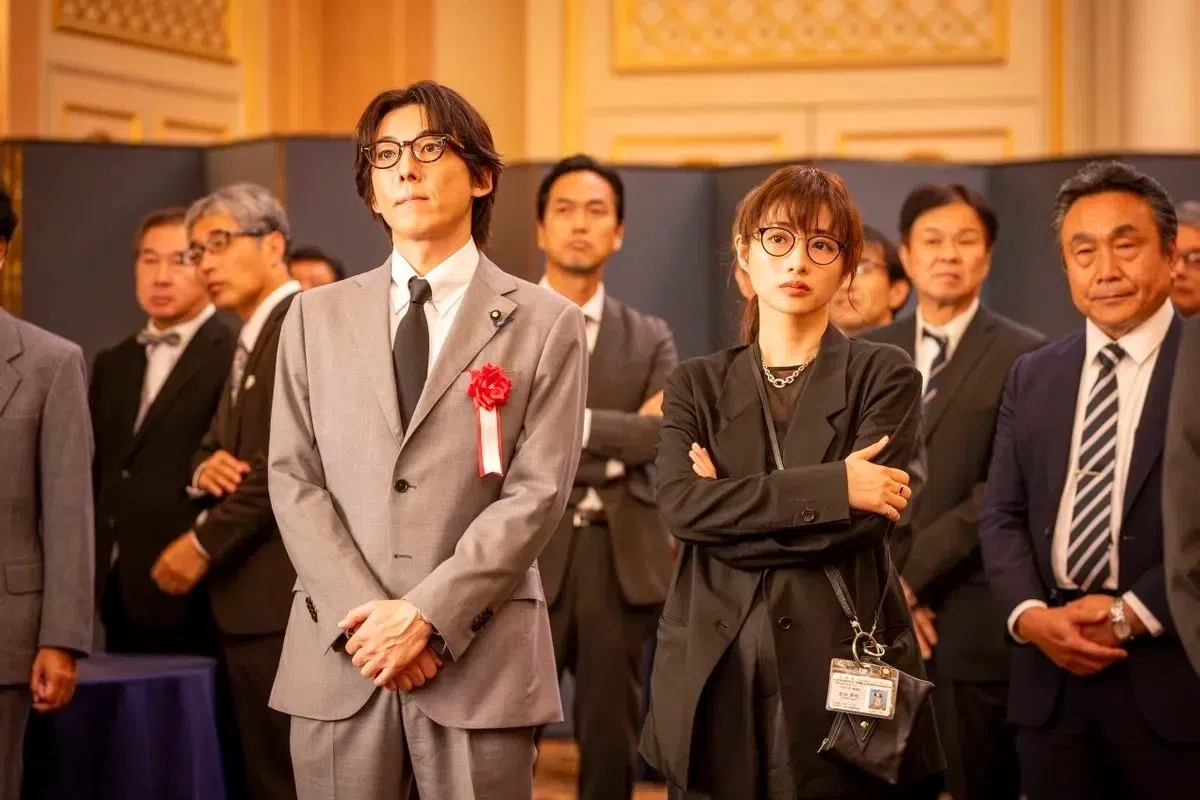
Yuumi Kawai brings depth to her role
Although Ishihara is the lead, it is the 25-year-old Kawai who holds my attention. Her wilful, stubborn political heiress is introduced as a party girl who spends her nights in bars, before abruptly deciding to enter politics with a down-to-earth campaign. Heckled during a street speech with “Speak English! Can you do it without a script?”, she calmly replies: “Actually, speaking from a script is harder. I’m not an actor.” Her popularity quickly soars, and she ultimately defeats her brother with the help of her fluent English.

Generally, the broader your electoral base and the more money you have, the better your chances of winning. But there are always exceptions. All this happens in the first episode, so I have not given too much away. The real substance of the series begins when the characters enter the inner sanctum of politics. Incidentally, Kanichiro, who plays the older brother, is the son of acclaimed Japanese actor Koichi Sato. His character is burdened by his father’s expectations but dares not rebel. Convinced that he will win anyway, he refuses to make campaign appearances. I was genuinely curious about the psychology of this seemingly ineffectual third-generation political scion. Unfortunately, he gets far too little screen time.
There is something both naive and ironic about a political heavyweight’s daughter calling for an end to hereditary politics. Yet I was moved when she challenged her father: “This country you care about — do you mean the land? The government? Or the people?” In another scene, she declares with conviction: “Democracy is not just about majority rule, or about winning and losing. What matters is finding happiness that everyone can share.” It gave me a sense of déjà vu from the Taipei mayoral election, and I could relate to it.
But when she appeals for “fairness” in a room full of political veterans, trying to persuade them with some very basic Adam Smith theory — and actually succeeds — I find it laughable. Writing about politics clearly is not Nogi’s strength. It is to Kawai’s credit that she still manages to give the character depth.
A surprise appearance by Shingo Katori
The series attempts to explore the full range of familiar political tactics: calculation, manoeuvring over appointments, manipulation of public opinion, and collusion and rivalry between factions. There are AI-generated fake-news videos, public relations firms cultivating online armies to spread rumours and smear opponents, and opinion leaders stirring up controversy for clicks.
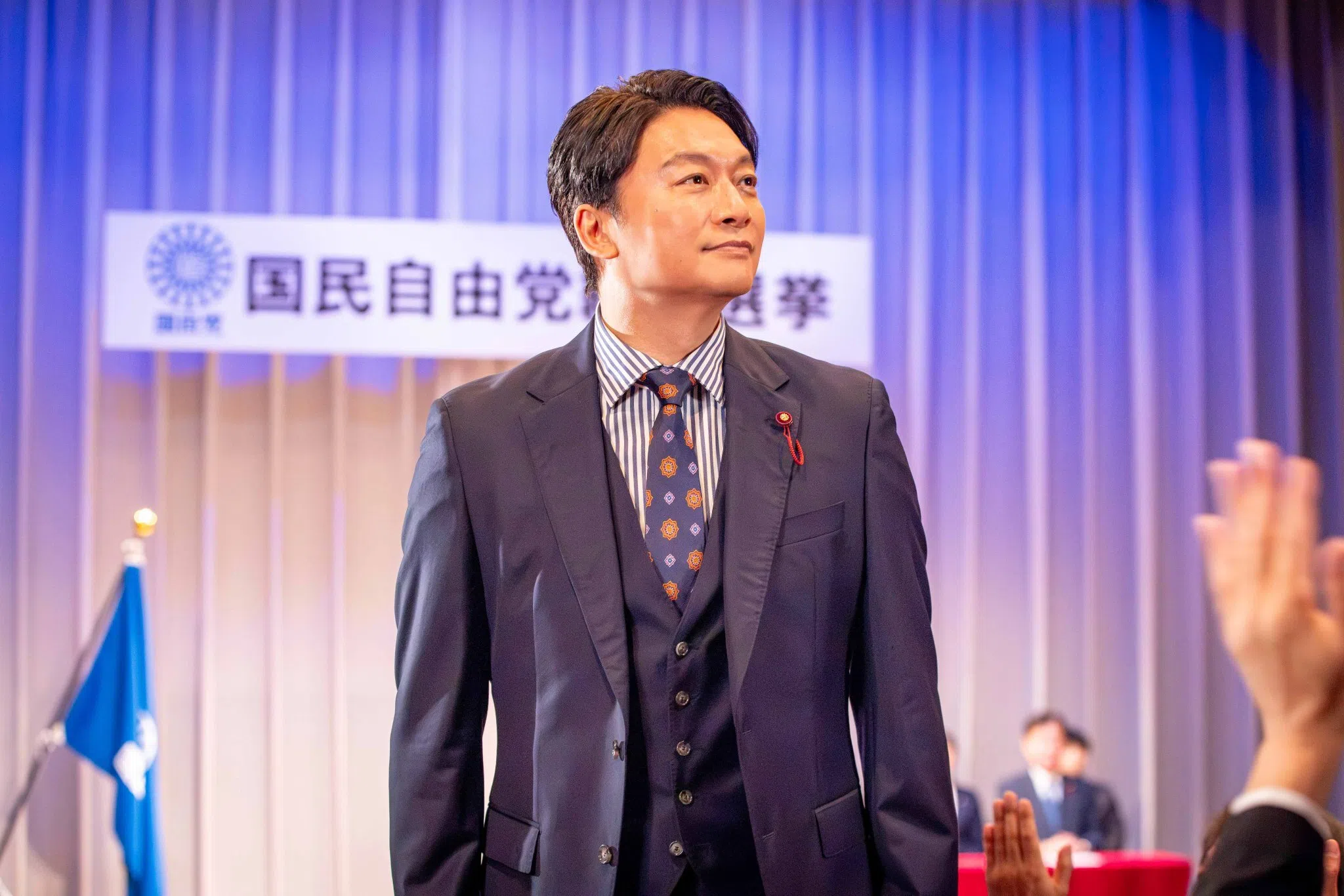
Those in high office can wield unchecked power and shrug off scandals: “Even if it leaks, nobody will care. The media won’t pursue it. Without that, there’s no follow-up. The public will soon forget, so it doesn’t matter.” The public cares only about image, allowing the country’s youngest prime minister, played by Shingo Katori, to sweep all before him with a single slogan: “Push!” I have to say that the drama only begins to get interesting when Katori makes his surprise entrance in episode five as the hugely popular prime minister.
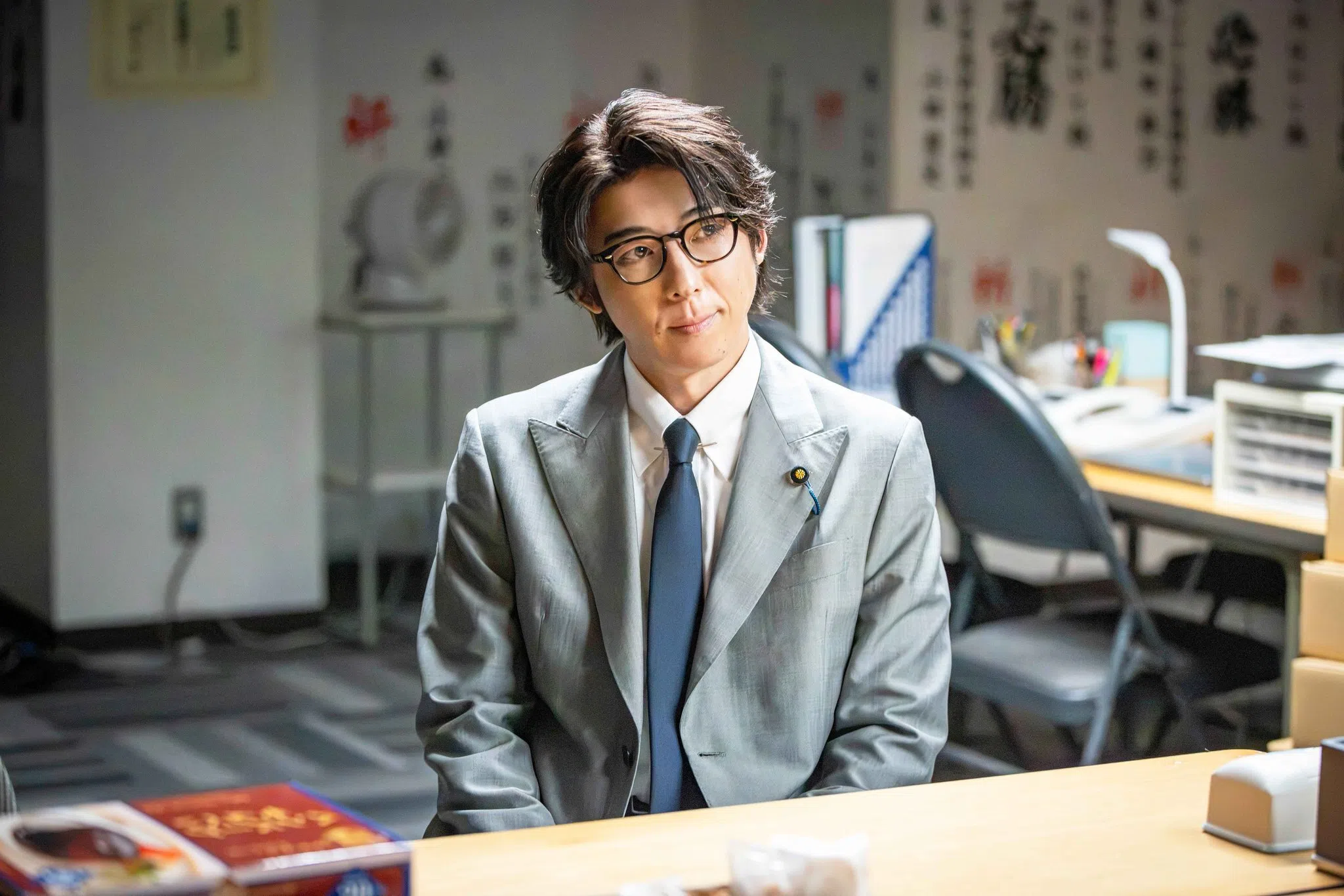
It is entirely down to Takahashi’s charm that I have kept watching through episode seven. His politician, caught between ideals and reality, takes me back to the role that first made me a fan: Kaibara, the young aide in his breakthrough series Wise and Foolish (《民王》). He is the clever one who sees clearly when everyone else is deluded, deliberately keeping others at just the right distance. I particularly enjoy his world-weary eye-rolls, forced smiles and muttering. Watabe’s inscrutable fixer, who knows all the political establishment’s dirty secrets, is also compelling. In fact, I prefer watching the veteran fixer and the thief together to the scenes between Takahashi and Ishihara.

The phantom thief premise strains belief
Making a phantom thief the protagonist offers a fresh approach, but that very premise is what prevents me from becoming immersed in the story. She is a thief, not a con artist. Having her single-handedly throw the political establishment into disarray feels far-fetched, while the effortless sleight of hand she pulls off with such breezy confidence in every episode is also thoroughly implausible.
Ishihara is genuinely beautiful — so flawlessly so that even women may feel their hearts flutter. Unfortunately, her exaggerated, somewhat affected acting frequently makes for uncomfortable viewing. There is no sense that the character might be using her wild behaviour to conceal a deep despair about the world. But never mind. Visually, at least, we have all been well rewarded.
