

All Of A Sudden (《突如其来》) (PG)
196 minutes
★★★★☆
Synopsis
While introducing the Humanitude care approach at a nursing home in the Paris suburbs, its director, Marie-Lou (Virginie Efira), meets Mari (played by Tao Okamoto), a Japanese playwright and theatre director with terminal cancer. In conversations that cross linguistic and cultural boundaries, the two women explore illness, chance and life.
Review
It is hard to imagine, and somewhat surprising, that a film running more than three hours, largely about two women who meet by chance and talk about everything under the sun as they wander and pause, could have such a profound emotional impact. It has been a long time since a film left me trembling all over and crying uncontrollably. The suddenness of my own reaction startled me.
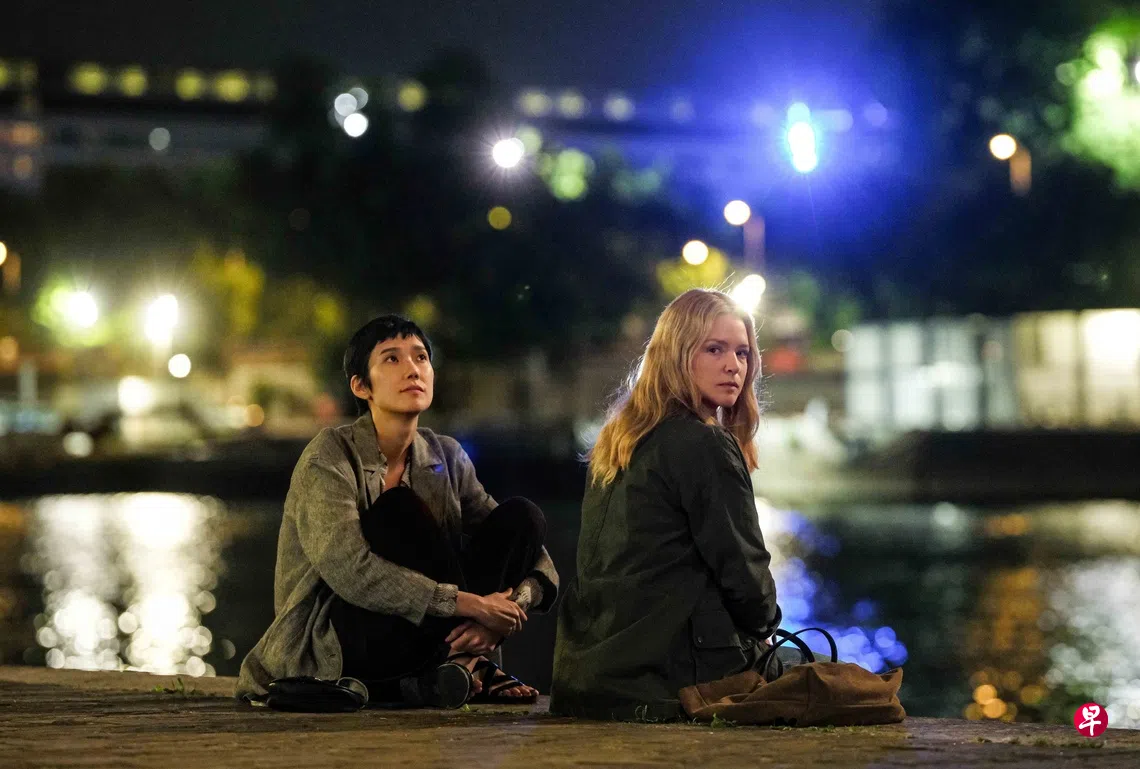
The film is adapted from Suddenly Feeling Unwell (《突然感到不舒服》), a collection of correspondence between Makiko Miyano and Maho Isono. Director Ryusuke Hamaguchi takes his camera to Paris, but offers none of the picture-postcard exoticism of the Eiffel Tower or the Louvre. Instead, there is a breeze on a suburban tram platform, harsh white light in nursing home corridors, faces deep in earnest conversation beside the Seine at night, and strangers drawn into a dance by music far from home.
The story is uncomplicated and the setting simple. But Hamaguchi’s strength lies in nuanced, insightful dialogue that gives his images time to reveal both his characters and the profound connections between them. In life, too, we sometimes experience these sudden, seemingly fated encounters across differences of skin colour, culture, geography and language. A single conversation can mean more than a lifetime of talking to someone else.
A lost autistic boy inadvertently brings together these two strangers, initially separated by language and culture. Marie-Lou once studied at Waseda University in Tokyo, while Mari studied philosophy in France. Moving effortlessly between French, Japanese and English, they embark on a long, unguarded conversation through the night.
Two souls meeting and finding resonance
The exchanges between the two women pour forth like a river bursting its banks. There is no contrived sentimentality, superficial romance or sermonising, only something remarkably pure, intellectual and intimate: the encounter and resonance of two souls recognising and coming to know each other.
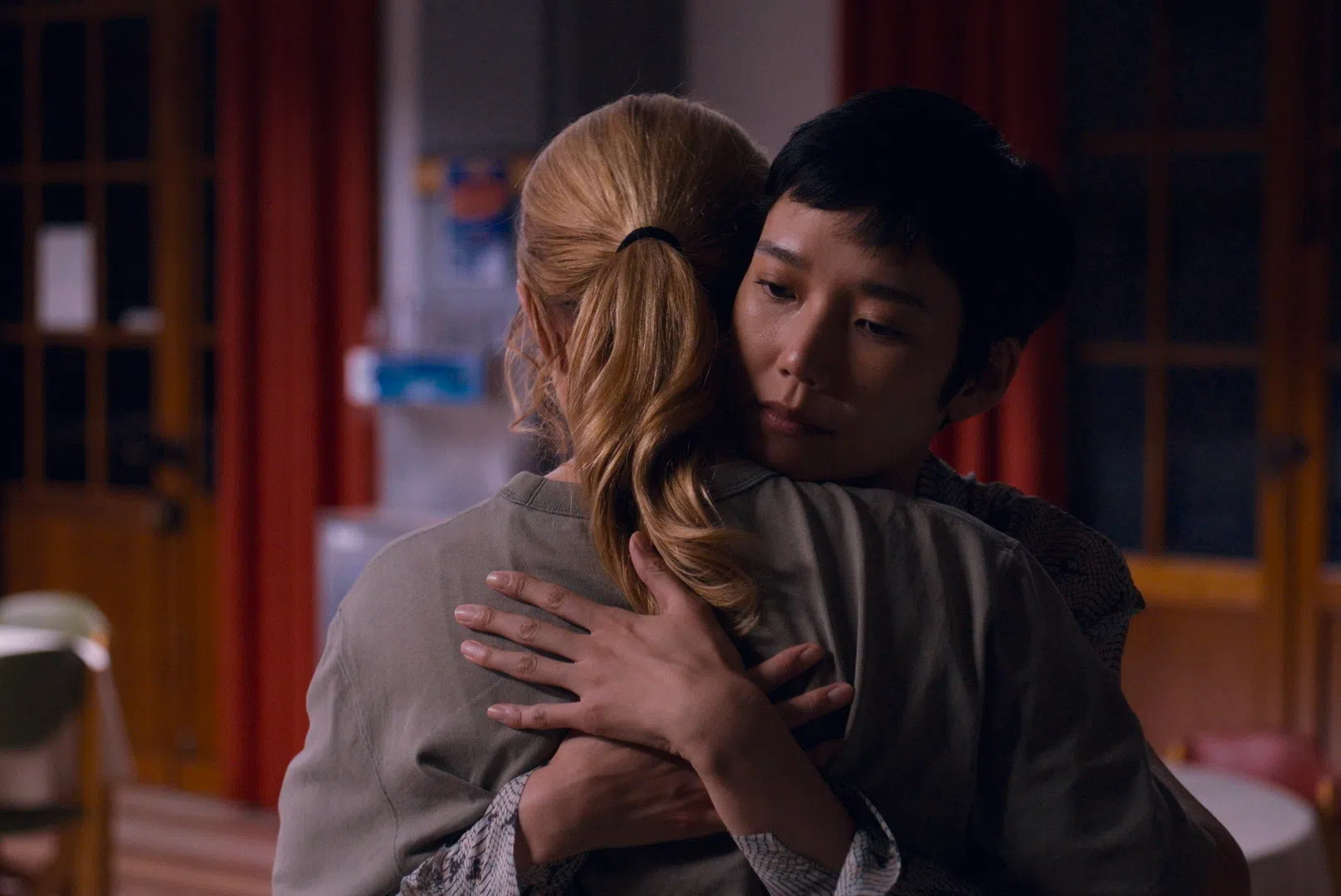
I later learnt that Efira had learnt Japanese in two months for the film. This award-winning actress is truly versatile.
In the nursing home’s empty staff room, Mari writes rapidly on a whiteboard, explaining how capitalism relentlessly squeezes the space we have to live, compressing and quantifying time. What might otherwise be an abstruse, sprawling theory of political economy becomes uncannily relevant to Marie-Lou’s struggles to manage the home. As they talk, the two women gradually come to terms with their pasts and present circumstances. All it takes is an embrace of mutual understanding.
As long as we are alive, we deserve respect
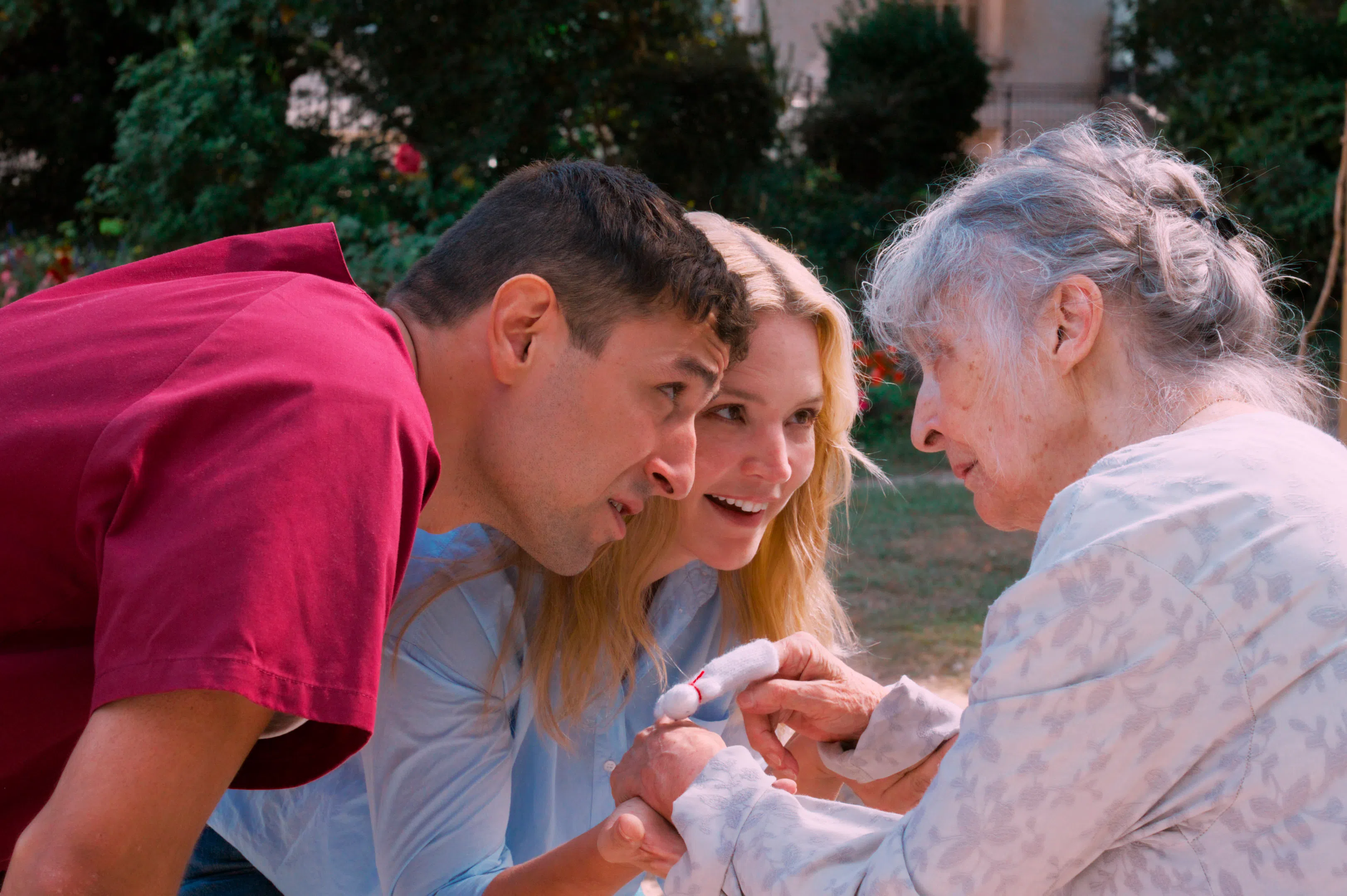
The film is most affecting in its questioning of the system of care for elderly and terminally ill people: when we know someone is nearing the end of life, at what point should we begin to regard them as “someone heading towards death”?
Its answer is calm but unequivocal: as long as someone is alive, do not treat them prematurely as a dying person. In a society obsessed with efficiency and speed, nothing is held in greater contempt than long-term care. In a system governed by KPIs, it is seen as a drain on resources with no economic return. People are reduced to data, and care loses its humanity. What the director wants to convey is that truly understanding a life and recognising a person’s dignity requires us to spend time looking at them directly. There are no shortcuts.
The film’s restraint when death actually arrives is equally shattering. Hamaguchi shows no heart-rending deathbed farewells, not even the moment of death itself. Instead, the camera suddenly reveals an urn in a scene. As the two women observe in their conversation, time itself is a paradox. One moment, a body still holds warmth; the next, it has become dust, scattered on the wind and returned to the earth.
The film quotes Italian psychologist Franco Basaglia’s famous remark: “Up close, no one is normal.” Beneath seemingly conformist, “normal” behaviour, everyone harbours quirks, wounds or hidden aspects of themselves deep within or behind the scenes of their lives. The film sets aside conventional judgements; imperfection and death are the great levellers. Yet even after spending three hours contemplating death and preparing yourself for it, the moment someone truly leaves this world, however quietly, still sends a sudden tremor through your heart.
Like time itself, the connections that weave people’s lives together are never linear. Amid the workings of fate, a bowl of instant noodles at dawn, a breeze, the first light of morning and every breath affirm that living in the present is the very meaning of life. The two women leave each other with warmth, and give strength to those around them.
Perhaps, before the inevitable farewell arrives, our only way to resist oblivion is to entrust our most precious time — and part of our lives — to another person, with care and intention. In French and Japanese with English subtitles. Showing exclusively at Filmhouse.
