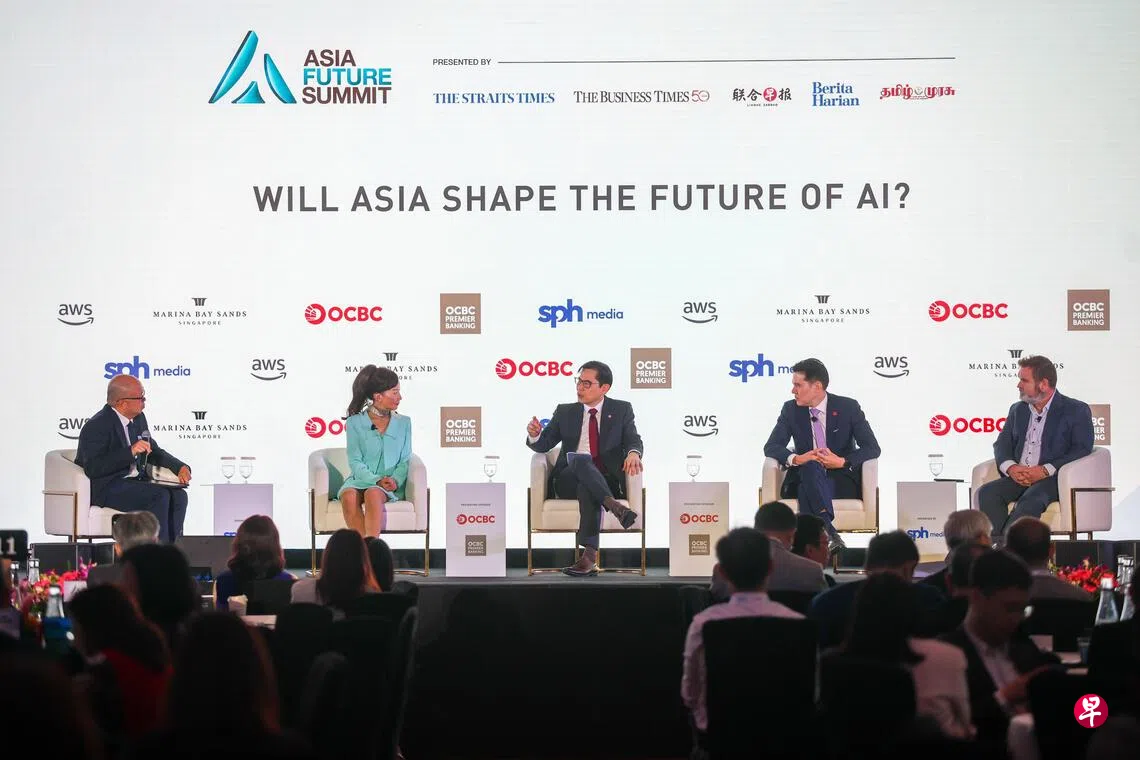
Artificial intelligence (AI) is accelerating cyber attacks, forcing companies to patch vulnerabilities faster and leaving less time for system testing. OCBC Group CEO Tan Teck Long believes consumers could face more service disruptions in future.
Tan made the remarks during a roundtable discussion at the Asia Future Summit on Friday (17 November), addressing the recent spate of cyber attacks and service disruptions worldwide.
Several widespread service disruptions have occurred around the world this month. Microsoft 365 suffered a global outage, leaving some users unable to send or receive emails through Outlook. Subsequently, the US Federal Aviation Administration briefly halted flight departures nationwide following a failure in its air traffic control communications system.
Tan said that at OCBC, some vulnerabilities previously took a month or longer to patch. The bank now aims to complete the work within days, or within a day if necessary. The tighter the timeframe, the harder it is for teams to thoroughly test whether other systems will be affected, increasing the risk of service disruptions.
He said a bank’s systems are interdependent, and patching one vulnerability could affect other services and pose risks. But for banks, “protecting the bank from cyber attack is paramount for us”.
Aaron Sempf, APJ Partner Org Chief Technologist and Principal for Frontier AI at Amazon Web Services (AWS), cautioned that companies must ensure the safety of the AI systems they introduce, even as they defend against external attacks. “But if you're securing your systems with models or agents that can and will act, and that is all they care about. Then there's a potential threat.”
Companies should focus on AI-driven revenue growth, not just cost savings
Participants also discussed how companies should measure returns on AI investment. Tan said OCBC focuses on revenue growth. He believes companies that consider only cost savings risk limiting AI’s use to existing operations. “But if you are expanding your business, AI probably expand the business more efficiently together with humans.”
Citing OCBC’s AI financial assistant, he said it can provide customers with round-the-clock advice and improve relationship managers’ efficiency. This does not mean cutting staff, however, but expanding demand. When OCBC launched the service earlier this year, it also announced plans to hire 600 relationship managers.
Trip.com CEO Jane Sun was optimistic about the changes AI would bring to employment. She said tourism remains a business built on human interaction. If productivity gains give people more leisure time, there is scope for travel demand to grow further.
She said: “We're hiring more drivers. We are hiring more tour guides, team leaders, and as the restaurants are being opened in the travel destination, we are also creating positive jobs.”
Temus CEO Sng Ren Yeong also believes AI could ultimately create more jobs than it eliminates, as unresolved problems and unmet needs receive greater attention.
Sng said that in helping companies implement AI strategies, he had found that employees’ use of AI tools was already widespread, yet companies often struggled to translate individual gains into business results.
He said many of the obstacles were organisational. Data, expertise and operational work are often spread across different departments, and existing divisions of responsibilities can limit AI’s ability to connect them. He advised companies to first identify bottlenecks affecting services or constraining business expansion, then concentrate resources on three or four initiatives with the potential to scale up.
Sempf said some companies begin reshaping their businesses as soon as they introduce AI tools. They skip the “integration” stage without clarifying governance and specific use cases, causing projects to stall or fail. He called for “taking a step back, understanding that true that you must go through these steps to be able to reform or realign your process”.
This year’s Asia Future Summit is jointly organised by SPH Media’s five flagship titles — Lianhe Zaobao, The Straits Times, The Business Times, Berita Harian and Tamil Murasu — under the theme “Asia Ascendant: Shaping the Region's Role in a New Global Order”. OCBC is the presenting sponsor for Asia Future Summit 2026, with Marina Bay Sands as the official venue partner and Amazon Web Services as the official cloud partner.