

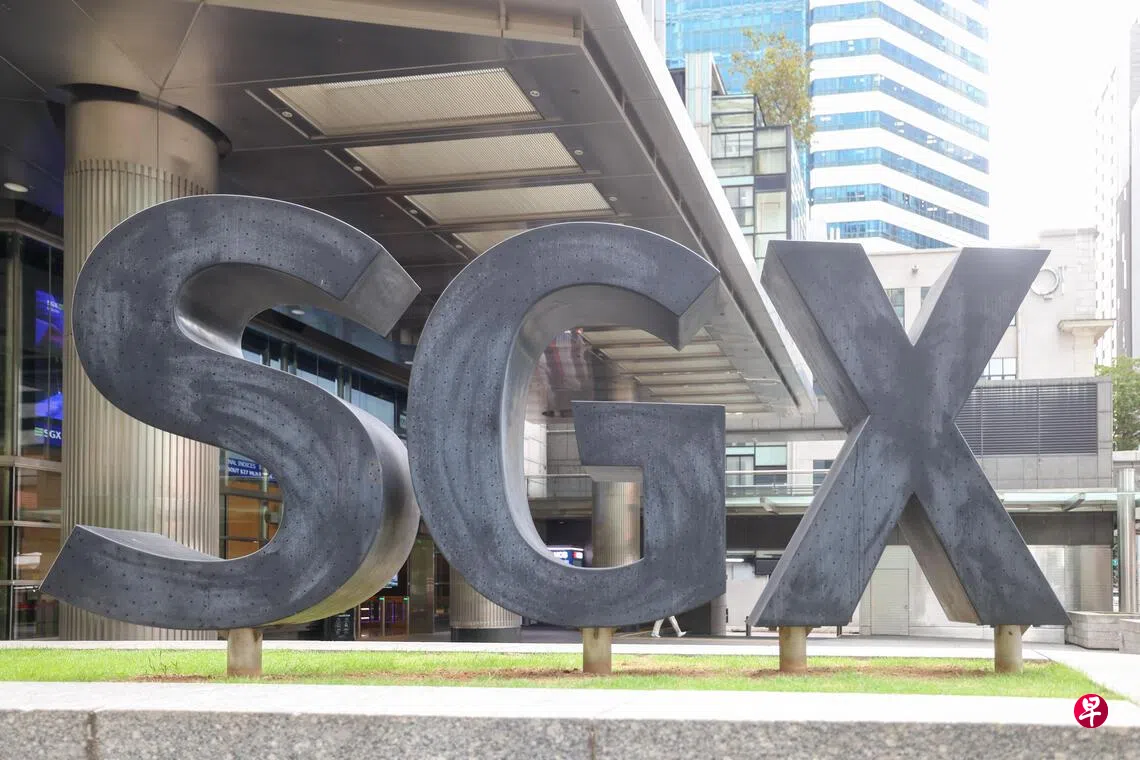
Bargain hunting in US technology stocks overnight helped major indices close above their early-session lows, giving Asia-Pacific markets some breathing room on Thursday (26 November). Regional markets generally recovered from early losses, with most ending higher. Singapore’s Straits Times Index (STI) rose 0.65%, or 31.81 points, to close at 4,962.64.
Seoul, Tokyo and Taipei stocks have seen sharp swings amid concerns over the artificial intelligence (AI) boom and fading excitement over Jensen Huang’s return to Nvidia. Shares in Asian technology companies that had suffered heavy losses led gains in some markets on Thursday.
Taiwan’s stock market closed 2.5% higher, while Hong Kong and Tokyo gained 1.19% and 0.86% respectively. Sydney rose 0.82% and Seoul added 0.29%. Shanghai edged up 0.01%, while Shenzhen fell 0.19%.
Veteran stockbroker Albert Fong told Lianhe Zaobao that the overnight rebound in US stocks had significantly boosted investor confidence. Beyond a technical rebound, sentiment had improved as investors bought battered stocks, reassessed macroeconomic headwinds and market resilience, and largely shrugged off the latest round of tariff announcements.
Commenting on the rebound, Forex.com senior technical strategist Michael Boutros cautioned that there needed to be evidence that the recovery in demand was more than a short-lived rally.
He said: “The focus heading into December is on whether semiconductor shares can regain traction and support a broader recovery or whether the recent deterioration signals further downside.”
Fong said: “This positive momentum may hold in the early part of the US Thanksgiving holiday, but with no fresh market cues from Wall Street and trading volumes thinning, the STI and Asia-Pacific markets could see consolidation, profit-taking and heightened volatility.”
Trading volume on the local bourse totalled 895.89 million shares worth S$1.39 billion, with 335 gainers and 191 losers.
Most of the 30 index constituents closed higher, with 19 advancing, six declining and five unchanged.
Mapletree Industrial Trust and Mapletree Pan Asia Commercial Trust both rose 1.84%, closing at S$1.66 and S$1.11 respectively. Singapore Exchange gained 1.8% to S$19.84.
Other gainers rose between 0.07% and 1.8%.
Among the decliners, Seatrium posted the biggest loss, closing 3.68% lower at S$1.31. Singapore Airlines (SIA) fell 1.72% to S$6.85, while DFI Retail Group dropped 1.14% to US$3.48.
Other decliners fell between 0.55% and 0.95%.
Phillip Securities financial adviser Tong Weiqiang said in an interview: “As the local market is relatively sensitive to international developments, a recovery is highly likely as long as the situation remains stable. But the pace of recovery will depend on developments in semiconductors and AI. Singapore ranks third globally among economies in AI, so we must keep an eye on this.”
He said that with the stock market currently at a high, investors could consider buying in stages during market corrections. “I suggest allocating 5% to 20% of funds to the stock market before the end of the year. If stocks rise, investors could sell before Chinese New Year.”
Tong also said that anti-AI regulations introduced by the US Democratic Party would negatively affect the stock market, and investors could consider buying on dips.
Albert Fong said investors should view the improvement in market sentiment with caution. Trade tensions, interest rate expectations and broader economic uncertainty, along with their potential impact on corporate profitability, would continue to drive market movements next year.
For more information on Singapore’s stock market, click here.
