

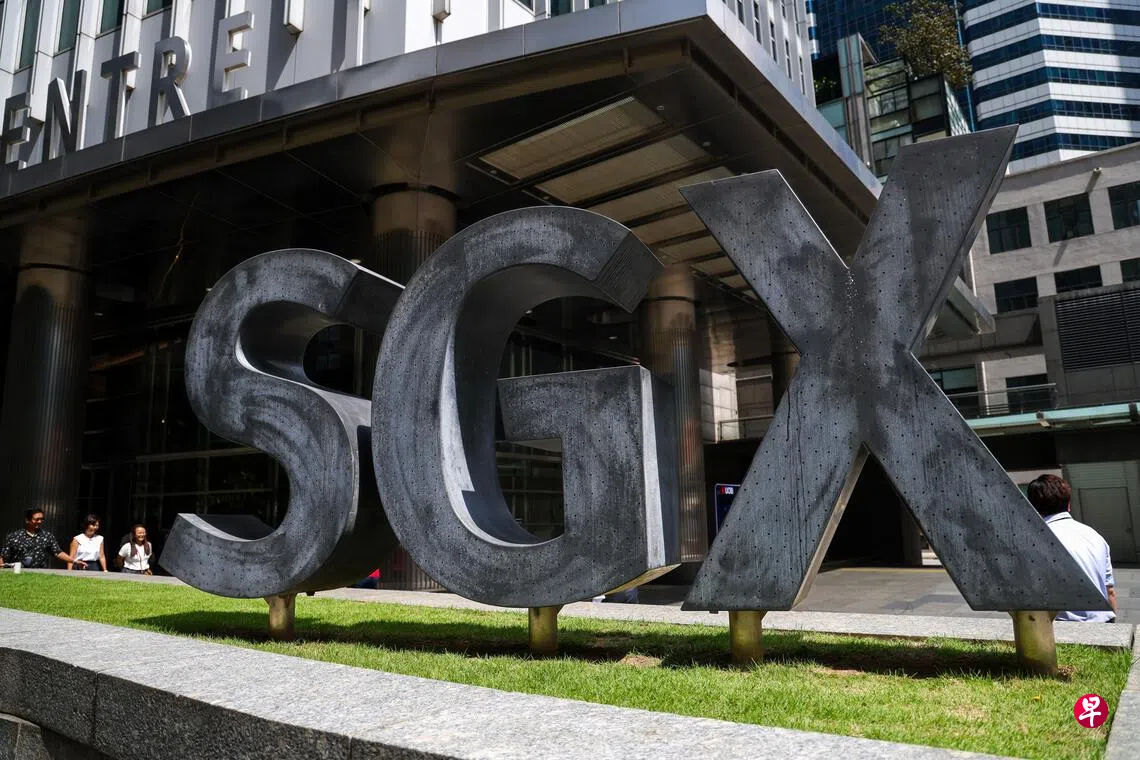
Asian stock markets mostly came under pressure as investors shifted their attention from a heavy sell-off in technology shares to renewed gains in oil prices and the risk of a further deterioration in the Middle East situation. Singapore’s Straits Times Index (STI) fell 50.86 points, or 0.96%, to close at 5231.84.
Hong Kong stocks were hit by the global technology sell-off, with the Hang Seng Index closing 1.55% lower at 23637.6. Major technology stocks ended lower across the board: Alibaba fell 3.46%, Lenovo Group slid 6.33% and Baidu lost 3.39%.
Seoul stocks also fell in volatile trading, with the Korea Composite Stock Price Index (Kospi) dropping 0.98% to 5290.53. Investors were closely watching whether South Korean technology companies working closely with Nvidia would be affected by an investigation into Nvidia’s illegal chip exports.
Market bellwether Samsung Electronics slipped 0.96%, while SK Hynix fell 3.03%.
The Shanghai Composite Index fell 0.59% to 3634.353, while Australia’s All Ordinaries Index slipped 0.75% to 9204.5.
The Nikkei proved resilient, closing 0.53% higher at 61142.35.
Dr Han Wei, a portfolio manager at Phillip Securities, attributed the broad decline in Asian stocks mainly to expectations of interest rate increases in response to inflation, as well as heightened geopolitical tensions in the Middle East.
He told Lianhe Zaobao: “After a rebound over the previous three to four trading sessions, regional markets began to see selling pressure. New inflation data also sharply increased the probability of a rate hike in December, putting pressure on regional equities. US stocks also showed signs of weakening towards the close overnight, adding to the pressure on regional markets.”
He expects the STI to fall below its support level of 5200 again and advised investors to focus on risk management. Investors could wait until the index falls to around 5150 before looking for signs of stabilisation and opportunities to enter the market.
On investment themes, Swissquote senior analyst Ipek Ozkardeskaya observed that artificial intelligence stocks, which have repeatedly come under selling pressure recently, extended their declines following Jensen Huang’s resignation. Investors accelerated their withdrawals and shifted into other sectors.
Even so, the rebound in oil prices weighed on investor sentiment. She said: “US stock index futures were a sea of red on Friday morning. As investors gradually digest the news of Jensen Huang’s resignation, the next question is whether Anthropic, which is making its initial public offering, can reclaim the headlines.”
On Thursday, 1.07 billion shares worth S$1.91 billion changed hands on the Singapore stock market. There were 240 gainers and 343 losers.
Among STI constituents, Genting Singapore posted the steepest decline, falling 5.74% to S$0.575. Other decliners included SATS and Jardine Matheson Holdings (JMH), which slipped 2.4% and 2.15% to S$4.07 and US$60.05 (about S$77.29), respectively.
The only gainers were Frasers Logistics & Commercial Trust and Frasers Centrepoint Trust, which rose 1.14% and 0.47% to S$0.89 and S$2.15, respectively.
For more information on the Singapore stock market, click here.
