


As Singapore enters a super-aged society, the number of citizens aged 80 and above has risen to more than 150,000 this year. An analysis by the Singapore Department of Statistics found that as Singapore’s population continues to age, annual deaths are increasing, driving up the demand for funeral services.
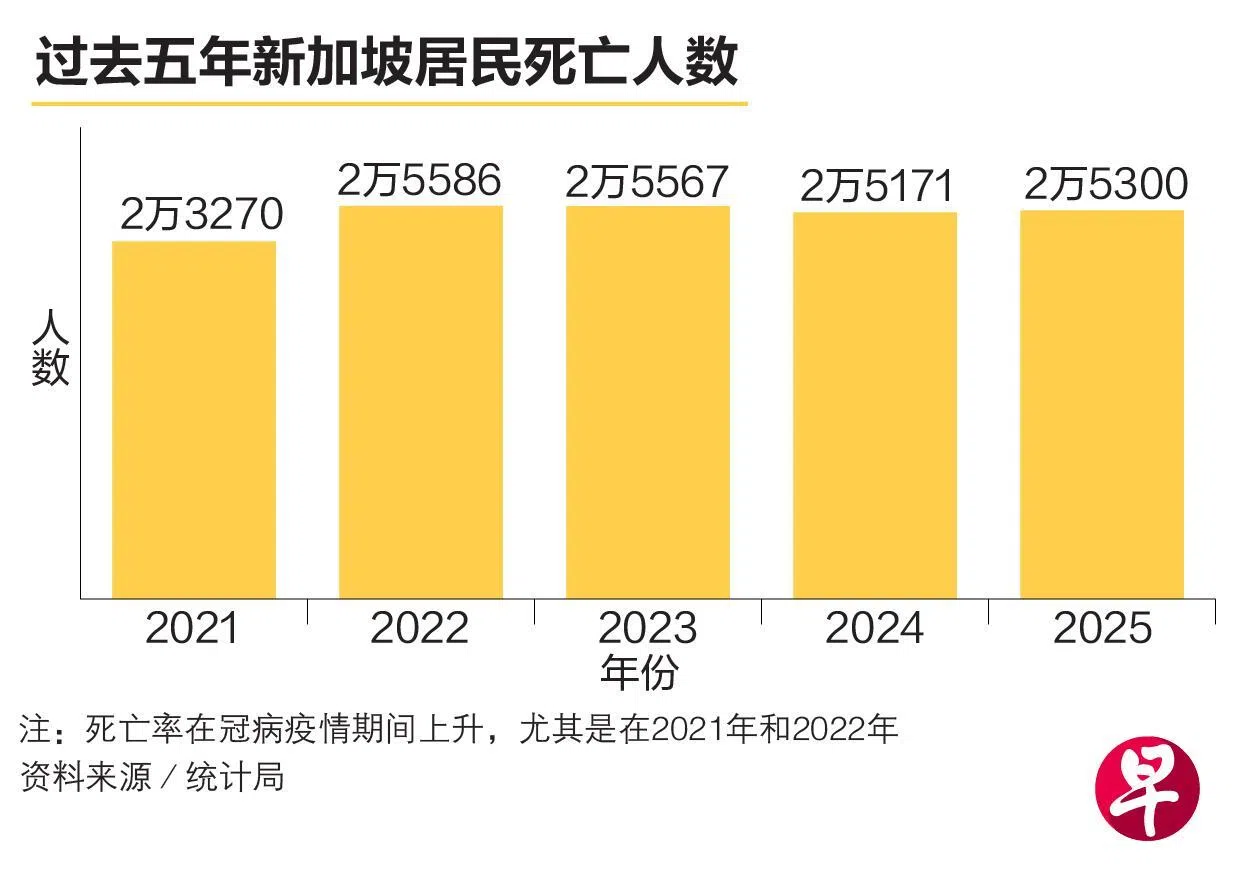
According to data released by the department on Wednesday (28 October), residents aged 65 and above accounted for 18.8% of the total population in 2025, up from 9.9% in 2012. Over the same period, annual resident deaths rose from 17,273 to 25,300.
Over the past five years, more than 20,000 people have died each year on average in Singapore, while household spending on funerals has also been on an upward trend.
When asked why it conducted this analysis, the department told Lianhe Zaobao (LHZB) that it was part of its ongoing efforts to provide more statistical insights. Drawing on the latest published data from the 2023 Household Expenditure Survey, the department has released analyses over the past two years on household spending on gambling, smoking and overseas travel, as well as spending by married couples with children.
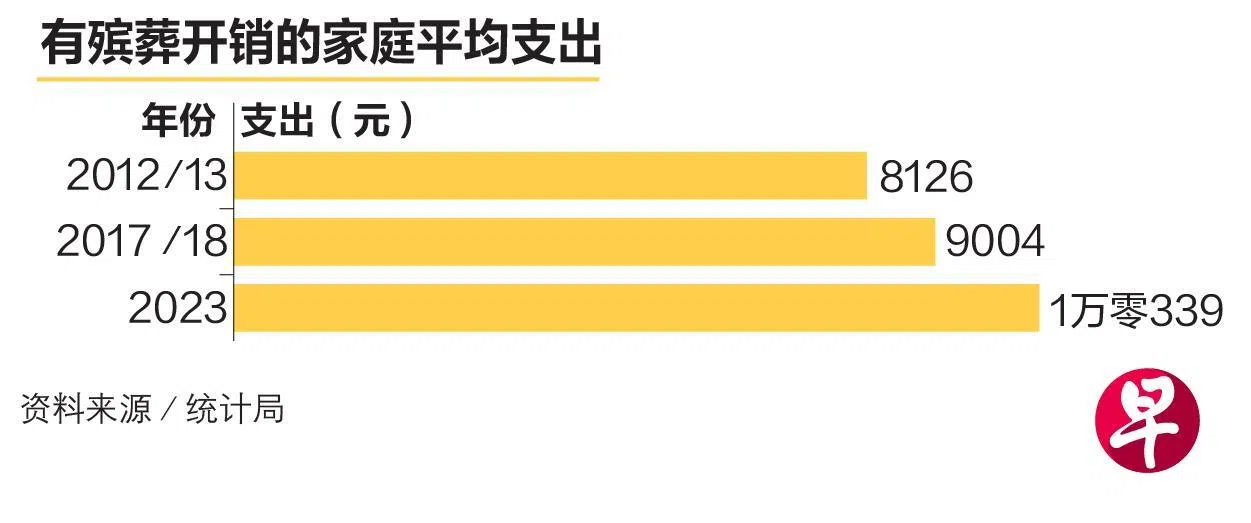
Between 2012/13 and 2023, the proportion of households with funeral-related expenditure nearly doubled, from 1.9% to 3.4%. Their average total spending on such expenses rose from $8,126 to $10,339.
As funeral expenses are a one-off outlay, the department’s analysis used the average total expenditure of households with such expenses over the 12-month survey period, rather than their average monthly expenditure.
Across age groups, households whose representatives were aged between 45 and 64 were the most likely to incur funeral-related expenses, at 4.4% in 2023. This could be the result of these households having to arrange funerals for elderly parents or older family members.
In terms of the amount spent, older households — those whose main members were aged 65 or above — had the highest average funeral-related expenditure, at $11,729 in 2023.
15% of local households spend $20,000 or more on funerals
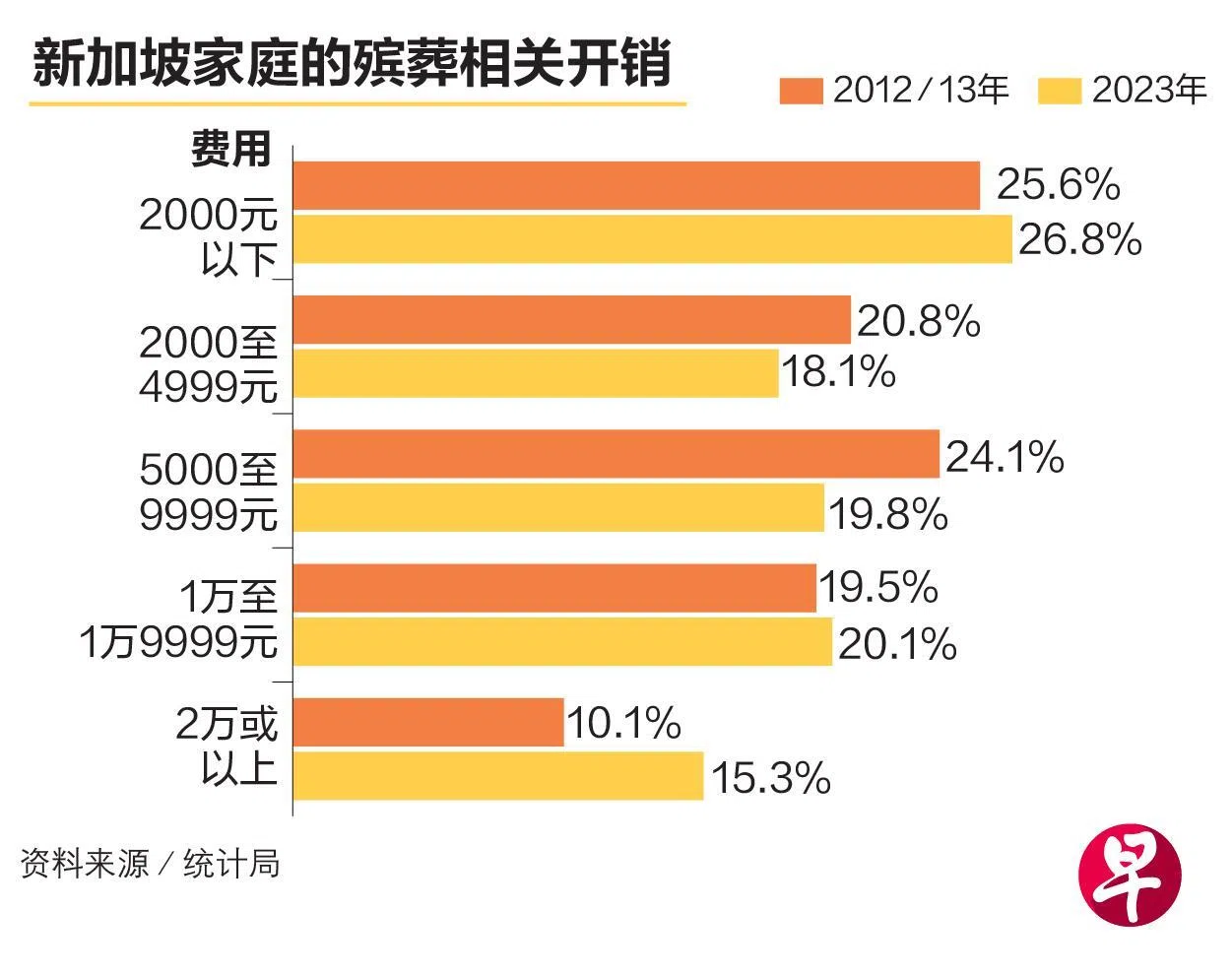
The proportion of households with higher funeral expenses has also increased. In 2023, 15.3% spent $20,000 or more, up from 10.1% in 2012/13. Over the same period, the proportion spending between $10,000 and $19,999 also rose, from 19.5% to 20.1%.
By contrast, the proportion spending between $5,000 and $9,999 fell from 24.1% to 19.8%, while the share spending between $2,000 and $4,999 dropped from 20.8% to 18.1%.
However, the proportion spending less than $2,000 rose slightly, from 25.6% to 26.8%.
Funeral package prices vary, with Taoist funerals costing more
Rising funeral-related expenditure does not mean families are choosing more elaborate funerals.
Angjolie Mei, founder of The Life Celebrant, told LHZB that part of the increase was due to higher operating costs and third-party service charges, including manpower, transport, venue rental, catering, flowers and other related services.
Jenny Tay, managing director of Direct Funeral Services, said rising costs had led the company to increase the prices of some funeral packages by about 5% to 10% over the past 13 years. However, prices for its basic packages have remained unchanged. Direct cremation costs $1,500, while packages for different religious funerals start at $4,999, all excluding GST.
Mei explained that if a wake is held, the overall cost can vary considerably depending on factors such as the venue, duration, type of coffin, religious or cultural rites involved, and the family’s expectations for the scale of the ceremony and personalised services.
Personalised services may incur additional charges. These include themed wake designs and decorations, special floral arrangements, upgraded coffins, longer wakes, extra transport, additional catering, the final arrangements and location for the ashes, and customised keepsakes.
Funeral parlour or wake venue rental may also be charged separately, depending on what each provider’s package includes.
Tay noted that Taoist funerals generally cost more than those of other religions because they involve more religious rites.
Mei added that funeral companies differ in what their packages include and how they price them, with no standard package across the market. Generally, packages cover the basic services needed for a funeral, including preparation and transport of the body, a coffin, basic wake set-up, hearse services, and funeral and cremation or burial arrangements.
She said: "The most important thing for families is to ask for a clear itemised quotation, so they understand what is included in the package and what would incur additional charges."
Funeral planning becomes less taboo and increasing popular among younger people
Both funeral industry professionals interviewed observed that consumers are less reluctant than before to think about their own funeral arrangements.
Mei said demand for advance funeral planning has grown in recent years, with younger people showing interest. In the past, those who bought funeral packages or planned their arrangements in advance tended to be older. Now, many younger people are also taking the initiative, hoping to ease the future burden on their families.
She said: "I have clients in their 40s who are healthy and actively planning their own funeral arrangements, and some are also taking the opportunity to discuss and plan for their parents at the same time."
Tay said the number of advance funeral planning cases handled by her company had risen from three in 2016 to 22 so far in 2026. These include people in their 40s, particularly those who have arranged funerals for their parents.
Read the terms carefully before prepaying to lock in prices
Given the ongoing rise in inflation, manpower costs and service charges, funerals will cost more in future. Some may consider locking in current prices to reduce the risk of higher expenses later.
Prepaid funeral packages are understood to generally cover basic funeral services agreed in writing between the consumer and provider at the time of purchase. These include the type of funeral, coffin, basic wake set-up, funeral arrangements, transport services, and relevant religious or non-religious ceremonies.
However, whether the specific items covered and the prepaid price can be fully locked in depend on the individual service provider and the terms of the agreement.
At Direct Funeral Services, for example, customers can pay a deposit of any amount for their chosen funeral package and lock in its price for five years. However, they must still pay GST at the rate applicable when the services are provided.
Tay said this gives people greater certainty about future funeral expenses and helps them plan their finances ahead. Before choosing a package, however, they must carefully go through the terms, including how long the price is guaranteed and if there are any potential additional charges.
She said the company’s customers are allowed to cancel their advance funeral arrangements, subject to a $250 administrative fee. The remaining deposit is refunded according to the terms agreed by both parties.
Mei also advised consumers to clarify several issues before buying a prepaid package. These include whether it can be transferred to another family member, what should be done if the person moves overseas permanently, and how arrangements would be handled if the person dies outside Singapore.
Should those on a limited budget be more inclined to buy a prepaid funeral package? Mei said this is not necessarily the only or best option.
She said: "For someone on a tighter budget, I would say the more important issue is not simply whether to pre-pay or retain the cash. It is to plan ahead, set a realistic budget, document the instructions clearly and make provision for how the funeral will be funded."
Another approach is to incorporate funeral arrangements into end-of-life and estate planning, documenting in advance the preferred type and scale of funeral, as well as how the related expenses should be paid from the estate.
Set aside $10,000 to $20,000 and review the budget every two to three years
Actual funeral costs vary from person to person. Financial experts recommend setting aside $10,000 to $20,000 to cover future cost increases or other additional expenses.
Tan Chin Yu, deputy head of advisory at Providend, said in an interview that, assuming annual inflation of 3%, a funeral costing $10,000 today could cost about $18,000 in 20 years.
He cautioned that the pricing of funeral packages may not be fully transparent. For example, quoted prices may exclude GST or an urn. A budget based only on the listed price could leave too little money set aside.
Personal preferences for funeral arrangements may also change over time; Tan recommended reviewing plans and reassessing the budget every two to three years.
Gao Jun Wei, financial advisory director at Financial Alliance, said it is not necessarily essential to set up a dedicated reserve for funeral expenses. It is more important to maintain financial flexibility and ensure you have sufficient liquid funds to cover unexpected expenses.
He said: “Many people think that as long as they leave behind enough assets, their families will not face financial problems. But when someone dies, the first issue the family faces is often not how much the estate is worth, but whether there is enough cash to pay the immediate expenses.”
Tan said what matters more is clear communication within the family, so members understand one another’s wishes, including how much to spend and what type of funeral to hold. Otherwise, family members will be left to guess, which could even lead to disagreements.
He said: "People often avoid end-of-life conversations because the topic is taboo, but having these conversations early and planning adequately helps loved ones manage these affairs more easily during a difficult period."
Money Matters welcomes readers’ questions
If you face a personal finance problem or an investment hurdle, email zbcj@sph.com.sg and we will ask experts to answer your questions.
