

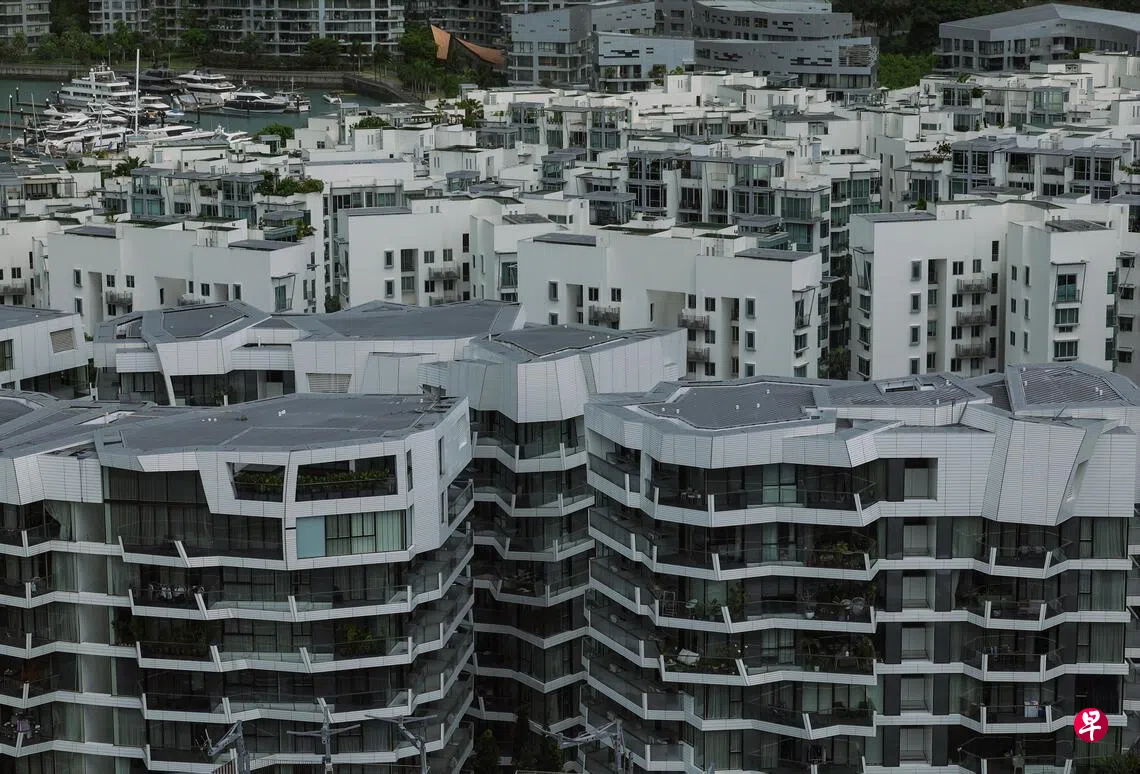
China’s stepped-up taxation of offshore trusts held by its wealthy citizens could dampen their appetite for luxury non-landed homes in Singapore. A research report found that the total value and volume of transactions for such homes fell 31% and 19% respectively year on year in the third quarter.
The report, released recently by Huttons, showed that 66 luxury non-landed homes changed hands in the third quarter, down from 81 in the same period last year and 79 in the preceding quarter.
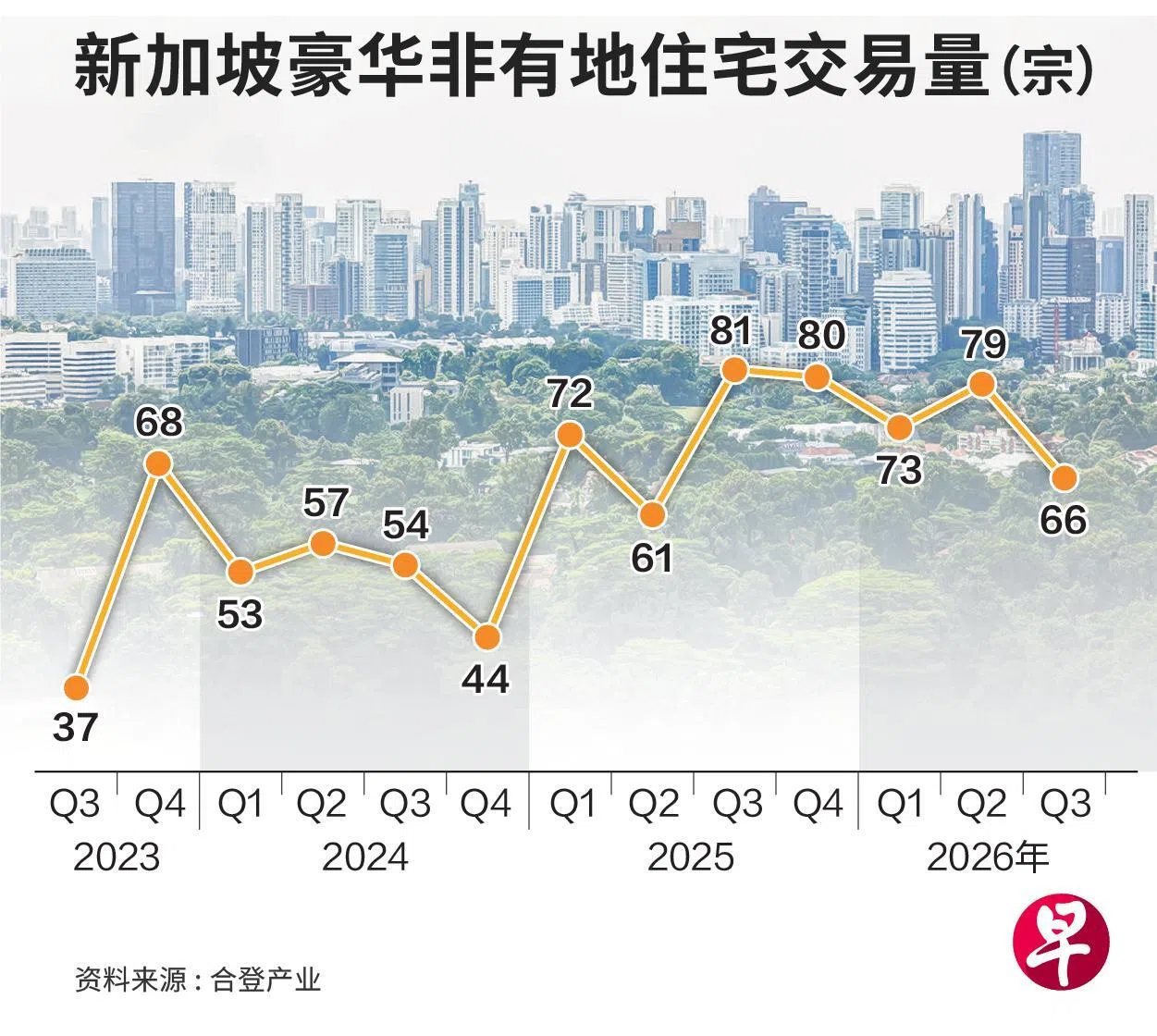
Transactions for ultra-luxury homes priced at $10 million or more fell to 11, the lowest level since the fourth quarter of last year.
Meanwhile, the total value of luxury non-landed home transactions fell 31.2% year on year to $509.6 million, also below the second quarter’s $673.4 million.
The report also noted that seven Good Class Bungalows changed hands in the third quarter, down from eight in the preceding quarter. An estimated 24 Good Class Bungalows were sold in the first nine months of this year, slightly fewer than the 26 sold in the same period last year.
The highest-priced unit sold in the third quarter was a 3,272 sq ft apartment at Sculptura Ardmore in the Orchard Road area, which fetched $20 million. The buyer was from the US. The second-highest transaction was a 2,949 sq ft unit at Skywaters Residences, which sold for $17.3 million.
On 24 July this year, China’s Ministry of Finance and State Taxation Administration announced new tax rules for offshore trusts. Transfers of property into offshore trusts, as well as income received from such trusts, would be treated as taxable income under the individual income tax law.
The Huttons report said: “There was speculation that some Chinese nationals were liquidating some of their assets to meet the tax obligations.”
Looking ahead, Huttons expects uncertainty over China’s policies to persist in the short term as the country continues to tighten tax oversight. Ultra-high-net worth individuals’ appetite for luxury non-landed homes is expected to remain subdued.
However, luxury apartments linked to the $3 billion money laundering case have continued to attract buyers seeking opportunities following court-ordered auctions, providing some support for market activity.
The report said: “Some ultra-high-net worth individuals (UHNWIs) also opted to bid for the luxury apartments which were linked to the $3 billion money laundering case.”
Huttons concluded that China’s new tax policies would continue to dampen the short-term risk appetite of Chinese ultra-high-net worth individuals, but that the fundamentals of Singapore’s property market remained sound.
Nicholas Mak, Mogul.sg chief research officer, told Lianhe Zaobao that China’s tax policies would inevitably have some effect on Singapore’s luxury private housing market, but the overall impact was expected to be limited. After all, Singaporeans account for more than 80% of local luxury home buyers. In other words, even if foreign buyers’ appetite weakens, the effect on overall market demand would not be substantial.
Analysis: AI millionaires may diversify into property
Separately, a report by Realion-OrangeTee & ETC expects an increase in the supply of new luxury housing projects next year to further boost buyer interest. The number of units launched in the Core Central Region (CCR) is projected to reach 2,943 next year, significantly higher than this year’s 1,374 and accounting for 19.9% of all new units launched.
The group also expects about 650 to 750 luxury homes to be sold next year, with a further 200 to 300 ultra-luxury homes potentially changing hands.
The report also noted that the artificial intelligence (AI) boom has generated substantial wealth for people in the technology sector. Newly minted tech millionaires may diversify from equities into tangible assets, including luxury homes, to preserve their wealth.
Mak took a cautious view. He noted that while the booming AI sector had created many high-net-worth individuals, intensifying competition would inevitably produce winners and losers, potentially causing their wealth to fluctuate sharply. “It’s still too early to say whether they will buy luxury properties in Singapore.”
