

In Thailand, almost no one’s life is entirely untouched by Charoen Pokphand Group (CP Group). Founded in 1921 by Chinese businessman Chia Ek Chor, it is now one of Southeast Asia’s largest businesses, with global sales revenue totalling US$111.4 billion (S$142.4 billion) last year.
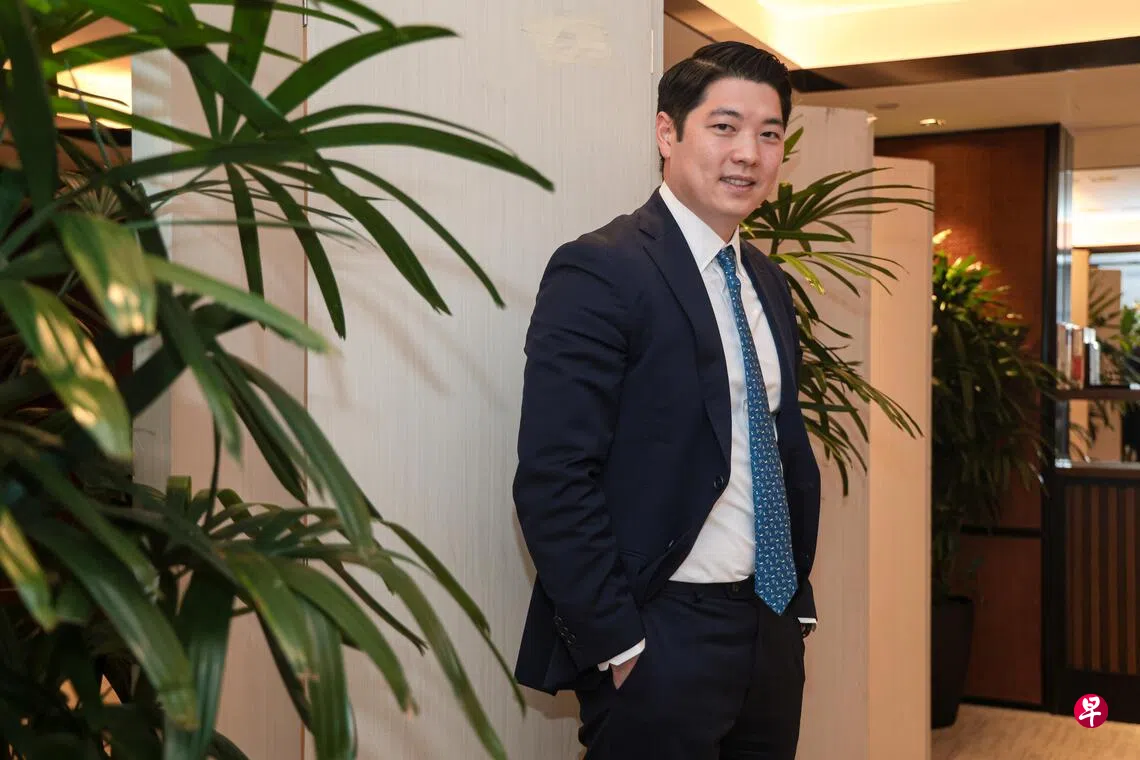
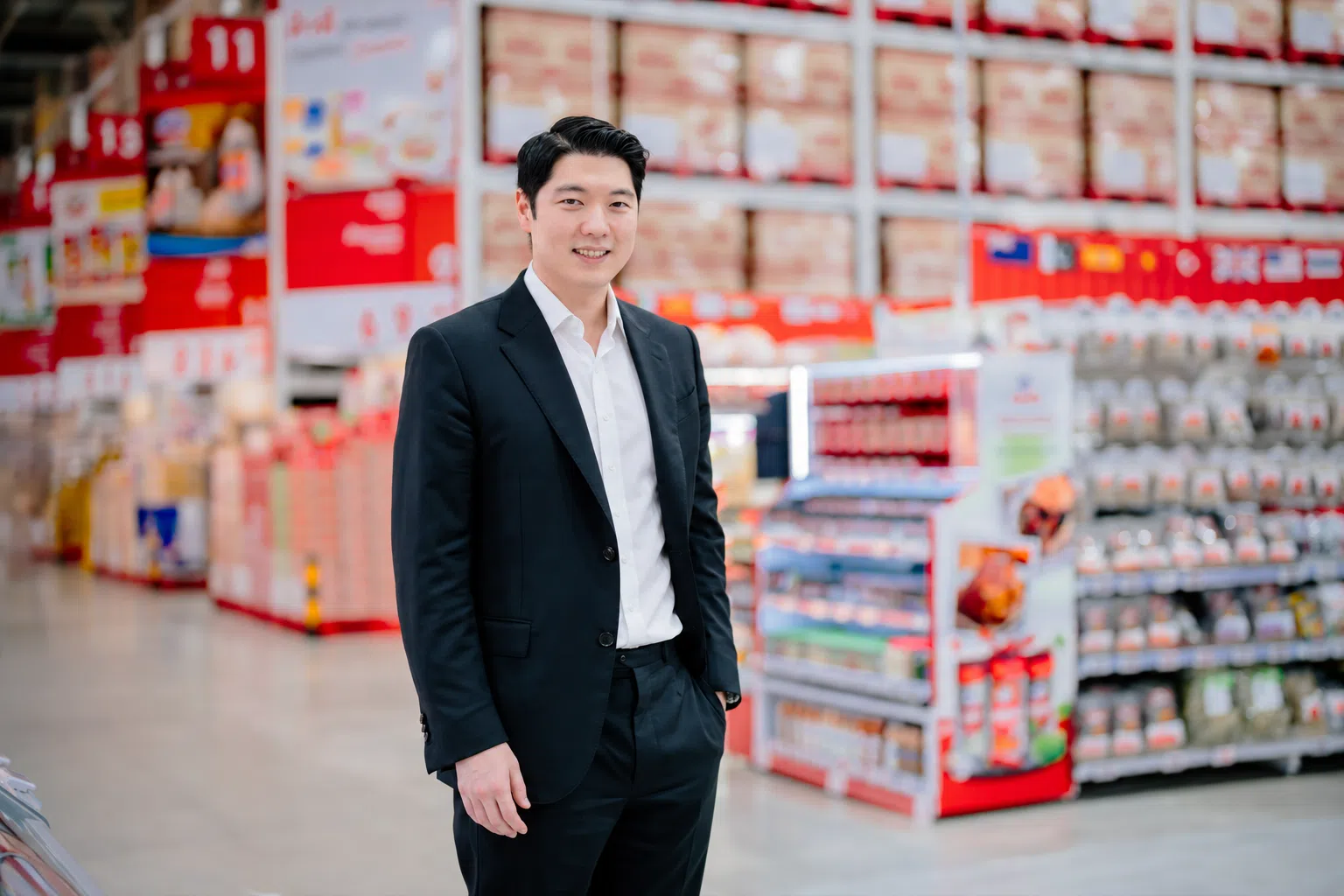
Succession in the Chearavanont family has quietly entered its fourth generation. Tanit Chearavanont, 37, the eldest son of current CP Group chairman Soopakij Chearavanont, is chief commercial officer and chief executive officer of the empire’s wholesale business at CP Axtra. He is leading the transformation of CP’s retail and wholesale operations into a leading Southeast Asian retail technology platform.
In an exclusive interview with Lianhe Zaobao on the sidelines of the Forbes Global CEO Conference, Tanit Chearavanont spoke repeatedly not of inheritance, but of transformation; not of wealth, but of pressure; not of his family’s prestige, but of the need to prove himself.
The scion, who is tall and has a striking presence, is also unassuming and likes to take a hands-on approach to things.
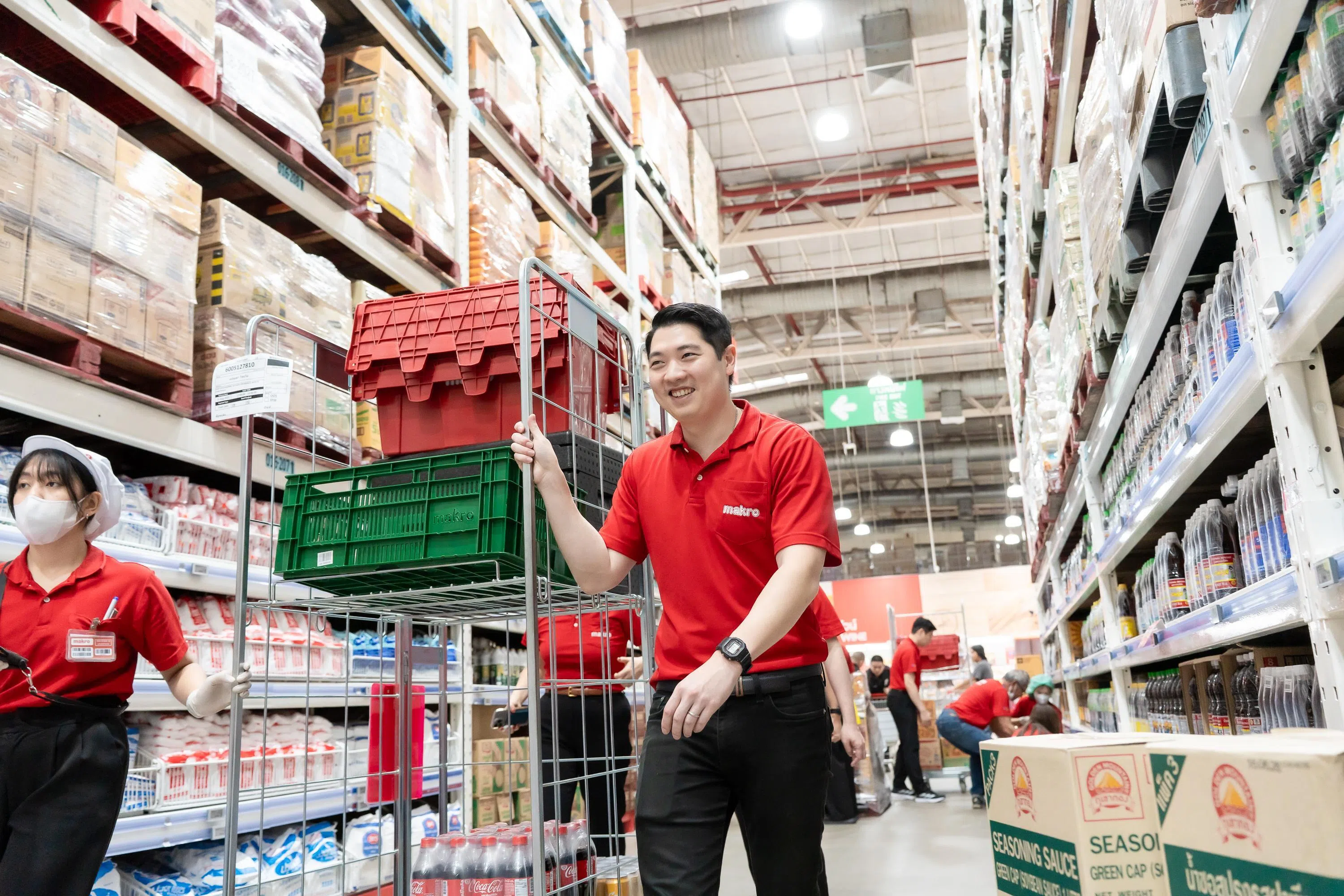
To find out why a distribution centre was inefficient, he once shadowed delivery workers to understand their work. During a visit to Cainiao’s smart warehouse in Wuxi, China, he personally drove a warehouse vehicle and picked and packed orders.
On one occasion, a third-party logistics operator told him that a vehicle could make no more than six deliveries a day. Unconvinced, he set off alone in a small van at 7am the next day, delivering goods from morning until night.
“I ended up making more than 20 deliveries on my own,” he said with a hint of pride.
A remark from his grandfather led him to join CP — with a 30% pay cut
Unlike many heirs who take over the family business as a matter of course, Chearavanont said of succession: “Many people thought that me joining Charoen Pokphand was part of a pre-arranged succession plan, but ever since I was a child, I’ve told myself that I didn’t want to work for Charoen Pokphand; I wanted to go on my own path.”
He joked that his grandfather, Dhanin Chearavanont, had “tricked” him into joining.
Tanit Chearavanont majored in history at Harvard University. After graduating in 2013, he joined UBS’ Hong Kong office as an investment banking analyst in its mergers and acquisitions and consumer retail teams.
During that period, he worked more than 50 hours a week, routinely staying until 2am or 3am. Then a chance lunch changed the course of his life.
“My grandfather happened to be in Hong Kong at the time, and we sat down to have lunch together. He asked, looking quite puzzled: ‘I don’t understand why you’re working for others until three in the morning. Why don’t you use that energy for me, in our family business?’”
Chearavanont was taken aback. His grandfather’s words made perfect sense. A week or two later, he handed in his resignation and formally joined CP Group.
“Looking back now, I think he ‘tricked’ me into it... my salary was even cut by about 30%… but that’s what happened, and I don’t have any complaint.”

After joining CP, the young man was not immediately given a senior position. He was assigned to wholesale chain Makro, starting as a junior supervisor. He was then sent to India as managing director of LOTS Wholesale Solutions, where he spent four and a half years.
India was a complex and intensely competitive market, he said. His time there also coincided with COVID-19. From lockdowns and employee safety to abrupt changes in customer demand, almost every day brought a new problem.
Launching an e-commerce platform in just over four months
His ambitions frequently ran up against all manner of obstacles. Some delivery workers would collect goods from the warehouse, then slip away to idle at tea stalls while falsely reporting failed delivery attempts. Some veteran drivers refused to follow AI-optimised routes, insisting they knew better. Their vehicles ended up passing the same location several times, making deliveries highly inefficient.
These challenges became valuable experience, teaching him the importance of getting directly involved to understand and solve problems.
In 2022, after several senior CP Group executives left in succession, he was called on to take charge as chief executive of Makro Thailand.
Makro, which operates wholesale and retail businesses, is often described as Thailand’s version of Costco. When Chearavanont took over, the company faced the formidable challenges confronting traditional brick-and-mortar stores. Online sales accounted for just 3% of its total, well behind many Southeast Asian peers.
Chearavanont understood how the internet age had changed retail: “We used to say that the big fish eats the small fish. Today, the fast fish eats all the fish.”
He therefore decided to launch a new e-commerce platform, Makro PRO, to turn Makro into a retail technology company.
But changing the course of a giant was easier said than done.
His transformation plan was met immediately with considerable opposition. Store managers believed e-commerce would cannibalise their brick-and-mortar businesses, while senior executives worried that heavy investment in technology would weigh on profits.
A challenge from his grandfather to double revenue: transformation is always a work in progress
Chearavanont pressed ahead with the changes, a decision that proved to be a turning point for the company. Makro PRO went live after just over four months, and average daily sales surged from about 20 million baht (S$760,000) to between 250 million and 300 million baht. Online sales rose to about 35% of the total within a few years.
Early this year, Euromonitor International ranked Makro PRO as Thailand’s leading e-commerce platform for everyday essentials.
Interestingly, when Tanit Chearavanont reported to his grandfather Dhanin — the man who had “tricked” him into the business — that the company’s platform had reached 72 billion baht in sales and was Thailand’s largest, his response was understated.
Dhanin Chearavanont simply said: “Good... Why don’t you do this? Keep the same profit margin, but double the revenue, so that your profit doubles.”
Once again, a remark from his grandfather pushed him out of his comfort zone. With a slightly rueful smile, he said his grandfather had always championed pushing boundaries: “Do the hardest things, the things others cannot do.”
“He often uses the phrase, ‘I’m only happy for a day.’ Because success brings joy for just a day; the very next day, you have to start thinking about how to improve.”
Corporate transformation is a long campaign, always a work in progress. As a fourth-generation member of the family, Chearavanont knows his challenge is not only to turn CP’s retail giant into a nimble, fast-moving competitor. He must also safeguard the CP Group empire built by his forebears and ensure it keeps pace with the times. Many more battles lie ahead.
Starting his two-year-old son on Chinese lessons
CP Group’s founding family has long had deep ties with China.
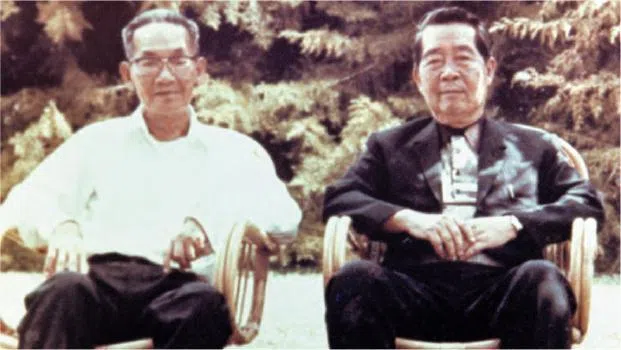
The story of CP Group began in a small shop in Bangkok’s Chinatown in 1921. Chearavanont’s great-grandfather, Chia Ek Chor, came from Chenghai in China’s Guangdong province, now Chenghai district in Shantou. With his younger brother Chia Siew Whooy, he opened Chia Tai, a vegetable seed shop in Bangkok.
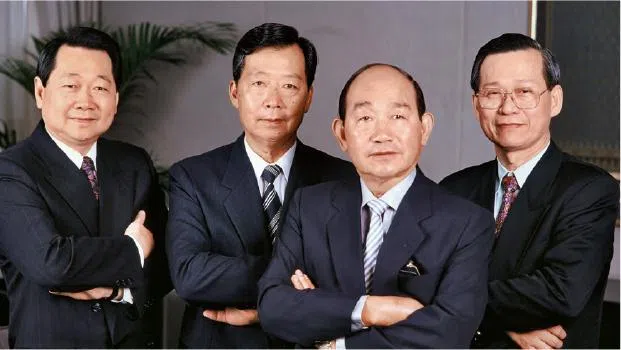
In a series of interviews with Nikkei, Dhanin Chearavanont said his father had chosen Chinese characters for the names of his four sons Jaran Chiaravanont, Montri Jiaravanont, Sumet Jiaravanon and Dhanin Chearavanont which, read in sequence of their birth order, formed “Zheng Da Zhong Guo”, pairing the Chinese words for the CP Group and China — an expression of the Chinese business family’s affection for its ancestral homeland.
When China began its reforms and opening up in 1978, CP Group was among the first foreign companies to enter the country; it obtained the foreign-invested enterprise business licence “001”. In the 1990s, Chinese audiences also became familiar with the CP-sponsored television programme Zheng Da Variety Show, hosted by Yang Lan.
Moved by a film about his forebears’ migration to Southeast Asia
As a descendant of a Thai-Chinese family, Tanit Chearavanont feels a special connection with China. He occasionally slipped into fluent Mandarin during the interview. In discussing his feelings towards China, he also displayed the distinctive cultural identity of Southeast Asia’s Chinese business families.
As the movie Dear You recently drew audiences across Southeast Asia, Chearavanont shared that he had watched the Teochew-language version. Although he speaks little Teochew and relied mostly on English subtitles, he found this story of a Chaoshan family’s migration to Southeast Asia deeply moving: “That was exactly the life my uncles and grandparents had experienced.”
When he was about seven, his father Soopakij was frequently expanding the business in China, and Chearavanont moved with his family to Hong Kong, where he attended Chinese International School.
The experience gave him a foundation in Mandarin and Cantonese. Today, when he travels to China for business; speaking Mandarin with his Chinese partners immediately helps build rapport.
“Looking back, however, I do feel a slight sense of regret that I didn’t study hard enough for my Chinese when I was younger. If I could go back in time, I would certainly work twice as hard to learn Chinese.” He said he planned to start formal Chinese lessons for his two-year-old son.
Thai-Korean marriages across two generations
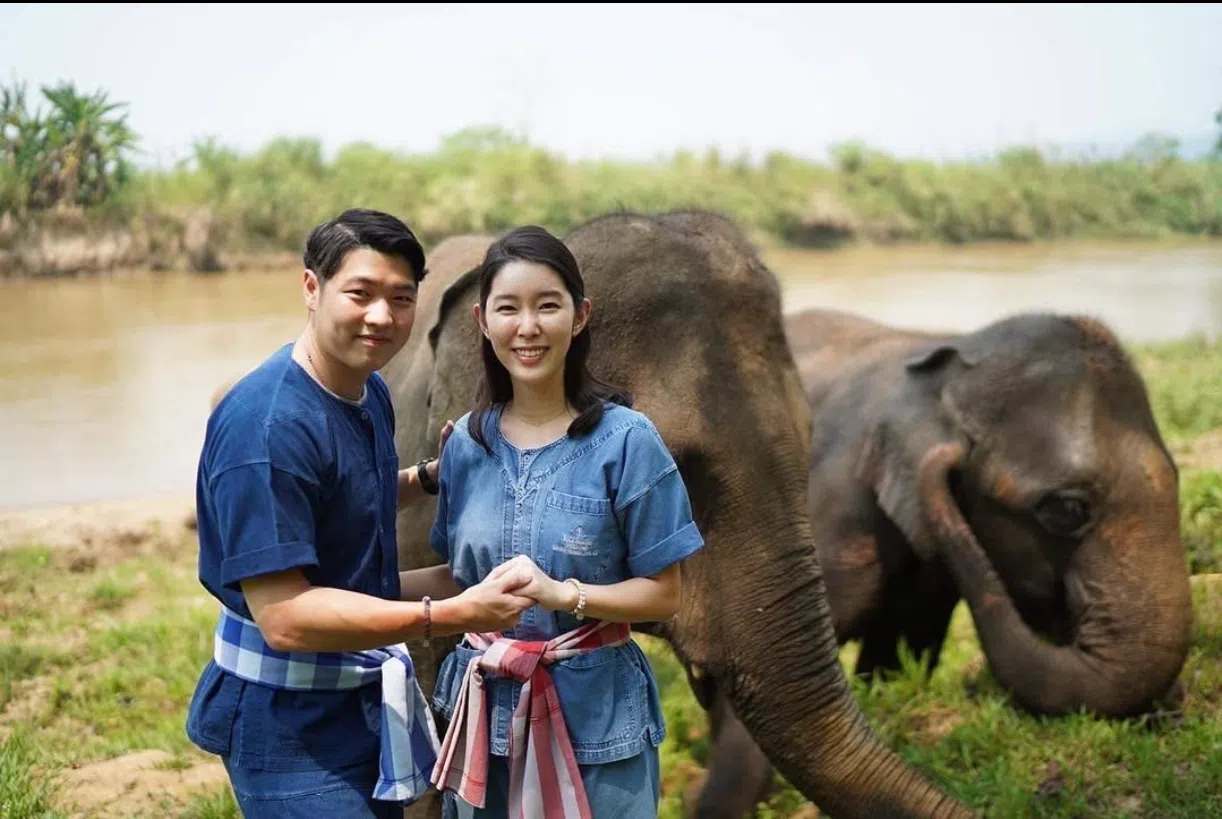
Beyond the business arena, Chearavanont’s personal life has also attracted considerable public attention. His marriage to Kim Sung in November 2022 caused a stir in Thailand’s political and business circles.
Kim’s great-grandfather was Kim Koo, who launched an independence movement on the Korean peninsula and was later revered as a founding father of South Korea. She graduated from Wellesley College in the US and previously worked at Singapore technology company Walkme.
Speaking of his marriage with a warm smile, Chearavanont said his mother, Marisa Chearavanont, knew Kim’s mother, Han Ji Hyun. He and Kim met while studying in the US, then reconnected and fell in love in Thailand during the pandemic.
Coincidentally, his mother is also Korean: Soopakij met Marisa at university, married and had three sons and a daughter. Tanit is the eldest.
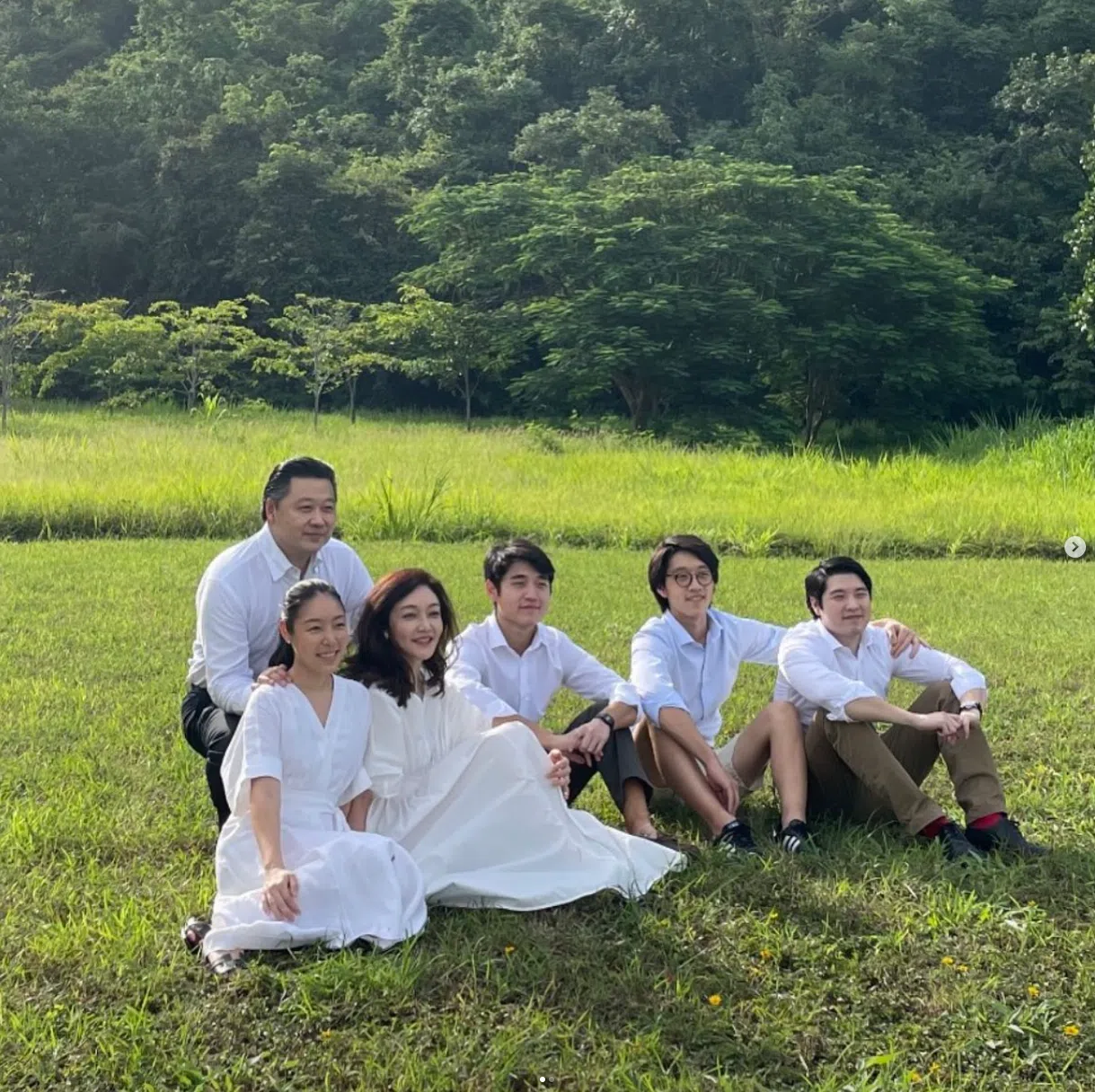
In Thailand, Marisa Chearavanont is known for her taste and generosity. Despite belonging to a business dynasty worth hundreds of billions, she rarely wears conspicuous jewellery or designer labels. Instead, she is passionate about collecting art and philanthropy, and often takes her husband and children out of the city to enjoy the countryside.
During the pandemic in 2020, she launched the Chef Cares charity project, bringing together more than 70 top chefs across Thailand to provide high-quality, nutritious meals for frontline medical workers and vulnerable groups. She also founded The Build Foundation with her four children, including Tanit, to help build schools for disadvantaged children in Thailand’s remote mountainous areas.
Fully committed at work, but with family KPIs to meet too
Through his mother’s words and example, Tanit Chearavanont has developed a deep appreciation of education and humility. He often joins his family and wife for countryside outings, art exhibitions and charity activities.
Besides his son, he has a daughter who is about two months old.
Asked how he balances a high-pressure job with family life, he said he had made it clear to his team that no meetings or work should be scheduled on Wednesday evenings. That time is reserved for his “date night” with his wife. At weekends, he also tries to take on childcare duties.
He said with a laugh, “As a leader, in work, you have to lead from the front and go all the way, but your family also has KPIs (key performance indicators) that must be met.”
Regional expansion, but no Singapore entry amid fierce supermarket competition
CP’s supermarket operations span Thailand and have expanded across the region in recent years. In 2020, it acquired Tesco’s Malaysian and Thai businesses, renaming them Lotus’s. In April this year, it acquired Malaysian premium supermarket operator The Food Purveyor.
Asked whether the company intended to enter Singapore, Chearavanont said ruefully that competition in the market was too intense.
He noted that Singapore had not only brick-and-mortar supermarket operators such as NTUC FairPrice and Sheng Siong, but also numerous Chinese e-commerce platforms.
“Look, even DFI sold its Cold Storage and Giant businesses in Singapore. That shows just how tough the competition is, and how challenging the Singapore market is.” DFI refers to DFI Retail Group.
Pig’s blood products in Singapore come from CP
It is worth noting, however, that in April this year, the Singapore Food Agency approved imports of heat-treated pig’s blood products from Thailand. The importer, CP Foods Singapore, is a core subsidiary of CP Group.
After the lifting of the ban on the import and sale of pig’s blood, imposed in 1999, the ingredient has returned after a 27-year absence. It is selling briskly in Singapore supermarkets and is once again being served in eateries, where it has proved popular.
Chearavanont’s family is connected to Singapore in other ways. His wife Kim previously worked here, while his father Soopakij studied at Nanyang Primary School and Hwa Chong Institution. And just a few weeks ago, when Chearavanont visited Singapore for the Forbes Global CEO Conference, his mother was also here, attending the Milken Institute Asia Summit.
