

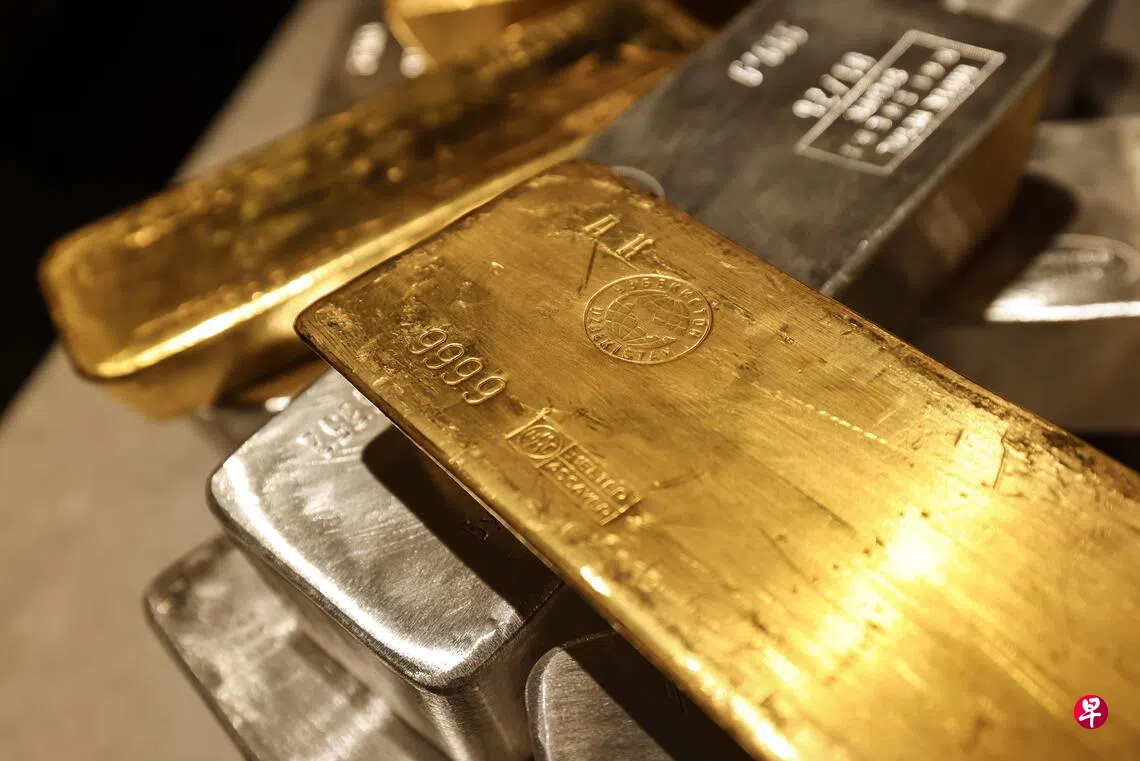
A study found that 50% of central bank respondents expressed growing interest in Asian gold hubs, while 25% were assessing Asia as a possible storage location for their official gold reserves.
In a report released recently, DBS Bank (DBS) said about half of the asset managers and banks surveyed indicated that state-backed gold infrastructure had increased their interest in Asian financial centres.
Meanwhile, about 50% of central banks surveyed considered legal stability and political neutrality the most important factors when choosing a new gold storage location.
“Among financial institutions, market liquidity, regulatory clarity, clearing and custody infrastructure, and cost efficiency ranked ahead of time zone alignment and geographical proximity.”
The report added that these findings reflected Singapore’s potential to build further on its existing strengths as an international financial and wealth management centre, including political stability and trusted financial infrastructure.
Taimur Baig, chief economist at DBS Group Research, noted that Asia had long been a major source of global demand for physical gold, yet most gold trading infrastructure remained concentrated in Western financial centres. As Asia’s role in the gold market grows and new channels emerge, building trusted market infrastructure has become crucial.
“Singapore is well placed to support this evolution, building on its strengths in regulation and financial market infrastructure.”
With global demand for gold surging, Singapore has stepped up efforts in recent years to strengthen its position as a gold hub.
In March this year, Minister for National Development and deputy chairman of the Monetary Authority of Singapore (MAS) Chee Hong Tat announced several priority areas for development.
These include developing gold-related capital market products, strengthening infrastructure for vault storage and logistics services and establishing a secure, efficient clearing system in Singapore to support over-the-counter trading in large gold bars and kilobars.
MAS is also exploring the provision of gold vault storage services for foreign central banks and sovereign entities.
Fellow Asian financial centre Hong Kong is also stepping up its efforts. In July this year, Hong Kong began a trial of a new central gold clearing and settlement system to make physical gold deposits, withdrawals and trading more convenient.
Hong Kong and the Shanghai Gold Exchange also launched the first phase of a physical gold connectivity initiative. Other efforts include expanding storage capacity, increasing refining capacity, offering more gold investment products and studying possible tax incentives.
Study: Wider adoption of tokenised gold requires clearer legal and regulatory frameworks
DBS said, “While emerging hubs such as Singapore and Hong Kong are unlikely to displace established centres such as London and New York, they are contributing to a more geographically balanced gold market.”
Separately, the DBS study found that exchange-traded funds (ETFs) and derivatives were each identified by 27% of respondents as the gold investment channels with the greatest growth potential over the next 12 months. Another 18% favoured tokenised gold.
DBS said tokenised gold offered advantages such as fractional ownership, near-instant settlement and round-the-clock trading. However, 50% of respondents said clearer legal and regulatory frameworks were needed for wider adoption.
Tokenised gold involves converting physical gold into digital tokens, allowing investors to hold and trade gold through a blockchain.
