

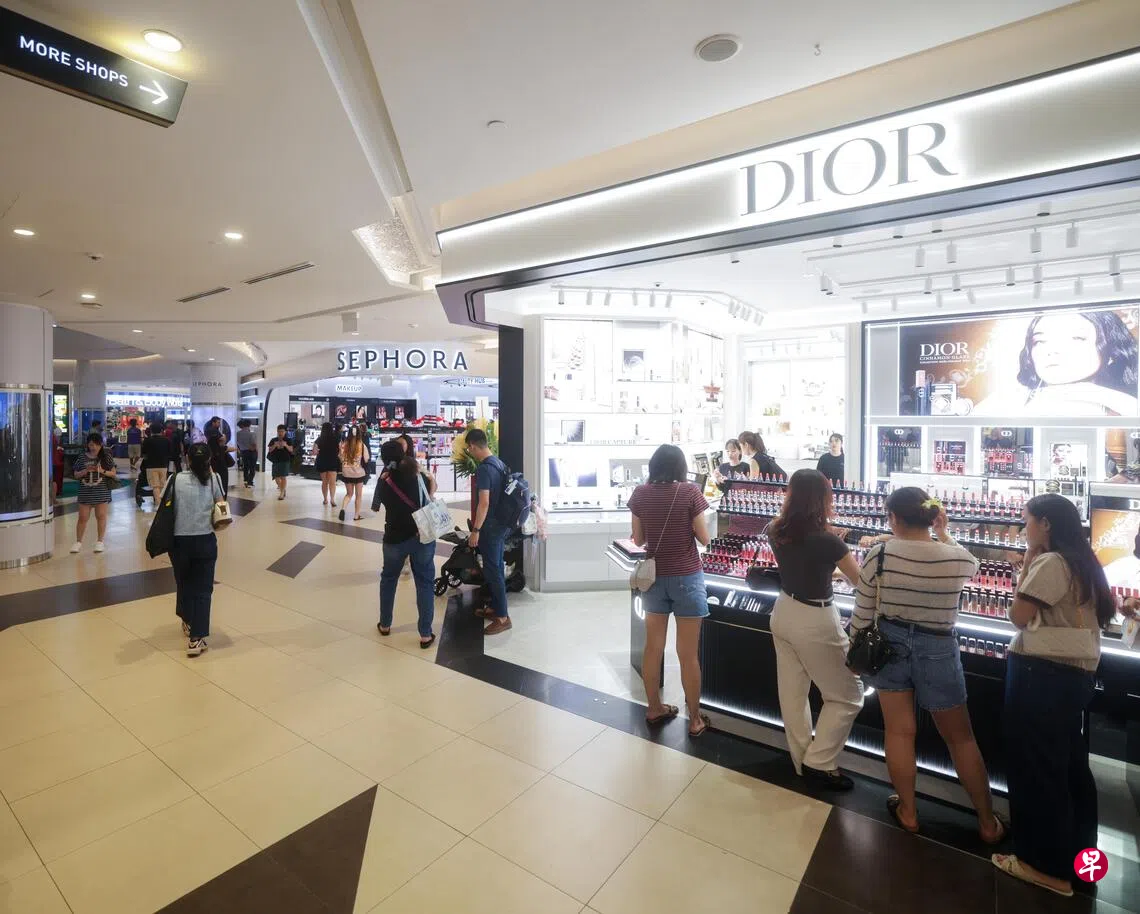
As consumers increasingly seek a richer mix of retail, dining, entertainment and lifestyle experiences, shopping malls are gradually replacing traditional department stores as anchor tenants with specialist retailers and lifestyle service providers.
Industry players and analysts interviewed said that while malls lose the convenience and wide product range offered by department stores, the distinctive new retailers taking their place can offer different consumer groups more choice and potentially boost rental returns.
Department stores were once typically the anchor tenants of shopping malls, drawing crowds with a wide array of merchandise that catered to diverse shopping needs under one roof. As they generally leased large premises, they also provided mall owners with stable rental income.
However, technological advances, the growing popularity of e-commerce and changing consumer habits and needs have gradually eroded the appeal of traditional department stores. Some operators have begun adjusting their business models in a bid to transform.
After Robinsons closed all its physical stores and moved online, BHG, OG and Isetan also scaled back their store networks. Metro announced in late July that it would close its two remaining stores in Singapore when their leases expire.
As department stores exit, retailers with more distinctive positioning are taking their place, with the vacated spaces being reconfigured. For instance, sporting goods retailer Decathlon moved into The Centrepoint after Metro left. After Japanese department store Isetan closed its Tampines Mall outlet, CapitaLand Integrated Commercial Trust (CICT) reconfigured the 38,000 sq ft space to bring in smaller lifestyle speciality stores, as well as fashion and beauty retailers.
Such reconfigurations can often be carried out alongside asset enhancement initiatives (AEIs) to further improve rental returns. In a report on CICT, UOB Kay Hian noted that the AEI at Tampines Mall following Isetan's departure was completed in the third quarter and had driven rents higher.
Lee Sze Teck, senior director of data analytics at Huttons, told Lianhe Zaobao that tenants are generally willing to pay higher rents if landlords can increase footfall after renovations and improve the layout of the space.
He said: “Landlords will charge rents based on gross turnover and a fixed component. This aligns their interest with tenant’s performance.”
In an interview, Associate Professor Ang Swee Hoon, NUS Business School, said traditional anchor tenants such as department stores had long been important crowd-pullers for shopping centres. But as their appeal wanes, mall owners may also be reassessing the value they bring.
She noted that department stores now mainly serve older consumers who are less familiar with online shopping. As online shopping becomes increasingly common, this customer base does not fit the vibrant, forward-looking positioning that malls are seeking to attract younger consumers.
Moving beyond a single anchor tenant, with dining taking up a third of mall space
Lee said: “For landlords, they are not relying on 1 tenant to pull in the crowd. It is more of a multi-tenant approach to satisfy shoppers.”
He also noted that food and beverage outlets can now easily occupy a third of a mall's total floor area. Large fashion retailers, supermarkets, enrichment centres and public libraries are also becoming important parts of malls' diversified tenant mix.
GuocoLand's malls do not have department stores as anchor tenants. In an interview, Valerie Wong, Managing Director, Asset Management, GuocoLand, said the group's tenant selection depends on a mall's location, the people in the surrounding area and the needs of its target customers.
“This allowed us to create a diverse mix of tenants that complement each other and serve the needs of its community.”
In an interview, Ervin Yeo, CEO of Commercial Management at CapitaLand Investment, said the anchor tenant concept remained relevant. Over time, however, future anchor tenants would be businesses centred on lifestyle and experiences, including sports and wellness facilities, entertainment and cultural spaces, and immersive flagship concept stores. The climbing walls at Funan and Kallang Wave Mall are examples.
Citing the retail component of Guoco Midtown, Wong said shops were arranged around public spaces, with lifestyle amenities, outdoor seating, leisure spaces and alfresco dining incorporated to enhance the overall experience and vibrancy of the development.
She added that introducing novel and distinctive dining concepts, such as plant-based menus and pet-friendly restaurants, could encourage repeat visits.
The departure of department stores as anchor tenants may mean malls lose their one-stop shopping convenience and wide choice of merchandise. However, Yeo said that fostering a sense of community and belonging was increasingly important in today's consumer landscape, with shoppers increasingly favouring places that offer meaningful experiences.
Lee agreed, noting that malls were no longer just places to shop. “They must be leisure spaces where individuals and families can gather, enjoy their surroundings and spend time together.”
Meanwhile, although many malls have lost department stores as traditional crowd-pullers, Ang said this did not mean their appeal would diminish.
She said malls could incorporate games, music and carnivals to create a relaxed, enjoyable atmosphere, making shopping more fun and giving customers reasons to return. Such in-person interaction and immersive experiences are also advantages that online shopping struggles to replicate.
