

The US proposal to impose tariffs of up to 20% on Singapore goods is expected to raise the effective tariff rate on Singapore’s exports to the US from 7.8% to 10.3%. About S$9.4 billion worth of Singapore’s exports will be affected.
Deputy Prime Minister and Minister for Energy and Trade and Industry (Trade) Gan Kim Yong said Singapore would actively engage the US to seek lower tariffs. While negotiations would inevitably involve trade-offs and compromises, the government would always put Singapore’s interests at the heart of its approach.
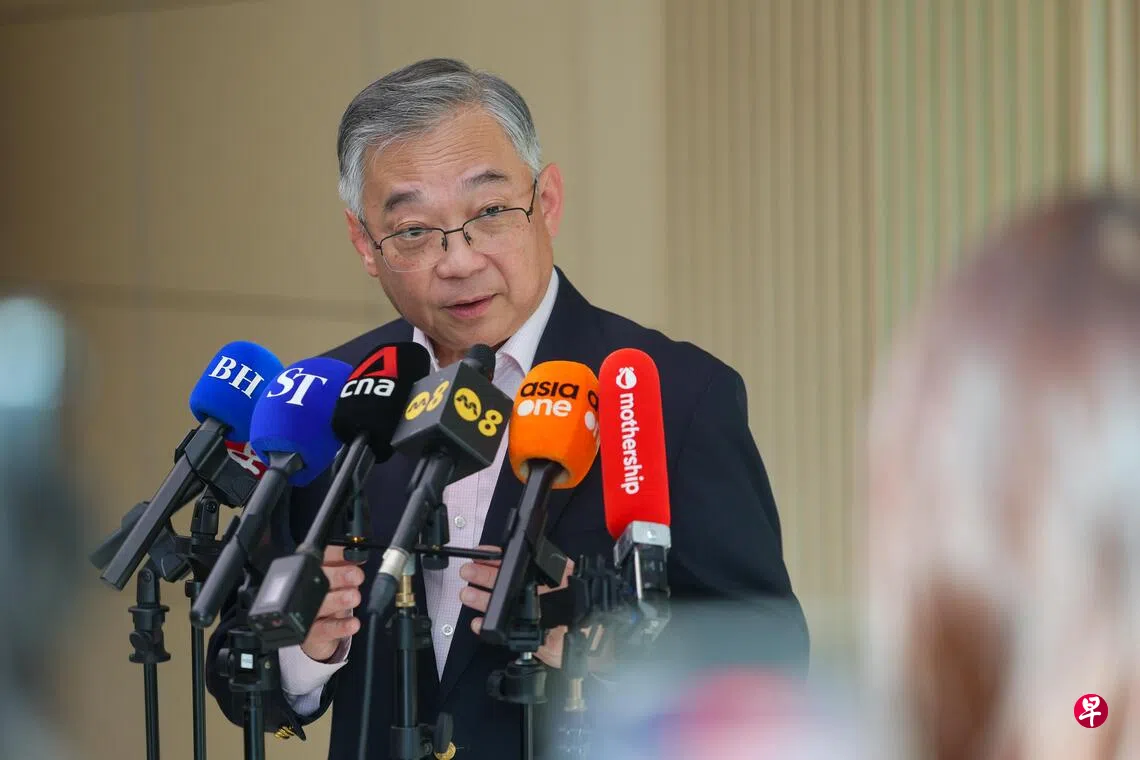
Speaking to the media about tariffs on Thursday (26 November) afternoon, DPM Gan said Singapore was “very disappointed” with the findings of the Office of the United States Trade Representative’s Section 301 investigation. Singapore also disagreed with the findings, as the US had not adequately considered its unique economic structure and national circumstances.
The US had earlier proposed lowering the tariff rate to 10% if Singapore reached a trade agreement with it or concluded other negotiations that addressed the investigation’s findings. DPM Gan said the final rate would not necessarily be 10% or 20%, but could fall somewhere in between, depending on the outcome of negotiations.
He said Singapore and the US had maintained communication over the past few years, but had not begun negotiations on an Agreement on Reciprocal Trade or any other form of related trade agreement. With the US proposing further tariff increases, Singapore needed to engage it to explore ways to bring tariffs down.
He added that the US had not discussed these tariffs with Singapore during the recent ASEAN Summit and Asia-Pacific Economic Cooperation meetings.
Over the coming months, the government will actively engage the US administration. Through the Singapore Economic Resilience Taskforce, it will also work with business partners to reach out to affected companies and help them cope with the impact of tariffs.
He said, “There will be give and take. There will be compromises. There will be trade-offs that we will need to be prepared to accept. So I think this process is always important to remember that we will always be principled and always have Singapore’s interests at our heart.”
DPM Gan surprised by US report’s criticism of CPF scheme
DPM Gan said he was also surprised by the US report’s assertion that Singapore used its Central Provident Fund (CPF) scheme to suppress domestic consumption, leading to structural excess capacity and overproduction.
He said CPF was a system unique to Singapore, designed to meet Singaporeans’ housing, healthcare and retirement needs.
“As you know, we are ageing very rapidly, and what we have is not a pension scheme, but a savings scheme. Through CPF, we put aside some of the funds, some of the money that we earn while we are working, so that by the time we retire or when we fall sick, we can tap on this savings. This is what CPF is about. It's not a scheme to suppress domestic consumption.”
DPM Gan also stressed that Singapore, with its small domestic market and lack of natural resources, had to rely on trade to sustain economic growth and create good jobs for Singaporeans. Manufacturing was an important part of the economy, enabling Singapore to produce goods the world needed while relying on imports to meet its own needs for energy, food and other essentials.
He noted that the US also placed importance on manufacturing and was pushing to bring production back to the country. Manufacturing was therefore important to both Singapore and the US.
However, he pointed out that bilateral ties spanned many areas beyond economic and trade cooperation. Singapore would remain committed to strengthening the relationship, seeking to resolve differences over trade and tariffs and secure lower tariffs for local exporters.
