

Facing intense competition from e-commerce rivals such as TikTok Shop and Pinduoduo, Sea's e-commerce platform Shopee is expanding its short-video shopping business while seeking to stand out through efficient deliveries using its own logistics network.
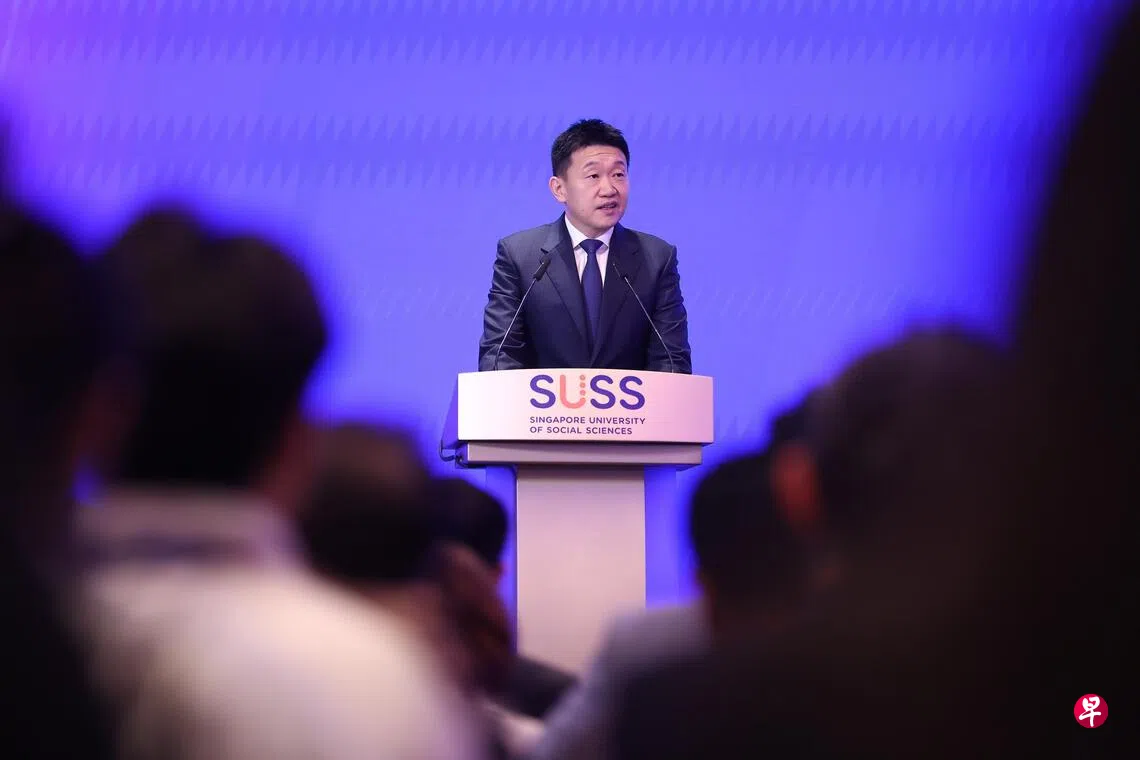
Sea Limited chairman and chief executive Forrest Li discussed the group's competitive strategies and his entrepreneurial experience in a dialogue with Professor Tan Tai Yong, president of the Singapore University of Social Sciences (SUSS), on Wednesday (25 November). The event was part of the university's JY Pillay Distinguished Speaker Series.
He said retail has always been one of the most fiercely competitive industries, given its vast scale and the substantial rewards for winners. Besides competing with Lazada, TikTok Shop and Temu, Shopee has recently faced a challenge from Pinduoduo.
According to an earlier report by technology publication Tech In Asia, video-driven TikTok Shop overtook Shopee in sales in Thailand in the second quarter of 2026. In Singapore, however, data from venture capital firm Momentum Works showed that Shopee remained firmly in the lead in 2025 with a 52% market share, ahead of Lazada (36%) and TikTok Shop (6%).
Short-video and search-based shopping will coexist
Asked whether “shoppertainment” would replace traditional search-based e-commerce platforms, Li said purchases made through short videos were often unplanned, and this was not the most efficient way to shop when someone wanted to buy something. Short-video shopping should therefore grow alongside and converge with search-based shopping, rather than replace it.
He said Shopee had fully embraced short videos. In Indonesia, its largest market, the platform's order volume generated through short videos “far exceeds that of any other competitor in the market”.
Besides short-video platforms, Shopee also faces a threat from ultra-low-price platforms such as Pinduoduo. DBS estimates that unbranded goods on Pinduoduo are 50% to 60% cheaper than on Shopee because they are shipped directly from factories, but parcels take three to four weeks to arrive. By comparison, Shopee parcels usually arrive within one to two days.
Li stressed that in relatively affluent markets such as Singapore, consumers were less price-sensitive and placed greater value on delivery speed and reliability. Shopee therefore relies on its own logistics service, SPX, to deliver almost every parcel on the platform. He acknowledged that logistics was not a highly profitable business and required hands-on involvement.
Some had criticised the decision not to use third-party logistics providers as “foolish”, but he considered delivery a crucial part of the e-commerce experience. “I am proud to be foolish on that part.”
A “stay foolish” mindset can overcome any challenge
During the talk, Li also drew on the late Apple founder Steve Jobs's famous words, “Stay hungry, stay foolish”, to explain several “counter-intuitive and high-risk” decisions he had made while leading Sea. These included moving from online gaming into e-commerce, building Shopee into a “mobile-first” retail platform and later expanding it into Brazil.
He said, “If you know how hard something is going to be from the start, you may not do it at all. But if you are foolish enough to begin, and you have that hunger and determination to just keep going, no matter what, you can overcome any challenge.”
