

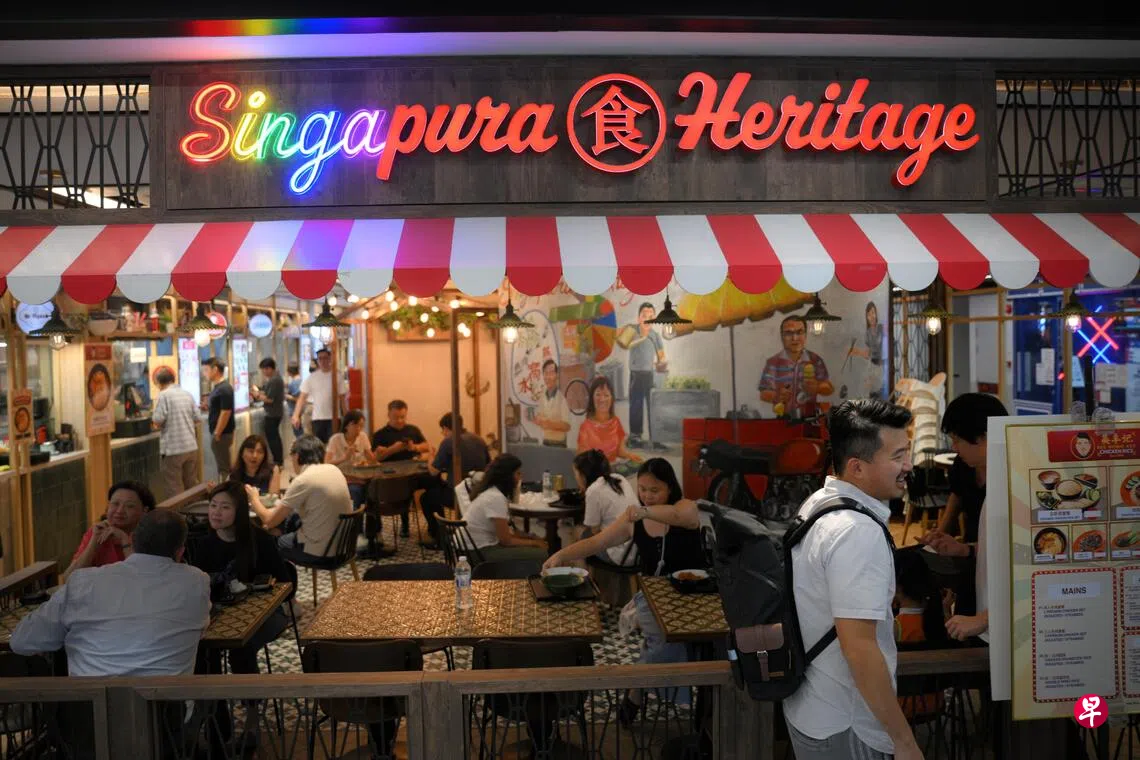
The company operating Singapura Heritage, a food court specialising in traditional Singapore fare, has been ordered by the High Court to be wound up. The application was filed by local poultry and meat supplier Toh Thye San Farm.
A notice published in the Government Gazette on Wednesday (4 November) showed that Toh Thye San Farm filed the winding-up application on 17 September. The High Court issued the winding-up order about five weeks later, on 23 October.
Toh Thye San Farm, which processes and distributes meat and poultry products, applied to wind up the operator in its capacity as a creditor. The gazette notice did not specify the transactions involved.
The notice did not disclose the amount or nature of the debt, nor did it state the specific grounds for the court’s winding-up order. The precise reasons for the operator being wound up therefore remain unclear.
The winding-up order also showed that the court had appointed liquidators to handle the company’s affairs. Creditors must first submit proofs of debt. The liquidators will then identify and sell the company’s assets, then distribute the proceeds to creditors in accordance with the law.
Records from the Accounting and Corporate Regulatory Authority show that the operating company was registered in September 2024 and is wholly owned by Lao Huo Tang Investments, a company linked to the Lao Huo Tang group.
The latter was registered in August that year, with restaurant operations as its principal business.
The Lao Huo Tang group’s website lists two Singapura Heritage outlets, at D’Resort in Pasir Ris and SingPost Centre in Eunos.
When a reporter from the Straits Times visited on Friday (6 November) during lunchtime, the SingPost Centre food court was still operating, with diners seated at most tables.
A reporter from Lianhe Zaobao (LHZB) also called the D’Resort outlet that day, but no one had answered by press time. It could not be confirmed whether the outlet was operating that day.
Separately, Lao Huo Tang F&B, a company linked to Lao Huo Tang, was charged in late September this year with breaching the Central Provident Fund Act by failing to pay a total of $39,121 in employees’ CPF contributions from June to August.
At a hearing on 21 October, the state courts granted a four-week adjournment until 11 November to allow the company to pay the outstanding CPF contributions in full.
