

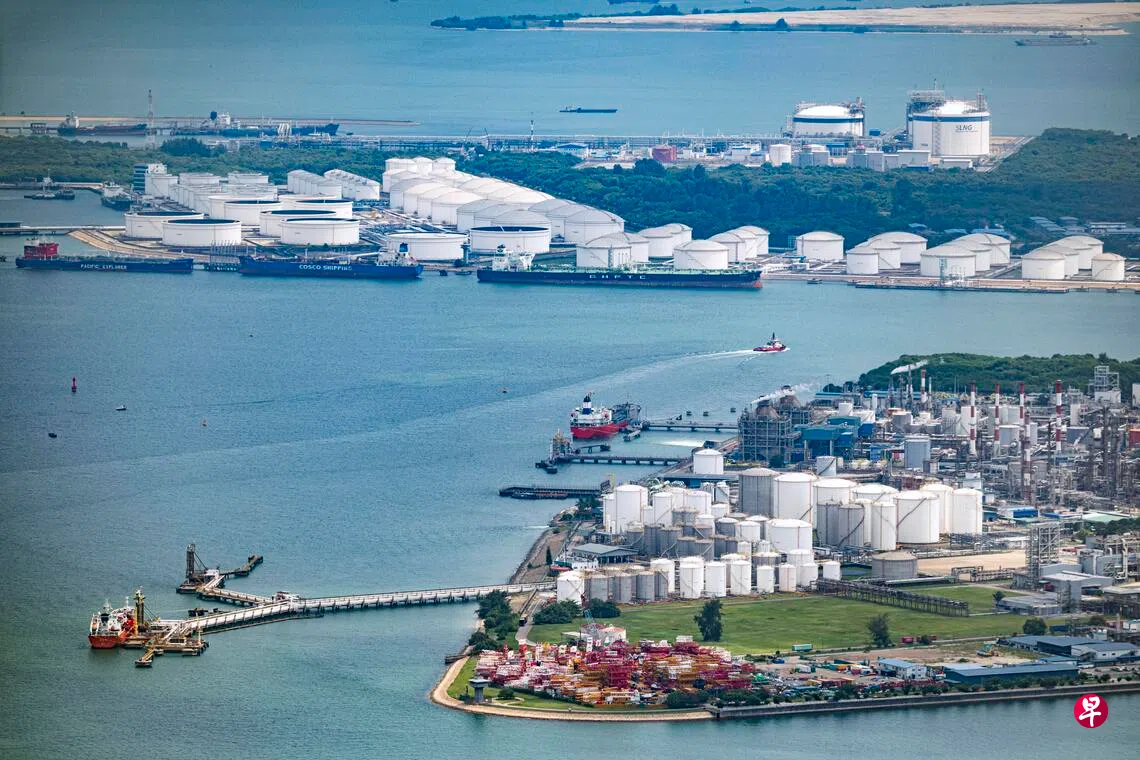
Indonesia recently announced it would cut piped natural gas supplies to Singapore to safeguard its domestic energy needs. Singapore’s Energy Market Authority (EMA) said the reduction amounted to less than 2% of Singapore’s daily natural gas demand, and reiterated that the country has sufficient energy supplies to ensure a stable electricity supply.
Although Singapore has stepped up its deployment of renewable energy in recent years, its options are constrained by its small size and limited natural resources. Natural gas therefore remains a key fuel, accounting for more than 90% of the country’s electricity generation.
Where does Singapore import this strategically important fuel from, and how have import volumes changed? Lianhe Zaobao examines the data here.
How much of Singapore’s energy imports does natural gas account for?
According to EMA data, petroleum products, including fuel oil, and crude oil still make up the bulk of Singapore’s energy imports.
Last year, Singapore’s total energy imports reached nearly 150.63 million tonnes of oil equivalent (toe). Petroleum products accounted for about 57.2% and crude oil about 35.4%, together making up more than 90%. By comparison, natural gas accounted for only about 7.2%.
However, natural gas is Singapore’s main fuel for electricity generation. Last year, it accounted for 93.1% of the fuel mix for electricity generation, followed by other fuels, such as waste incineration, at 3%. In the first half of this year, natural gas accounted for 91.6% of the fuel mix.
Where does Singapore import its natural gas from?
EMA data shows that Singapore imported about 5,105,700 toe of natural gas through pipelines last year, and 5,721,400 toe in liquefied form.
Liquefied natural gas (LNG) imports have risen steadily in recent years. In 2015, piped natural gas imports exceeded 7.13 million toe, while LNG imports were below 2.32 million toe. In 2023, LNG import volumes surpassed those of piped natural gas for the first time.
As natural gas in gaseous form must be transported through pipelines, it comes mainly from Indonesia and Malaysia. Data from the UN Comtrade database shows that Indonesia accounted for about 65% of Singapore’s imports of gaseous natural gas last year, while Malaysia accounted for 35%.
LNG comes from a much more diverse range of sources. Qatar accounted for about 47.2% of imports and Australia 32.3%. Other major sources included Mozambique, Malaysia and the US.
Why import liquefied natural gas?
According to EMA, Singapore relied mainly on piped natural gas imports from Indonesia and Malaysia in the early 2000s. To diversify its energy supply sources, however, the country began importing LNG in May 2013.
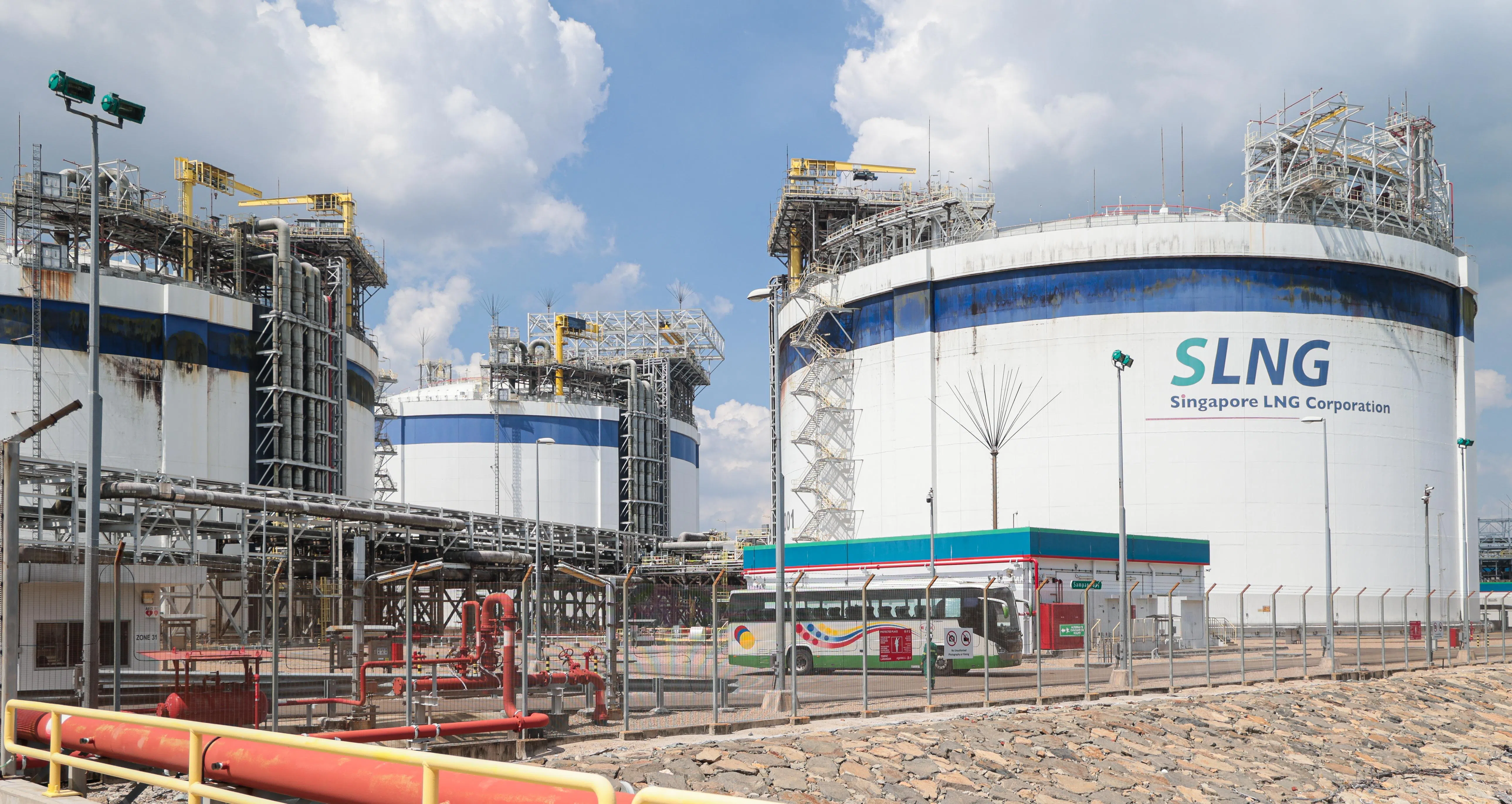
Cooling natural gas into liquid form significantly reduces its volume, making it easier to transport in specialised ships from more distant countries. Supplies are thus no longer limited to neighbouring countries connected to Singapore by pipelines.
Which sectors use Singapore’s natural gas?
After arriving at the LNG terminal on Jurong Island, imported LNG is stored and regasified before being delivered to power plants and other users through Singapore’s natural gas pipeline network. The terminal currently has four storage tanks and two jetties.
The industrial sector, including electricity generation, is the largest user of natural gas, accounting for 90% of consumption, followed by the commercial sector and households. The piped town gas that Singapore households use for cooking and heating water comes from a gasworks in Senoko in the north.
The plant, managed by City Energy, a subsidiary of Keppel Infrastructure Trust, uses feedstocks including natural gas to produce town gas suitable for household use.
