

The proposed merger between StarHub and M1 would not only remove about S$324 million in M1 net debt from Keppel Ltd.’s books, but could also generate S$34 million in annual dividends from the 23% stake in StarHub that Keppel would receive.
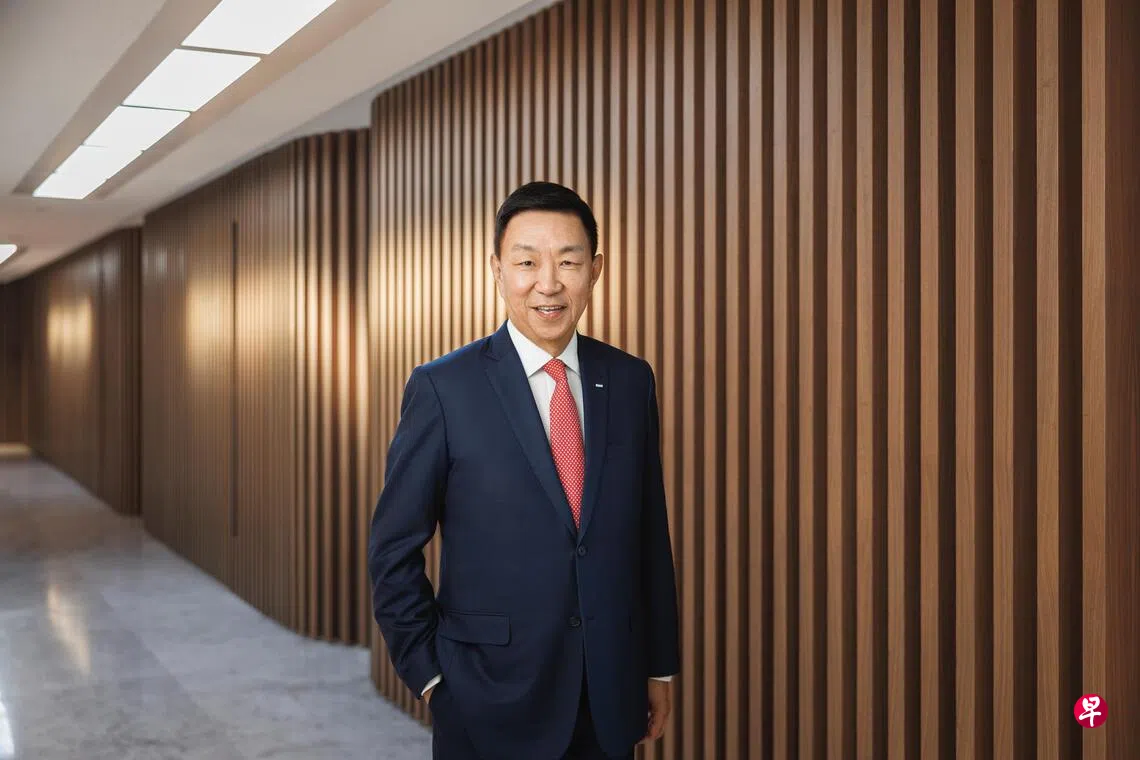
Responding to investor queries about the merger, Keppel chief executive Loh Chin Hua noted that M1 contributed S$3 million to Keppel’s earnings in the 2025 financial year. Had the transaction been completed on 1 January 2025, Keppel could have received S$34 million in dividend income from its stake in the merged company alone.
As a further illustration, he said that if StarHub’s share price rose by 10 cents over a year, the value of Keppel’s shareholding would increase by about S$55 million.
If StarHub continued to pay an ordinary dividend of six cents a share, Keppel could also receive about S$33 million in cash. Together, the share price gains and dividends could deliver returns of about S$88 million to Keppel in a year.
Keppel released chief executive Loh Chin Hua’s responses to investor queries on Thursday (26 November). The statement said the divestment of M1 was in line with the group’s strategy of moving towards an asset-light business model and monetising non-core assets by 2030.
The proposed merger between StarHub and M1 was announced on Tuesday (24 November). Under the plan, StarHub will issue about 651.7 million new shares to M1 shareholders. Based on Keppel’s 83.9% stake in M1, it will receive a 23% stake in StarHub, equivalent to 546.5 million shares.
After the lock-up period, Keppel can progressively sell these listed shares to raise cash, for example through phased sales on the market or transfers to strategic investors and fund investors.
If the transaction receives approval from the Infocomm Media Development Authority, Keppel will cease consolidating M1’s results and debt in its group accounts upon completion. Besides removing about S$324 million in M1 net debt from its books, it will no longer have to fund M1’s capital expenditure.
Loh noted that retaining M1 as a subsidiary would require continued investment in upgrading technology systems and strengthening cybersecurity resilience, as well as funding network and spectrum costs.
The group would also have to continue consolidating M1’s financial results, including absorbing its losses. M1 recorded a loss in the first half of 2026.
Merger expected to be completed in first half of next year
If all goes smoothly, the two companies expect to complete the merger in the first half of next year, when M1 will become a wholly owned subsidiary of StarHub.
Loh said that while seeking a buyer for M1, Keppel found strong interest in Singapore’s telecommunications market among several strategic investors, provided the market had three competing operators rather than four.
He noted that the net debt removed through the M1 divestment, together with proceeds from future sales of StarHub shares, would count towards the group’s total asset monetisation and form the basis for calculating special dividends. The group could also distribute StarHub shares directly to shareholders in specie, or use a combination of distribution methods.
Under the all-share transaction, StarHub will issue about 651.7 million new shares to M1 shareholders at an implied issue price of S$1.04 per ordinary share, valuing the shares at about S$678 million. Assuming M1’s net debt is S$380 million upon completion, the two amounts together would put M1’s enterprise value at about S$1.058 billion.
Loh said using shares as consideration would benefit both parties. The merged company could preserve cash for business integration and future growth, while Keppel could retain a stake and share in potential gains from telecommunications market consolidation, an improved competitive environment and synergies from the combined businesses.
M1 was originally to be sold to telecommunications company Simba at an enterprise value of S$1.43 billion. However, the Infocomm Media Development Authority found suspected regulatory breaches in Simba’s operations during its review, leading to a pause in the approval process.
After Keppel terminated the proposed transaction with Simba, StarHub became the only viable merger partner.
Loh concluded that divesting M1 would allow Keppel to remove the associated debt and reduce future investment and working capital requirements, while retaining a stake in the merged StarHub to share in its long-term growth potential. The group therefore considers the transaction a highly favourable arrangement for Keppel.
Keppel shares closed at S$8.39 on Thursday, up 0.84%. StarHub closed at S$1.11, up 1.83%.
