

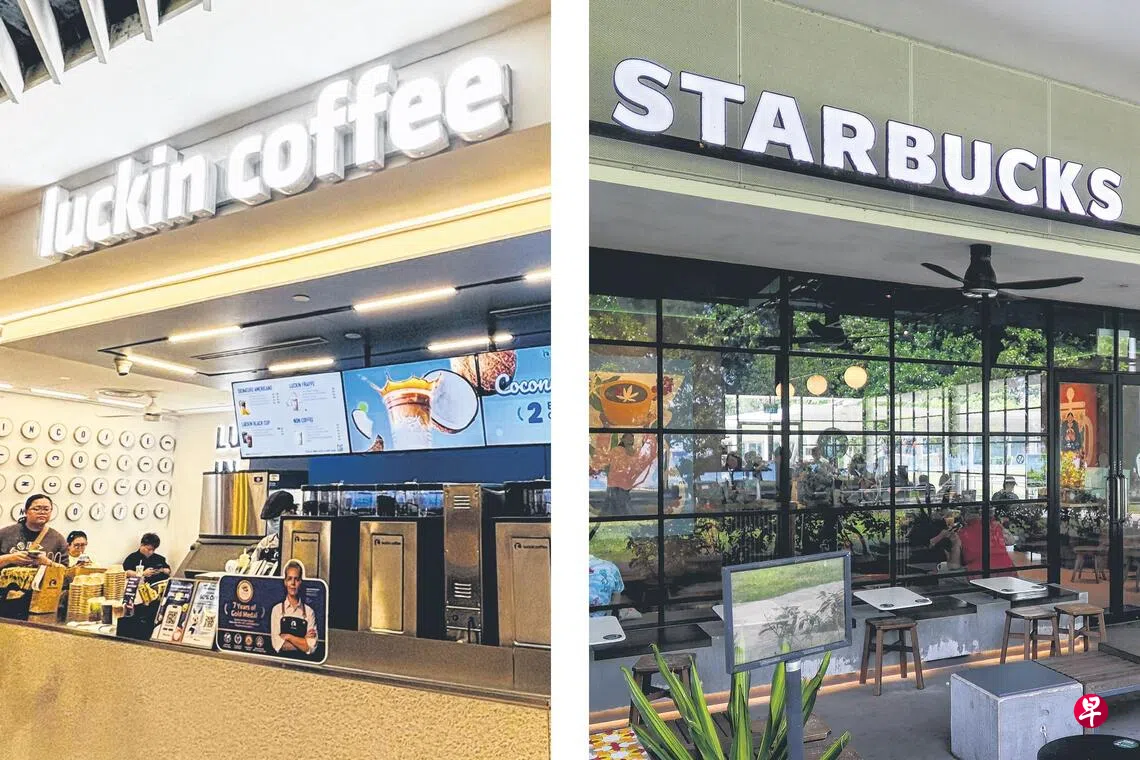
China’s Luckin Coffee is stepping up its expansion in Singapore, with market expectations that its outlet count could catch up with that of established US coffee chain Starbucks in the first quarter of 2028.
But experts caution that more outlets do not necessarily mean better business. Sales, transaction volumes, average spending per transaction and long-term profitability must also be considered.
As of 27 November this year, Luckin had opened 108 directly operated outlets in Singapore. In an interview with Lianhe Zaobao, Chee Zheng Feng, the SG consumer analyst at DBS Group Research, estimated from open data that if Luckin maintains its pace of six new outlets a quarter, it could match Starbucks’ footprint of 138 outlets as of June by the first quarter of 2028.
However, he noted that Luckin and Starbucks have different market positions. Total sales and long-term profitability are better indicators of their actual business performance than outlet numbers.
Sabine Benoit, Professor of Marketing (Practice) at the Lee Kong Chian School of Business, Singapore Management University, suggested comparing transaction volumes and average spending per transaction to assess how the two brands perform on each measure. She expects Luckin to have more transactions and Starbucks to record higher spending per transaction. These two measures alone, however, cannot establish which is more profitable.
Dr. Xu Le, Lecturer (Educator Track) in the Department of Strategy and Policy at NUS Business School, cautioned that Singapore is a limited market. The key question is whether opening more outlets can genuinely drive revenue and profit growth. “If new outlets merely divert existing customers, having more outlets does not necessarily mean greater overall profitability.”
Luckin’s gains need not come at Starbucks’ expense
The experts also noted that Starbucks and Luckin position themselves differently. Starbucks’ selling point is its outlets’ role as a “third place” where people can meet, work and relax. Luckin focuses on low prices, thin margins, high sales volumes and convenience.
Chee said Luckin’s digital operations, small outlets and global sourcing give it a cost advantage in Singapore, while promotional prices can encourage customers to try its products.
Xu said that although the brands cater to different consumption occasions, consumers can switch between them as their circumstances and needs change.
For example, Xu said, someone rushing to work in the morning might choose Luckin for its affordability and convenience, but opt for Starbucks’ comfortable surroundings when meeting friends or holding business discussions.
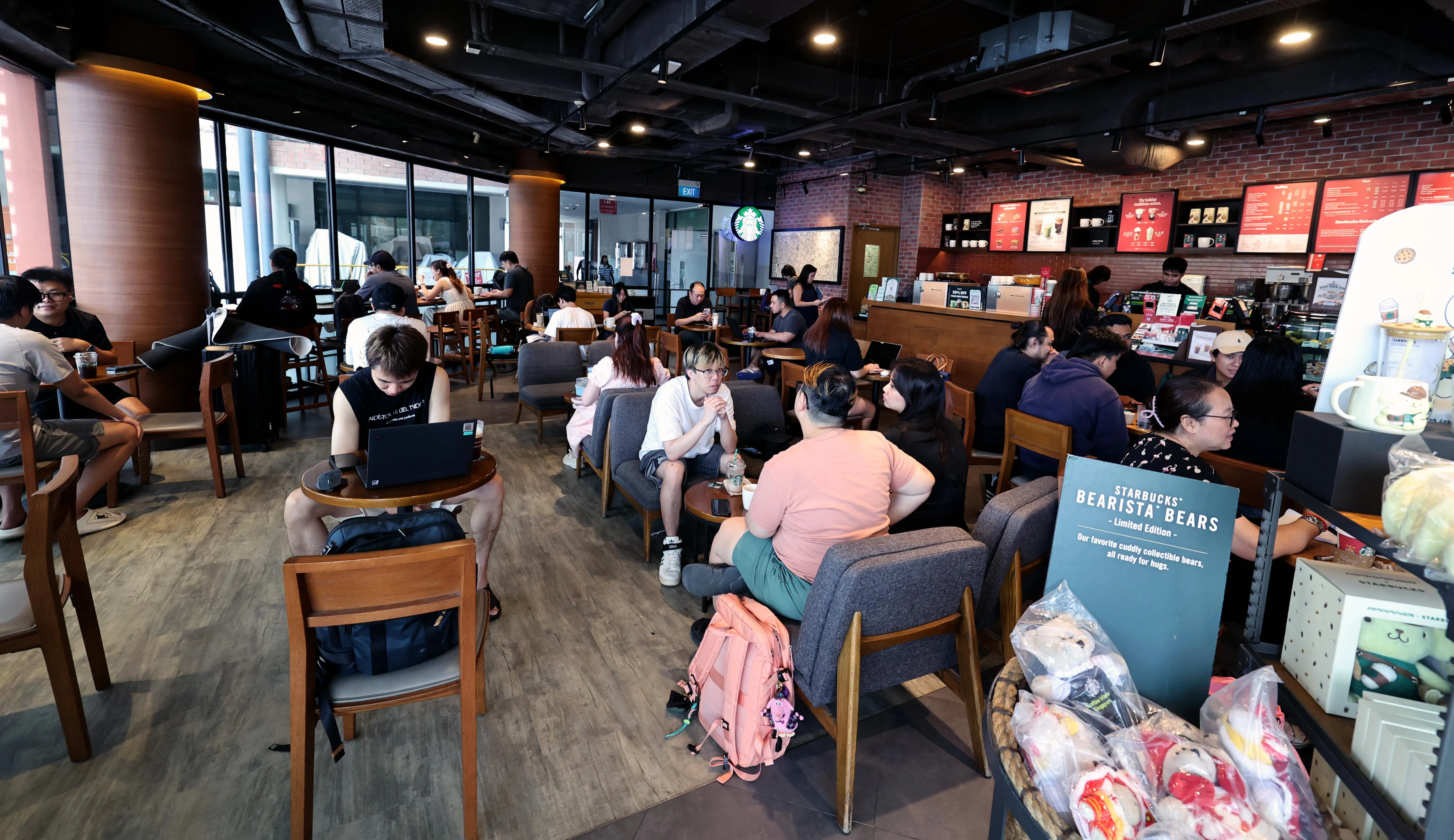
Benoit said Singapore’s market has room for both Luckin’s and Starbucks’ business models. Consumers seek convenience as well as places to socialise, giving each format its own strengths without one necessarily gaining at the other’s expense.
For example, the central business district, shopping malls and tourist areas are better suited to larger cafes with seating and social spaces that meet customers’ needs for meetings and work. Transport hubs such as MRT stations, where space is limited and footfall is high, are better suited to smaller, lower-cost takeaway outlets where consumers can buy coffee quickly.
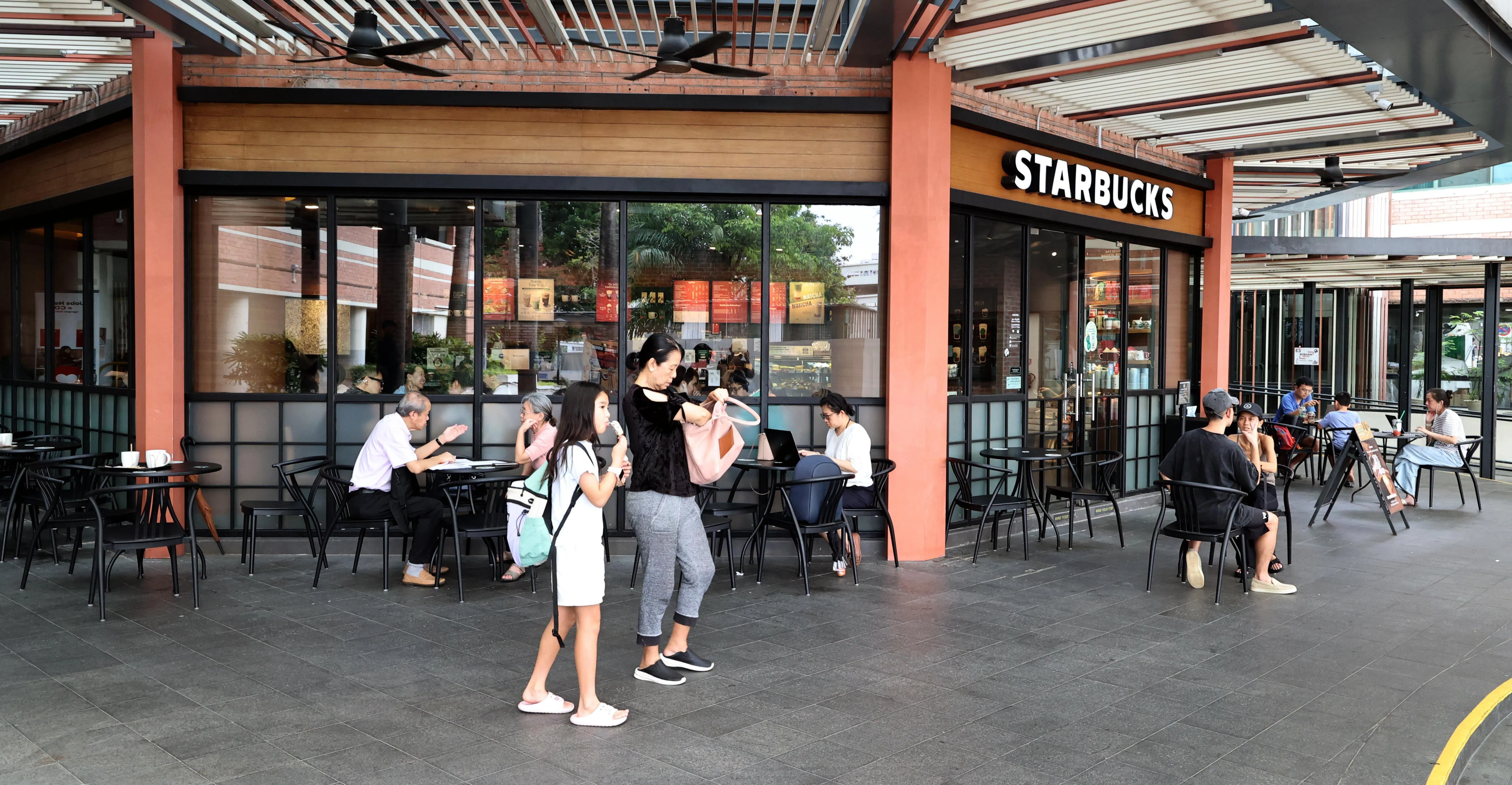
Both brands are moving towards each other’s core customers
Interestingly, the two brands are gradually expanding their reach into each other’s core customer base.
Chee observed that everyday coffee purchases and the afternoon tea period have become the most hotly contested areas.
He said Starbucks is attracting value-conscious consumers with buy-one-get-one-free promotions, while Luckin has begun adding cafe-style outlets with seating to draw customers looking to socialise and dine in.
However, Xu said Starbucks does not necessarily need to engage in a price war. Instead, it should make more of its strengths in space and service to attract customers willing to pay more for a better experience. To retain these customers, Xu added, it must ensure they feel the environment and service offer value for money.
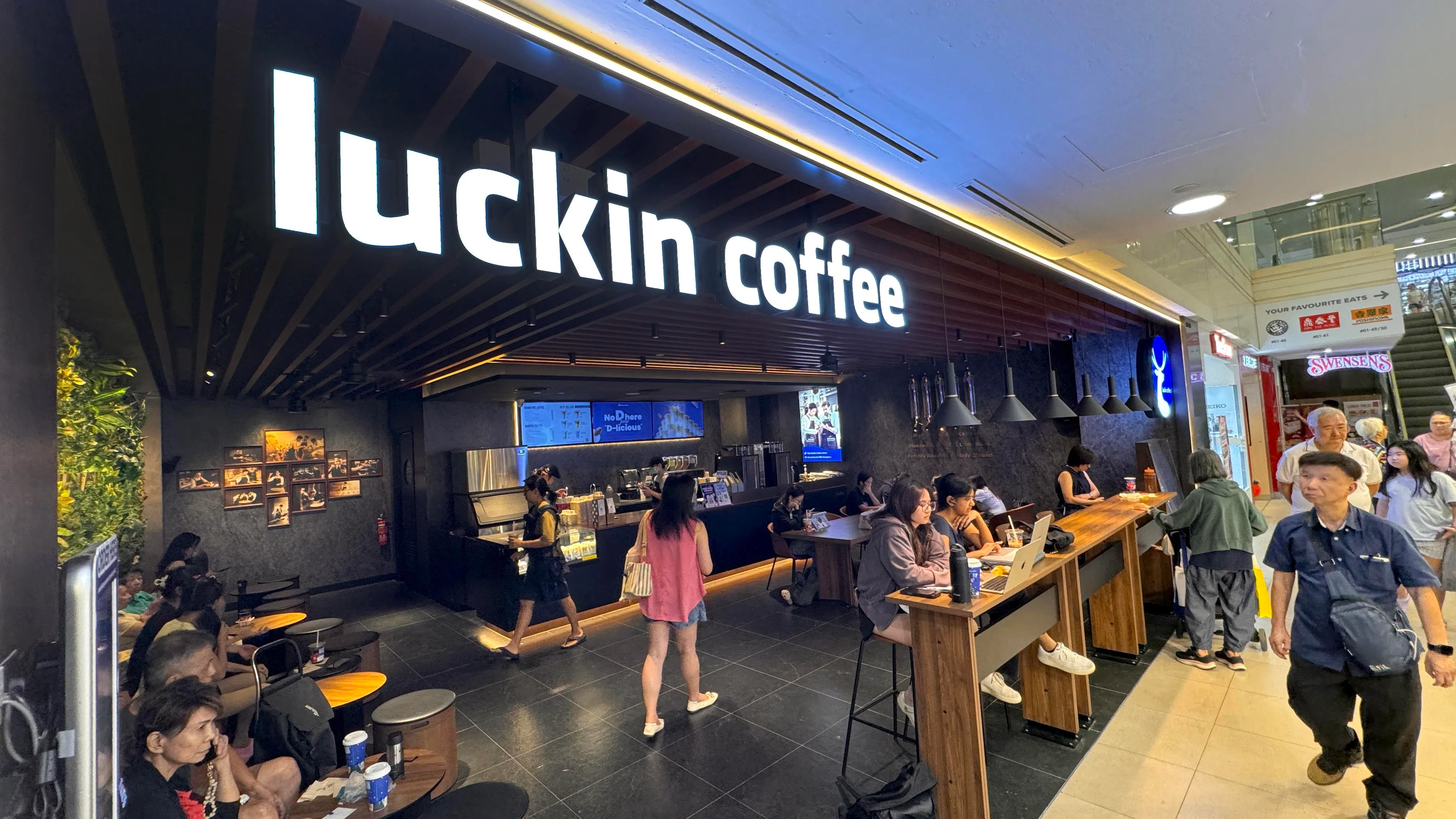
A person familiar with the matter told Lianhe Zaobao that grab-and-go remains Luckin’s core business model. Adding larger outlets with seating is primarily intended to meet customers’ varied needs, such as gathering with friends or taking a break during the day. It extends the customer experience rather than marking a change in the business model.
The source also said localisation is an important part of Luckin’s growth strategy in Singapore. The brand will continue studying local tastes and consumption trends, developing new products while retaining its distinctive offerings, and integrating into customers’ daily lives through affordable pricing and a convenient digital experience.
Xu agreed that long-term competitiveness depends not only on the pace of store openings, but also on the ability to keep attracting consumers and retain existing customers.
What opportunities could DFI’s planned Starbucks takeover bring?
The potential impact of a change in ownership of the Starbucks franchise business on its performance is also drawing close market attention.
DFI Retail Group announced on 30 September that it plans to take over Maxim’s Starbucks franchise operations in seven Asian markets, including Singapore, by restructuring its stake in Maxim’s. The transaction is expected to be completed by the end of March 2027.
DFI plans to increase the number of Starbucks outlets across its seven Asian markets to at least 1,350 by 2029, with expansion focused on Thailand and Vietnam.
Chee said DFI could improve Starbucks’ performance in three ways after the takeover: broadening food choices, reducing operating costs and increasing merchandise’s share of sales. The first two align with plans DFI has already announced.
On food, DFI said at an investor briefing in October that it plans to accelerate the launch of new food and drink offerings tailored to local tastes and add healthier options. It will also develop lunchtime, afternoon and evening sales while strengthening Starbucks’ morning business.
Chee said a wider food selection could create more consumption occasions and raise average spending per transaction, while DFI’s experience in convenience retail could support food development and distribution.
The group also plans to use members’ spending data to offer products better suited to customers’ preferences and personalised services, with the aim of increasing footfall and sales.
On costs, DFI has proposed improving operational efficiency through procurement savings, lower overheads and adjustments to its store network.
Chee also believes DFI’s existing retail network could help Starbucks secure better terms in rental negotiations and procurement.
He said DFI is currently licensed to operate 7-Eleven convenience stores in markets including Singapore, and could draw on intellectual property resources related to 7-Eleven to develop more appealing merchandise for Starbucks. This represents a potential business opportunity.
However, Benoit and Xu both noted that operators of global brands must comply with brand standards. A change of franchisee is more likely to affect the pace of store openings, menu choices, pricing and how promotions are carried out, while Starbucks’ core positioning is unlikely to change fundamentally.
Beyond Luckin and Starbucks, who else is competing for Singapore’s coffee business?
Singapore’s chain coffee market has no shortage of strong competitors beyond Luckin and Starbucks.
Citing data from market research firm Euromonitor International, Chee said Starbucks had the most outlets in Singapore as of the end of 2025, followed by Toast Box, The Coffee Bean & Tea Leaf (known in China as Xiangfeibin), Ya Kun and Luckin.
By market share based on revenue, however, The Coffee Bean & Tea Leaf led the field. Starbucks and Luckin ranked second and third respectively, followed by Toast Box and Ya Kun.
He attributed The Coffee Bean & Tea Leaf’s larger revenue share to its broader food selection. If DFI completes the transaction and formally takes over the Starbucks business, Starbucks could also step up its food offerings.
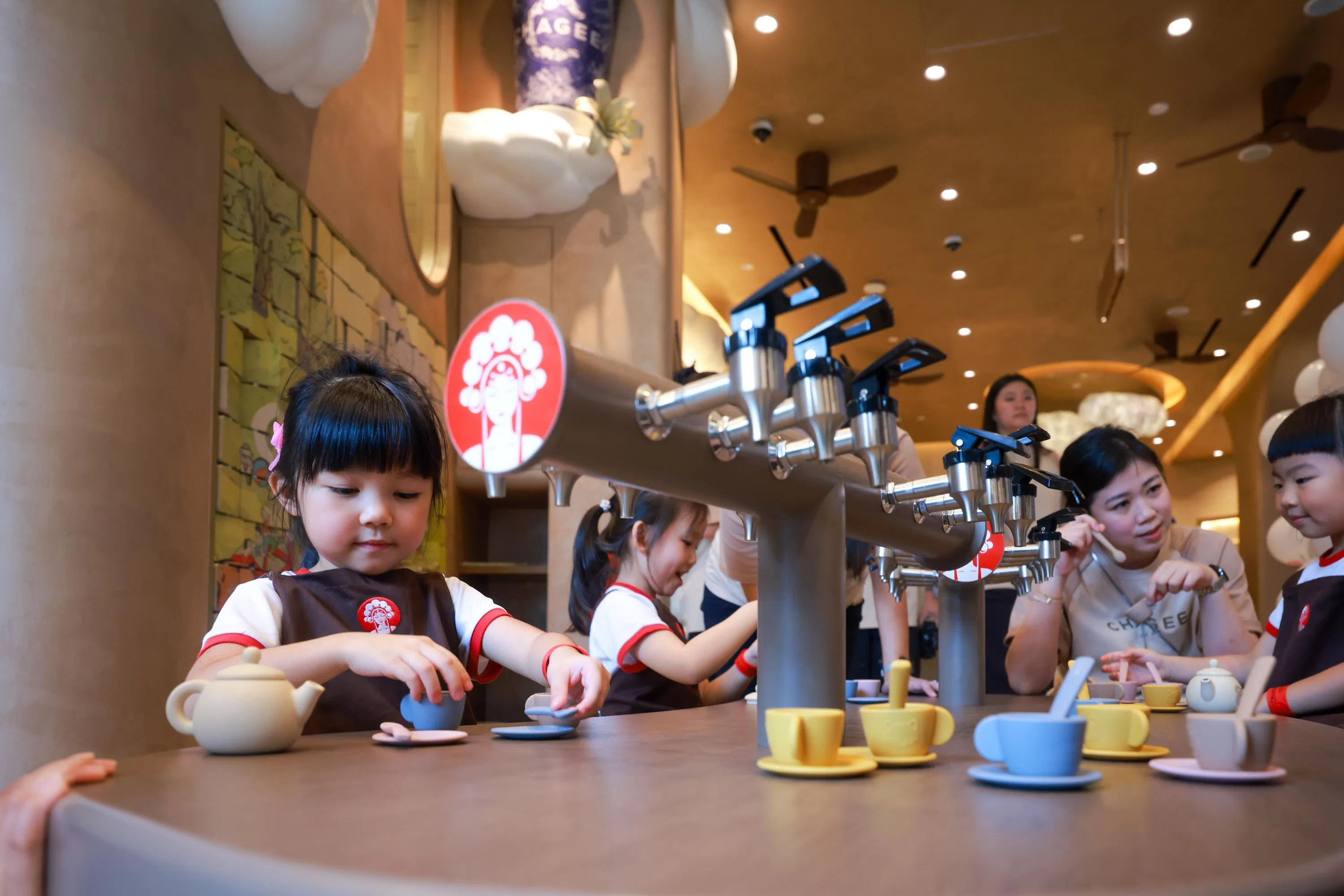
Chee also sees Chagee as a competitor that increasingly warrants attention. Although it does not sell coffee, it competes for the same consumer spending on drinks. As it opens more outlets in Singapore, competition between coffee and tea brands for customers, locations and consumption occasions could intensify.
Xu also noted that consumers may drink coffee one day and choose tea the next, meaning coffee brands must also contend with tea brands.
However, Chee said this is not a zero-sum game. As incomes rise and demand for convenience grows, there is still room for growth in the market for drinks bought outside the home.
