

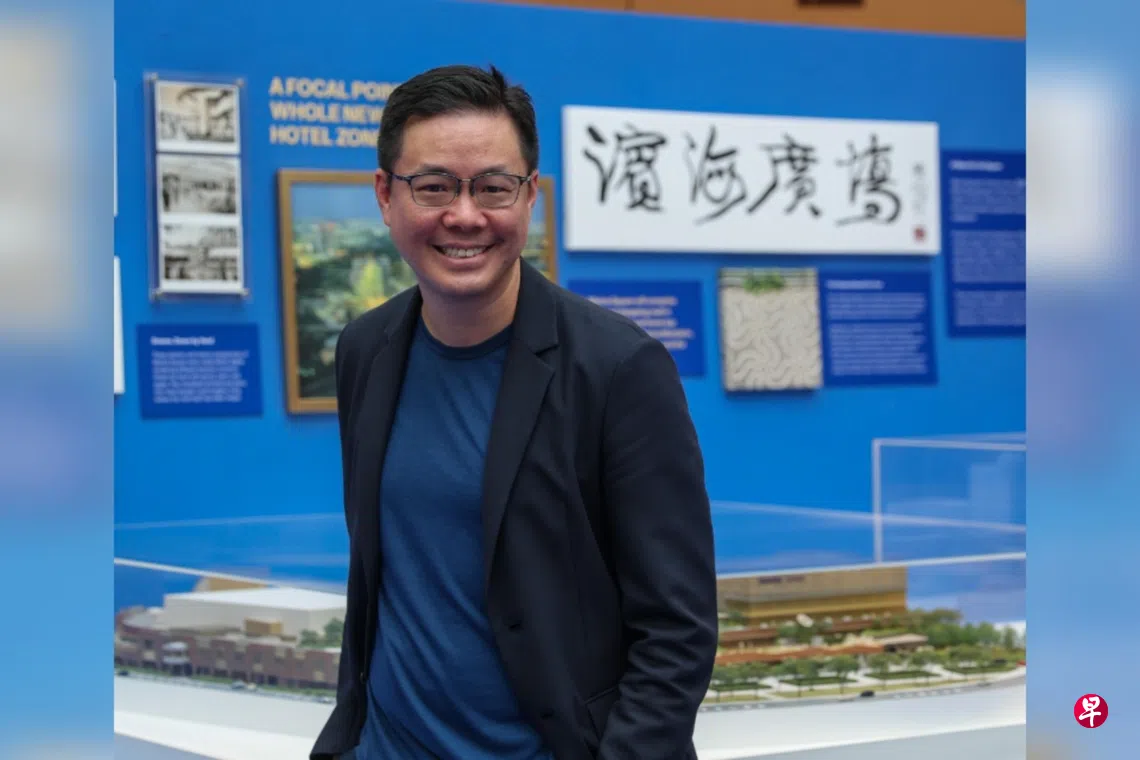
A workout before work, enrichment classes after school, and weekends spent with family and pets: these are the everyday scenes Singapore Land Group envisions for the redeveloped Marina Square. The group plans to reduce retail space and introduce more sports and lifestyle experiences to revitalise the 40-year-old landmark.
The group’s Jonathan Eu, CEO, said in a recent media interview that developments combining hotels, a shopping mall, serviced apartments and homes for sale were rare even globally. “I hope I hope this is something for for Singapore. You know that we can be a global reference”
The group announced in September that Marina Square shopping mall will close on 31 March next year to be transformed into Singapore’s first hyper-mixed development. The integrated development is expected to be completed in 2031 and reach stabilised operations in 2032 or 2033. The three existing hotels will remain open during construction.
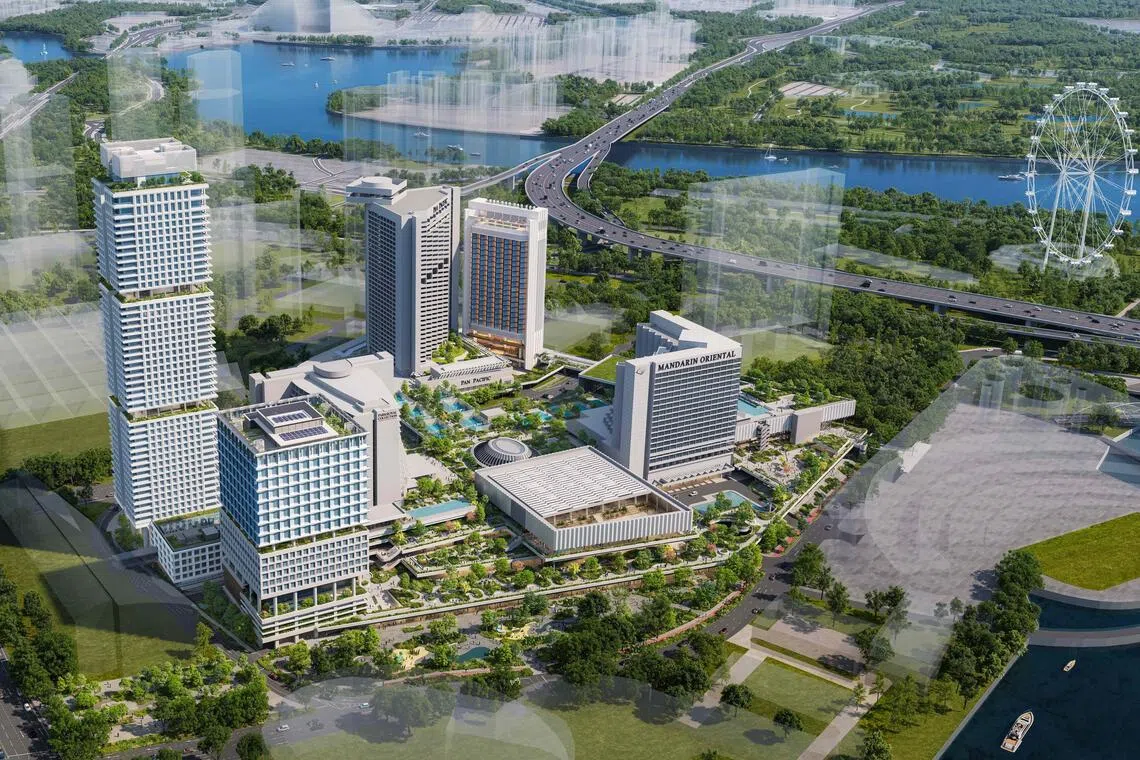
The redevelopment will add three buildings: a residential tower with 204 luxury homes, a hotel and office building with 304 hotel rooms, and a serviced apartment building with 260 units. The development’s total gross floor area will increase by about 15.1% to more than 360,000 square metres.
However, the mall’s net lettable area is expected to shrink from nearly 800,000 sq ft to just under 500,000 sq ft.
Eu explained that this did not reflect a pessimistic outlook for retail. Rather, the group wanted to “strike the right balance between retail and other asset classes that can reinforce one another”.
He noted that Marina Square was originally designed to draw footfall through anchor tenants at the mall’s four corners. But with the growth of omnichannel retail and changing consumer habits, the development needs to rethink how to attract visitors and encourage them to stay.
Sport and community activities to give mall a distinctive draw
Sport will be a key theme of the future mall. The group is exploring a rooftop racket sports club and plans for about 40,000 sq ft of privately owned, sheltered space open to the public, which could host basketball, badminton, concerts and other activities.
Eu believes running, cycling and racket sports can all foster communities. He hopes these activities will make Marina Square part of participants’ everyday lives, while the hotels within the development could help it tap opportunities in sports tourism.
The group also plans to create dedicated facilities for pet activities, rather than simply being “pet-friendly”. He said the concepts were still being developed, but “probably I would say it's definitely going to be a first here, in terms of the scale and what we're doing”.
In keeping with the development’s sports theme, sports-related brands will be a priority among future retail tenants. Education and enrichment centres will also be important tenants, offering not just tuition but also dance, art, cultural and music classes.
Eu also hopes to set aside areas in the mall to support Singapore businesses and start-up brands at different stages of development, helping them “grow and go above and beyond our shores, and even be a bit more global”.
He envisages the group sharing some of the risks of experimentation with entrepreneurs, allowing them to test concepts in curated spaces. Brands that have begun to grow could receive help to raise their profile and reach a wider customer base.
Asked whether introducing new concepts would increase risk, Eu said that, as with Apple’s entry into the mobile phone market, pioneers in any industry have to face the unknown, adding that “you have to see risk as opportunity as well”.
He said Marina Square’s goal was not to become the next Marina Bay Sands or ION Orchard, but to attract quality tenants through a distinctive positioning. “We're trying to be different yet very relevant.”
He does not see Marina Square’s transformation as particularly risky. While individual concepts may be more challenging, the group already has experience investing in, operating and managing different asset classes, and is not entering entirely unfamiliar territory. “we're not doing something crazy”
Asked whether the new homes could face sales pressure, he said Marina Square differed from typical residential developments in the central business district. In his view, one challenge for some CBD homes is the lack of weekend activity. By contrast, Marina Square’s existing mall and hotels, along with nearby cultural and leisure amenities, already offer a different living environment.
The planned 49-storey residential tower at Marina Square will comprise three- to five-bedroom units and penthouses. Eu said the group had opted for larger homes rather than smaller units aimed at the investment and rental markets. The intention is to build a community of long-term residents that complements the shorter stays at the hotels and serviced apartments.
He also acknowledged that, given factors such as the lack of schools nearby, the development would not appeal to every typical Singapore family. Potential buyers could include people without children who value convenience and want to live in a bustling city-centre location.
Phased asset renewal to cushion income disruption
The Marina Square redevelopment is part of Singapore Land’s systematic review of its portfolio, which began in 2020.
Eu said the group owned many quality assets, but “some of them maybe a little bit under loved”. After he joined the group, the team drew up plans for each asset, assessing whether it was suitable for refurbishment, redevelopment or sale, and scheduling the work to manage the impact on net property income during construction.
Specifically, the group waited until upgrading works at Singapore Land Tower were completed and income had recovered before proceeding with the closure of Marina Square mall. The Clifford will begin operations soon after Marina Square closes, helping to minimise the income gap during asset renewal.
Singapore Land Tower underwent a comprehensive asset enhancement while remaining operational, with work completed in the third quarter of 2025. Eu said occupancy had fallen to about 50% at one point during the works but has since risen to more than 90%.
Meanwhile, The Clifford, which is being redeveloped from the former Clifford Centre, is expected to be completed in 2028 and reach stabilised operations in 2029. The group said the project had already attracted interest from major tenants, including financial services and consultancy firms.
He did not disclose the cost of redeveloping Marina Square or specific return targets, but said the group had investment return thresholds and had conducted rigorous assessments. It was “very confident in both the project’s positioning and its prospective returns”.
DBS Group Research analysts estimated in February this year that the Marina Square redevelopment would cost between S$2.6 billion and S$3.4 billion. According to Singapore Land’s earlier announcement, it will be funded through new and existing credit facilities, internal cash resources and funding from shareholders in proportion to their stakes. Development expenditure will be phased, and the group expects its net gearing to rise gradually.
As of the end of June this year, the group’s net gearing was 8.9%.
Confident in Singapore property outlook, with plans to deepen overseas presence
Eu remains confident in Singapore’s property outlook, particularly for offices, the group’s main asset class. He believes the limited supply of quality Grade A office space in the core CBD creates favourable supply-and-demand conditions for the group, allowing it to be more selective about tenants.
He said: “in a world where there's so much noise, you know, and so much uncertainty and geopolitical instability, you know, I think we are a safe harbor……I think it doesn't change in the in the near term.”
However, he also noted that the group’s business was heavily concentrated in Singapore and that it needed to consider diversification across geographies and asset classes over the longer term.
“Looking at the next 50 years of a business, Singapore is in a very good position now, but we do not know what the future will bring.”
Looking ahead, Eu hopes the group will deepen its investments in suitable asset classes in markets where it already operates, such as the UK, Australia and China. It will also actively review its existing business model and explore new growth opportunities.
