

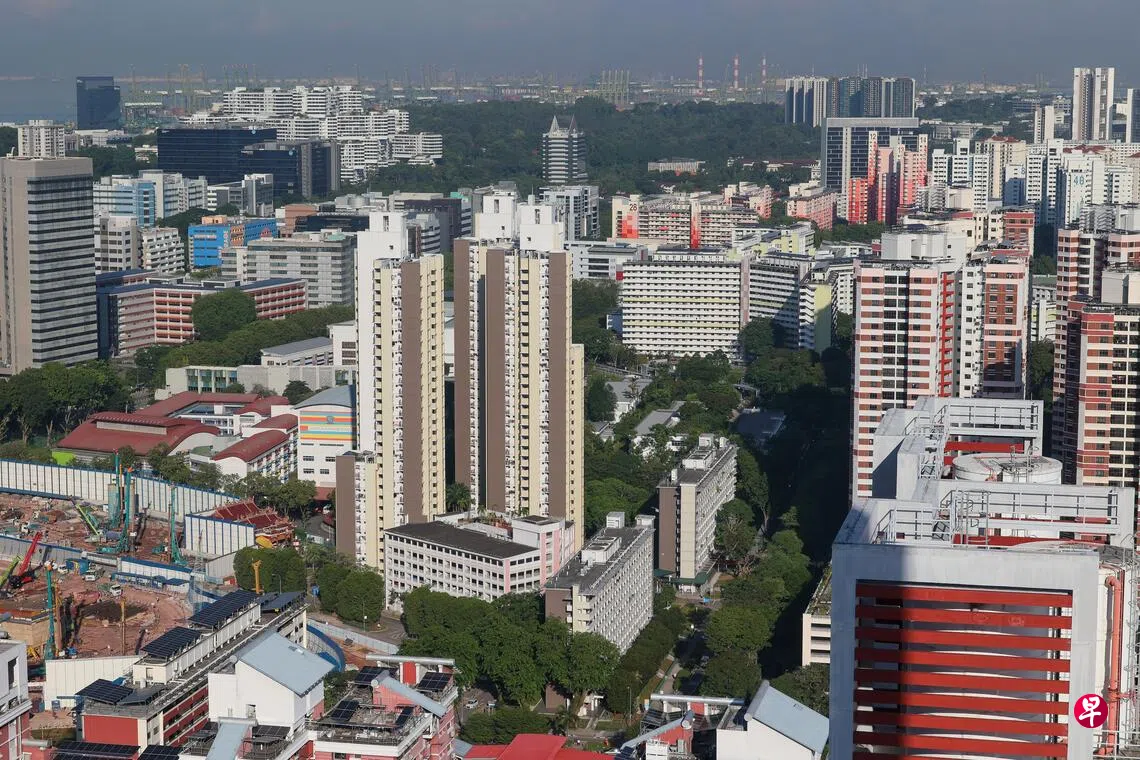
As Singapore’s HDB flats age, nearly four in 10 blocks islandwide have crossed the 40-year mark, leaving less than 60 years on their leases. Some towns could see a sharp rise in the proportion of ageing blocks over the next few years.
Property industry players and analysts interviewed said financing restrictions arising from shorter remaining leases would prompt some HDB owners to sell earlier and upgrade to private housing. However, constraints on net sale proceeds and affordability mean the ageing of HDB flats is expected to provide only a modest boost to the overall private housing market, and is unlikely to trigger a buying frenzy or sharp price increases.
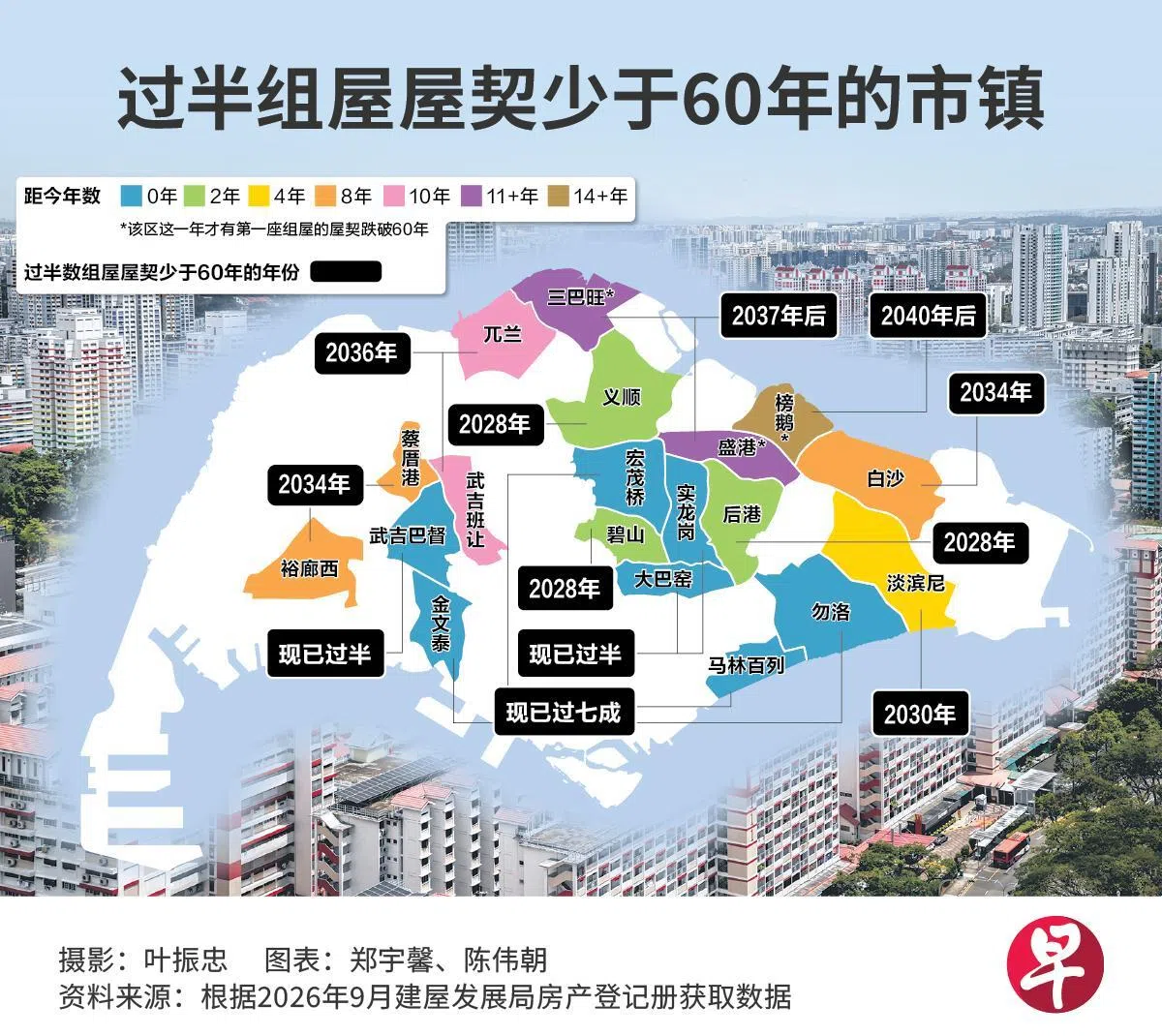
Data compiled from the Housing and Development Board’s property register by ERA Senior Division Director Gary Lim showed that, as of September this year, 4,129, or 38.7%, of the 10,657 HDB blocks across Singapore’s 26 HDB towns had less than 60 years remaining on their leases.
There is a stark divide in the age profiles of different towns. In Marine Parade, Ang Mo Kio, Clementi and Bedok, more than 70% of HDB blocks have reached the 40-year mark. By contrast, no HDB blocks in Sengkang, Punggol or Sembawang have yet turned 40.
60 years left on lease: A financing threshold
Why is a remaining lease of 60 years a key threshold for the property market? In an interview with Lianhe Zaobao, Lim said it largely came down to the “age-95 rule” governing Central Provident Fund (CPF) usage and housing loan limits.
Under the rules, an HDB flat’s remaining lease must cover the youngest buyer until the age of 95 for buyers to use their full CPF entitlement and obtain an HDB loan at a loan-to-value (LTV) limit of up to 75%. Buyers aged around 35 form the core of the HDB resale market, and they need at least 60 years remaining on the lease — 95 minus 35.
Once the remaining lease falls below 60 years, these younger buyers — who have the greatest purchasing power but also rely most heavily on loans — are the first to face pro-rated reductions in their loan and CPF usage limits. For example, a 55-year-old buying a four-room flat with 55 years left on its lease would be unaffected. But a 35-year-old buyer’s CPF usage limit would fall to 87.5%, and the loan limit to about 68.8%.
Lim said that when HDB owners anticipate their pool of potential buyers shrinking as their leases shorten, they are prompted to plan an earlier sale, “and if they can afford it, a resale condo or EC near where they already live is the natural next step.”
This is particularly true in mature estates such as Marine Parade, Ang Mo Kio, Clementi and Bedok, where most HDB blocks are more than 40 years old but resale prices remain firm.
Lim said: “On the one hand, owners who sell their older HDB flats realise large, stable proceeds, allowing them to enter the private housing market. On the other, when HDB resale prices are high, some owners conclude that paying a little more for a 99-year leasehold or freehold condo in the same area is better value. This supports demand for entry-level private homes.”
Newer towns have more potential private housing upgraders
Realion Group Chief Researcher and Strategist Christina Sun also believes that ageing HDB flats can help drive private housing prices. However, as prices of older flats ultimately rise more slowly than those of newer flats, the upgraders bringing substantial purchasing power to the private housing market are not owners rushing to sell older flats, but younger owners in newer towns such as Sengkang, Punggol and Sembawang.
Sun said: “In these newer towns, younger flats may fetch higher prices than older flats due to their longer remaining leases, giving younger owners greater financial means to upgrade to private housing. In non-mature estates such as Lentor and Tampines, prices of new private homes have also risen considerably.”
Dr Lee Nai Jia, co-founder and co-head of Property Doctors, agreed. He said: “As batches of flats reach their minimum occupation period (MOP), a younger HDB town may actually see more households consider upgrading. That can support demand for nearby condominiums, especially from families who want to stay close to schools or parents.”
Impact on private housing likely to remain modest as ageing flats become more common
Looking ahead, as more HDB blocks cross the 40-year mark, all three interviewees agreed that the impact of ageing flats on the overall private housing market would remain modest, and could even weaken.
Lee said shorter remaining leases gave some owners a reason to sell their HDB flats and upgrade to private housing. However, with price growth for older flats potentially slowing and some owners still carrying substantial mortgages, the equity they have built up may not be enough to bridge the price gap when upgrading to a private home.
Sun noted that not all owners selling older HDB flats wanted to upgrade. Some might choose another, newer resale flat or downsize to Community Care Apartments.
She concluded: “In future, when large numbers of flats nearing or crossing the 40-year mark are listed for resale, the increased supply may mean flat prices do not grow as much as in the past. If so, owners’ ability to cash out will be constrained, and upgrader demand for private residential homes may not be as strong, unless private home prices suddenly become highly attractive or external factors become favourable, such as ultra-low interest rates.”
