

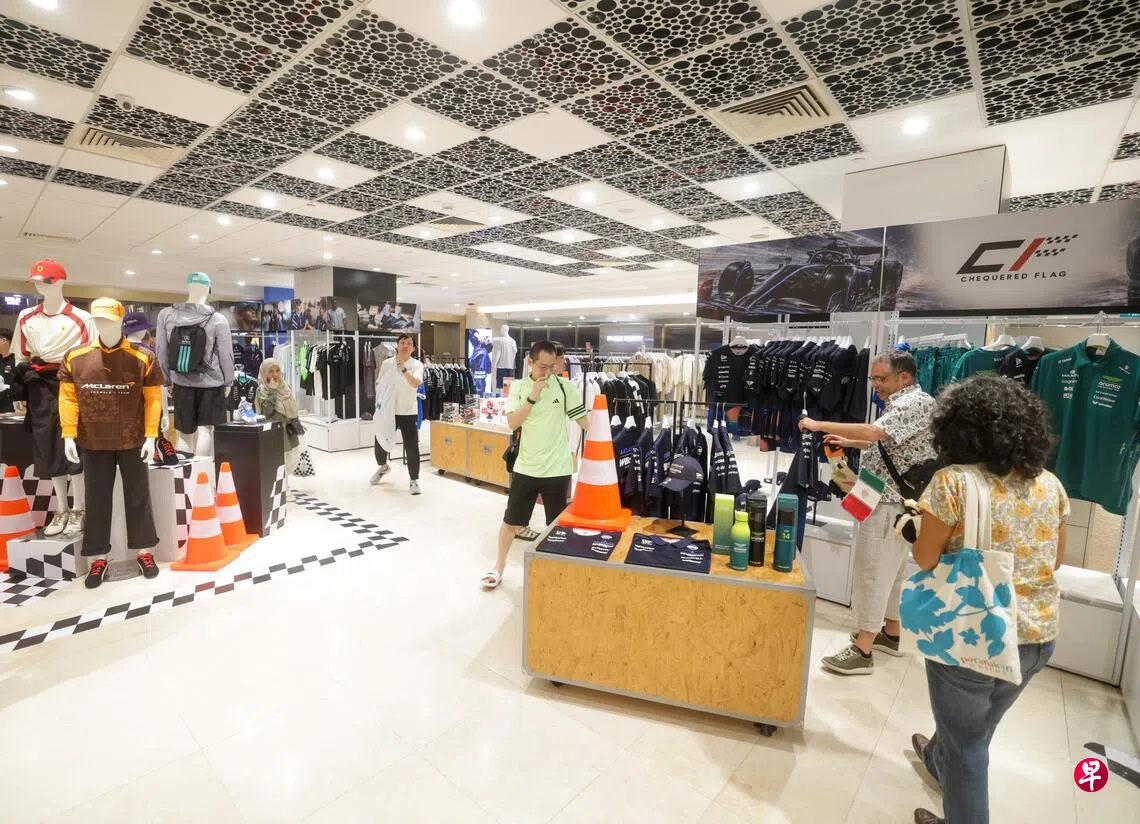
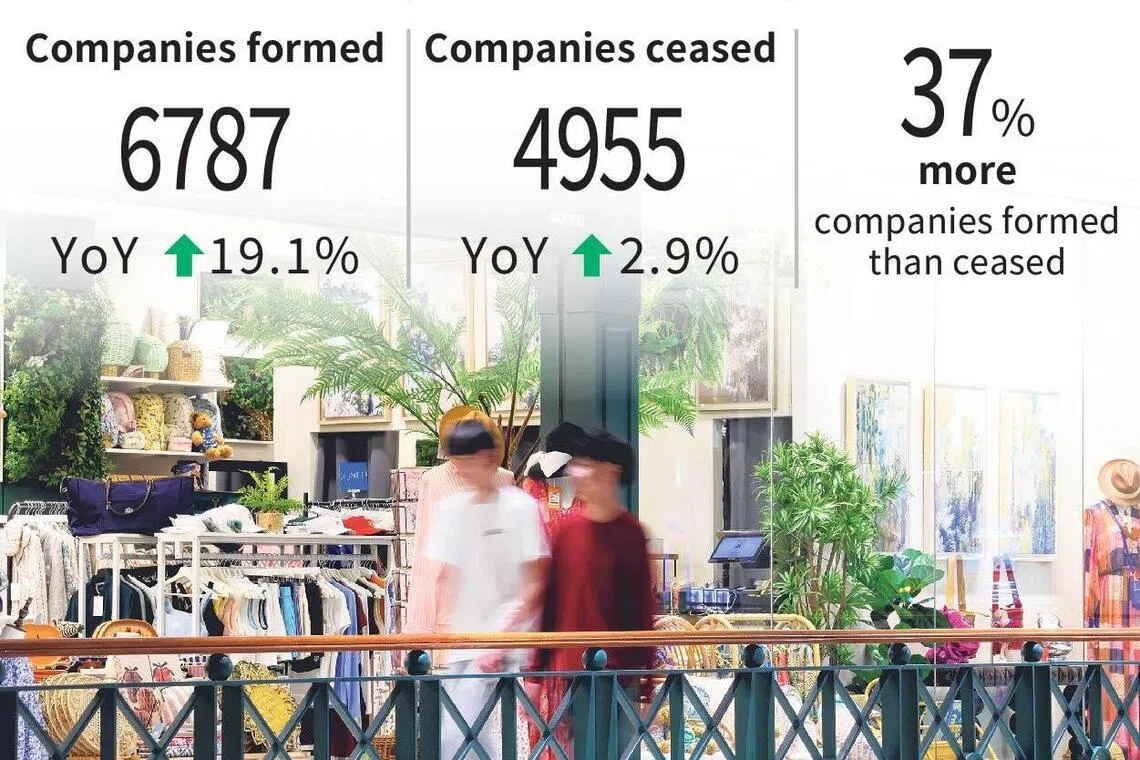
Despite rising rents and manpower constraints, 6,787 retail trade companies were registered in Singapore in the first nine months of this year — outnumbering closures over the same period by 1,832, or about 37 per cent.
According to Accounting and Corporate Regulatory Authority (ACRA) data, new retail trade company registrations rose 19.1% from the same period last year, while closures edged up 2.9% to 4,955. For the whole of last year, new retail trade company registrations increased 20% year on year, while closures rose 11%.
The growth in new retail trade company registrations in the first nine months of this year far exceeded the 8.9% increase in new business formations overall.
It should be noted that the authorities track when companies are incorporated, which does not necessarily reflect when they begin operations. Some investors may set up companies in advance to prepare for future expansion, while some new shops open under company registration numbers obtained years earlier.
Analysts and industry players interviewed said the arrival of foreign brands, job market changes prompting some people to turn to entrepreneurship, and artificial intelligence (AI) lowering barriers to running small businesses are among the factors driving the increase in new retail companies.
Dr Xu Le, a lecturer in the Department of Strategy and Policy at the National University of Singapore (NUS) Business School, told Lianhe Zaobao (LHZB) that the increase in new retail companies could be linked to foreign brands entering Singapore and a rise in local entrepreneurship.
She said many foreign retail brands had entered Singapore in recent years, with some Chinese brands viewing the country as a testing ground for overseas expansion.
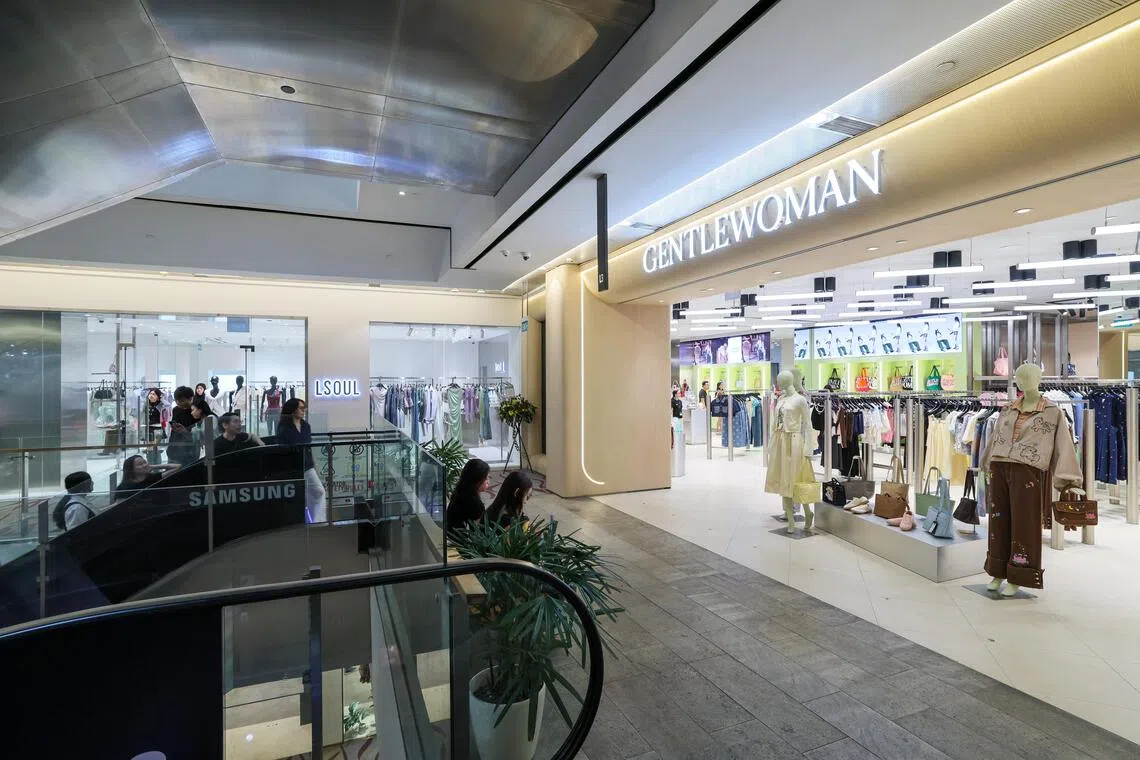
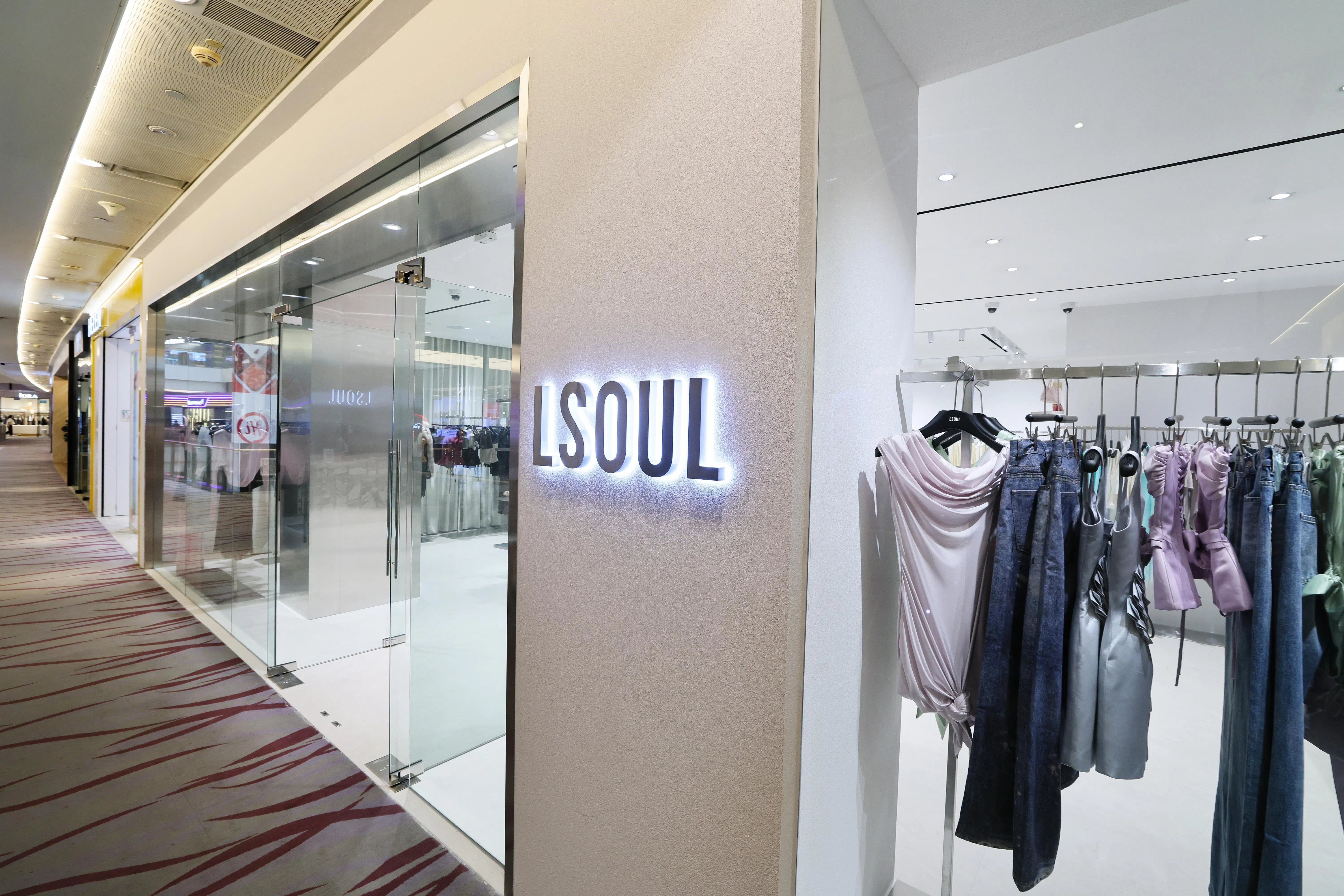
Singapore-listed Metro is one example. To cater to consumers’ changing preferences, Metro set up Grand Brands Asia this year to expand its retail business, focusing on international retail brands and immersive concept stores. In October, the company opened stores for Thai bag brand Gentlewoman and Vietnamese fashion brand LSOUL at 313@Somerset.
Sara Ching, director of Retail at Knight Frank Singapore, said international brands recently looking to enter Singapore came not only from China, but also from markets such as Japan, South Korea and the UAE.
She said retailers from mature economies with higher operating costs generally have a more realistic understanding of Singapore’s business environment. Although local rents and labour costs are not low, the familiar, transparent market environment and relatively well-developed retail ecosystem help reduce execution risks, giving companies greater confidence in making investment decisions.
However, she noted that international brands’ regional expansion strategies are changing. Brands with tighter budgets may first enter other lower-cost Southeast Asian markets, then move into Singapore after building a certain regional scale or establishing market demand.
Despite competition from international brands, some Singapore brands are continuing to open stores.
Lifestyle boutique SAGE opened at Tanglin Mall in March this year, with the company also registered this year. Co-founder Sabrina Lim told LHZB that this was not her first venture into retail. She also runs Silk Walk, a lifestyle boutique founded by her mother that has been in business for 27 years.
She acknowledged that the operating environment is now more challenging than before. Rising rents and labour costs, changing consumer spending habits and competition from e-commerce platforms have all put greater pressure on physical stores.
“However, we believe that retail is evolving rather than disappearing. Consumers today are not necessarily looking for just products, but also experiences, individuality and something different.”
She said small retailers should not compete solely on price and scale with large multinational brands or e-commerce platforms. Instead, they should build a competitive edge through carefully curated products, personalised service and a distinctive shopping environment. SAGE brings together clothing, accessories, homeware and other products from local and international brands, hoping to attract consumers with a shopping experience that differs from traditional retail stores.
Meanwhile, changes in the job market may also be prompting more people to start businesses. Xu said retail had lower barriers to entry than sectors such as technology and could attract people making career transitions, particularly middle-aged workers.
As AI renders certain skills obsolete and industries undergo restructuring and layoffs, some workers are finding that it takes longer to land a new job — and that their pay may not match previous levels. As a result, they are turning to running small shops or online retail businesses instead.
AI tools can also lower start-up costs. Xu said entrepreneurs can now use AI platforms and tools to offer personalised services with fewer staff, creating new business opportunities.
OCBC chief economist Selena Ling said the faster growth in new company registrations than in closures reflected a vibrant business ecosystem, as well as changes in the economic environment, consumer behaviour and technology. She said opportunities remain in retail, particularly in niche markets such as health and wellness, lifestyle and premium products, which are less exposed to mass-market competition. An omnichannel approach combining physical stores, e-commerce and social media could also help lower initial business costs.
More shops, but more sales?
However, the shop-opening boom has not translated into sales growth. Monthly retail data show that Singapore’s retail sales have recorded only low single-digit growth this year. Ling expects full-year growth of 2.6%.
Singapore Retailers Association President Ernie Koh, who is also executive director of furniture manufacturer Koda, expressed surprise that new company registrations far outnumbered closures.
He said retail and food and beverage are often the first sectors considered by aspiring entrepreneurs because their barriers to entry were relatively low. Frequent entries and exits were normal. Thousands of retail businesses open and close each year, and some of today’s major local brands began as small shops. Business turnover is also part of entrepreneurship.
Xu suggested that new company registrations might far exceed closures because businesses do not necessarily cease operations immediately after sustained losses. Having already committed to leases and fixed costs such as rent, operators may choose to stay open in the hope that business will improve. Even after ceasing operations, they may not immediately close the company, possibly in preparation for reopening.
Despite the flurry of retail openings, those interviewed said the industry still faced significant challenges and intense competition.
Koh said the cost of opening a physical retail store has risen. Besides shop rent, deposits and renovation costs, entrepreneurs also need to consider delivery vehicles and manpower expenses. Even a small business require an investment of hundreds of thousands of dollars.
He said the arrival of foreign brands could spur local businesses to become more competitive. However, some overseas companies have capital, supply chains and business teams at their disposal, so local retailers need to find their own distinctive strengths to stand out. The entry of low-cost e-commerce players such as Pinduoduo have also dealt a major blow to small neighbourhood businesses.
Koh said the Singapore Retailers Association is adjusting its membership structure to better cater to small retailers and new entrepreneurs. It is also involving small businesses in the Singapore Retail Festival to help them reach a wider market. From its previous focus on member services, the association is gradually broadening its remit to address challenges facing the retail industry as a whole.
