

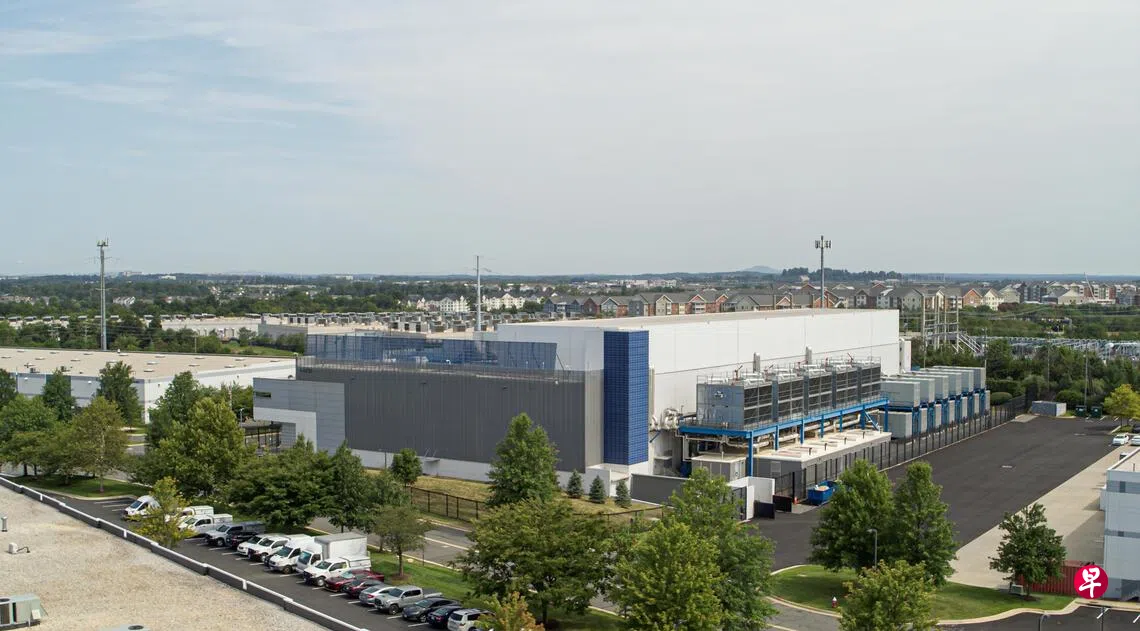
The rapid development of artificial intelligence (AI) and cloud computing has made data centres a closely watched asset class in the real estate investment trust (REIT) market. For investors, however, growing demand is one thing; turning that demand into stable, steadily rising distributions is another.
NTT DC REIT, which listed on the Singapore Exchange in July last year, is trying to prove it can do just that.
The trust’s latest results for the first half of its 2026/2027 financial year showed that gross revenue surged 142% year on year to US$119.8 million (about S$153.5 million) in the six months to the end of September this year.
The trust’s net property income (NPI) and distributable income both increased. Distribution per unit (DPU) reached 4.32 US cents, up 156% year on year and 10% above its initial public offering (IPO) forecast.
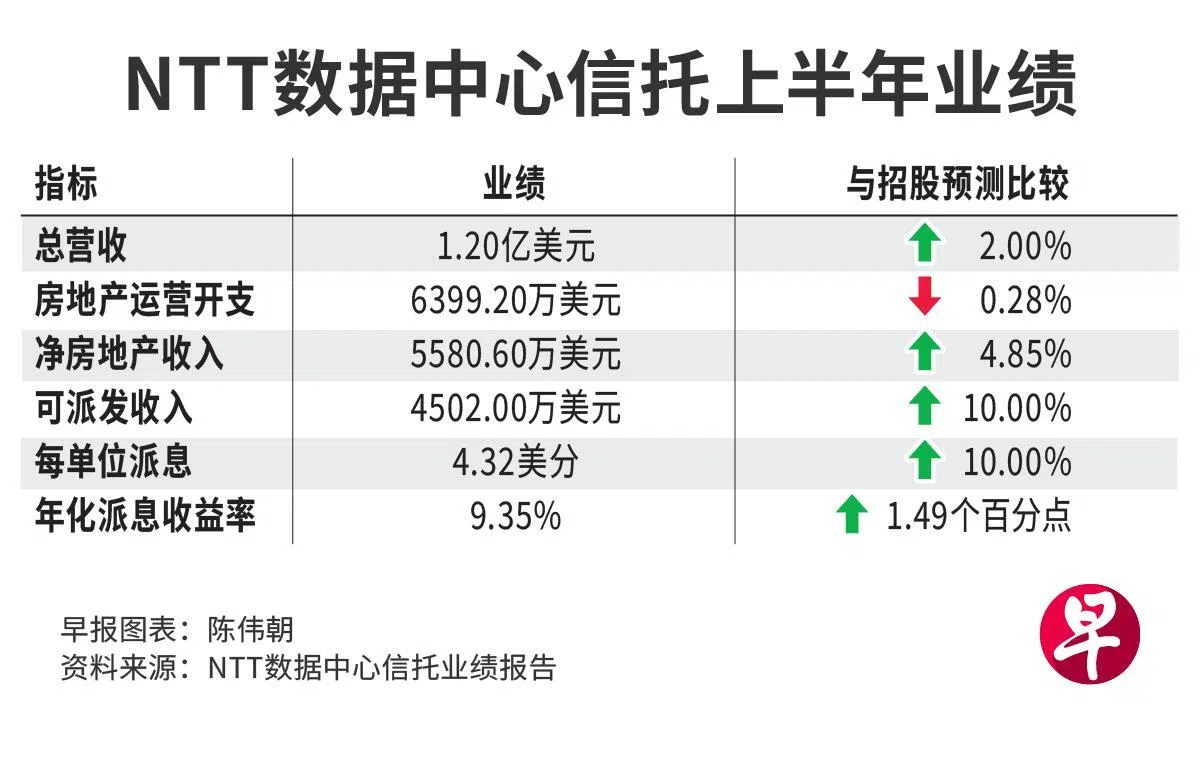
Given that the trust listed only in July last year, however, comparison with its prospectus forecasts may offer a clearer picture of its operating performance since listing. Its results showed that first-half revenue was 2% above forecast, while NPI was 4.9% higher.
Beyond revenue growth, cost control also played a part.
Other operating income reached US$7.5 million, exceeding forecast by 54.8%, mainly owing to additional tenant customization and fit-out works. Real estate taxes and insurance were also 72.2% below forecast, partly offsetting higher repair and maintenance costs.
The NPI margin consequently reached 46.6%, exceeding the original forecast. Meanwhile, net finance costs were 5.5% below forecast, further boosting distributable income.
With the US midterm elections now over, however, markets have recently begun reassessing the US government’s future policy direction, bringing the sector’s growth prospects under closer scrutiny. Some also argue that tighter regulation and restrictions on new data centres will do more good than harm for owners of existing assets, particularly in supply-constrained markets.
Jefferies analysts Wilson Ng and Geraldine Wong noted: “Scarcity of existing capacity, combined with structural demand growth, provides a favourable backdrop for occupancy, rents and asset values.”
Of the three data centre-focused REITs listed in Singapore, NTT DC REIT is the newest and has the smallest asset base. It currently owns six data centres across the US, Singapore and Austria, with a total valuation of about US$1.67 billion.
By comparison, Keppel DC REIT owns 27 data centres across 10 countries in the Asia-Pacific and Europe, with a portfolio worth about S$7.6 billion. Digital Core REIT owns 11 across the US, Canada, Germany and Japan, with assets of about US$1.9 billion.
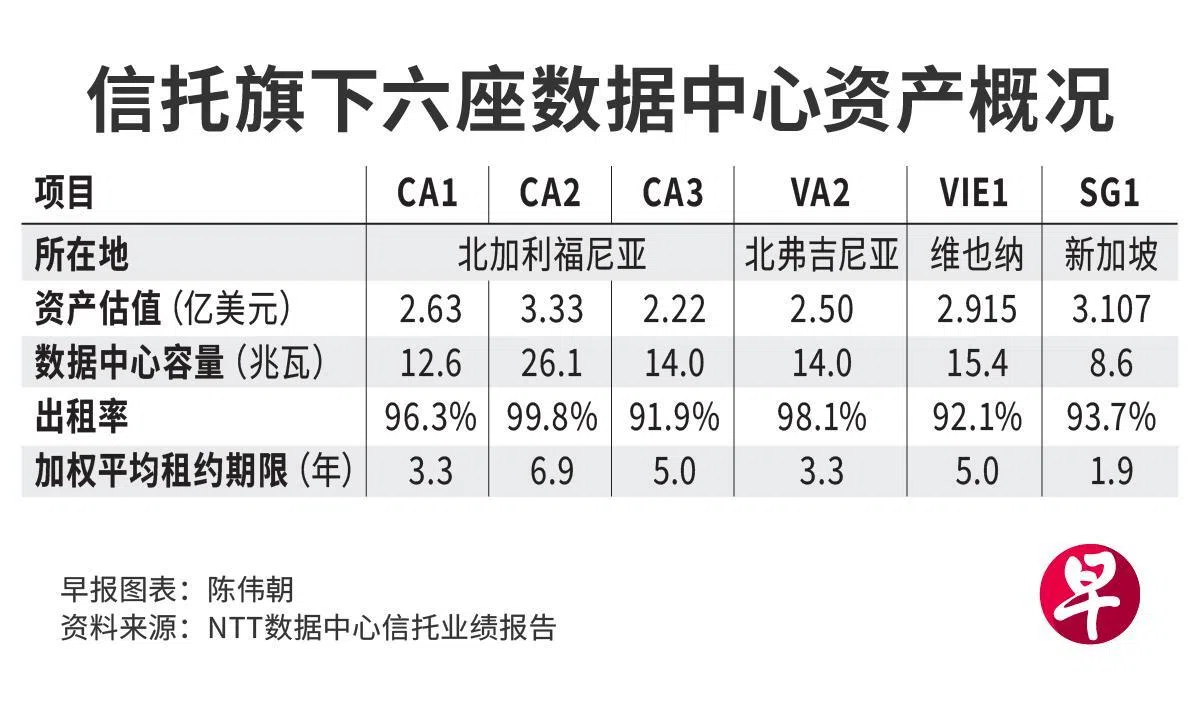
Occupancy rises to 97.5%, with rental increases offering room for growth
Dale Lai of DBS Group Research noted that NTT DC REIT has delivered on its promises in several areas since listing.
He said: “We continue to view NTTDCR positively and retain it as our top pick among DC-focused S-REITs, supported by strong organic rental growth from improving occupancy, positive rental reversions and built-in rental escalations.”
For instance, rent at the trust’s SG1 data centre in Singapore rose 23% upon lease renewal with its sponsor, Nippon Telegraph and Telephone Corporation (NTT). The trust also has annual rental escalation clauses averaging 3.1% in 84.3% of its leases, while another 3.2% are linked to the consumer price index.
This does not mean the trust’s prospects are without risk. Lai noted that occupancy across the existing portfolio is already close to full, leaving progressively less room to drive growth simply by filling vacant space. Its ability to continue raising rents will therefore become more important, particularly for leases expiring over the next two years.
Beyond rental growth from existing assets, the market is paying even closer attention to the trust’s first acquisition since listing. With NTT, the world’s third-largest data centre provider, as its sponsor, the trust has a right of first refusal over the sponsor’s stabilised data centres.
German acquisition valued at nearly US$500 million requires additional funding capacity
The trust previously announced plans to acquire a 24-megawatt (MW) hyperscale data centre in Frankfurt, Germany, in the second half of its 2026/2027 financial year. The property is valued at between US$450 million and US$500 million.
The data centre has two US hyperscale cloud service providers as its main tenants, a weighted average lease expiry of 10 years and an expected NPI yield of more than 6%.
UOB Kay Hian analyst Jonathan Koh believes that, if completed, the acquisition would not only expand the trust’s asset base but also improve its geographical mix. The ratio of its assets in Tier 1 markets to those in the secondary market could shift from the current 32:68 to 48:52.
For data centres, Tier 1 markets are established major hubs with strong demand from cloud computing and enterprise customers, as well as well-developed infrastructure such as network connectivity and power supply. Examples include Northern Virginia in the US and Frankfurt in Germany, with Singapore the main such market in Asia.
The acquisition could also reduce the share of the trust’s portfolio valuation accounted for by US assets from 64% to 49%, lowering its reliance on a single market.
Notably, the German transaction still requires regulatory approval, tax planning and preparations for the asset carve-out. The final acquisition terms have yet to be determined.
Moreover, with a potential valuation of up to US$500 million, the acquisition would exceed the trust’s estimated current debt headroom. Completing the deal may require a combination of borrowing, new unit issuance or other financing arrangements.
Fee reform links remuneration to distributions, helping align management and unitholder interests
Beyond its assets, NTT DC REIT has recently moved to adjust its management fees. On 6 November, the trust approved a new management fee structure, replacing the performance fee previously calculated at 3.5% of NPI with one directly linked to DPU growth.
Under the new mechanism, the manager will receive no performance fee if DPU growth does not exceed 3%. If growth exceeds 3% but is below 5%, the performance fee will be equivalent to 0.1% of assets under management. This rises to 0.2% if growth reaches or exceeds 5%.
REIT management fees have recently come under scrutiny. A mid-year survey of 41 listed trusts by independent research firm Corporate Monitor found that only half had management performance fee mechanisms linked to DPU. Under such arrangements, managers qualify for performance fees only when distributions grow year on year or similar conditions are met.
Only four of these trusts have a hurdle rate, requiring management to achieve a minimum year-on-year increase in DPU. They include CapitaLand Ascendas REIT and AIMS APAC REIT.
ESR REIT is the only trust with a high-water mark. Its management must raise distributions above their previous peak before qualifying for a performance fee.
Koh believes NTT DC REIT’s new system will encourage management to focus more on long-term value creation. “The restructuring incentivises DPU growth and increases alignment with unitholders’ interest.”
Overall, Lai believes the trust’s current valuation does not yet fully reflect its potential for organic growth and future acquisitions.
He said: “At a forward yield of approximately 9.6%, we continue to find valuations attractive for a pure-play data centre REIT with a visible organic earnings growth trajectory, strong Sponsor support and structural data centre tailwinds that could drive further upside.”
