

This week, technology giant Microsoft announced a voluntary departure programme spanning the US, Canada, the UK and India. It covers about 60,000 employees, more than a quarter of its global workforce (27%), making it one of the largest organisational restructurings among leading technology companies in recent years.
Then came Microsoft’s results for the first quarter of its 2027 financial year. Driven by a sharp 48% surge in its Azure cloud business, revenue and profit comfortably beat market expectations, sending its shares up more than 5% in after-hours trading.
Against a backdrop of investments running into tens of billions in artificial intelligence (AI) infrastructure and data centres, offering tens of thousands of employees a dignified exit through a “Golden Handshake” has become a quick way to demonstrate cost-cutting and efficiency gains. On the other side is investor euphoria over AI-driven productivity gains and soaring profits.
This stark contrast once again confronts us with a glaring reality of modern business: on a profit and loss statement, employees’ livelihoods are merely operating costs to be squeezed and optimised in a system that rewards doubling earnings per share (EPS) and soaring market capitalisation — while the painful fallout of lost jobs is silently offloaded onto the public purse and ordinary families.
The misalignment between business objectives and employee welfare — and indeed the common good — could hardly be clearer. Bridging this divide and bringing commercial logic back into line with the public interest often requires powerful mechanisms. Sometimes, that calls for both compulsory external intervention and a conscious redesign of internal institutions.
Government and regulators put haze-linked companies on notice
Take the transboundary haze that has persisted in Singapore for more than a month, with the 24-hour Pollutant Standards Index (PSI) at one point soaring to 192. The government’s firm intervention on Wednesday (28 October) offers an example of external mechanisms being used to align commercial interests with the public good.
That day, Deputy Prime Minister Gan Kim Yong, Senior Minister K. Shanmugam and Minister for Sustainability and the Environment Grace Fu took the unusual step of summoning top executives from 10 palm oil and forestry companies, including Wilmar president Kuok Khoon Hong and Golden Agri president Franky Widjaja.
At the meeting, Shanmugam made clear where corporate responsibility lay. The companies linked to the haze had not been summoned to serve as scapegoats, he said, but the haze came from fires, and those fires arose from irresponsible business practices. It was not a natural phenomenon. Fu also announced that amendments to the Transboundary Haze Pollution Act (THPA) would be introduced the following week. These would require companies under investigation to pay for a government-appointed panel of independent experts to examine their accounts and supply chains. Refusal to cooperate would become a criminal offence.
Concurrently, the Monetary Authority of Singapore and Singapore Exchange Regulation also took action, warning local banks to review the environmental risks posed by the companies concerned and reassess financing terms. Where serious environmental offences are established, banks must take firm measures, from limiting their exposure to terminating client relationships. The latter issued further queries to seven listed companies linked to the haze, requiring them to disclose, by a deadline, their haze-prevention policies and their connections to Indonesian entities under investigation.
Together, these measures sent an unmistakable message to capital markets: Singapore will not allow companies to reap the benefits of capital and private profits while passing the social damage and pollution costs on to the public.
Building safeguards for the public good into corporate DNA
By contrast, Anthropic, the developer of the Claude large language model, offered another distinctive case study this week as it prepared to go public, showing how a company might seek to impose self-restraint through its internal governance framework.
As markets cheered its pursuit of a valuation of about US$1.5 trillion (S$1.9 trillion), revenue growth of more than 1,300% in the first half of the year, and the rise in the fortunes of its seven co-founders, including Dario Amodei, to about US$27 billion each, its prospectus disclosed several governance choices that run counter to conventional business practice.
These include a collective pledge by all seven founders to donate 80% of their respective personal shareholdings and wealth to charity.
As a public benefit corporation (PBC), Anthropic must balance shareholder returns with the public interest. Its central measure is an independent Long-Term Benefit Trust (LTBT), which holds special Class T shares and has the power to elect and remove a majority of the board. This provides a structural counterweight to shareholders’ demands for short-term profits. Through another special category, Class F shares, the co-founders hold an absolute 50.1% of voting rights in general shareholder votes and in selecting the remaining directors, creating a second safeguard.
The company has also donated a 5% equity stake to a public benefit fund and devised a mechanism to issue an additional 2% automatically as its share price rises, ensuring that its contribution to the public good grows alongside its business.
Such a structure, which involves ceding control and pledging away wealth, will inevitably come with a valuation discount. Moreover, this model has yet to be tested in the public markets, and whether it can withstand pressure from capital to prioritise profits remains an open question. Even so, it at least represents a meaningful effort by a company to “consciously do good” at the level of institutional design.
When multinational giants wield more influence than sovereign states
Companies such as Anthropic, willing to place voluntary safeguards on capital, remain a minority. Across the wider business world, many multinational giants may be expanding at a pace that increasingly puts them beyond traditional constraints.
In the past, large multinationals hired armies of lobbyists to influence governments around the world in exchange for tax exemptions and subsidies. Today, many corporate giants command assets, computing power and influence exceeding those of many sovereign states. In some cases, the roles have even reversed, with countries competing to woo these industries.
That is precisely why the yardsticks for judging these giants cannot be confined to quarterly earnings, capital expenditure and share price targets. Higher standards and thresholds are needed, especially when these companies can determine whether people breathe clean air or have dignified jobs. The foundations of social governance and long-term stability are at stake.
Looking further afield, Southeast Asia is not the only region under a pall of haze recently. Western Europe, too, has been aflame.
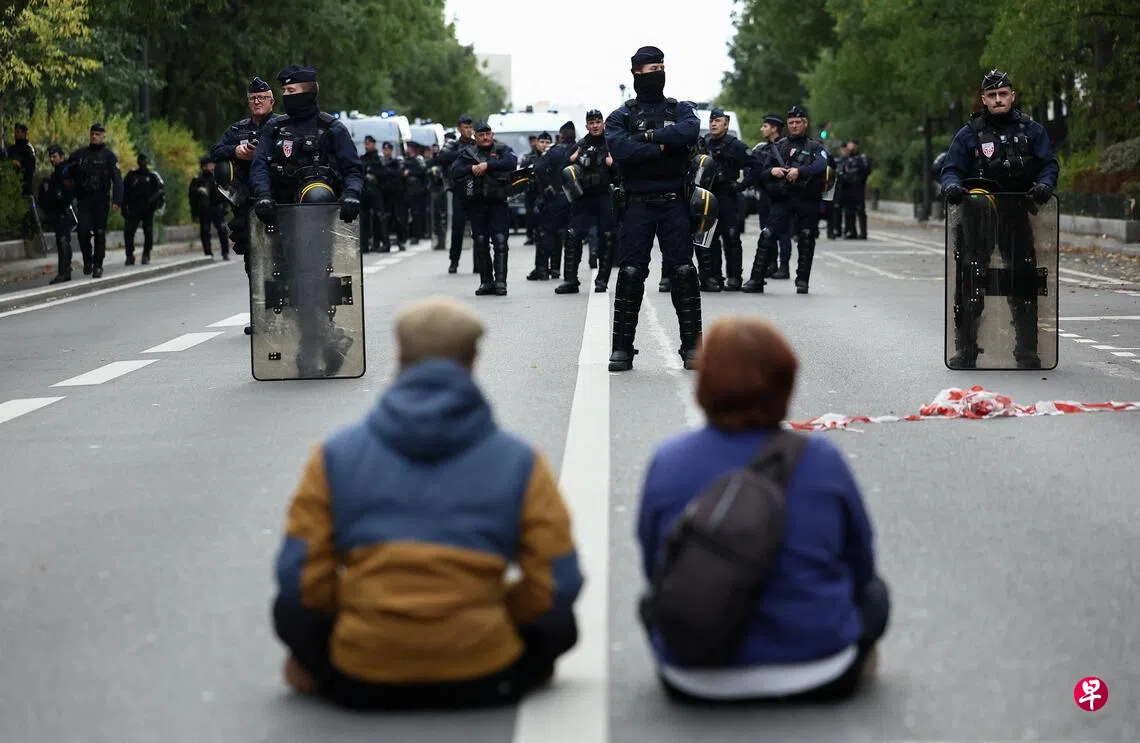
From flames at the town hall in Limoges, France, and water cannon on the streets of Brussels, to tent cities in the squares of Lisbon and Madrid, Western societies have been plunged into turmoil by soaring living costs, cuts to public budgets and corporate monopolies. This is a warning to those of us on the other side of the world: if companies focus solely on extracting profits while ignoring their social responsibilities, and governments are powerless and inactive, the foundations of social governance will be torn apart.
From AI replacing workers to a post-scarcity era
Meanwhile, it is an open secret that companies are adopting AI across their operations to eliminate the most expensive bottleneck in production: human labour. Friends working at multinational banks have privately told me that replacing workers with algorithms is now a core internal performance metric. And as a journalist myself, I have lost count of the number of times I have been asked: When will reporters be replaced?
One possible answer lies in the future sketched out by the world’s richest man, Elon Musk, and Michael Saylor, chairman of US-listed Strategy. Saylor warns that cash is like “a melting ice cube”, with the US dollar quietly losing 7% to 15% of its value each year.
Reasoning from first principles in physics, Musk describes money as essentially “a database for the exchange of goods and services”. He predicts that, as early as around 2036, AI and robotics will drive exponential productivity growth, pushing the marginal cost of goods and services ever closer to zero. Once labour and material supplies are no longer scarce, the role of a universal medium of exchange will be upended, and money and wages in the traditional sense will lose their value.
This inevitably brings to mind a shocking image I saw at the SOSORO Museum in Phnom Penh, Cambodia. Under the Khmer Rouge, Pol Pot took the extreme step of abolishing fiat currency, leaving people so impoverished that they had only bundles of banknotes to burn as fuel for boiling water and cooking. When money collapses, order disintegrates and value loses all meaning, human life becomes disposable. As many as two million people died unnatural deaths during that period, about a quarter of Cambodia’s population.
Yet this week’s events also point towards another possible answer: the future need not be a runaway train beyond saving; human wisdom and goodwill can still redirect capital. So long as capital is anchored in conscience, with human survival and dignity always placed first, value need not dissolve. Instead, institutional reform can secure a firm foundation that puts people first.
