

For artificial intelligence (AI) to be widely adopted, it must earn a social license, which rests on supporting jobs and raising wages.
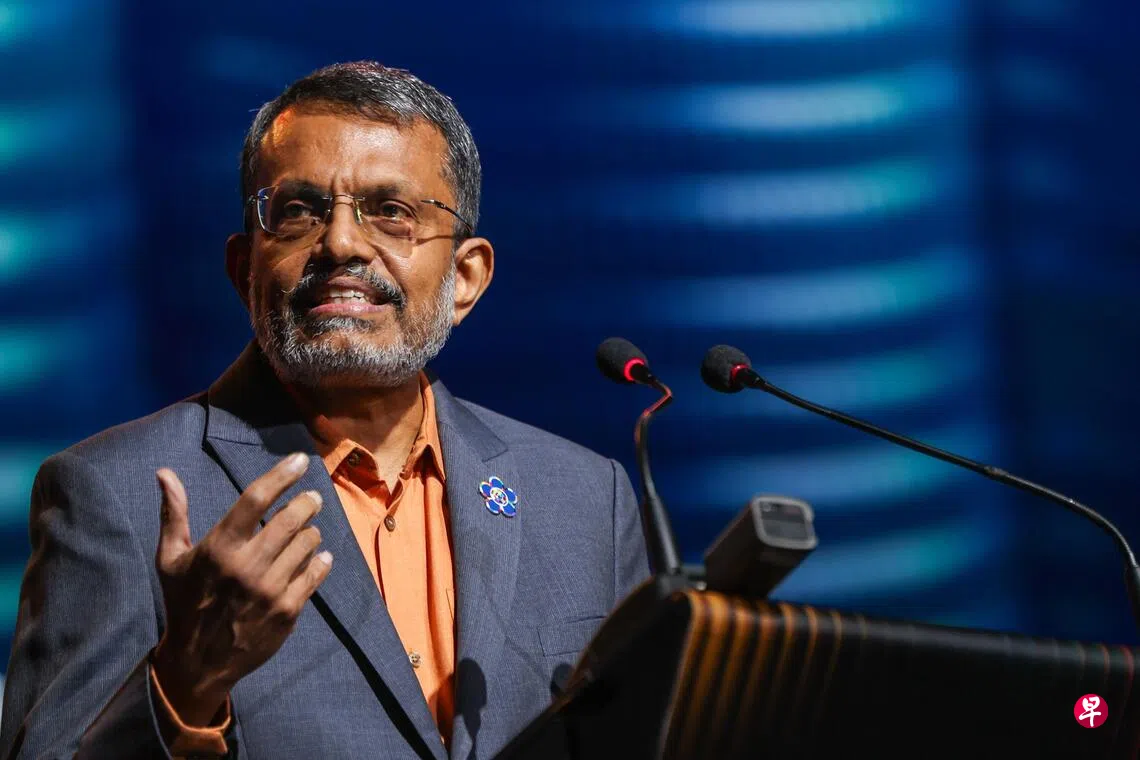
Singapore’s Ambassador for Climate Action and chairman of the Global Finance & Technology Network (GFTN), Ravi Menon, warned at the Singapore FinTech Festival on Wednesday (18 November) that globalisation had left lessons to be learnt. The populist backlash against globalisation in many countries was linked to domestic policy failures: people had not shared sufficiently in its gains, and those whose jobs and livelihoods were disrupted had not received support.
He said AI would face the same test, warning: “Let us not make the same mistake.” He stressed that AI development must put people first and allow workers to share in the benefits of technological progress.
On AI’s impact on employment, Menon explained that it could replace jobs through automation, but could also help employees become more productive, leading to higher wages and, in some cases, new jobs.
He said junior employees would feel both effects most keenly. Entry-level roles would be among the first affected by automation. But if businesses used AI to assist employees, less experienced workers could see the greatest productivity gains.
Whether AI helps junior employees or replaces them depends on employers’ choices, Menon said. Market demand and public policy would also influence those decisions.
He stressed that Singapore would not leave the distribution of gains from AI development to chance or market forces.
Spence: Businesses must not let automation overshadow long-term talent needs
Menon then held a dialogue with Michael Spence, professor emeritus at Stanford Graduate School of Business in the US and a Nobel laureate in economics. Spence said AI would not necessarily cause a lasting shortage of jobs, but was very likely to change what almost everyone did at work.
He expected “machine human collaboration” to be a working model more likely to succeed in future. AI could take over some tasks and shorten processing times, but people would still be needed to check the results and take responsibility.
Young people, however, already face employment challenges. Spence noted signs that youth employment was being affected in fields such as professional services and finance, but said other factors were also at play, and AI could not be blamed for everything.
Businesses must not neglect their long-term talent needs simply because current tasks can be automated. Citing large investment banks, he said that if AI took over junior-level work previously assigned to new recruits, banks would still need to find other ways to bring in young talent, as they would still need these people in ten years’ time.
Turning to income inequality, Menon noted that analytical skills currently commanded a substantial pay premium. Could AI change that distribution, bringing greater recognition to work such as nursing, services and eldercare, and thereby narrow income gaps?
Spence replied: “I’m pretty optimistic about this.”
He said advances in robotics, including the use of AI models in physical robots, also had to be considered. If these technologies could be widely adopted, enabling employees in different occupations to become more productive, they would help improve income distribution.
But he also warned that if the technology did not become widely accessible, some employees could see rapid productivity gains while others’ productivity stagnated.
