

A programme to advance climate technology in Southeast Asia has been renewed for three years, bringing in major regional industry players including Indonesia’s Pertamina NRE, Olam Agri and PTT ExpresSo to help innovators de-risk their technologies and commercialise promising climate solutions.
Launched in 2024, Breakthrough Energy Fellows – Southeast Asia (BE Fellows – SEA) is the first Fellows hub outside the US. It aims to address early-stage barriers to climate technology innovation in Southeast Asia and support the development and commercialisation of these technologies.
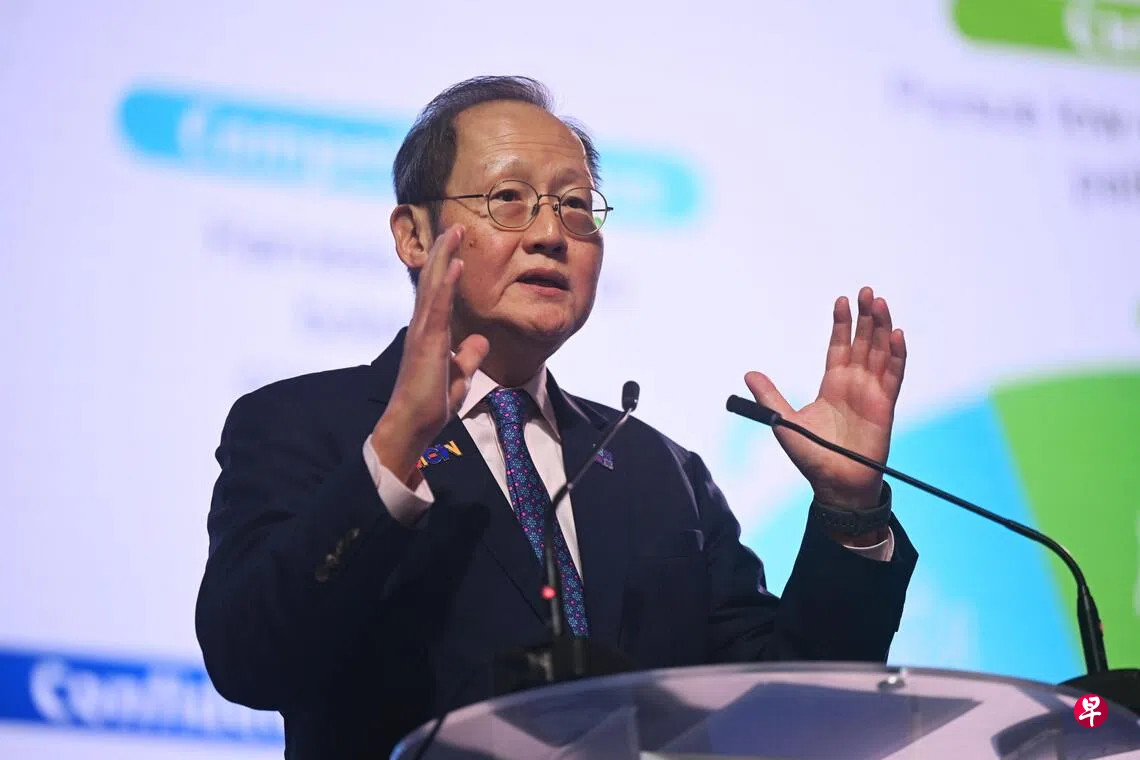
Minister for Trade and Industry (Energy and Industry) Dr Tan See Leng announced the renewal in a speech at the Singapore Week of Innovation and Technology 2026 (SWITCH 2026) on Wednesday (28 October).
Tan said that for many start-ups, developing breakthrough technologies was only the first step. The bigger challenge was to validate solutions in real-world settings, secure early customers and build commercially viable businesses.
These challenges were particularly acute for climate and energy technologies, he noted, and this was where partnerships could play a critical role.
Tan said: “Singapore is well-positioned to bring these partners together. Our ambition is not just to develop technologies here, but to translate them into commercially viable solutions and scale them globally.”
According to a joint statement by Breakthrough Energy, the company founded by Bill Gates, Enterprise Singapore and Temasek, fellows selected for BE Fellows – SEA can receive up to US$500,000 in project funding, along with technical and commercialisation support and access to a network of industry experts across regions.
On the same day, Tan also launched the 24-month Lenovo–Enterprise Singapore Global Accelerator Programme. Focusing on deep-tech fields such as artificial intelligence (AI), robotics and advanced materials, it will help start-ups connect with Lenovo’s R&D teams, corporate customers and real-world validation environments across more than 180 countries.
Tan also announced that the Singapore Airlines Group had signed an offtake agreement to purchase sustainable aviation fuel (SAF) from environmental technology company Aether Fuels.
Aviation is one of the hardest sectors to decarbonise, partly because of the current lack of commercially available low-carbon technologies. Sustainable aviation fuel is considered the most viable solution currently available for achieving net-zero carbon emissions by 2050, and is expected to deliver about 65% of the emissions reductions needed.
On international partnerships, Tan announced a new collaboration between Enterprise Singapore and Bakar Labs at the University of California, Berkeley. It will help Singapore start-ups access Bakar Labs’ life sciences and advanced materials laboratories and facilities, with eligible companies receiving subsidies covering up to 70% of costs.
Tan reiterated: “The true measure of innovation is not simply what we can invent, but what we can put to use - to solve real problems, transform industries and improve lives.”
This year’s Singapore Week of Innovation and Technology exhibition introduced a Southeast Asia pavilion for the first time, bringing together leading companies from across the region to showcase opportunities for innovation and collaboration. It reinforces Singapore’s position as a regional hub where innovations from around the world can, with support from various partners, be developed, commercialised and scaled across Southeast Asia.
Separately, Enterprise Singapore said in a statement issued during SWITCH that it had signed a memorandum of cooperation with the Tokyo Metropolitan Government as Singapore and Japan mark 60 years of diplomatic relations. Through two-way immersion exchanges and business matching, the partnership will help Singapore start-ups enter the Japanese market, while supporting Japanese start-ups in using Singapore as a springboard into regional and global markets.
