

Singapore will launch three National AI Missions for Financial Services, bringing institutions together to advance practical applications of artificial intelligence in scam detection, financing for small and medium-sized enterprises (SMEs), and automated transactions by AI agents.
One mission involves developing an industry-wide anti-scam data platform to address the challenge of scam proceeds being moved between banks within minutes. Five banks have begun a proof-of-value project, securely pooling transaction data and using AI models to identify unusual patterns that individual banks cannot detect.
The Monetary Authority of Singapore (MAS) will launch a design study early next year to develop a governance and operating blueprint for an industry-wide Scam Detection Utility.
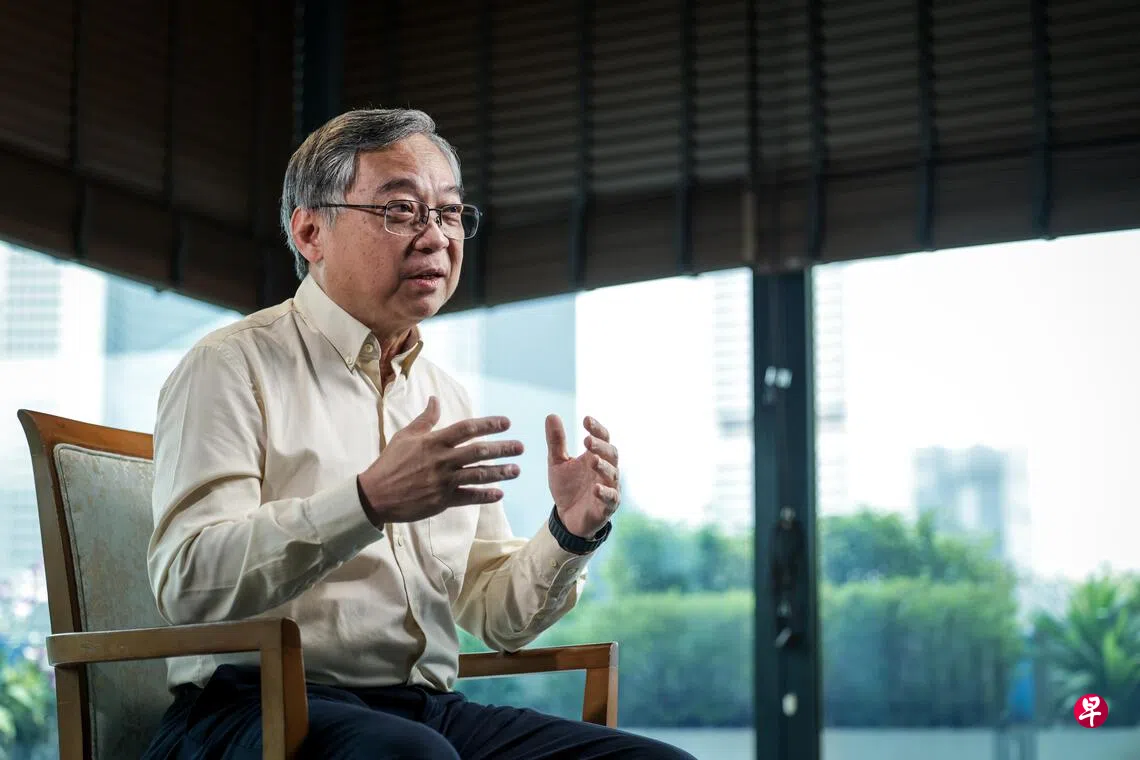
Deputy Prime Minister and Minister for Energy, Trade and Industry (Trade) Gan Kim Yong made the announcements in his keynote address at the Singapore FinTech Festival 2026 on Wednesday (18 November).
Gan, who is also chairman of the Monetary Authority of Singapore (MAS), said artificial intelligence was reshaping competition in the financial sector, but technological innovation must be built on trust and accountability.
He said: “Trust gives us the confidence to move quickly. Clear standards and effective safeguards enable financial institutions to test and deploy new solutions responsibly. They also give businesses and individuals the confidence to use these services, knowing that their money and data are protected and that institutions will be held accountable.”
The three National AI Missions for Financial Services launched by MAS follow the government's establishment earlier this year of the National AI Council, led by Prime Minister Lawrence Wong. They aim to address systemic challenges that individual financial institutions would struggle to tackle alone. The Future of Finance Institute will coordinate efforts across industry, research institutions and the public sector to turn the missions into practical solutions.
On improving SME financing, traditional credit assessments often rely on past performance and collateral, making it difficult to capture the growth potential of SMEs and start-ups. The government will invite AI technology companies to test models using realistic synthetic data. By integrating diverse data sources, including bank accounts, invoices, payments and government records, the models could help lenders make faster, less costly lending decisions and even proactively recommend suitable financing options to businesses.
To enable secure transactions by AI agents, which could in future act autonomously on behalf of individuals or businesses, the authorities will work with industry on trials in a controlled environment. These will include exploring how AI agents can use purpose-bound money to automatically make contractual payments and purchases within predefined permissions.
Gan stressed: “Greater autonomy must come with clear responsibility and accountability. Agents must operate within defined permissions and limits. Financial institutions and businesses remain accountable for the actions taken on their behalf, and must build in safeguards from the outset.”
Gan: Singapore will not tolerate companies misusing their links to the country
Discussing the development of computing infrastructure, Gan addressed the US Department of Commerce's recently announced rules on advanced semiconductors. He said the government was assessing the business impact with affected companies and engaging the US authorities to help local firms secure access to the relevant technologies.
Gan reiterated Singapore's firm commitment to safeguarding its international reputation: “We value our international reputation and will not tolerate companies using their association with Singapore to circumvent or violate other countries' laws in their international business activities. We will take action against those who violate our laws.”
MAS also released the second-phase report on PayNow Generation 2 on the same day, aimed at further improving the convenience and security of everyday payments.
The new initiatives include introducing an SGQR+ switch, allowing Singapore residents and visitors to scan any SGQR+ label to make payments using their preferred QR code payment app.
