

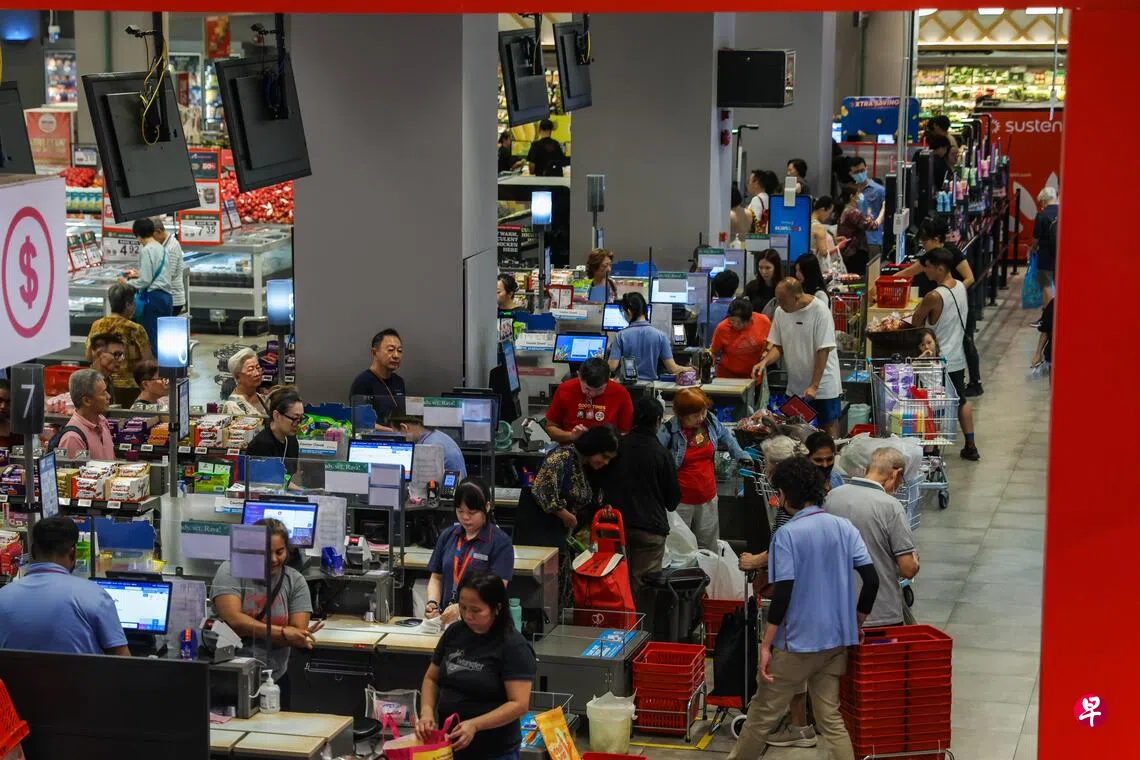
Singapore’s retail sales rose 1.7% year on year in September, up from August’s revised 0.8% growth. This marked the eighth consecutive month of growth, but the increase fell short of economists’ forecasts.
Economists polled by Bloomberg had forecast a 2.2% year-on-year rise in September retail sales.
The latest figures released by the Singapore Department of Statistics on Thursday (5 November) also showed that, excluding motor vehicles, parts and accessories, retail sales rose 2.5% year on year in September, up from 1.7% in August.
On a seasonally adjusted basis, retail sales fell 1.0% month on month in September. Excluding motor vehicles, parts and accessories, retail sales fell 1.8% month on month.
Total retail sales in September were estimated at S$4.3 billion, with online sales accounting for 17.7%, up from 15.6% in August. Excluding motor vehicles, parts and accessories, retail sales totalled about S$3.6 billion, of which 20.8% were online sales.
Chua Han Teng, senior economist, DBS Bank, noted that nominal retail sales rose 1.7% year on year in September, marking the eighth consecutive month of growth. However, year-on-year retail sales growth slowed to 1.3% in the third quarter, down from 4.1% in the second quarter.
Performance across the 14 major retail categories was mixed, with only six recording year-on-year sales growth in September.
"The year-on-year rise in nominal retail sales mainly reflected higher price effects, as retail sales in real terms remained weak, contracting year on year for the third consecutive month," said Chua.
Haze ‘could have boosted online sales’
The 6.5% year-on-year rise in petrol service station sales illustrated this price-driven growth, as renewed increases in global energy prices pushed up domestic petrol prices and raised costs for consumers. Computer and telecommunications equipment also recorded a significant sales increase of 16.5%.
Looking ahead to October’s figures, Chua said medical goods sales could receive a boost as severe transboundary haze drove up demand for masks.
He expected increased tourist spending from major events in the fourth quarter of this year, such as the Formula One Grand Prix and large-scale concerts, along with continued government support measures, to underpin retail sales growth. Stable but mixed labour market conditions would also provide some support for retail sales.
Selena Ling, chief economist, OCBC, said, "The impact of the hazy conditions could have curbed some outdoor activities and shifted some consumption online as reflected in the higher proportion of online sales from 15.6% of total sales in August 2026 to 17.7% in September 2026."
Ling expected retail sales to rise 0.6% year on year in the fourth quarter of 2026. However, she remained cautious about October’s figures, forecasting a 0.4% year-on-year decline and a 0.2% month-on-month fall, partly because of the high base in October 2025 and worsening haze conditions in October.
Said Barnabas Gan, group chief economist, RHB, "The retail activity is expected to moderate in the medium term as elevated energy costs, softer regional tourism demand and more cautious consumer sentiment weigh on household spending."
He maintained his forecast for retail sales growth of 3.0% in 2026 and expected growth of 2.6% in 2027.
The Statistics Department’s figures also showed that food and beverage services sales rose 1.0% year on year in September this year, reversing August’s 1.8% decline. On a seasonally adjusted basis, sales rose 0.8% month on month in September.
