

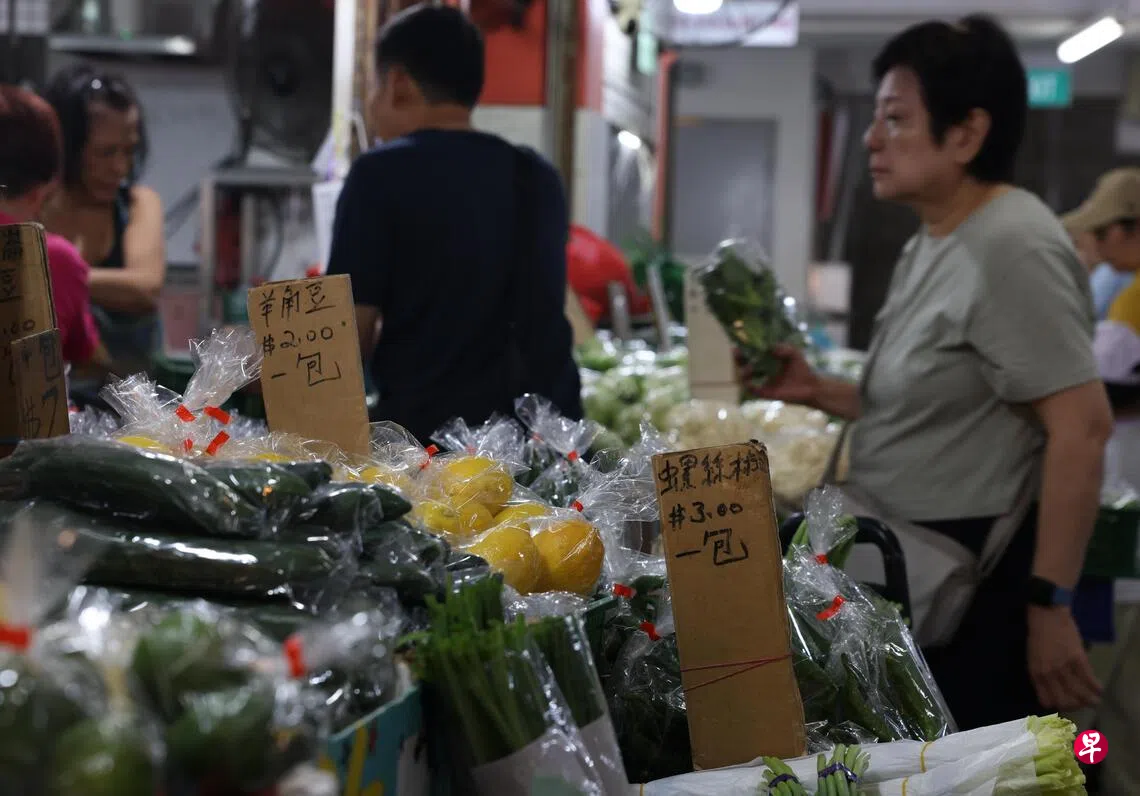
Singapore’s core inflation rate fell from 2.0% in September to 1.5% in October, mainly due to slower price increases for services, electricity and gas. Headline inflation also eased from 2.2% to 1.9%.
Data released by the Monetary Authority of Singapore (MAS) and the Ministry of Energy, Trade and Industry on Monday (23 November) showed that slower increases in car prices brought private transport inflation down from 7.1% in September to 6.7% in October, also contributing to the easing in headline inflation.
However, core inflation, the measure MAS focuses on, excludes accommodation and private transport costs and is therefore not directly affected by these price changes.
By category, services inflation fell from 1.7% in September to 1.1% in October, as airfares, health insurance premiums and healthcare costs rose more slowly.
Food inflation edged down from 2.4% to 2.3%, while inflation for retail and other goods rose from 1.2% to 1.6%. Accommodation inflation held steady at 0.9%.
Electricity tariff cut brings down core inflation
Electricity and gas inflation fell from 8.7% in September to 1.0% in October, mainly due to slower increases in electricity prices.
Edward Lee, Standard Chartered’s chief economist for Southeast Asia and South Asia and head of foreign exchange research, told Lianhe Zaobao that the reduction in electricity tariffs in October was mainly due to lower global energy prices from July to September. The cut was also larger than the bank had expected, bringing core inflation down further.
However, he said energy price trends would still need to be watched. Although oil prices have retreated after surging in October, Standard Chartered estimates that even if Brent crude prices remain at US$90 a barrel until mid-December, the average oil price from October to mid-December would still be higher than that from July to mid-September.
OCBC chief economist Selena Ling, meanwhile, said the retreat in oil prices from their late-October highs could bring electricity tariffs down further after a time lag.
DBS senior economist Chua Han Teng cautioned that the easing in electricity and gas inflation could be temporary. Fluctuations in global energy costs could push it up again in the first quarter of 2027.
Economists expect monetary policy to remain unchanged in January
Looking ahead, MAS and the Ministry of Energy, Trade and Industry expect imported cost pressures to remain elevated in the near term. Core inflation is expected to pick up in the first quarter of 2027 before slowing more noticeably from the middle of the year.
The authorities maintained their inflation forecasts, with core inflation projected to average 1.5% to 2.0% in 2026 and headline inflation around 2.0%. Both measures are forecast to range between 1.5% and 2.5% in 2027.
OCBC expects headline and core inflation in 2027 to be around 1.8% and 1.9% respectively.
Maybank cut both its 2027 forecasts from 1.9% to 1.7%. It also lowered its 2026 headline inflation forecast from 2.0% to 1.9% and its core inflation forecast from 1.8% to 1.6%.
Despite upside risks to inflation, economists interviewed generally believe MAS still has room to maintain its current monetary policy in the near term.
Chua Han Teng said that while another modest tightening by MAS could not be ruled out, the central bank could continue to wait and see in the absence of a major external price shock.
Maybank economists Chua Hak Bin and Lee Ju Ye expect MAS to maintain the Singapore dollar’s current pace of appreciation for the rest of 2026 and throughout 2027. The bank believes the bar for further monetary policy tightening is high, given slowing economic growth and inflation remaining under control.
Edward Lee also maintained his forecast that MAS would leave monetary policy unchanged in January, but said further tightening remained possible.
He noted that the latest US restrictions on advanced chips and remote computing services had added uncertainty to the economic growth outlook, making policy tightening less likely than before.
However, ING believes MAS could tighten monetary policy further if domestic inflationary pressures rise again. The bank noted that while Singapore benefits from AI investment, the associated economic activity could also generate persistent price pressures.