

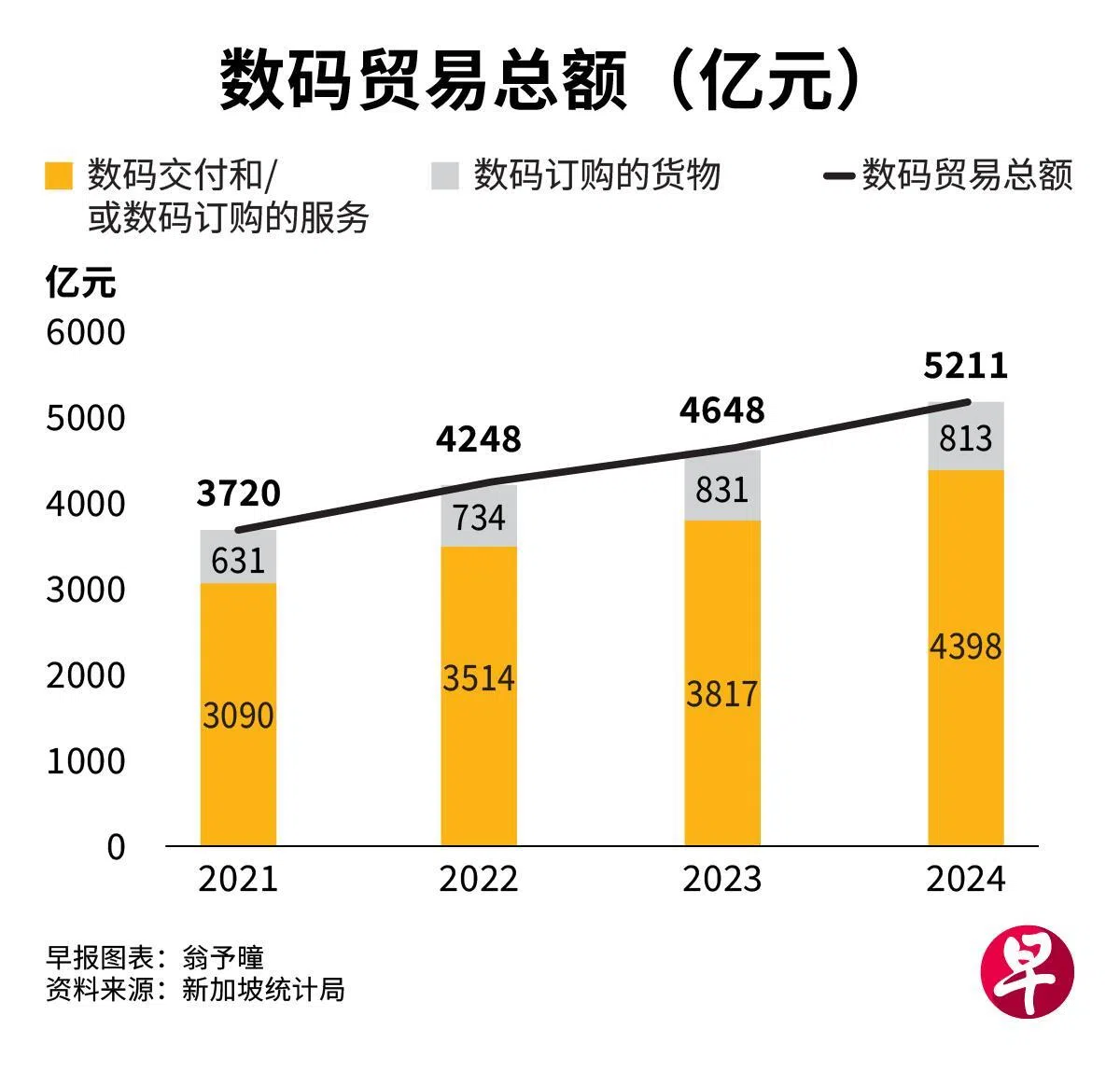
Amid growing digitalisation, Singapore’s digital trade rose from S$372 billion in 2021 to S$521.1 billion in 2024, recording a compound annual growth rate (CAGR) of 11.9%, well ahead of the 7.4% growth in overall trade over the same period.
The latest experimental estimates released by the Singapore Department of Statistics (SingStat) show that digital trade’s share of Singapore’s overall trade rose steadily from 19.2% in 2021 to 21.7% in 2024. Over the same period, the ratio of digital trade to gross domestic product (GDP) increased from 62.8% to 68.1%, reflecting the increasingly significant role of digitalisation in driving Singapore’s economy.
Digital trade is a component of international trade in goods and services, covering exports and imports of goods and services that are digitally ordered or delivered.
Digital trade in goods and services is classified according to how they are ordered and delivered. Singapore’s digital trade estimates are compiled mainly from trade and industry surveys, supplemented by other sources such as credit card transactions and household surveys.
Digitally delivered or ordered services, such as cloud services and streaming platform services, make up the bulk of Singapore’s digital trade.
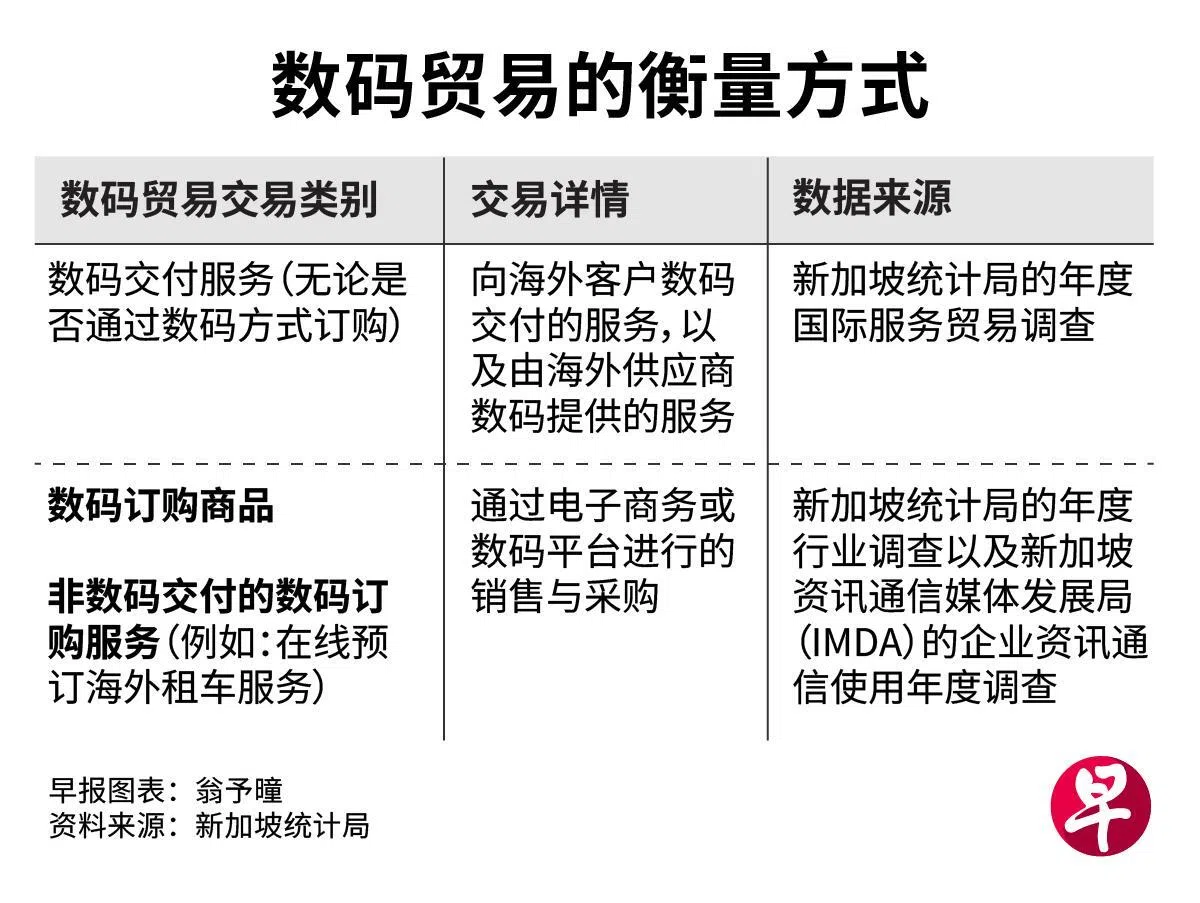
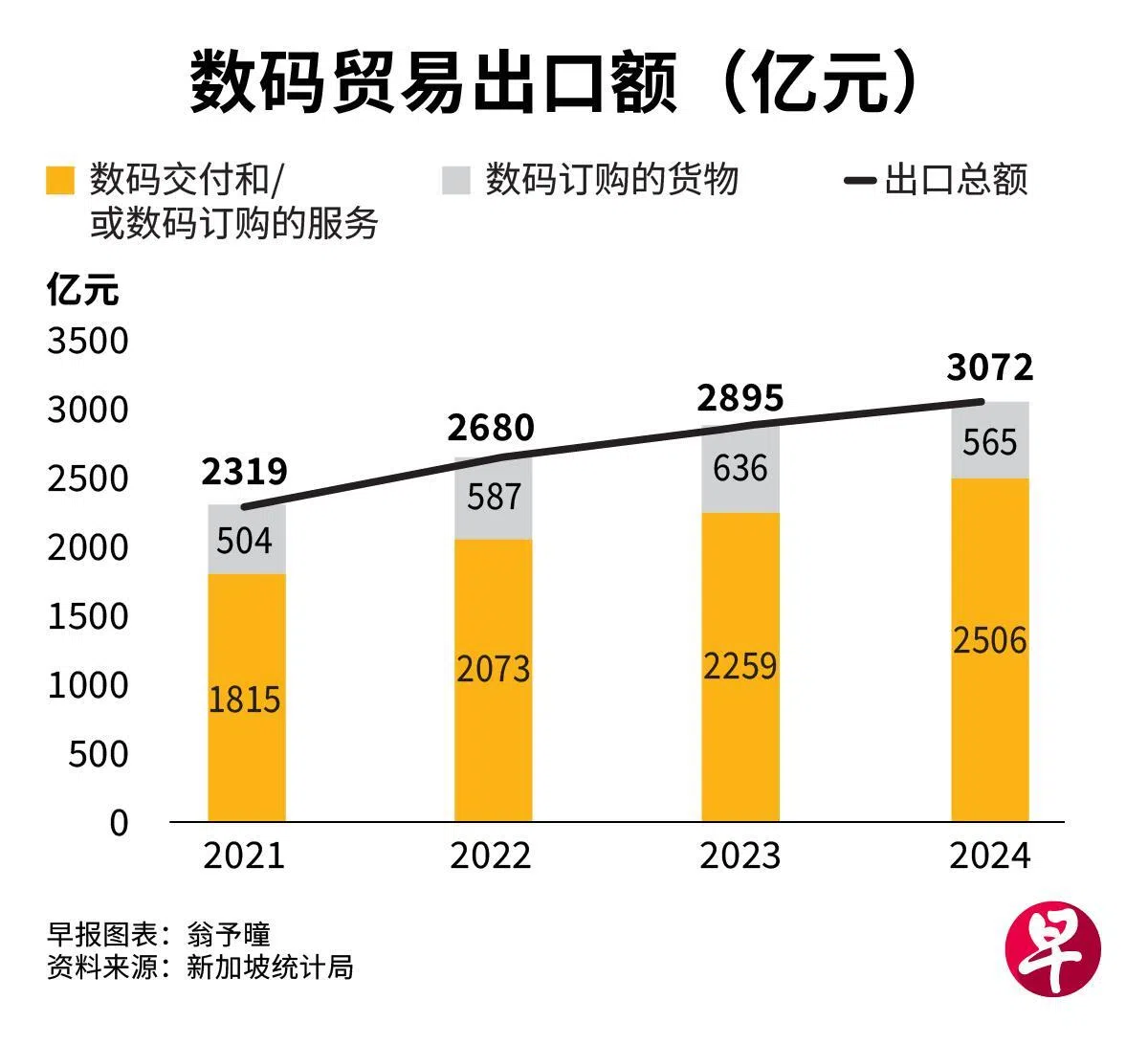
In 2024, trade in these services reached S$439.8 billion, accounting for more than 80% of the total, with a four-year CAGR of 12.5%.
By comparison, goods ordered through e-commerce or digital platforms totalled S$81.3 billion in 2024, with a four-year CAGR of 8.8%.
Digital trade exports grew from S$231.9 billion in 2021 to S$307.2 billion in 2024, a CAGR of 9.8%. Services accounted for S$250.6 billion of these exports.
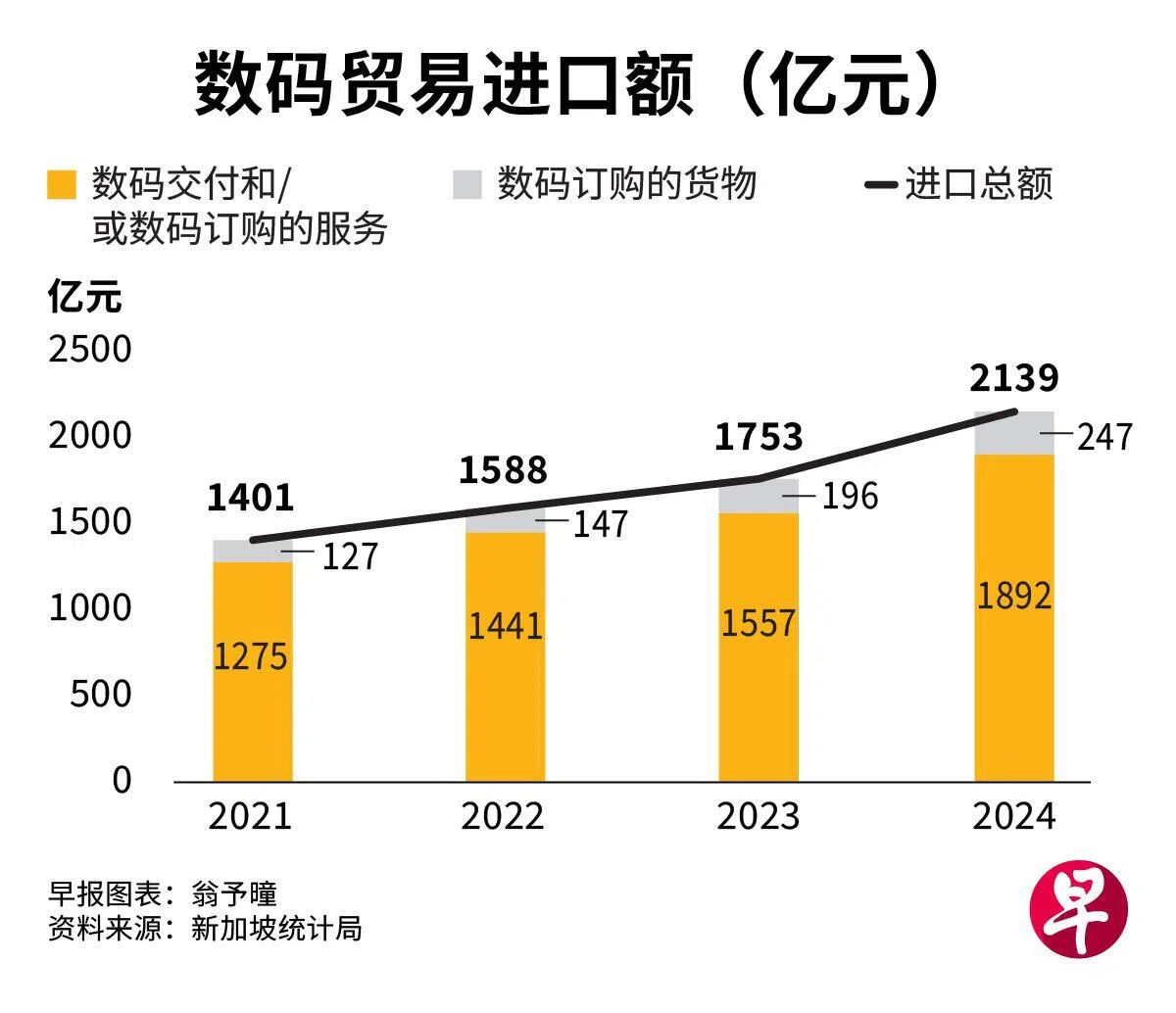
Digital trade imports grew even faster, rising from S$140.1 billion in 2021 to S$213.9 billion in 2024, a CAGR of 15.1%. Notably, surging demand from consumers and businesses ordering physical goods on cross-border e-commerce platforms drove imports of digitally ordered goods to nearly double, from S$12.7 billion to S$24.7 billion, a CAGR of 25.0%.
International comparisons based on 2023 data show that digital trade accounted for 20.9% of Singapore’s total trade. This was higher than in economies such as Canada (14.8%), Greece (14.5%), Italy (14.2%) and Norway (10.2%), but below the Organisation for Economic Co-operation and Development (OECD) average of 25.9%. Singapore also trailed leading countries such as the UK (55.2%) and Sweden (43.6%).
SingStat’s analysis noted how this indicates that Singapore still has considerable room for growth in deepening digital adoption and expanding digital trade.
Beyond cross-border trade flows, the first experimental estimates for the Digital Economy Satellite Account, released at the same time by SingStat, show that local digital industries also provide strong support for the real economy. In 2023, Singapore’s digital industries generated S$152.7 billion in gross value added, accounting for 23.7% of the national total and maintaining a substantial contribution of more than 20% of GDP.
SingStat said the experimental framework, developed using OECD standards, would give policymakers and businesses clearer, more comparable data for assessing Singapore’s position in international value chains and the digital economy.
Maisie Chong, Standard Chartered’s head of trade and working capital for ASEAN and South Asia, told Lianhe Zaobao (LHZB): “Singapore has significant structural strengths in connectivity, services and digital infrastructure, so our baseline expectation is that its digital trade will continue to grow faster than overall trade in 2025 and 2026. However, with a more volatile external environment, growth may normalise from the exceptional double-digit rates seen in the early phase of accelerated digitalisation.”
Chong said a Standard Chartered study, the Future of Trade report, further supported this trend. Between 2016 and 2025, global exports of digitally delivered services grew by 136%, compared with 70% growth in total exports of goods and services.
The study found that recent demand for computer services, artificial intelligence, cloud delivery, cyber security and broader digital transformation had supported this growth momentum.
She noted that these trends remained favourable for a highly connected, services-oriented economy such as Singapore, even amid a more volatile external trade environment.
