

The Straits Times Index (STI) extended its losses on Friday (20 November), falling more than 2% in intraday trading. It broke below both the previously anticipated support level of 5,020 and the psychological threshold of 5,000, taking its decline from a record high of about 5,828 in early September to nearly 15%.
Analysts interviewed said the correction had evolved from an initial valuation reset into a regional withdrawal of funds driven by the global sell-off in artificial intelligence (AI) stocks and pressure from interest rates. Market volatility is expected to persist in the near term, with the next key technical support zone at 4,860 to 4,890.
Commenting on the STI’s continued slide, Glenn Thum, research and investment analysis manager at Phillip Securities, told Lianhe Zaobao (LHZB) that the correction had unfolded in two stages.
He said: “The first leg, from September to October, was a valuation reset, as higher US yields made bank dividends less attractive. This latest leg is part of a global AI sell-off, and Singapore is being sold along with the rest of Asia.”
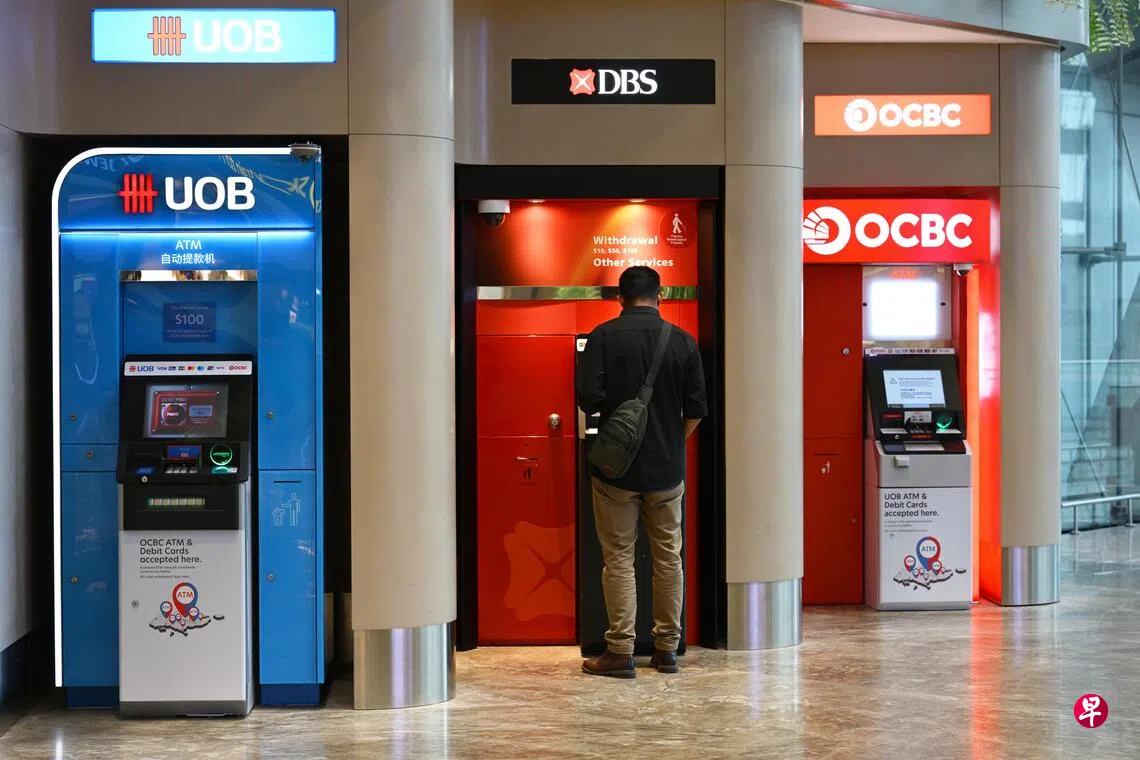
Although Singapore’s domestic fundamentals have not deteriorated, all three local bank stocks have come under pressure as global funds reduce their exposure to Asia. Their shares fell between 1.3% and 3.2%, with even OCBC, which had delivered stronger third-quarter results, unable to escape the sell-off.
Hu You, senior research analyst in FSM Global’s research and portfolio management department, said the declines across all three banks showed that global risk aversion and concerns over the banking sector’s overall profitability were now outweighing differences in individual banks’ fundamentals.
She said: “Rising funding costs remain a key concern, as they could offset the benefits of higher lending yields and constrain net interest margins. Meanwhile, elevated bond yields and uncertainty over the sustainability of wealth management and trading income continue to weigh on valuations.”
Hu noted that DBS, OCBC and UOB account for about 57% of the STI’s weighting and have fallen more than the broader market since September, making bank stocks the biggest driver of the latest decline.
Thum said: “We think buying picks up decisively when bank yields reach around 5.5% to 6%, a clear premium over US Treasuries. A fall in US yields would bring that point forward.”
With support at both 5,020 and 5,000 breached, the index faces further downside. Zane Aw, senior investment analyst at Phillip Securities Research, said the STI’s next important technical support level was 4,860, which had served as horizontal support from late March to late April this year.
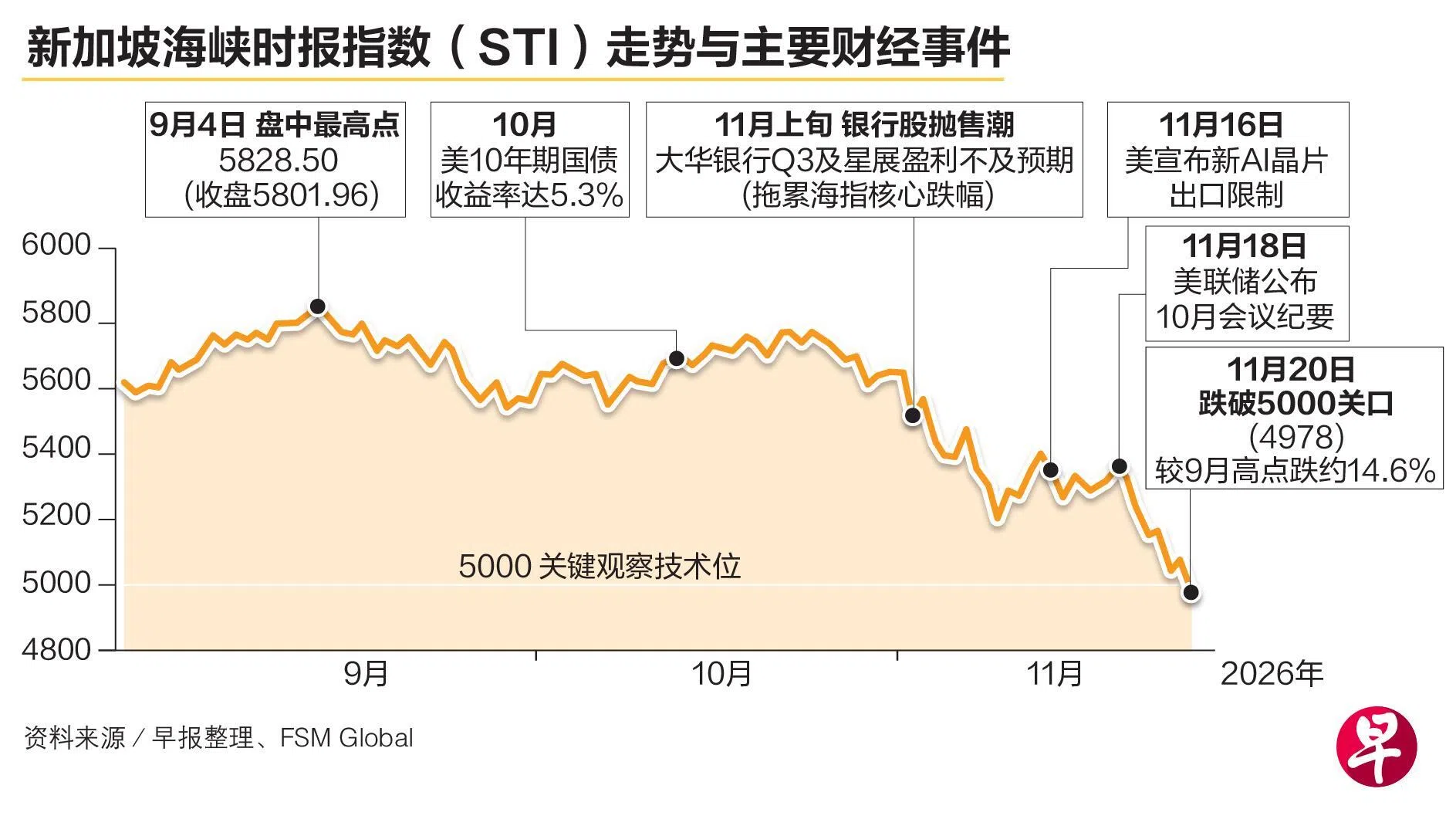
Looking ahead, Hu You said 5,000 had been a key technical level to watch for the STI. Having retreated more than 13% from its September high, the index had already shed some of its earlier excess valuations. She said: “On the upside, we see 5,100 points as the first meaningful recovery level and our year-end target for 2026.”
Hu stressed that Singapore’s overall economic and corporate fundamentals remained relatively sound, while banks’ asset quality was healthy and they continued to generate substantial profits and pay dividends.
She cautioned that a meaningful recovery in the banking sector in 2027 could be delayed if funding cost pressures persisted and earnings forecasts faced further downgrades. In the near term, whether the STI can halt its decline and stabilise will depend heavily on the direction of US Treasury yields, whether global AI stocks can stabilise, and market expectations of a more dovish stance from the US Federal Reserve at its policy meeting on 9 December.
