

Tighter US export rules for advanced artificial intelligence chips could affect the profitability of some data centres and their ability to repay loans. Major Singapore banks contacted said they were closely monitoring developments.
Equity analysts estimate that data centre loans account for a relatively small share of local banks’ total lending, at about 2% to 5%. While the new rules could put credit pressure on some data centres, the overall impact on banks’ earnings would be minimal.
The US announced last week that it planned to impose new licensing requirements on advanced AI chips shipped to data centres in Singapore, Malaysia, Thailand, Indonesia and Brazil. The chips include products from Nvidia and other US manufacturers.
Tighter export controls could affect data centres’ access to advanced chips, making it harder for operators to secure customer orders. They could even face a shortage of cash to repay debt. This has put financial institutions that lend to data centres on alert, particularly Southeast Asian banks.
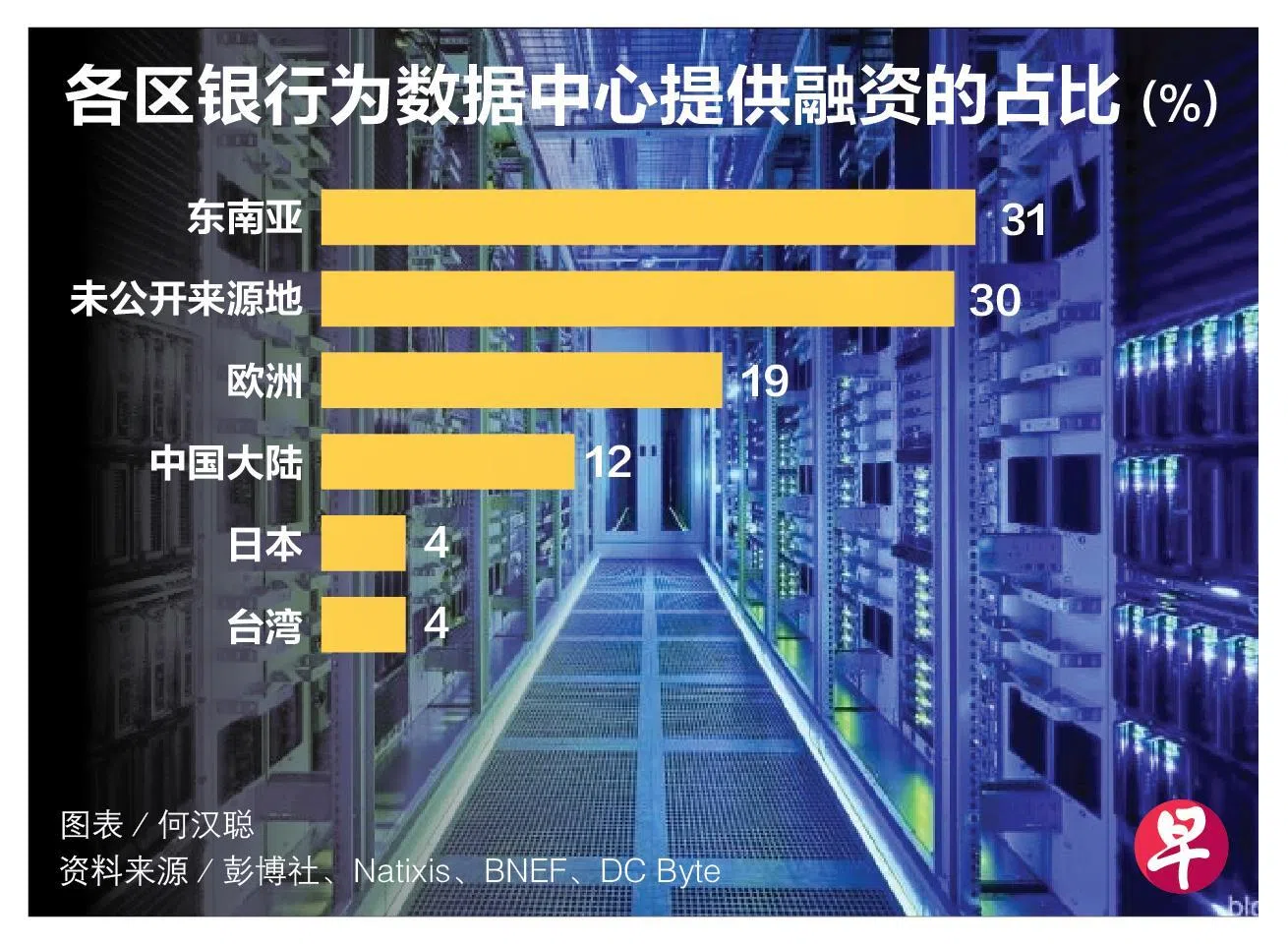
Data compiled by Bloomberg shows that Southeast Asian banks are the world’s largest lenders to data centres, accounting for 31% of global lending, ahead of Europe’s 19% and mainland China’s 12%. A further 30% comes from undisclosed regions.
Bloomberg also reported that several Southeast Asian banks have stepped up reviews of their data centre investment and loan portfolios. In a recent interview with Bloomberg Television, Maybank Investment Bank chief executive Michael Oh-Lau said the bank would seek further clarification from clients to ensure they remained in good shape and could proceed with the financing arrangements they needed.
Maybank: Too early to determine the full impact
In response to queries from Lianhe Zaobao, Maybank said: “At this stage, it is too early to determine the full impact as the situation continues to evolve and further clarity is needed on the implementation and scope of the measures.”
A spokesperson added that Maybank’s exposure in this area was relatively small, accounting for about 0.6% of its total loans as of 30 September this year.
OCBC also said in response to queries that it had engaged clients to understand how the new rules would affect them.
“Based on our engagement to date, we do not anticipate material concerns at this juncture, given that the vast majority of our data centre exposure is to US hyperscalers. We will continue to monitor developments closely.”
A spokesperson added that the bank carefully assessed loan applications, focusing on projects with strong sponsors, established operating capabilities and clear cash flows. It would also stay in close contact with clients as market conditions evolved.
UOB has also discussed the implications of the new rules with clients. The bank said it did not anticipate material concerns at this stage as most clients met the new requirements.
Singapore’s largest bank, DBS Group, has always included assurances of compliance with domestic and foreign laws in its standard financing terms. The bank said it remained committed to supporting data centre clients and would continue to pursue data centre financing transactions, subject to the applicable regulatory requirements in each jurisdiction.
Data centre loans account for about 2% to 5% of lending at Singapore’s three major banks
According to figures provided by FSM Global’s research and portfolio management team, DBS’s total data centre exposure stands at S$14.6 billion, including about S$8.98 billion in outstanding loans. These outstanding loans account for about 2% of its total lending.
Data centre loans account for about 3% of OCBC’s total lending, with projects directly linked to AI accounting for less than 1%. AI-related financing makes up nearly 5% of UOB’s lending.
FSM Global research analyst Gao Yuanhui said data centre lending was relatively limited. Major banks also tended to focus on reputable data centre operators and hyperscalers, so the impact on bank earnings was expected to be small.
Phillip Securities Research investment analyst manager Glenn Thum shared a similar view. While there was some credit risk, he said, local banks could cope even if data centre loans defaulted.
For example, he said, DBS could absorb the losses if 3% of its data centre loans defaulted and had to be written off. The risk would rise substantially only if the default rate climbed to the mid- or high-single digits over the medium term.
