

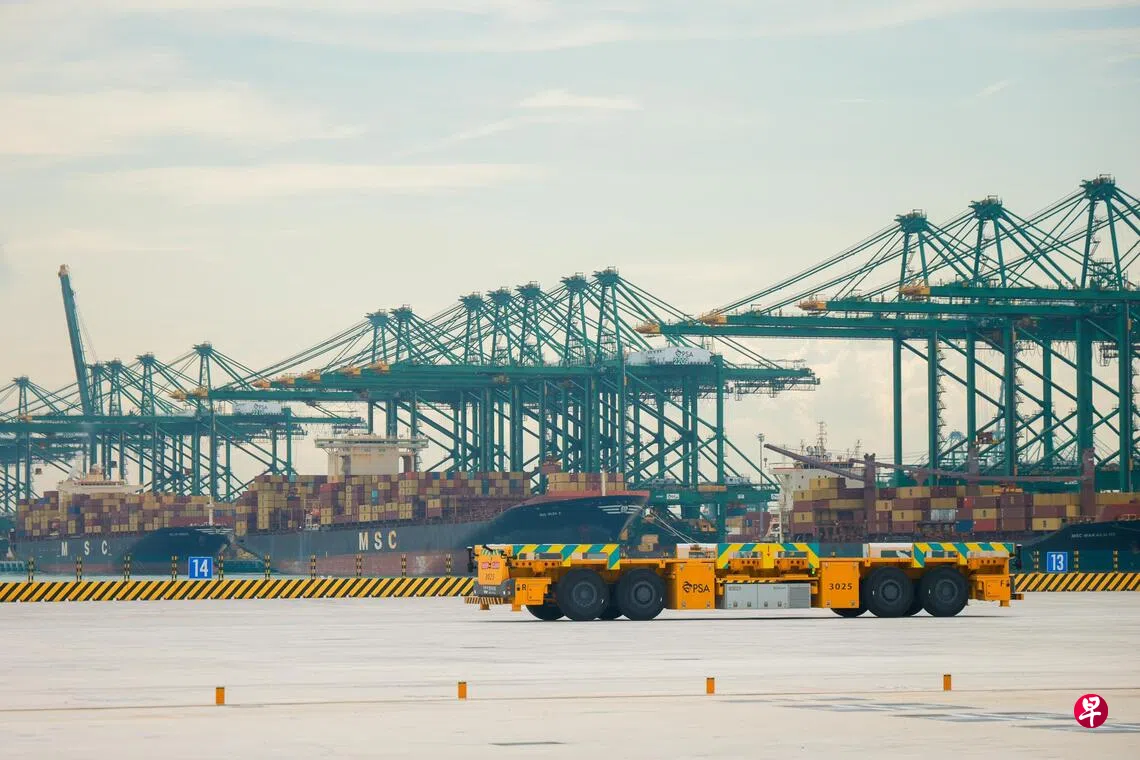
On 11 March this year, the US government launched investigations into 16 economies under Section 301 of the Trade Act of 1974. The Office of the United States Trade Representative (USTR) recently announced its findings and, citing “overcapacity”, imposed additional tariffs on 14 economies, including Singapore.
The 20% tariff rate Singapore faces is the joint third-highest, alongside China’s, behind only Vietnam’s 35% and India’s 25%. Among the economies investigated, the USTR has yet to propose additional tariffs on goods from Mexico and Norway.
In its investigation reports on the economies, the US claims that they have expanded production and exports without a corresponding increase in domestic demand, squeezing the market space available to US companies. Its report on Singapore runs to 168 pages.
Which aspects of Singapore’s economic system has the US questioned? How have the Central Provident Fund and migrant worker recruitment become grounds for allegations of overcapacity? And what has the US said about other economies? Lianhe Zaobao examines the USTR reports through the following questions.
1) On what grounds does the US accuse Singapore of fuelling overcapacity?
By structural excess capacity and production, the US means government policies that keep capacity and production persistently above levels that would prevail under market conditions. The report argues that Singapore’s industrial planning, financial support, and imports and investment from non-market economies such as China have driven such expansion.
The report first singles out the “Manufacturing 2030 vision” and the “Research, Innovation and Enterprise 2030 (RIE 2030) plan”. Under the former, Singapore aims to increase manufacturing value-added by 50% over 10 years; the latter commits S$37 billion to research, innovation and other activities.
The US argues that these initiatives, together with tax incentives, research and development grants and industrial investment in electronics, semiconductors, pharmaceuticals and medical devices, and petrochemicals, have expanded manufacturing beyond the scale that would prevail under market conditions.
Government involvement in corporate financing has also come under scrutiny. The US argues that this channels funds to companies, supporting capacity expansion. It also accuses Singapore of encouraging, or failing to adequately address, direct investment and imports from non-market economies such as China.
The report argues that arrangements such as the China-Singapore Free Trade Agreement facilitate the entry of Chinese inputs into local supply chains, enhancing the export competitiveness of downstream manufactured goods while allowing China’s excess capacity to extend overseas.
Notably, earlier this year, the US questioned why Singapore continued to expand manufacturing capacity despite falling industrial property occupancy rates. However, after the government and the Singapore Business Federation (SBF) submitted information in response, the US has not made a finding on this issue at this stage.
2) Why did the US include CPF and migrant worker recruitment in its investigation?
Rather puzzlingly, however, the US has also linked Singapore’s Central Provident Fund (CPF) system and its rules on hiring foreign workers to domestic consumption and manufacturing costs.
The US argues that CPF’s relatively high mandatory contribution rates reduce the income Singapore households have available to spend and depress cash wages, thereby curbing consumption.
Citing data from 2021 to 2025, the report claims that personal consumption averaged 30% of Singapore’s gross domestic product, compared with 67.9% in the US. On this basis, the US accuses Singapore of failing to increase domestic demand in tandem with production and exports, leaving importing markets such as the US under pressure to absorb the additional output.
On labour, the US says Singapore does not prohibit charging recruitment fees to migrant workers, increasing their risk of being trapped in forced labour or exploitation through debt. It argues that various factors suppress their pay and consumption, giving producers an artificial cost advantage.
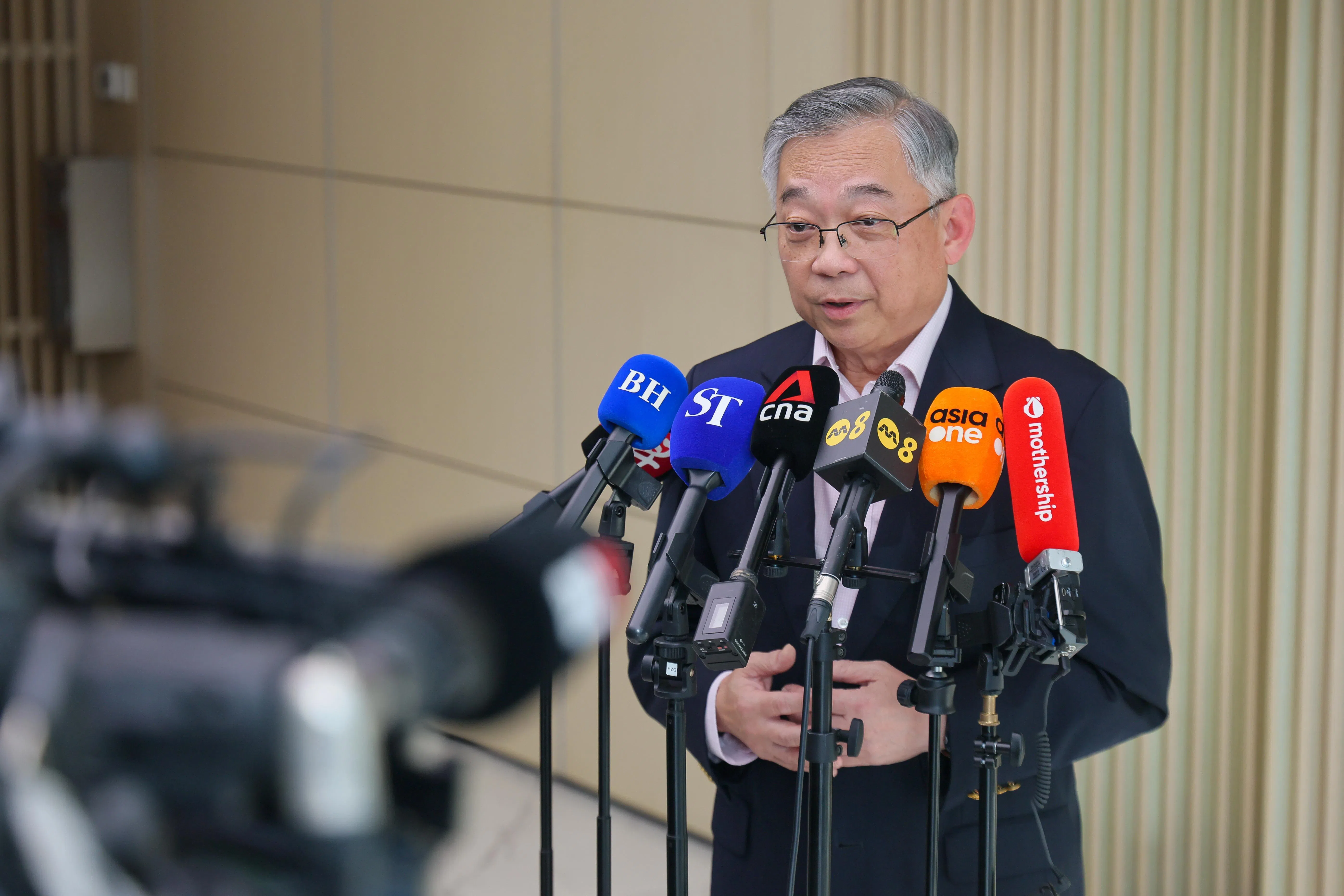
In an earlier interview on tariffs, Deputy Prime Minister and Minister for Energy, Trade and Industry (Trade) Gan Kim Yong said he was quite surprised that the US had included the CPF system in its trade investigation.
Gan said the government would actively engage the US administration over the coming months. Through the Singapore Economic Resilience Taskforce, it would also work with business partners to reach out to affected companies and help them cope with the impact of tariffs.
The US had earlier proposed that the tariff rate could be lowered to 10% if Singapore reached a trade agreement with it or concluded other negotiations that addressed the investigation’s findings. Gan noted, however, that the final rate might be neither 10% nor 20%, but somewhere in between. The precise level would still depend on the outcome of negotiations.
The authorities will conduct a series of public consultations. Businesses affected by the policies should submit feedback through the Ministry of Energy, Trade and Industry’s website.
3) On what grounds were other countries investigated?
The US also issued investigation reports on allies such as the EU, Japan and South Korea, as well as several Southeast Asian countries. Most of the grounds cited centred on governments funding industries in which they have an advantage through a range of subsidies or planning measures.
In its investigation into neighbouring Malaysia, the US focused its allegations on five areas: industrial planning, preferential financing, imports and investment from non-market economies, and inadequate labour protections. The sectors involved include electrical and electronic products, semiconductors, electric vehicles, solar products and rubber products.
The report also singles out projects such as the Malaysia-China Kuantan Industrial Park. It says Chinese companies setting up factories in Malaysia, and Chinese components being processed there before export, have extended the impact of Chinese capacity on international markets and may help companies circumvent US trade measures.
In its investigation into Japan, the US says the country uses industrial planning, policy-based financial institutions and government funds to channel loans and equity financing into strategic manufacturing industries. It also points to chronically underperforming “zombie companies”, arguing that preferential financing, loan extensions and regulatory forbearance keep some manufacturing capacity operating that might otherwise have exited the market.
4) What do the US’s 11 categories of allegations against China cover?
At 457 pages, the US report on China is more than twice as long as those on other countries. It lists as many as 11 categories of allegations, covering sectors including steel and aluminium, automobiles, batteries, chemicals, semiconductors, solar products and shipbuilding.
The report says China supports production by keeping financing costs low and channelling household savings and bank credit into priority industries, without a corresponding expansion in domestic consumption.
The US also alleges a range of practices involving forced technology transfers and intellectual property theft in China, including cyber intrusions to obtain US companies’ trade secrets. It also cites human rights issues, including restrictions on workers’ rights to freedom of association and collective bargaining, unsafe and unhealthy working conditions, and forced labour in Xinjiang.
In addition, China’s dominant position in critical raw materials and manufacturing supply chains increases the risk of supply disruptions for the US. The US also accuses China of turning other economies’ dependence into a tool of economic pressure by restricting supplies of gallium, germanium and rare earths, among other materials.
Beijing counters that the US is “politicising normal market competition and weaponising industrial development issues”. It says this could disrupt the security and stability of global industrial and supply chains, as well as industrial cooperation, creating long-term systemic risks for global economic growth.
