

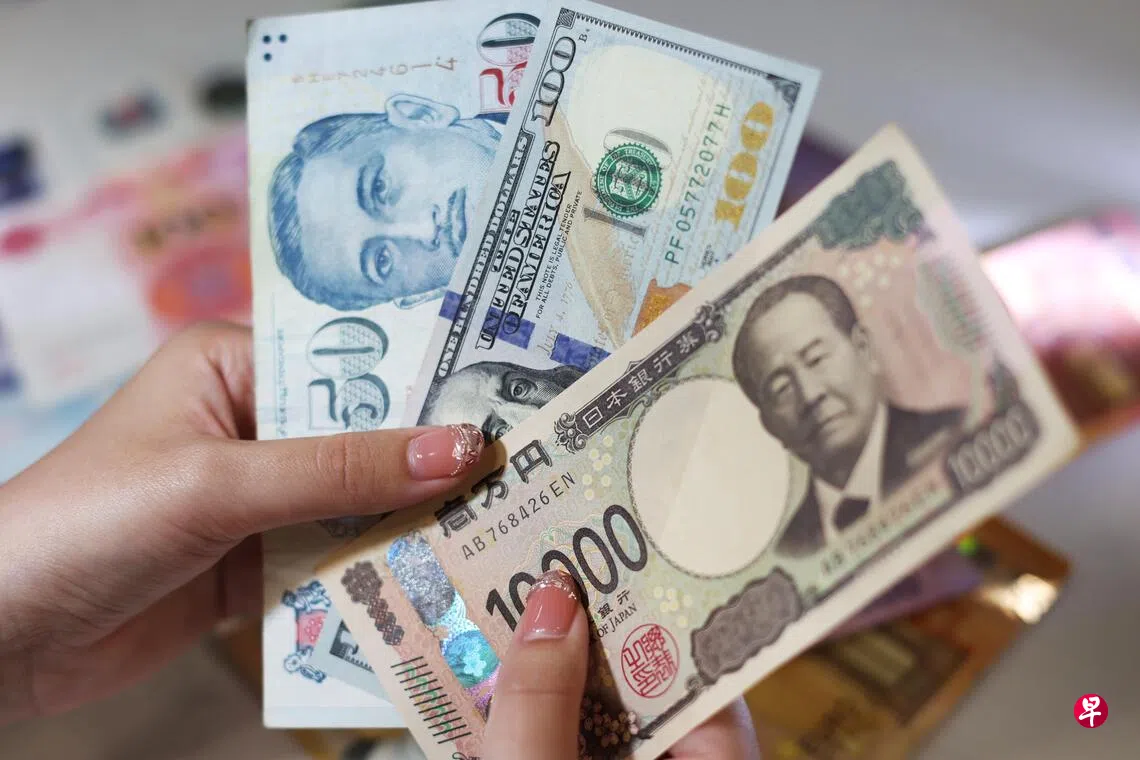
Foreign currencies are familiar to Singaporeans. From travelling and studying abroad to buying overseas property and investing in global markets, we need different currencies. But currencies do more than facilitate exchange and payments. They can also offer investors income and growth opportunities, while protecting their portfolios.
This year’s performance is a good example. Despite broad-based US dollar strength, the Singapore dollar has remained relatively stable against it. This is largely thanks to Singapore’s strong balance of payments position and its monetary policy, which centres on managing the Singapore dollar’s exchange rate against a basket of currencies. Looking ahead, we expect the Singapore dollar to remain resilient.
Beyond that, however, the performance of Singapore investors’ holdings in other currencies has varied considerably. Against the Singapore dollar, the Australian dollar has been one of the stronger major currencies this year. The yen has been weaker, while the euro has fallen more sharply. In Singapore dollar terms, gold prices have also declined substantially.
Past performance is not the best guide to future opportunities. A more useful question is: what roles do different currencies and their associated investments play in a diversified portfolio?
Australian dollar offers attractive yields; yen has limited scope to rebound
Australia’s interest rate advantage and its central bank’s relatively hawkish policy stance support the Australian dollar. Following its sharp rise earlier this year, we expect its appreciation to slow and the currency to consolidate. However, its attractive yield advantage over many developed-market currencies should help support its exchange rate.
This is particularly relevant to Singapore investors. Australian dollar short-term money market deposits yield around 4% to 5%, an attractive proposition when local interest rates are relatively low. Exposure to the currency is therefore worth considering even without substantial appreciation.
Japan’s currency and equity markets present contrasting pictures. Further monetary policy normalisation by its central bank should help limit the risk of further sharp yen depreciation. However, with markets already pricing in future Bank of Japan interest rate rises, any recovery in the yen is likely to be gradual rather than a strong rebound.
By contrast, we are more positive about the investment case for Japanese equities. Among global asset classes, we rate Japanese equities as “attractive”. Corporate reforms, improved capital management and a favourable outlook for the banking sector provide additional support.
For Singapore investors, Japanese equities offer worthwhile opportunities regardless of whether the yen is strong.
US dollar expected to soften slightly; weaker euro need not dim asset outlook
The US dollar remains central to the global financial system and is the currency in which the world’s deepest equity and bond markets are denominated. Even if the dollar itself softens slightly, we remain positive about opportunities in US assets.
In US equities, we recommend diversifying across structural and cyclical growth opportunities rather than concentrating excessively on a handful of stocks. We favour areas such as artificial intelligence (AI), power and resources, and the longevity economy. There are also opportunities in financials, industrials, utilities, healthcare and consumer-related businesses. Within AI, we favour industry leaders with strong financial resources, as well as high-quality semiconductor and hardware companies, but investors should be selective in capital-intensive areas.
High-quality US fixed-income assets are also attractive. Today’s higher bond yields offer a good income stream, while bond prices could rise if yields fall. We therefore favour selected high-quality bonds with medium to long maturities, while remaining cautious about those with the longest maturities.
While we are cautious about the US dollar, US assets still warrant attention.
The euro has weakened markedly against the Singapore dollar this year, but that does not mean the outlook for European assets is bleak.
We believe the euro could gradually recover, although volatility may be considerable. More importantly for long-term investors, the outlook for eurozone equities remains positive. Improving manufacturing activity, cost discipline and investment in areas such as AI, electrification and defence should support corporate earnings.
Investors should not overlook opportunities in eurozone equities simply because the euro is soft. For globally competitive companies with good earnings prospects, a weak euro does not undermine the investment case.
Gold’s short-term weakness does not negate its diversification benefits
It is crucial to distinguish between an asset’s short-term performance and its role in a portfolio, and gold is perhaps the best example. In Singapore dollar terms, gold prices have fallen sharply this year, but short-term price weakness does not mean its long-term diversification benefits have disappeared.
Gold generates no interest income, so higher real interest rates generally weigh on its price. However, demand from central banks and investors, along with gold’s role as a hedge against financial and geopolitical risks, continues to support the case for investing in it.
For Singapore investors, gold is better viewed as a form of portfolio insurance than as an asset that must appreciate every year. Its value lies in behaving differently from traditional financial assets when markets, economies or geopolitical conditions come under strain, helping to strengthen the resilience of the overall portfolio.
An investor’s goal should not be to predict which currency will “win” next year. Different currencies and markets each have value in a diversified portfolio.
The Australian dollar offers an attractive yield advantage, while Japanese equities are appealing despite the yen’s relatively subdued outlook. US markets offer opportunities to tap structural growth themes and invest in high-quality bonds. European currencies have scope to recover, and the region’s equity markets also offer opportunities. Gold can provide diversification against risks that traditional equities and bonds may not adequately address.
A strong, resilient home currency is an advantage for Singapore investors. But it should not be a reason to hold excessive Singapore dollar cash positions or avoid overseas investments.
A more sustainable approach is to diversify across currencies and markets, making full use of what each offers: income, earnings growth, structural opportunities and portfolio protection. Ultimately, the focus should be on building a more diversified and resilient portfolio.
(The author, Tan Teck Leng, is an executive director and head of Asia-Pacific foreign exchange and rates at the UBS Chief Investment Office.)
