

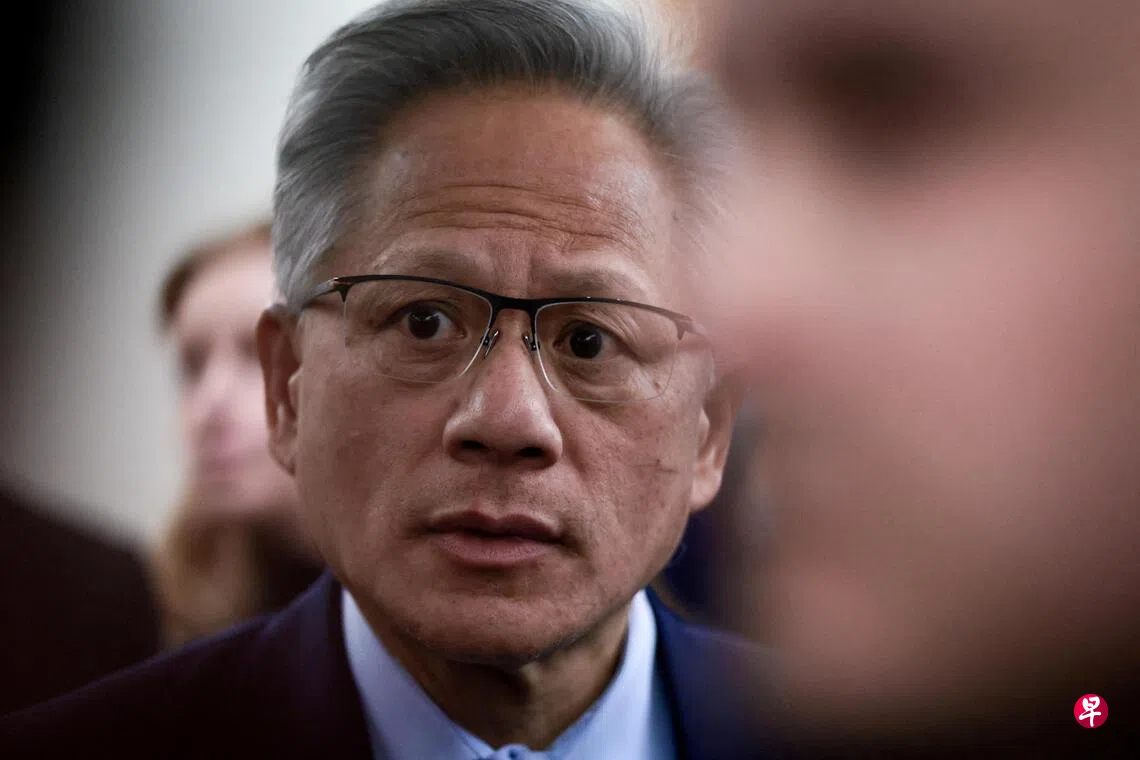
Chip giant Nvidia announced on 12 November that Jensen Huang had resigned as chief executive and director, with chief financial officer Colette Kress taking the helm on an interim basis. And so the global technology legend who founded Nvidia and steered it through 33 years of ups and downs has left the company to which he devoted half his life.
What makes this so sobering is not just the fall of a technology titan, but the sudden, formidable test facing the Silicon Valley entrepreneurial dream he embodies. Huang’s extramarital affairs, particularly one involving a woman suspected of links to Chinese intelligence agencies, have undoubtedly dealt a severe blow to his credibility and integrity. But the more pressing question is not how many affairs he had. It is one that concerns business ethics, corporate governance and even US national security: did Huang know where Nvidia’s advanced chips, worth billions of dollars, ultimately ended up?
If he did not, that points to serious gaps in his oversight of a vast business empire. If he knew but chose to look the other way, the issue goes beyond management failures to potentially deeper questions of legal responsibility and integrity.
Suspicion, of course, is not fact. So far, there is no public evidence that Huang personally directed or participated in illegal chip exports. Nor can his personal relationships with those involved be taken as proof of unlawful conduct. But as Nvidia’s top executive, he must answer not only for any legal liability, but also for whether he fulfilled his management responsibilities.
From business partners to questions over chip destinations
Most troubling is that both companies involved in this controversy — AI server maker Super Micro Computer and Megaspeed International — were already under a cloud of suspicion.
Super Micro Computer is a server manufacturer and longstanding Nvidia partner. Its founder and chief executive, Charles Liang, has known Huang for many years. Both founded their businesses in 1993, and they frequently appear together at technology events such as Computex in Taipei. Such longstanding relationships are hardly unusual in business, and may even be regarded as an important “intangible asset” behind corporate success.
Yet when personal ties become entangled with business dealings that have national security implications, networks once seen as a competitive advantage can also become a blind spot in corporate governance.
According to a case brought by US prosecutors in March this year, Super Micro Computer co-founder Yih-Shyan Liaw and two others allegedly used shell companies in Southeast Asia to transship servers equipped with Nvidia H200 and B200 chips to China. The servers were worth about US$2.5 billion (S$3.222 billion). Methods described in the indictment included using dummy servers to pass inspections and replacing equipment identification labels.
The case still has to go through the judicial process. Neither Super Micro Computer nor Liang has been charged in the case so far. The company has also said it is a victim and will cooperate with investigators.
Meanwhile, Megaspeed International reportedly bought more than US$4.8 billion worth of Nvidia chips over the past two years. Some of the equipment was intended for installation at data centres in Malaysia and Indonesia.
But when officials from the US Commerce Department’s Bureau of Industry and Security (BIS) conducted an on-site inspection of Megaspeed International’s data centre at Sedenak Tech Park in Johor, Malaysia, in September 2024, they found large quantities of extremely expensive Nvidia AI equipment, such as H100 chips, subject to strict US sales restrictions. The equipment had been left in its original packaging for an extended period and had not been powered up, installed or put into operation. US authorities are also investigating whether these chips were being made available to restricted Chinese customers through remote computing services. Megaspeed International denies wrongdoing.
That, however, is precisely the problem. When Nvidia chips are resold through layers of server manufacturers, distributors, data centres and cloud service providers, who is responsible for verifying the end user? If a company can prove that it delivered products to a legitimate customer but cannot effectively identify the end user, does export compliance amount to meaningful oversight, or merely paperwork?
The shrewd Huang is no ordinary corporate executive. He has the foresight to look beyond the market, committing substantial resources to GPU computing long before AI became a global investment craze. He also knows how to build business alliances, using investments, technology partnerships and financing arrangements to place Nvidia at the centre of the entire AI ecosystem.
It is precisely because Huang is so astute that people are now asking how much he knew about chip transactions worth billions of dollars.
Even the shrewdest chief executive cannot personally track every chip. But Huang has always been known for his intensely hands-on management style. At Nvidia, as many as 60 senior executives report directly to him, and his personal influence runs deep across major technology decisions, business partnerships and strategic investments. So, did he know?
According to WIRED (《连线》) magazine, Huang privately engaged the prominent New York-based crisis communications firm Heller Inc as early as October last year. The firm is known for handling high-profile personal scandals and allegations of misconduct. Its appointment came about a year before Huang publicly admitted to extramarital affairs and subsequently resigned as Nvidia’s chief executive. Was this “foresight”?
Whatever the case, when every major decision revolves around one founder, decision-making may be efficient, but who challenges his judgement? Who stops orders that breach compliance rules? How are personal relationships independently scrutinised? These are questions arising from the Huang controversy that deserve serious reflection.
Behind Huang’s sex scandal lies a wider crisis of integrity. One of his extramarital partners, Huang Le, previously worked for Megaspeed International and is suspected by US intelligence agencies of having links to Chinese intelligence activities. Although it has not been established that Huang knew of her alleged intelligence background, he previously defended Megaspeed International’s business credibility in public. Nvidia also said allegations of chip diversion had been investigated and were not substantiated. With doubts now emerging, those assurances are naturally being questioned. Many will inevitably ask: on what basis did Nvidia reach such a firm conclusion at the time?
These issues deserve far more attention from investors than his extramarital affairs.
Huang’s departure also exposes another long-neglected problem at Nvidia: how can a company worth trillions of dollars depend so heavily on one person?
Nvidia does more than sell chips. Through large investments in customers, suppliers and AI companies, it also drives the expansion of the entire AI industry. From OpenAI and Anthropic to optical component manufacturers and quantum technology start-ups, Nvidia’s capital and business ties have become a major force behind the AI investment boom. But this raises another concern. When suppliers invest in customers, who then use that financing to buy the suppliers’ products, the line between market demand and capital investment becomes increasingly blurred.
In the past, Huang could drive these deals through on the strength of his personal standing and business judgement. With his departure, however, investors will inevitably reassess their returns, risks and sustainability.
Then there is Nvidia’s longstanding lack of a clear succession plan. Having Kress serve as interim chief executive may help stabilise operations, but it cannot immediately fill the gaps Huang leaves in technology strategy, global business relationships and government engagement.
This reflects a longstanding contradiction in Silicon Valley. Founders are often given enormous power because of their vision. Yet once a company reaches a certain size, that concentration of power may instead undermine the development of institutional safeguards.
Nvidia does not, however, have a dual-class share structure giving Huang super-voting rights. He holds about 3.5% of its shares, so even as founder, he cannot override the board. From a corporate governance perspective, that appears to be one reassuring aspect of this episode.
The real test comes on 18 November
Huang’s resignation does not mean the controversy is over.
Nvidia will announce its quarterly results on 17 November. On 18 November, Huang has been asked to attend a closed-door briefing by the US House Foreign Affairs Committee, the Select Committee on China and the Intelligence Committee. According to the latest reports, Huang has agreed to cooperate with the investigation.
The 17 November results will likely be one factor shaping Nvidia’s short-term share price performance. The closed-door briefing, however, could determine its future regulatory environment, business credibility and position in global markets. Everyone in the industry is likely to be watching closely for any information that emerges.
Thirty-three years ago, Huang founded Nvidia with vision, courage and the ability to execute his plans. Thirty-three years later, he has left under a cloud of controversy over his personal judgement and corporate governance, losing public trust overnight.
The most sobering aspect of this controversy is not that a successful man strayed in his personal life. It is whether an entrepreneur so intelligent and so adept at anticipating the future of technology overlooked the most basic principles of management: power must be subject to oversight, trust cannot replace scrutiny, and commercial success is not a licence to do as one pleases.
