

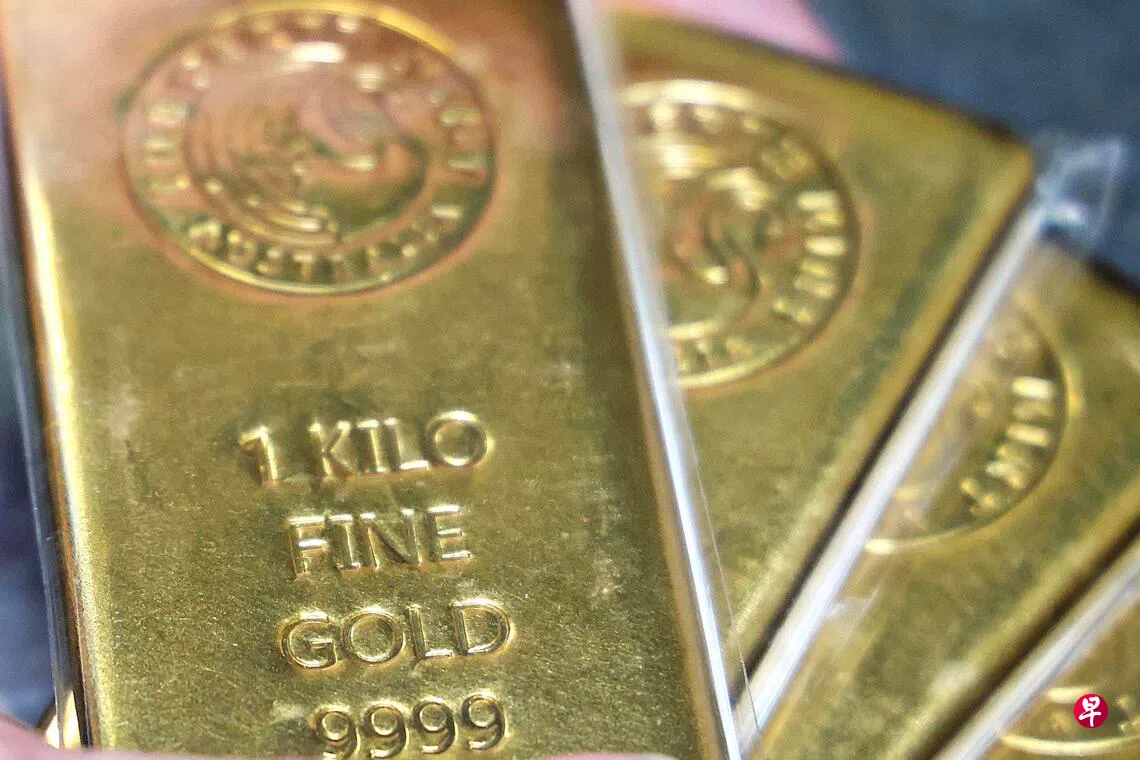
Gold suffered a sharp sell-off last week, hit by mounting expectations of hawkish interest rate rises by the US Federal Reserve, surging US Treasury yields, a stronger dollar and a scramble for cash triggered by a technology-led stock market rout. Spot gold plunged 8.71% over the week, approaching US$3,500 (about S$4,512) an ounce and hitting its lowest level in more than a year.
Analysts are broadly bearish on gold’s prospects this week, expecting the downtrend to continue and prices to fall further.
Spot gold opened last week at US$3,869.30 an ounce, briefly stabilising and touching a weekly high of US$3,901.40. However, as markets continued to price in another Fed rate rise in December, safe-haven demand failed to support prices despite lingering inflation concerns and geopolitical tensions.
Gold broke below US$3,800 after US retail sales data released on Tuesday (17 November) showed only a marginal 0.2% increase in October. A stronger dollar and minutes of the Fed’s October meeting showing policymakers’ firm commitment to further monetary tightening also weighed on prices.
By Friday (20 November), the technology-led slump in US stocks had deepened, forcing investors to liquidate precious metals positions to cover stock market losses and accelerating gold’s decline.
Gold ended last week at US$3,537.87 an ounce, down 8.71% for the week. It traded between a high of US$3,901.40 and a low of US$3,533.31 an ounce.
Gold could plunge another US$300
Most analysts attributed gold’s plunge to deleveraging and selling to meet margin calls triggered by the stock market rout.
Sean Lusk, co-director of commercial hedging at Walsh Trading, noted that gold had fallen 20% so far this year and that the market was in the midst of a “liquidation disaster”. “Long positions in precious metals had become too crowded. Now, faced with the threat of further rate rises and a stock market rout, investors have no choice but to sell gold to raise cash.”
Lusk warned that November had historically been a seasonally weak period for gold. If spot gold failed to hold above US$3,500, prices could quickly plunge another US$300 to test their July 2025 lows. He advised buyers against rushing in to buy the dip before the Fed’s December policy meeting.
Alex Kuptsikevich, senior market analyst at FxPro, also said gold could retreat to the range in which it consolidated between April and August 2025. Prices could resume their upward trend only once financial market sentiment stabilised and signs of monetary easing emerged.
Bearish factors may already be fully priced in
Some analysts believe the short-term sell-off in gold has gone too far. Rich Checkan, president and chief operating officer of Asset Strategies International, is bullish on gold this week. He believes bearish factors such as high yields, a strong dollar and expectations of a December rate rise have been fully priced in. Once interest rate expectations stabilise and technology stocks stop falling, heavily oversold gold is certain to stage a technical rebound, he said.
Of the 15 analysts surveyed in Kitco’s latest weekly gold survey, nine expected prices to fall further this week, four were bullish and the remaining two were neutral.
Adam Button, head of currency strategy at investingLive, was among those taking a neutral view. He predicted that excessive tightening would eventually force the Fed to cut rates rapidly, laying the groundwork for a gold bull market later in 2027.
With the US Thanksgiving holiday falling on Thursday (26 November), major economic releases will be concentrated in the first three trading days of this week. These include the S&P Global flash US manufacturing purchasing managers’ index (PMI) on Monday (23 November), the US consumer confidence index for November on Tuesday (24 November), and the personal consumption expenditures (PCE) price index on Wednesday (25 November).
