

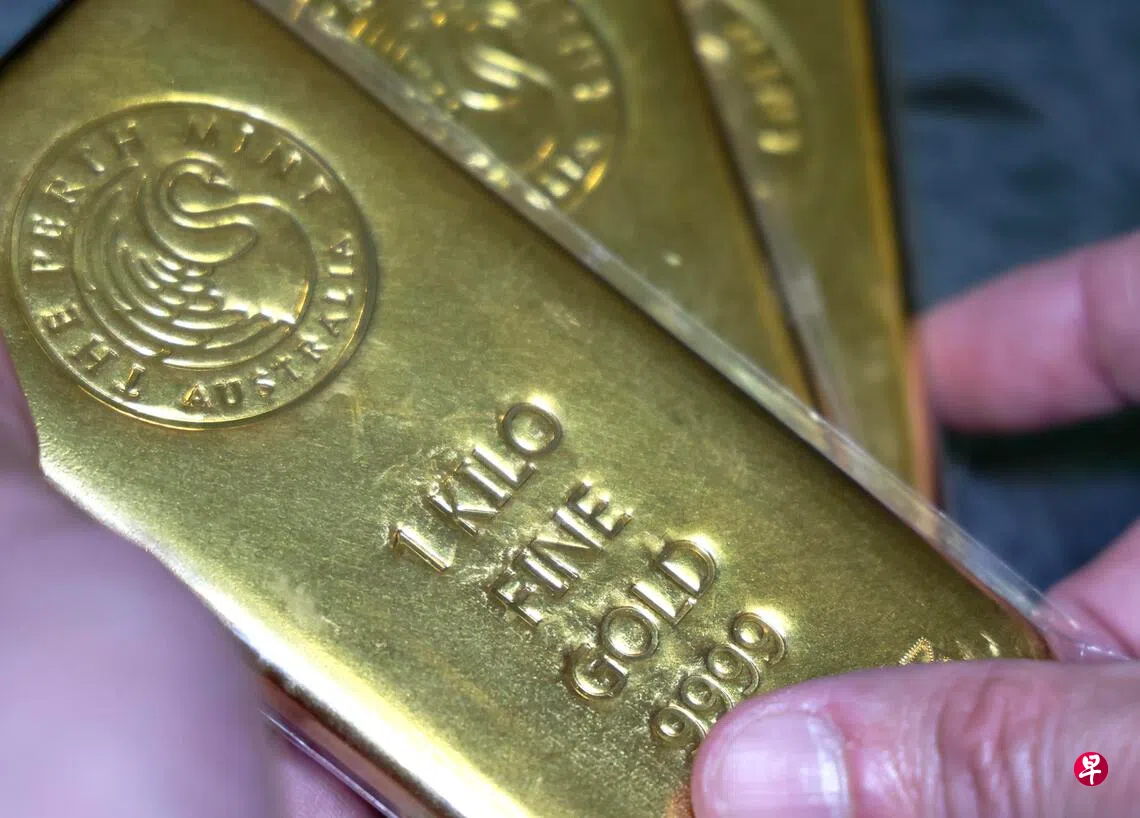
News that the US could introduce new tariffs as early as this week rattled stock markets and reinforced expectations of an interest rate hike by the US Federal Reserve, sending gold prices lower.
Despite a brief rebound, gold fell more than 2% on Tuesday (24 November), wiping out most of the previous session’s gains. Prices continued to fall on Wednesday (25 November) morning, reaching US$3,545 (about S$4,573) an ounce, before hovering around US$3,559 at the time of writing.
US media reported on Tuesday that the Office of the United States Trade Representative was preparing to release, in the coming days, the findings of a Section 301 trade investigation launched several months ago into excess industrial and manufacturing capacity. The investigation could lead to higher tariffs on 16 economies, including Singapore, China and the EU.
The news triggered a sell-off in technology stocks that spread to other markets, prompting some investors to sell gold to cover their losses.
Meanwhile, demand for safe-haven assets pushed US Treasury prices higher and yields lower, reducing the opportunity cost of holding non-interest-bearing gold.
US consumer confidence also rebounded sharply to its highest level in nearly two years, after falling to its lowest in more than a decade ahead of the midterm elections.
With inflationary pressures persisting, investors see a Federal Reserve rate hike in December as almost certain. High interest rates typically weigh on gold. Prices have fallen about 8% so far this month, exceeding October’s decline of nearly 7%.
The US will release the personal consumption expenditures (PCE) price index, the Federal Reserve’s preferred inflation gauge, later on Wednesday. A higher-than-expected reading would further reinforce market expectations of a rate hike.
Market analysts see the outlook for Federal Reserve monetary policy as the main headwind for gold. A fall below the psychologically significant US$3,500 level could trigger another round of declines.
