

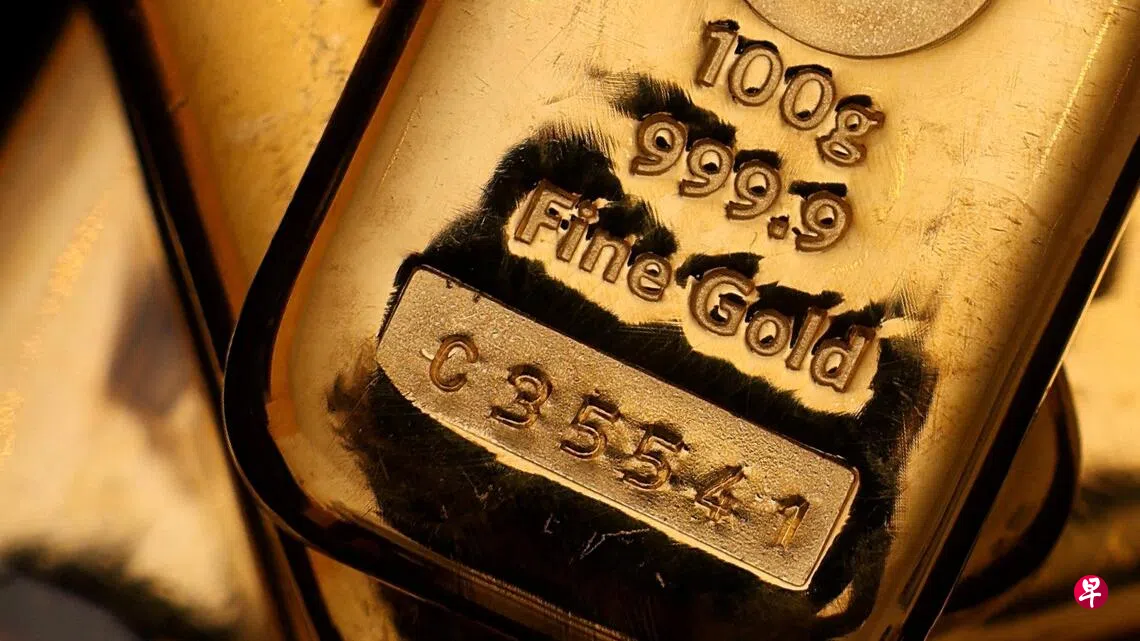
Gold prices snapped a two-week losing streak as US stocks rebounded.
Spot gold prices fell before recovering over the past week. US inflation data reinforced expectations of further interest rate rises by the Federal Reserve, sending gold to a 15-month low before a rebound in technology shares and bargain hunting lifted it back above US$3,600 an ounce.
US data released on Wednesday (25 November) showed that the personal consumption expenditures (PCE) price index rose 3.8% year on year in October, while third-quarter gross domestic product (GDP) growth was revised up to 4.3%. Persistent inflationary pressures and strong economic growth prompted markets to step up bets on another interest rate rise by the US Federal Reserve in December. Spot gold fell below US$3,500 an ounce in response, touching US$3,426.35, its lowest level since late August last year.
By Friday (27 November), spot gold had recovered its losses as US stocks rebounded from the earlier sell-off. It closed at US$3,653.53 an ounce, up nearly 3% for the week, reversing the previous week's 8.71% plunge.
Gold is sometimes seen as a hedge against stock market volatility, but in recent months its price has largely moved in tandem with equities. According to Bloomberg's analysis, this is partly because investors may sell gold to raise cash to meet margin calls on other positions whenever stocks fall sharply.
Saxo Bank's head of commodity strategy Ole Hansen likened precious metals to a “cash machine” when markets come under pressure. He said the rebound in artificial intelligence (AI)-related technology stocks had revived risk appetite and eased investors' urgent need to raise cash, reducing selling pressure on gold and silver.
However, Audacity Capital market analyst Zain Vawda said the rebound in gold mainly reflected short covering and profit-taking. As long as the Fed continues raising interest rates, real yields remain high and the dollar stays strong, gold could face selling pressure if it rises to US$3,750–US$3,800 an ounce.
Vawda added: “A return to $5,000 is possible, but not in the first half of the year. Gold needs the Fed to stop hiking and the dollar to roll over. If that happens by mid-2027, a recovery toward $4,500 is realistic.”
HSBC's chief precious metals analyst James Steel said gold could fall below the key support level of US$3,400 an ounce if stock markets remain weak.
FxPro senior market analyst Alex Kuptsikevich expects gold prices to fall next week.
He said: “Appetite for risky assets continues to wane in financial markets, which, in our view, is largely due to relatively hawkish expectations regarding the Fed’s monetary policy, set against a backdrop of growing doubts about the economy and the validity of corporate valuations.”
A weekly survey by precious metals information provider Kitco showed that market analysts were divided on the outlook for gold. Of the 15 analysts surveyed, six expected gold prices to rise next week, five expected a decline and four were neutral.
The US will release November non-farm payrolls data next Friday (4 December). Hansen said markets had largely priced in a Fed interest rate rise in December. For precious metals, the more important question was whether the Fed would signal further policy tightening next year.
