

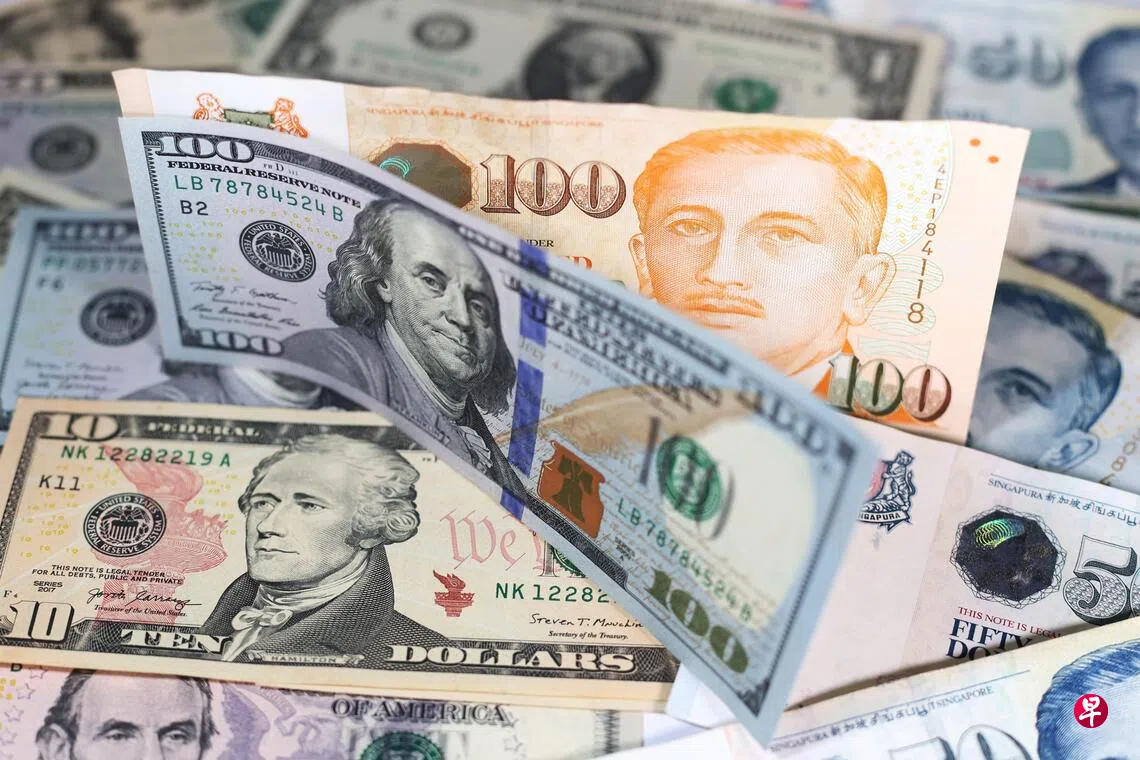
Minutes from the US Federal Reserve meeting and hawkish comments from officials pointed to possible further interest rate rises, keeping the US dollar near a 19-month high on Thursday (19 November). The US dollar rose to its highest level against the Singapore dollar in more than three months, approaching S$1.29.
Broad US dollar strength also weighed on the euro, which fell close to its lowest level since April 2025 and last traded at US$1.0977. Sterling hovered near a one-month low at US$1.3152. The yen was little changed at 159.39 per US dollar, remaining close to the closely watched 160 mark.
The US dollar’s strength was driven mainly by hawkish signals from the Fed. Minutes of its 27–28 October meeting, released on Wednesday (18 November), showed that officials had grown increasingly concerned last month that more action might be needed to bring inflation under control, although they agreed at the time to leave interest rates unchanged.
Fed governor Christopher Waller reinforced that stance, saying the central bank should raise rates by 50 basis points in December or signal a faster pace of rate rises in 2027.
The Fed’s hawkish stance continued to support the US dollar despite volatility in technology stocks. Shares in chip giant Nvidia fell overnight despite better-than-expected revenue and guidance.
OCBC analysts noted that a hawkish shift in market expectations for Fed policy was, for now, offsetting the impact of weakness in technology stocks and continuing to support the US dollar. However, if markets further lowered their expectations for artificial intelligence capital expenditure, US real yields could fall and equity inflows could weaken, posing a challenge to the currency.
Long-dated US Treasuries rose on Wednesday, with strong demand at a 20-year bond auction leading to gains at the longer end of the market. The 10-year Treasury yield fell about four basis points to 5.06%. Treasury yields were little changed in early Asian trading on Thursday. Bond prices move inversely to yields.
Pepperstone research strategist Dilin Wu said falling oil prices had eased some inflation concerns, while weakness in US equities and worries about economic growth could prompt investors to seek safety in US Treasuries.
Data from the US Energy Information Administration showed that US crude oil and fuel inventories rose more than expected, reinforcing market expectations of a supply glut. International oil prices closed more than 1% lower on Wednesday.
Gold stabilised at US$3,743 an ounce after a sharp overnight sell-off triggered by the Fed’s hawkish signals.
The US dollar index was broadly flat at 103.81 in early Asian trading, hovering near its highest level since April 2025.
