

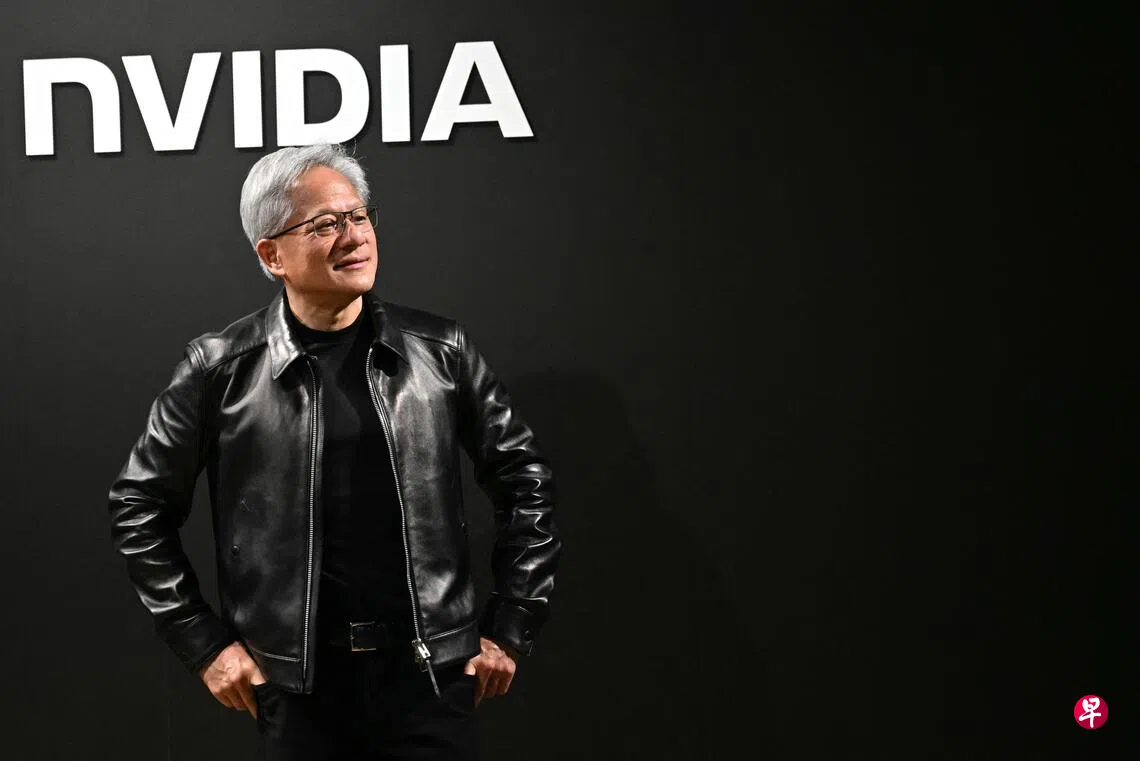
Jensen Huang has long been almost synonymous with Nvidia. Now, suspicions of espionage have put the question of whether he will stay or go in the spotlight.
Who will decide the fate of Huang and Nvidia? That may well lie in the hands of Nvidia’s 10 other directors. The board has said it will appoint a special committee of current directors to investigate the allegations surrounding Huang, with assistance from external legal advisers.
These directors have diverse backgrounds, ranging from early investors who have been with Nvidia as it grew to finance and technology executives, and a scientist who specialises in how marine organisms swim.
Lianhe Zaobao takes a look at the people who could shape Nvidia’s future.
1) Nvidia’s board has no chair
Nvidia’s board has, until now, kept a low profile.
Unlike many listed companies, Nvidia has no board chair. Instead, it has an independent lead director.
This board structure is highly unusual among large US companies. A report published by law firm Fenwick in 2025 found that only one company in the S&P 100 index had no chair: Nvidia.
The same report, however, showed that as many as 60.6% of companies had the same person serving as both board chair and chief executive.
According to Nvidia’s 2026 proxy statement, this structure is intended to “ensure that every director has an equal voice in Nvidia’s affairs and management decisions. The independent directors reassess the independent lead director role and its appointment annually.”
The board believes its current leadership structure is appropriate.
Apart from Huang, all 10 of Nvidia’s directors are independent.
2) Who is the independent lead director?
Nvidia’s current independent lead director, Stephen Neal, 77, joined its board in 2019. He also chairs the nominating and corporate governance committee.
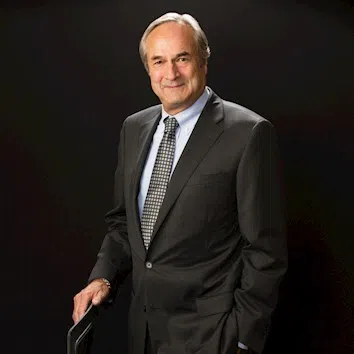
He is chairman emeritus and senior counsel at prominent US law firm Cooley, where he served as chief executive from 2001 to 2008. He has extensive experience in corporate governance, securities, antitrust, mergers and acquisitions, and internal investigations. He has also represented the boards and special committees of several companies in investigations.
This is not his first encounter with governance issues at major companies.
Neal previously chaired the board of denim clothing maker Levi Strauss & Co and has been involved in disputes and investigations concerning companies including General Motors. He also represented Walter Hewlett, son of HP co-founder William Hewlett, in an attempt to block HP’s merger with Compaq.
His former clients also include Elizabeth Holmes, founder of US blood-testing company Theranos, who was jailed over a fraud scandal.
Neal also has a long history with Nvidia. His law firm, Cooley, has been one of the company’s principal external legal advisers since its founding in 1993, and handled its initial public offering (IPO) in 1999.
3) Who else on the board is worth watching?
Several members of Nvidia’s board have witnessed virtually its entire journey from start-up to AI giant.
Among the earliest to join were venture capitalists Tench Coxe, Harvey Jones and A. Brooke Seawell.
Coxe joined Nvidia’s board in 1993, the year the company was founded. He was a long-serving managing director at venture capital firm Sutter Hill Ventures, investing primarily in technology companies.
Jones also joined the board in 1993. A technology entrepreneur and investor, he founded Daisy Systems and served for many years as president and executive chairman of electronic design automation company Synopsys.
Seawell joined the board in 1997 and is a venture capitalist at New Enterprise Associates.
The board also includes several experts from finance, pharmaceuticals, the consumer sector and science.
Suzanne Nora Johnson, who joined the board in July this year, was formerly vice-chairman of Goldman Sachs, where she worked for 20 years.
Aarti Shah worked at pharmaceutical company Eli Lilly for 27 years.
Dawn Hudson was president of Pepsi-Cola’s North American business and chief marketing officer of the National Football League (NFL).
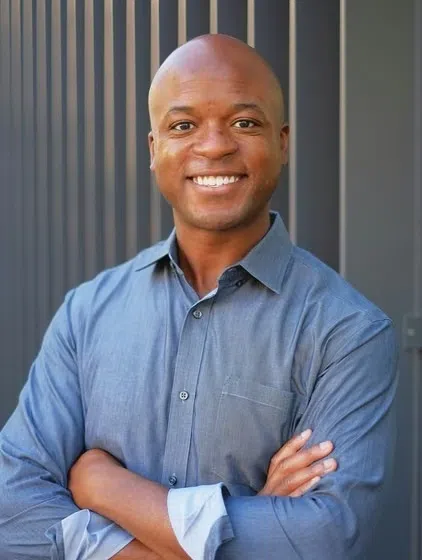
Perhaps the most intriguing name on the list is John O. Dabiri. He is a professor of aeronautics and mechanical engineering at the California Institute of Technology. A major focus of his research is how marine organisms such as jellyfish use fluid motion to swim more efficiently.
His honours include a MacArthur Fellowship, often known as a “genius grant”, and the US National Medal of Science. He also served on the President’s Council of Advisors on Science and Technology under the Biden administration.
Brayden King, a professor of management and organisations at Northwestern University’s Kellogg School of Management, said investors would closely watch the investigation as it unfolds, particularly whether it can remain independent.
Speaking to CNBC, he said the investigation must be led by someone with public credibility, giving investors confidence that its report is trustworthy and its eventual conclusions fair and appropriate.
The investigation will determine whether Huang “became the target of an intelligence operation by a foreign intelligence agency”. However, the independent directors stressed that there was currently “no reason to believe that US national security or Nvidia’s confidential information has been compromised”.
Another urgent task for the board is succession planning at Nvidia. Although the board has expressed “confidence in Jensen Huang and the leadership team”, the incident has prompted calls from the market for Nvidia, like any company, to make succession planning a priority.
