

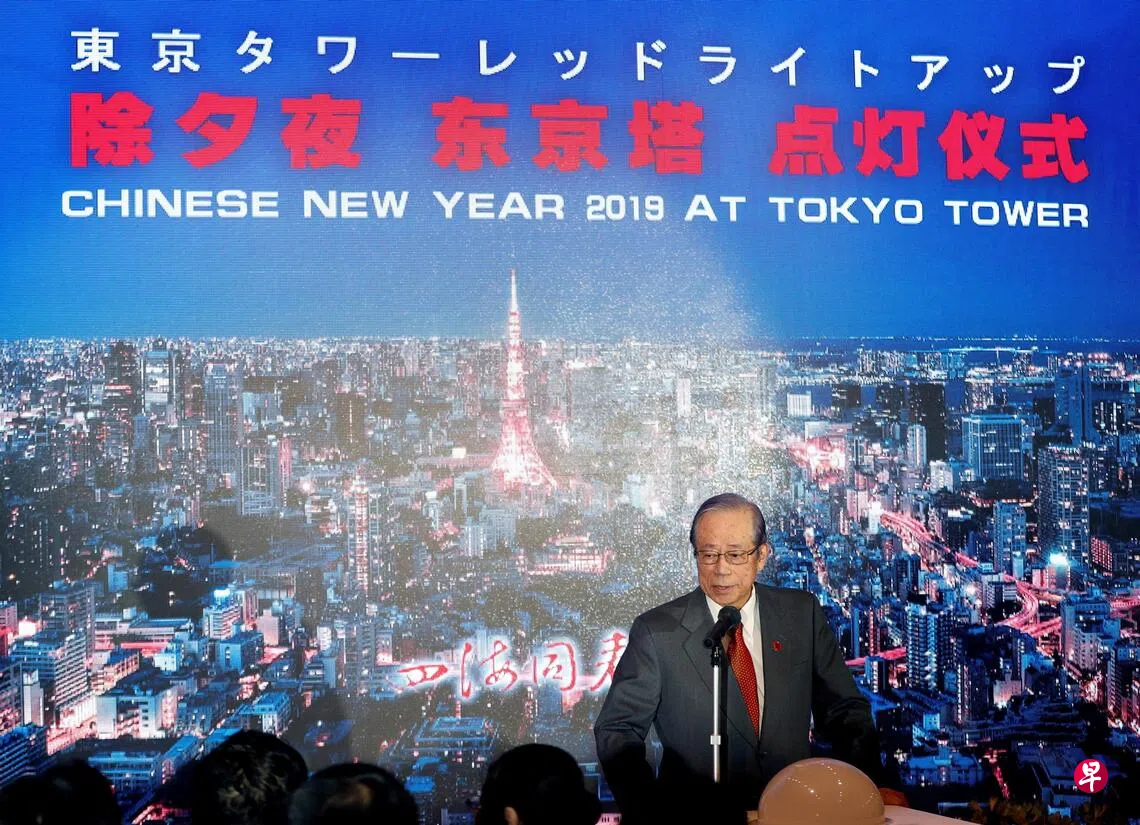
Former Japanese Prime Minister Yasuo Fukuda died in October. During his premiership from 2007 to 2008, he was known for his efforts to balance relations with the US and China. He also promoted a mutually beneficial strategic relationship between Japan and China, helping to secure the adoption in 2008 of the Japan-China Joint Statement on Comprehensive Promotion of a “Mutually Beneficial Relationship Based on Common Strategic Interests”. The statement is still regarded as one of the four foundational documents governing China-Japan relations.
The Fukudas are a Japanese political dynasty whose power base is the Gunma prefecture. His father, Takeo Fukuda, served as Japan’s prime minister in the late 1970s, from 1976 to 1978. The Fukuda Doctrine, which Takeo Fukuda put forward in 1977, will mark its 50th anniversary in 2027.
What is the Fukuda Doctrine? It refers to Takeo Fukuda’s speech in Manila, the Philippines, in August 1977, and the basic principles of Japan’s diplomacy towards ASEAN that stemmed from it. It has three core principles. First, Japan is determined to remain committed to peace and not become a military power, and on that basis contribute to peace and prosperity in Southeast Asia and the wider world. Second, Japan will build relationships of mutual trust with Southeast Asian countries across politics, economics, society, culture and other fields, fostering heart-to-heart exchanges as true friends. Third, as an equal partner, Japan will actively support ASEAN and its member states in their own efforts to strengthen solidarity and resilience, working with other like-minded countries outside the region. It will also seek to build relations with the countries of Indochina based on mutual understanding, contributing to peace and prosperity throughout Southeast Asia.
However, relations between Japan and ASEAN have changed over the past 50 years. These changes are reflected in a series of documents issued in 2023 to mark 50 years of Japan-ASEAN cooperation. They emphasise not only the two-way nature of cooperation, but also place greater weight on security cooperation. Has the Fukuda Doctrine of 1977 become a thing of the past?
I believe the Fukuda Doctrine remains the foundation of Japan’s relations with Southeast Asian countries, and ASEAN in particular.
First, economic ties between the two sides have changed considerably, and cooperation must indeed become more reciprocal. Both sides are also actively exploring cooperation in new areas such as security and emerging technologies. In this sense, Japan-ASEAN relations need to keep developing and deepening on the foundations of the Fukuda Doctrine to meet the needs of a new era.
In October this year, the Japan Centre at the National University of Singapore’s (NUS) East Asian Institute was formally established. At the launch event, Singapore’s Second Minister for Foreign Affairs and Home Affairs Sim Ann spoke about the past, present and future of Japan’s relations with ASEAN and Singapore, against the backdrop of the 60th anniversary of Japan-Singapore diplomatic ties and the Fukuda Doctrine’s 50th anniversary in 2027. One key phrase was “looking ahead”.
During the Second World War, Japanese aggression brought immense suffering to Singapore and other Southeast Asian countries. After its defeat, Japan gradually established cooperative relations with Singapore and other countries in the region. As these ties developed, neither side forgot this history. They continued to explore what each needed from the other and how they should cooperate, in response to changing circumstances and needs.
The Fukuda Doctrine’s emphasis on Japan not becoming a military power and contributing to world peace and prosperity reflects a deep awareness of this history. Japan and ASEAN countries’ efforts to build mutual trust as true friends and equals across politics, economics, culture and other fields elucidate their willingness to keep exploring each other’s needs and what each can contribute.
The world is now at a major turning point; ASEAN economies are growing rapidly, and relations between Japan and ASEAN have also changed considerably. This makes it more important than ever for both sides to strengthen “heart-to-heart” exchanges and build an equal, two-way partnership.
In recent years, Japan has actively promoted security cooperation with countries such as the Philippines. As it ventures into these new areas and pursues the necessary cooperation, the Fukuda Doctrine’s principle that Japan will not become a military power remains important. It is precisely because Japan-ASEAN relations must continue to develop and deepen that the Fukuda Doctrine, as their starting point and guiding philosophy, matters all the more.
The author is a professor at the University of Tokyo.
