

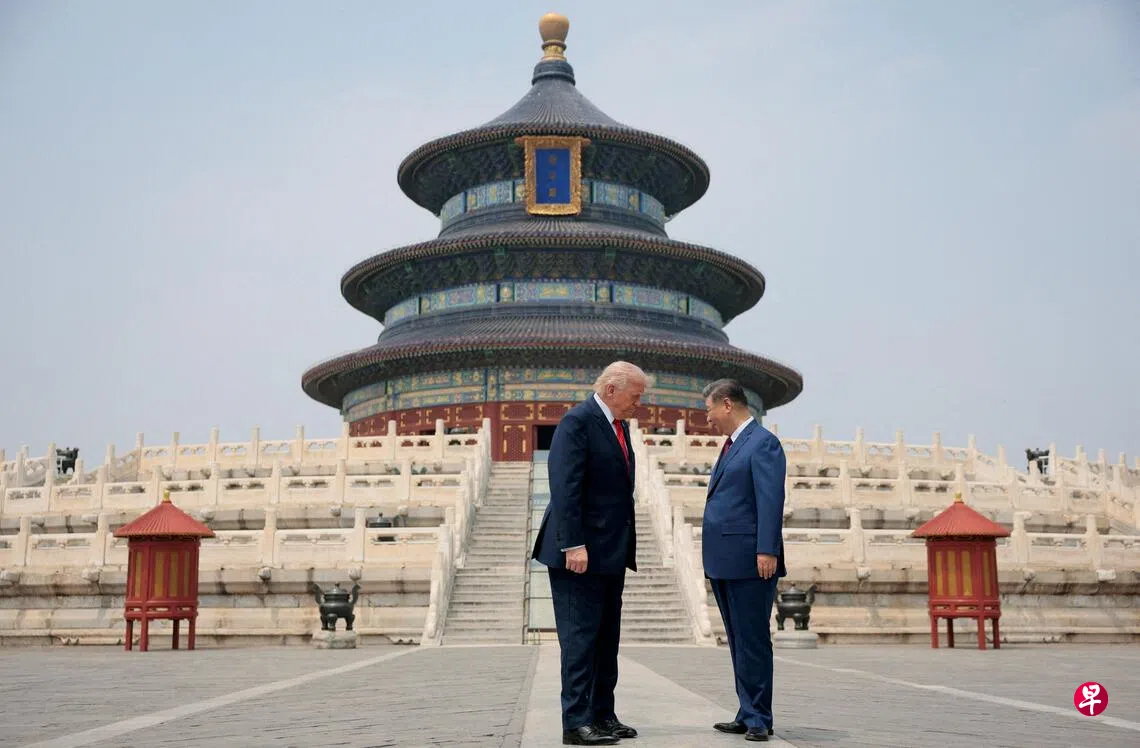
The Democratic Party’s landslide victory in the 2026 US midterm elections marks a turning point in American politics and could have profound implications for US-China relations. The core paradox, however, is that while a Democratic-controlled Congress will further intensify long-term strategic competition with Beijing, a politically weakened President Donald J. Trump may become even less predictable in his China policy. Crucially, this electoral setback could accelerate the Republican leadership contest ahead of the 2028 presidential election, particularly the rise of Vice-President JD Vance as a potential successor.
Strategic competition will outlast the Trump era
The US-China competition has structural roots; it is not simply a product of Trump’s personal political preferences. Republicans and Democrats alike increasingly see China as the US’s principal long-term strategic competitor, particularly in advanced technology, industrial capacity, supply chains and military influence in the Indo-Pacific.
However, important differences remain between the two parties over policy tools. Democrats generally favour coordinated export controls, cooperation with allies and targeted industrial policies, while Trump prefers tariffs, bilateral negotiations and transactional diplomacy. Democratic control of Congress is therefore unlikely to soften the US’s strategic stance towards China, but it may constrain Trump’s freedom to make major concessions in negotiations.
Indeed, a divided government could make US-China relations more unpredictable. Faced with legislative gridlock at home, Trump may increasingly turn to foreign policy to demonstrate political leadership. He could tighten tariffs and technology restrictions to project strength, or seek a high-profile deal with Chinese President Xi Jinping to claim a diplomatic victory. These possibilities are not mutually exclusive: Trump could well escalate economic pressure to strengthen his negotiating position.
Taiwan is especially sensitive. The US Congress is likely to further strengthen bipartisan support for Taiwan’s defence, while Trump retains considerable discretion over diplomacy, military deployments and crisis management. Conflicting signals from Congress and the White House could complicate Beijing’s strategic calculations and increase the risk of miscalculation.
For China, a politically weakened Trump presents both opportunities and dangers. His desire for diplomatic achievements could create room for economic compromise, but congressional resistance could undermine the credibility and durability of US concessions.
Beijing may increasingly find itself dealing, in effect, with “two Americas”: a president seeking short-term political deals and a Congress determined to maintain long-term strategic pressure.
The midterm elections’ more profound impact may emerge in the run-up to the 2028 presidential election. Vice-President Vance’s public criticism of the political consequences of the Iran war is particularly noteworthy. Vance identified three main sources of discontent among Republican voters: the increasingly unpopular and costly conflict with Iran, persistent inflation and cost-of-living pressures, and dissatisfaction among parts of the Republican base over Washington’s close alignment with Israel.
These criticisms contrast sharply with Trump’s continued defence of military action against Iran and his steadfast support for Israeli Prime Minister Benjamin Netanyahu. Notably, Vance reportedly secured Trump’s approval before presenting his assessment. Trump subsequently acknowledged the validity of many of these judgements, without abandoning his defence of the war.
Vance’s move may thus mark the beginning of the contest for Republican leadership in the post-Trump era. Rather than directly challenging Trump, he appears to be positioning himself as a candidate who can both carry forward the “America First” movement and correct perceived strategic mistakes.
The Iran war has therefore become more than a foreign policy dispute. It is increasingly a defining test of Republican identity: does “America First” mean protecting US interests abroad through military intervention, or does it mean strategic restraint, economic nationalism and a focus on domestic renewal?
This debate could fundamentally shape US policy towards China after 2028.
If Vance becomes president
Should Vance become president, the US will almost certainly continue to regard China as its principal long-term strategic competitor. However, his policy priorities and methods could differ significantly from Trump’s.
First, economic and technological competition could become more systematic and institutionalised.
Vance’s emphasis on US reindustrialisation, semiconductor self-sufficiency, advanced manufacturing and supply chain security suggests that he could sustain efforts to reduce the US’s strategic dependence on China. While Trump frequently uses tariffs as a negotiating tool, Vance may favour more lasting restrictions on critical technology exports and industrial dependencies. Economic competition could thus become less transactional but more deeply embedded in the US policy framework.
Second, Vance may strengthen deterrence in the Indo-Pacific while becoming more reluctant to intervene militarily.
His scepticism towards prolonged overseas wars reflects his belief that US military resources are overstretched. He may strengthen Taiwan’s defensive capabilities while remaining cautious about direct confrontation between US forces and mainland China. This combination could encourage regional allies to shoulder greater defence responsibilities, but it could also create uncertainty over the credibility of US security commitments.
Third, Vance may seek a strategic accommodation with Russia to concentrate US resources on China.
This approach resembles a “Reverse Nixon” strategy: rather than exploiting the Sino-Soviet split to contain Moscow, as it did during the Cold War, Washington would seek to ease tensions with Russia to strengthen its strategic position against Beijing. However, the increasingly close strategic partnership between China and Russia makes such a realignment far more difficult than it was during the Cold War.
Fourth, Vance’s preference for military restraint could create more opportunities for strategic dialogue with Beijing.
Although he would likely maintain strong economic and technological pressure, he may be more willing to negotiate arrangements aimed at reducing military confrontation, particularly over Taiwan and broader Indo-Pacific security issues.
The resulting policy would not necessarily be softer on China. Instead, it could draw a clearer, more coherent distinction between economic confrontation and military restraint: competing fiercely in technology, manufacturing and economic influence while seeking to avoid a catastrophic war between major powers.
For Beijing, the immediate challenge is to navigate the remainder of Trump’s presidency without allowing short-term political manoeuvring to destabilise bilateral relations. Both countries have ample reason to avoid an uncontrolled escalation. The US faces domestic economic pressures and competing security commitments, while China faces structural economic difficulties and needs a relatively stable external environment.
Beijing’s longer-term challenge is to prepare for possible shifts in US strategic priorities under Vance or another post-Trump Republican leader.
The author is an emeritus professor of economics at Nanyang Technological University.
