

The Chinese saying “a cunning rabbit has three burrows” describes someone who is calculating. It has a derogatory undertone, casting the rabbit as a sly creature. The saying comes from the ancient Chinese text Strategies of the Warring States, under the section “Stratagems of Qi”. Feng Xuan, a retainer of Lord Mengchang of Qi, observed that a clever rabbit digs three burrows to protect itself from predators in the sky and forest. Through this vivid analogy, Feng advised Lord Mengchang on how to secure his position and cultivate goodwill far and wide.
Over more than six decades of Singapore’s development, its strategies for safeguarding and strengthening itself in three major areas can be seen as its own “three burrows”.
What are they?
The first is water.
Singapore’s Four National Taps strategy has become part of national education. As times change, water resources have become even more important.
Besides providing clean, safe water for its people, Singapore must meet the water needs of growing industries such as wafer fabrication and data centres. The government has announced close to S$100 million in funding to improve water management and develop innovative solutions that make industrial water use more efficient and increase recycling.
At the opening of the 11th Singapore International Water Week in June this year, Deputy Prime Minister and Minister for Energy, Trade and Industry (Trade) Gan Kim Yong urged on the issue of water challenges that: “We must act with urgency. But we must also plan with foresight. Water infrastructure takes time to plan and build. Water technologies take time to develop and deploy. And no country can solve these challenges alone.”
“Our aim is not only to meet Singapore’s own needs. We also want to develop solutions that can be applied in cities and industries around the world.” Gan made clear that Singapore is now able to share its accumulated experience with other cities.
The second is energy.
Singapore and Malaysia have suffered badly from transboundary haze over the past two or three months. Yet, Indonesia has lashed out in embarrassment at Singapore by cutting its natural gas supply.
This reminded Ho Ching, the wife of Senior Minister Lee Hsien Loong, of former trade and industry Minister S. Iswaran’s contribution in advancing the liquefied natural gas terminal project during the global financial crisis of 2008 to 2009. The terminal’s first shipment came from the Republic of Trinidad and Tobago, thousands of kilometres away.
In a recent post on her personal social media account, Ho wrote that everyone is bound to make mistakes in life, and that a lapse should not overshadow past contributions. S. Iswaran had made mistakes, but this contribution of his should not be erased.
“Energy is more important than water,” she said. She also praised Minister for Energy, Trade and Industry (Energy and Industry) Tan See Leng for recently signing an agreement with Saudi Arabia, with plans to store crude oil in the Jurong Rock Caverns on Jurong Island from the second half of next year. Establishing Southeast Asia’s first crude oil storage facility is an unprecedented achievement.
About 95% of Singapore’s electricity is generated from natural gas. Indonesia may have thought this was Singapore’s Achilles heel, and that it could use it to teach us a lesson. Instead, Indonesia’s pointed move reminded Singaporeans that we had long been preparing to secure our energy reserves.
Several encouraging announcements came out of Singapore International Energy Week late last month. Tuas Power Generation signed a memorandum of understanding with two energy agencies in Laos. Hydropower supplies from Laos will gradually increase from 100 megawatts in the first year of the contract to 500 megawatts in the third year and beyond. The contract is currently expected to run for between five and 15 years.
Singapore has appointed three power generation companies — Keppel Energy, Sembcorp Industries and Tuas Power Generation — to trial the import and supply of biomethane as an alternative to natural gas for power generation.
Tan also announced Singapore’s energy infrastructure plans for the next five years, covering six areas: the electricity grid, power generation, natural gas, solar energy, energy storage and electricity imports. Singapore currently has more than 20 gas-fired power plants. Five more will be added over the next five years, with total generation capacity expected to increase by 26%.
Consideration of building a nuclear power plant has also been placed on the national agenda, as part of longer-term planning to strengthen Singapore’s energy security.
The Singapore Nuclear Research and Safety Initiative at the National University of Singapore and the VTT Technical Research Centre of Finland jointly announced on 30 October that they had signed a five-year memorandum of understanding. It will deepen cooperation on nuclear safety and strengthen Singapore’s ability to assess emerging nuclear technologies.
The third is Singapore’s role as a global transport hub.
Singapore will invest S$800 million over the next five years to deepen its capabilities in maritime, land and air transport. The focus will be on research and innovation in artificial intelligence, autonomous driving technologies and robotics, strengthening Singapore’s position as a global transport hub.
Minister for Transport and Second Minister for Finance Jeffrey Siow told Parliament in July this year: “S$800 million is more than double the funding over the last five years. We will use these funds to back ideas that could completely transform how transport operates today.”
Transport is one of Singapore’s largest economic sectors, accounting for about 10% of gross domestic product and employing about 7% of the workforce.
Siow said that if these projects were successfully implemented over the next 10 years, Singapore would remain a key global transport and logistics hub, but with a transformed landscape.
Singapore’s ambitions have never been mere talk; they are made public only when backed by concrete plans and action, and the nation is confident that it can remain a shining little red dot on the world map. That said, with its small size and limited airspace, Singapore faces a very practical challenge in its development as an aviation hub.
Beyond these three main safeguards, we must bring the same resourcefulness to economic, diplomatic and social policy. We need an economy alert to developments on every front, diplomacy attuned to every direction, and a society that is diverse yet united. This is easier said than done. It requires not merely adapting to circumstances, but anticipating developments and taking the initiative.
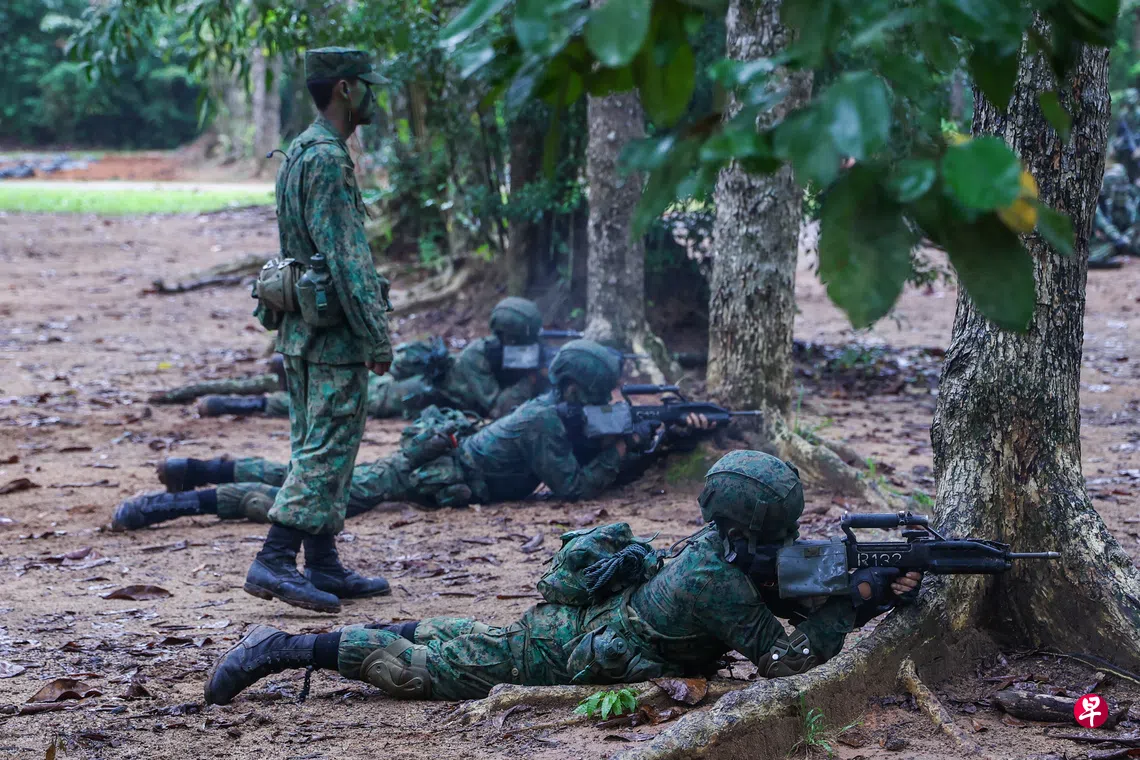
Most importantly, Singapore also has a defence force with three key strengths: advanced technology, high efficiency and strong deterrence. This last line of defence is meant to be ready but never needed. It is worth the long-term investment, much like accident insurance: never having to claim on it is itself a gain.
With a firm resolve and a flexible approach, Singapore must always be as resourceful as the clever rabbit. But we must not forget that the true meaning of “a cunning rabbit has three burrows” lies in treating others well and cultivating goodwill far and wide.
(The author is a guest commentator for Lianhe Zaobao (LHZB).)
