

Recent political developments in several countries seem to reveal a pattern worth noting, reflecting a trend that free people living in modern open societies must guard against. National elections in Israel and Brazil, the US congressional midterm elections, riots spreading from France to neighbouring countries, and even the open confrontation between Poland’s president and prime minister over control of the judiciary, all suggest unsettled times. They also suggest that the tools people use to understand reality have become unreliable.
Since opinion polls failed to predict the UK’s Brexit referendum result and Donald Trump’s election as US president in 2016, they appear not to have fully regained public trust, apart from their performance in the latest US midterm elections. Polls predicted that Israeli Prime Minister Benjamin Netanyahu and Brazilian President Luiz Inacio Lula da Silva would both lose, yet the results were the opposite. Although Netanyahu’s camp won only 53 seats, leaving it unable to form a government, the opposition alliance likewise failed to secure the 61 seats needed for a majority, winning just 48. Lula lost to his opponent Flavio Bolsonaro in the first round of voting but came from behind to win the run-off. Refusing to concede defeat, Bolsonaro hastily left office and went into exile in the US.
The biggest highlight of this Israeli election is that Arab parties could become kingmakers in the next government. Fearing the Netanyahu government’s policies hostile to Arab citizens, Arab voters turned out in record numbers. An alliance of Arab parties comprising Ra’am and the Joint List won a record 19 seats, well above their previous 10. Clearly, Israel’s Arab citizens enjoy equal political rights. Yet some mainstream Western media outlets, including The New York Times, The Washington Post, the Los Angeles Times, The Guardian and the BBC, have unquestioningly repeated claims by non-governmental organisations such as Amnesty International and Human Rights Watch, spreading the false accusation that Israel is an “apartheid state” and misleading international audiences.
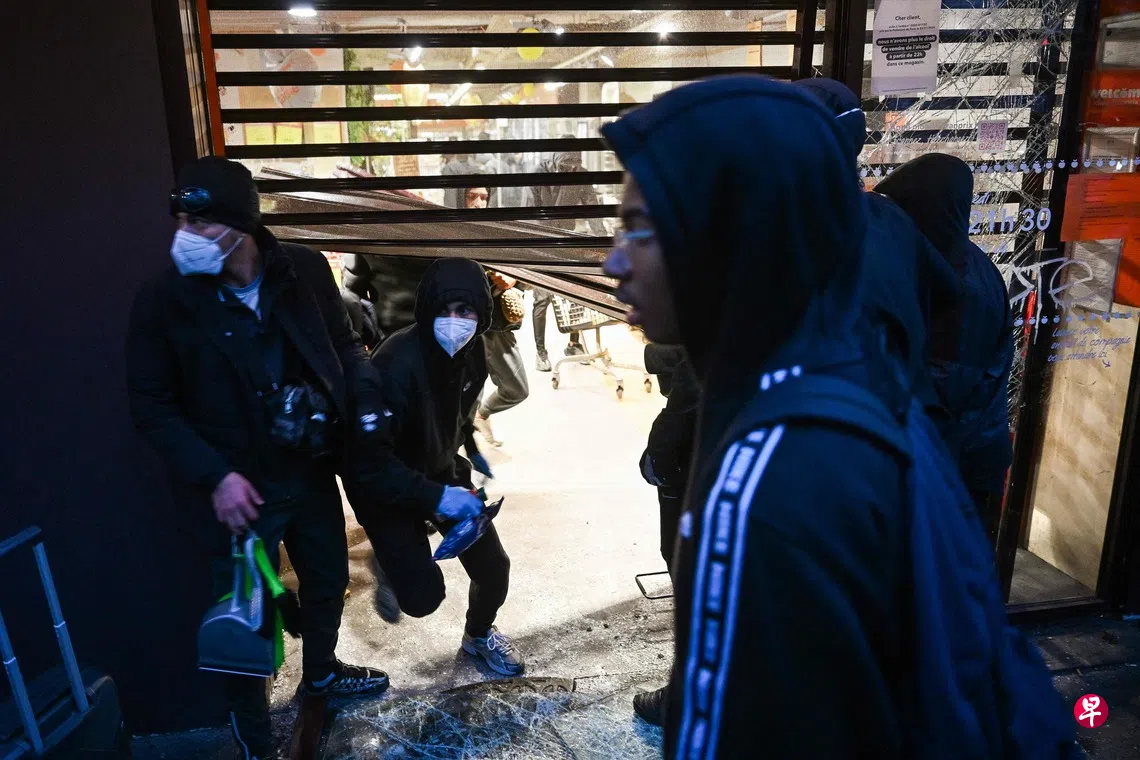
Similarly, these outlets have portrayed the unrest in France, which has spread elsewhere in Europe, as being driven mainly by young people unhappy with the unfair distribution of educational resources. Yet they turn a blind eye to the abundance of videos on independent media platforms showing large numbers of masked youths of Middle Eastern descent waving Palestinian flags, shouting “God is great”, smashing property, looting, setting fires and clashing violently with police. This prevents the contentious issue of illegal immigration troubling European countries from being openly confronted and rationally discussed.
This turmoil shows that without a basic grasp of facts and a shared understanding, free citizens in modern open societies can retreat into their own emotional echo chambers and succumb to primitive tribalism. They not only disagree over social realities but also, because of their divergent perceptions, regard fellow citizens with opposing views as mortal enemies, fearing that their country will become unrecognisable if the other side takes power. Poland’s political conflict may reflect a similar malaise. Such intense anxiety inevitably affects individual judgement and behaviour, as the exceptionally high turnout in recent elections across various countries suggests. This feverish political atmosphere can only be a warning sign for the health of a country’s democracy.
The modern state, which emerged from the course of Western history, is a new form in the development of human civilisation. It rests on the premise that all members of a political community share a fundamental consensus on values. Most societies that accepted and put this premise into practice after the Second World War have been able to provide their members with relatively high and secure living standards. Yet the turmoil in many open societies today suggests that this consensus is gradually weakening and, in some cases, breaking down. The result is severe division within political communities, as once-normal differences of political opinion turn into irreconcilable antagonism.
The reasons are complex, and Western thinkers have offered various theories to explain them. Robert Kim Henderson, a senior fellow at the Manhattan Institute, has proposed the concept of “luxury beliefs”: ideas or positions promoted and propagated by the wealthy, well-educated upper classes, such as disparaging monogamy and traditional family structures, advocating cuts to police funding, and opposing meritocracy in the name of equality. Henderson argues that “luxury beliefs” are a new status marker for social elites, signalling their moral superiority, progressiveness or intellectual standing. Yet their economic and social privileges shield them from the harmful consequences of putting these beliefs into practice, leaving those at the bottom of society as the ultimate victims.
In his book The Parasitic Mind: How Infectious Ideas Are Killing Common Sense, evolutionary psychologist Gad Saad introduces the concepts of “idea pathogens” and “parasitic ideas”. He argues that, like biological parasites, these ideas invade and rewire their hosts’ minds and behaviour, disabling reason and common sense. Postmodernism, for example, which is prevalent in academia, denies the existence of objective truth, holding that everything is subjectively constructed and declaring that “there are no objective facts, only different narratives”. Without objective facts, opposing views cannot be debated on common ground, leaving people talking past one another and struggling to compromise. A widely circulated remark attributed to British writer George Orwell captures this vividly: “There are some ideas so absurd that only an intellectual could believe them.”
Whatever the causes, modern open societies struggle to function normally once their foundations weaken, giving rise to the various forms of social and political turmoil now unfolding across countries. The enemies of open societies exploit this vulnerability, using social media and artificial intelligence to fan the flames. They wage cognitive warfare against free citizens through deliberate distortions of reality, further eroding the basic consensus and intensifying antagonism. As more people become unsettled by anxiety and fear, emotion can easily displace independent thought. They mistakenly treat fellow members of what was conceived as a shared community as enemies, making open societies difficult to sustain.
Those who enjoy the freedoms and civilised life of modern open societies must therefore recognise the vulnerabilities inherent in the environment on which their survival and development depend. They must refuse to be manipulated by fear, take public issues seriously, and make sound judgements and act wisely for the well-being of future generations.
(The author is the opinion editor of Lianhe Zaobao.)
