

Watching South Carolina, Kansas and Texas turn blue and elect Democratic senators, I instinctively blinked to make sure my eyes were not deceiving me. These were deep-red states that have steadfastly backed the Republicans for decades.
Although vote counting has yet to be completed in some states, projections by US media indicate that the outcome is settled. Besides defending their own seats, the Democrats have taken at least seven Senate seats and more than 40 House seats from the Republicans, regaining control of both chambers.
Several US presidents have faced opposition control of both the Senate and the House of Representatives in their final two years in office. In most cases, however, their party had controlled only one chamber to begin with and lost the other in the midterm elections. Only three presidents in US history had lost both chambers at once in the midterms before President Donald J. Trump became the fourth.
Faced with such a brash and erratic president, many are probably secretly pleased, hoping a resurgent Democratic Party can regroup and keep him in check, restoring the international order, trade rules and diplomatic conventions he has disrupted. But expecting a change in control of Congress to rein in Trump, or even put US policy back on its old course, probably overestimates what this electoral victory can achieve, and is somewhat wishful thinking.
Whether bombing Iran, launching a raid to capture Venezuela’s former president or imposing “Liberation Day” tariffs, Trump did not seek congressional approval beforehand. He has also used a series of executive orders to bypass Congress, tightening immigration controls, overturning diversity policies and cutting the federal workforce. Even after a court ruled that the US’s unilateral tariff increases were unconstitutional, Trump simply found another route, invoking other laws to restore the levies.
Clearly, he has paid little heed to the checks that the two chambers of Congress are meant to impose on him.
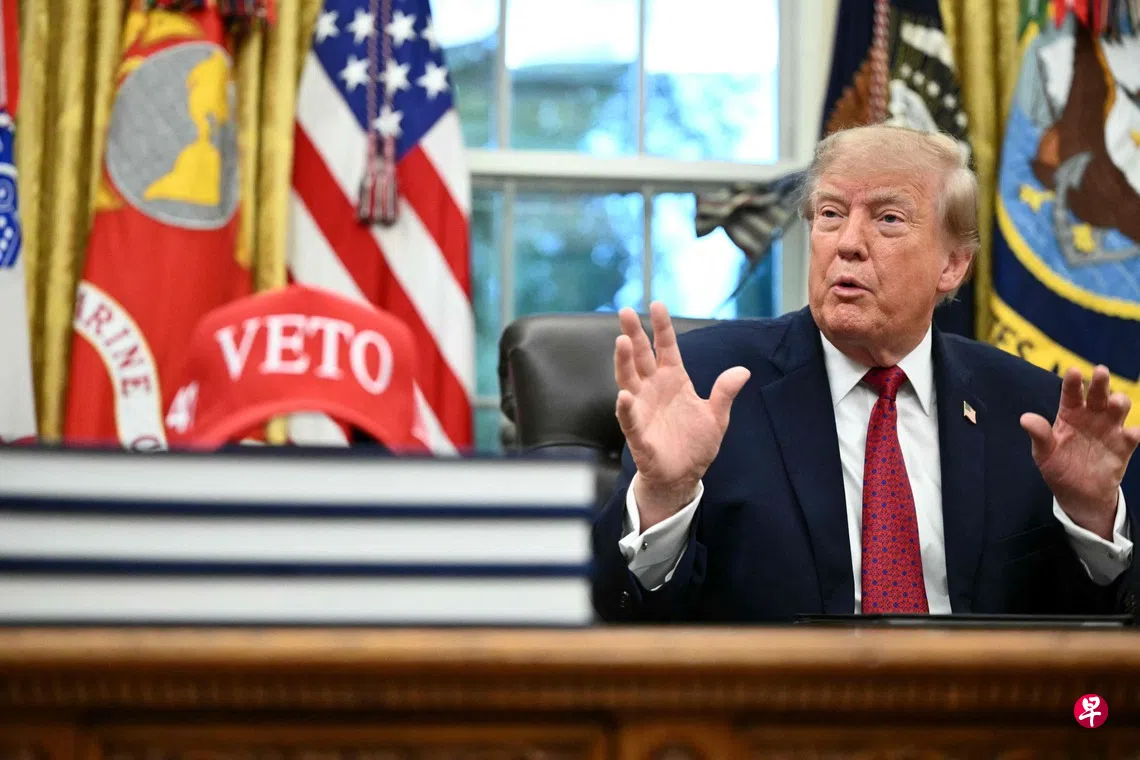
After the midterm elections, Trump adopted a slightly more conciliatory tone, saying there were more issues on which he could work with the Democrats than outsiders might imagine. But he also made a point of stressing that he held the power to veto their bills. Congress can override a presidential veto, but doing so requires a supermajority of at least two-thirds in each chamber. Despite their victory, the Democrats do not hold two-thirds of the seats. Unless Republican lawmakers break ranks to support them, the president still has the upper hand.
What about using an appropriation bill to put pressure on Trump? The experience late last year showed that he was prepared to let the government shut down and wait for public backlash against his opponents, seeing who blinks first under the pain.
The Democrats have said they will investigate suspected corruption and lawbreaking by the president and his family, but impeaching and removing Trump on that basis would be very difficult. With a majority in the House, they could readily pass articles of impeachment. Removal, however, requires a two-thirds supermajority of 67 votes in the Senate, well beyond the Democrats’ tally of just over 50 seats.
Beyond these institutional constraints, public opinion is crucial. The US’s shift towards protectionism has not reversed. American voters turned to the Democrats not because they opposed protectionism, but because they were unhappy that the Trump administration had failed to curb rising living costs and had wasted resources attacking Iran, indirectly driving up domestic oil prices. The calls to “Make America Great Again” and put “America First” that helped return Trump to the White House two years ago have not subsided.
To regain the presidency, the Democrats have little choice but to heed public opinion. After entering the White House in 2021, former Democratic president Joe Biden made no attempt to rejoin the Trans-Pacific Partnership, which his own party had helped bring about. He also retained the sweeping tariffs Trump had imposed on China during his first term, which the US regards as its biggest challenger, and even raised tariff rates as his own term drew to a close.
The Democrats do differ quite clearly from the Republicans on immigration, diversity and civil rights. But on trade, they too are leaning towards protectionism, albeit with slightly greater concern than Trump for justifying their actions and following legislative procedures.
A report published by the Federal Reserve Bank of New York in early October made clear that Trump’s global tariffs had pushed up the prices of 67 types of goods by 2.9%. It also found that each percentage-point increase in tariffs would raise consumer goods prices by about 0.25% after a year. With tariffs hitting consumers directly in the pocket, the Democrats have vowed to try to repeal them. But to show that they are actively protecting workers’ interests and shielding them from cheap imports, they are not expected to scrap all tariffs in one sweep.
For Southeast Asian countries, which depend heavily on global supply chains, a change in control of the US Congress offers little relief if its underlying protectionist stance remains unchanged. The region’s export-oriented economies will still face an uncertain trading environment and must continue to diversify their investments and deepen regional cooperation.
Whether a proposal to repeal tariffs can escape a Trump veto also remains a major question. Over the next two years, the power struggles between Democrats and Republicans, and between the White House and Congress, will only intensify. Unwilling to become a “lame duck”, Trump may instead turn into an “angry duck”, responding more aggressively to congressional constraints. That is unlikely to be good news for the world. The “blue wave” may raise the political cost of Trump’s policies, but it will not necessarily turn back the tide of protectionism.
(The author is associate editor of Lianhe Zaobao.)
