

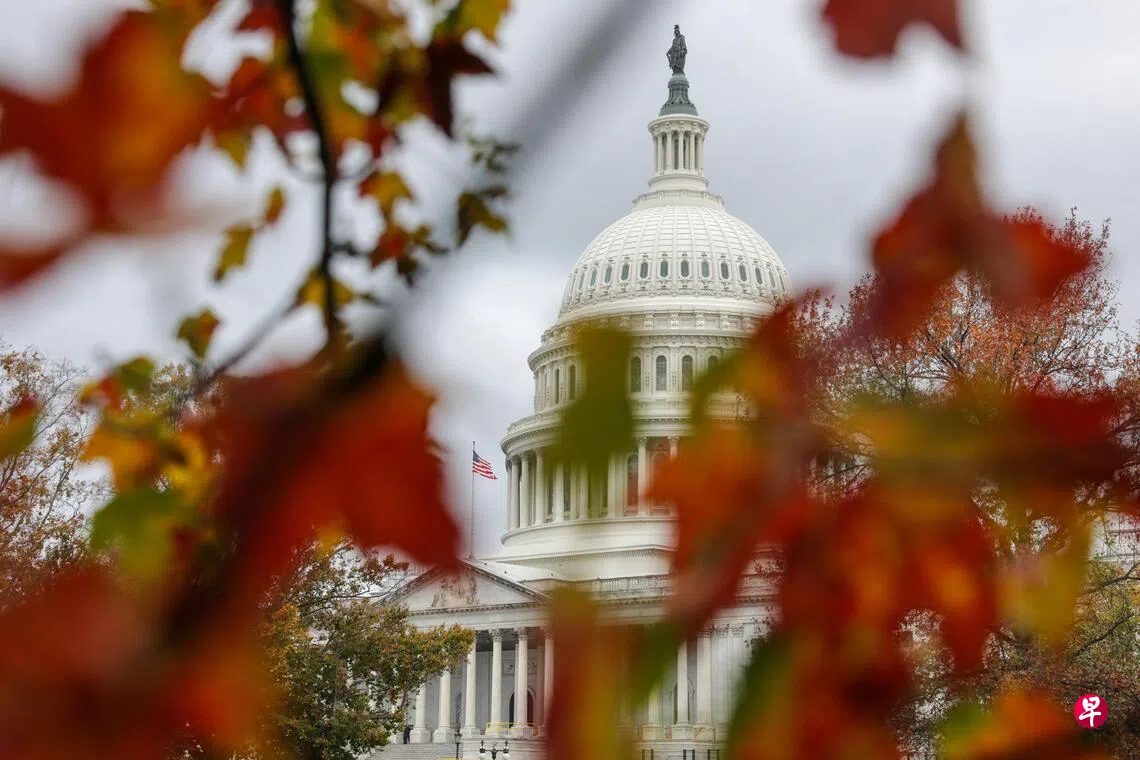
The US midterm elections have not only returned control of both houses of Congress to the Democrats, but also set off a realignment of values across the country’s political landscape.
If US President Donald Trump’s return to the White House two years ago marked the triumph of right-wing populism, this sweeping “Blue wave”, or “Blunami”, represents voters’ collective reckoning with a radical conservative agenda.
The most profound message of these midterms lies not in Republican losses and Democratic gains, or seats changing hands, but in the changing faces of those in power. Deeply conservative Texas elected its first Latino governor, while Kansas elected a Democratic US senator for the first time since 1932. More moderate swing states also witnessed dramatic outcomes: New Mexico elected its first female Native American governor, while Michigan elected the country’s first Muslim US senator.
The most ironic and dramatic result came in traditionally deep-red South Carolina. The state not only elected a Democratic US senator, but also sent Nancy Lacore, a three-star Navy vice-admiral recently dismissed by Secretary of War Pete Hegseth, to the US House of Representatives.
In August last year, Hegseth forcibly removed Lacore as chief of the Navy Reserve on trumped-up grounds, abruptly ending her 35-year military career. Lacore channelled that political persecution into her campaign and narrowly won a House seat. It was a dramatic reversal: the admiral dismissed by the defence secretary had become a member of Congress overseeing the Pentagon.
During her campaign, Lacore openly called Hegseth “the most unqualified secretary this nation has seen”. Now a member of the House, she is very likely to vote in favour of his impeachment.
Having regained control of Congress, the Democrats are sharpening their knives, and Hegseth is almost certain to be their first target. From compelling testimony and withholding classified funding to launching a barrage of hearings and formally initiating impeachment proceedings, the Democrats are certain to seek Hegseth’s removal as a means of severely weakening the White House’s grip on the Pentagon.
But the Defence Secretary is far from their only target. The Justice Department, the Environmental Protection Agency and even the White House’s inner circle will be dragged into a morass of endless congressional investigations. Faced with this gathering storm of accountability, are Republicans really willing to serve as Trump’s “human shields”?
Should the Democrats initiate impeachment proceedings against Trump over collusion with Russia, abuse of power and corruption, or obstruction of justice, a subtle wave of defections could emerge within Republican ranks. With just two years to go before the 2028 general election, Trump’s personal appeal has proved incapable of delivering electoral gains for the Republican Party. Instead, it has become a liability to GOP candidates in local races. Using the Democrats’ efforts to make a clean break with Trump and end his stranglehold on the party may be the Republicans’ only way to stem their losses, survive and put forward a new generation of leaders before the next general election.
The change of control on Capitol Hill has also sent a chill through the business titans who have tied themselves closely to Trump over the past two years.
During Trump’s first term, Silicon Valley’s technology chiefs and Wall Street financiers were still able to keep their distance. By his second term, corporate titans were flocking to Mar-a-Lago to pledge their allegiance. Tesla founder Elon Musk went so far as to stay at Mar-a-Lago, becoming deeply involved in federal affairs for a time as an unofficial adviser. Nvidia chief Jensen Huang also interacted closely and frequently with Trump. Publicly praised by Trump as “a rare and great talent”, Huang actively endorsed plans to develop artificial intelligence domestically and build data centres.
Now, the Blue wave has immediately drawn these fervent political-business alliances into the reckoning. The day after the election results were announced, Nvidia shares plunged more than 9%, wiping US$447 billion (about S$573 billion) off its market value. Huang’s wealth shrank by US$15.1 billion in a single day, knocking him out of Bloomberg’s list of the world’s ten richest people. Shares in Musk’s Tesla and SpaceX fell nearly 11% and 8% respectively, erasing more than US$300 billion from their combined market value in a day. Musk’s personal fortune suffered a staggering US$79.7 billion decline.
A commentary in The New York Times described Musk as the biggest loser after Trump. He donated more than US$400 million to the Republicans, with over half directed towards Texas. Yet voters in Texas rejected his preferred candidates, also demonstrating that American elections are not a “money game” controlled by the wealthy.
These losses are merely the first bitter consequences for the tech oligarchs. The real threat still hangs over them on Capitol Hill. Having regained control of the House Oversight Committee and the Senate’s investigative panels, Democrats will certainly seek to establish their political authority through thorough investigations into “Trump and his political-business alliance”.
Getting too close to authoritarian power ultimately carries the heavy price of becoming an easy political target. For the tycoons who so publicly bet on Trump, what awaits is no longer a warm welcome as honoured guests in the Oval Office, but a series of “lawful reckonings” that Democrats are poised to pursue through taxation, antitrust enforcement and compliance reviews.
(The writer is Lianhe Zaobao’s international news editor.)
