

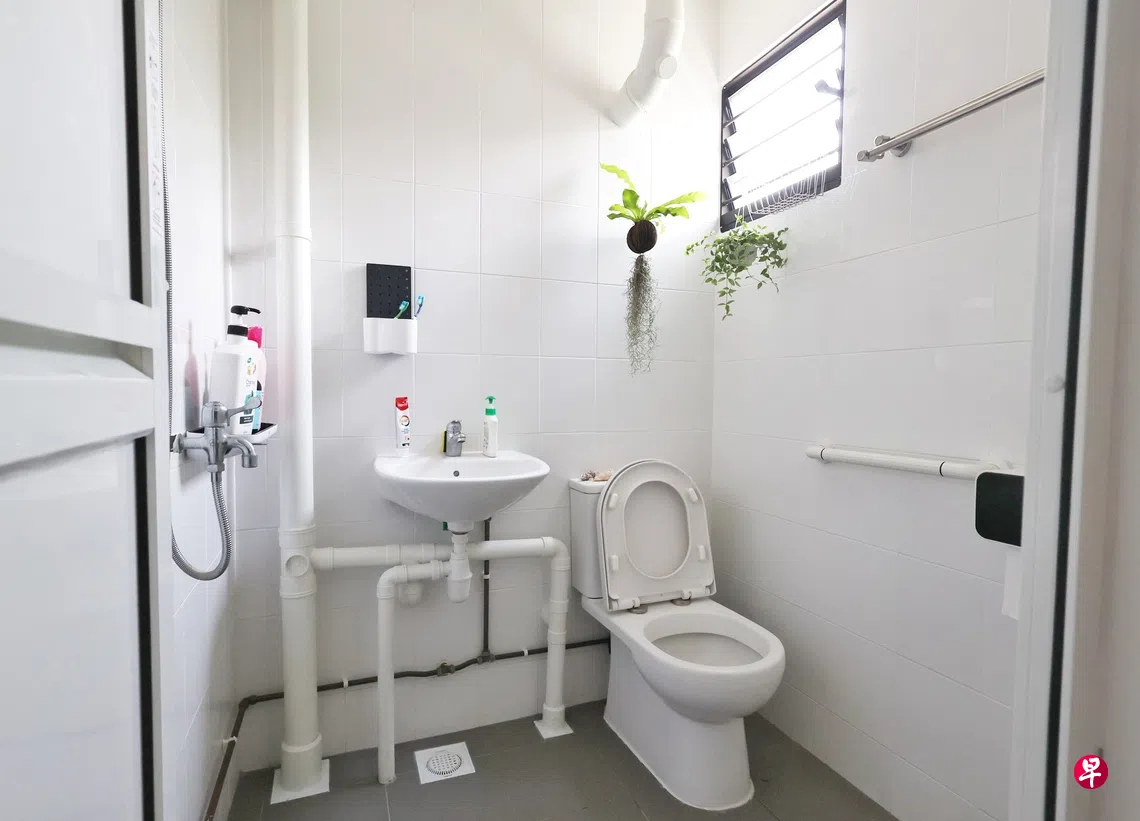
With my home due for the Home Improvement Programme (HIP), I thought that, since we would have to endure the dust and upheaval anyway, we might as well take the opportunity to renovate the entire flat and prepare it for our later years.
When I mentioned HIP to relatives and friends in Malaysia, they were astonished to hear that the government subsidises most of the cost.
The programme is very much in keeping with the Singapore government’s far-sighted approach to governance. It shows care and concern for people’s well-being and, going beyond patching cracks and upgrading facilities in ageing flats, also offers a timely helping hand at an important juncture in our lives, reminding us to prepare for old age.
I have lived in this flat for a full 30 years. When I bought it on the open market, the previous owner had just completed an elaborate renovation. Young and on a limited budget, I was happy to benefit from someone else’s efforts and thus did not complete any major work after moving in.
Thirty years have since slipped by, making this our first makeover of the old flat.
But the first challenge in a full renovation is clearing everything out. Had I not forced myself to do it this time, I would never have realised how much clutter could accumulate over 30 years.
The clear-out, which has taken almost six months, has felt like a long farewell to the past. Often, I would pull out a box that had been sealed for years and pick through it, throwing some things away. The traces left on those objects would carry my thoughts back to a particular time in my life.
Yet when I returned a few days later for a second or third look, my attachment would have faded a little more, and I would quietly part with some of what remained.
After several rounds of this, something became clear to me: of the memories and tokens of achievement I had tried so hard to hold on to in my younger days, those that truly mattered were already etched deep in my mind. The physical objects were merely shells taking up space. There was really no need to cling to them.
A deeper realisation came as, while sorting through the belongings of an elder who had died, I opened a dusty tin to find neatly stacked phonecards, long since obsolete.
For her, each might have held the memory of someone far away or carried a special emotional attachment. To me, however, they were merely a collection of lifeless relics. What had truly become part of me were her teachings and unfailing care. None of that needed a few magnetic cards as proof or remembrance.
That got me thinking about my own possessions. After I am gone, won’t the things I have kept like precious treasures also become a burden that my children would have to spend time and effort clearing away?
Rather than leave the next generation this bittersweet task, I would do better to deal with it myself while my faculties are still intact.
As I worked through this process of decluttering and letting go, the original outlines of our once-crammed home gradually emerged. Standing in the nearly empty flat and looking around, I could not help laughing to myself: our living room was actually large enough for a game of table tennis.
The sight of that open, unobstructed space lifted my spirits too. No longer preoccupied with what to keep or discard, I found that clearing out old possessions had left me with what is most precious for the later years of life: a sense of ease and room to breathe.
(The writer is deputy local news editor of Lianhe Zaobao.)
