

Rustic wooden plaques, the glowing lines of neon signs, handwritten boards outside shops and sweeping lettering on walls make up our familiar streetscapes.
In an age that prizes efficiency, some people are still willing to put time and effort into every brushstroke, cut and curve, studying and refining their work until they are satisfied.
Chinatown’s streets are filled with signs and display boards, but a few always invite a second look. One is the wooden plaque with gold lettering on a black background above the main entrance to Starbucks on Smith Street.
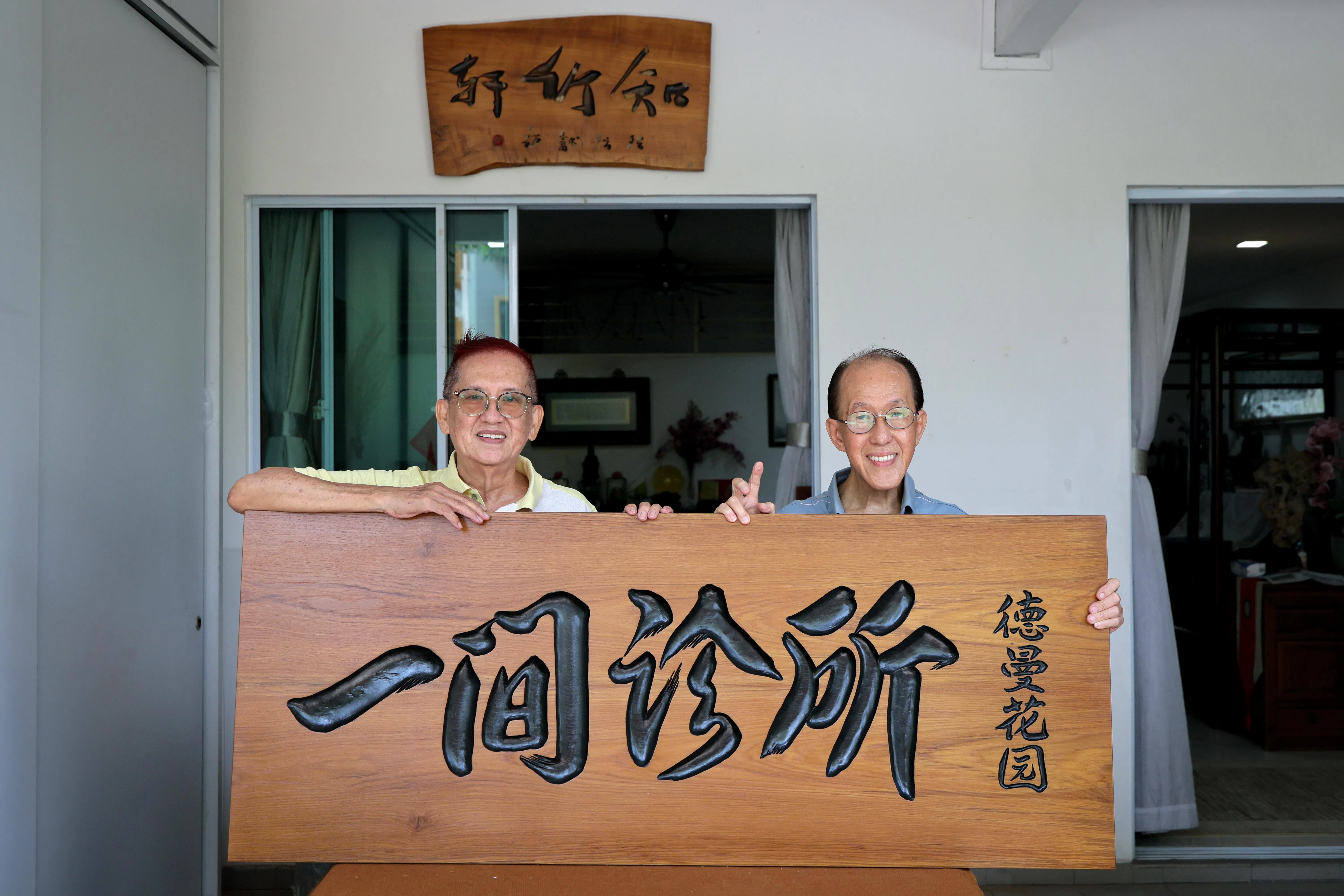
The three full, rounded Chinese characters for “Starbucks” are the work of calligrapher Yong Cheong Thye, 80, and woodcarver Cheh Kai Hon, 76, of Yong Gallery. The two masters have collaborated for decades: one writes, the other carves, preserving the spirit of calligraphy in wood.
Recalling the thinking behind the Starbucks lettering, Yong says he wrote several versions for the client to choose from. The one selected had full, powerful strokes.
“They are running a business, so they want something rounded and substantial. With business and money comes abundance. Thin lettering would not look good or have that strength. Its whole spirit would seem less full than that of the rounded characters.”
In 2018, after more than 30 years in Chinatown, Yong Gallery moved out because of rising rent. The pair then continued working together from a home studio in the Joo Chiat area.
Making traditional plaques like composing poetry
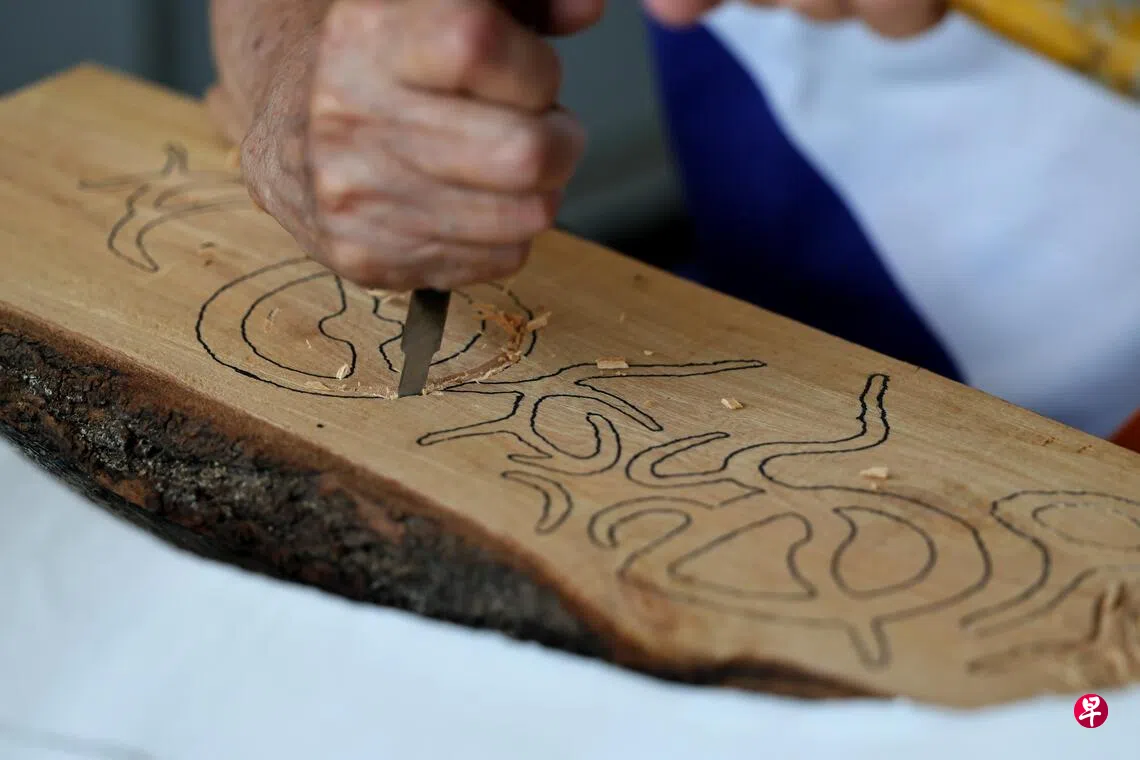
On the day of the interview, rhythmic, forceful tapping could be heard before the reporter reached the studio door. Inside, Cheh held a chisel in one hand and a mallet in the other, carving along the outlines of characters on a wooden board.
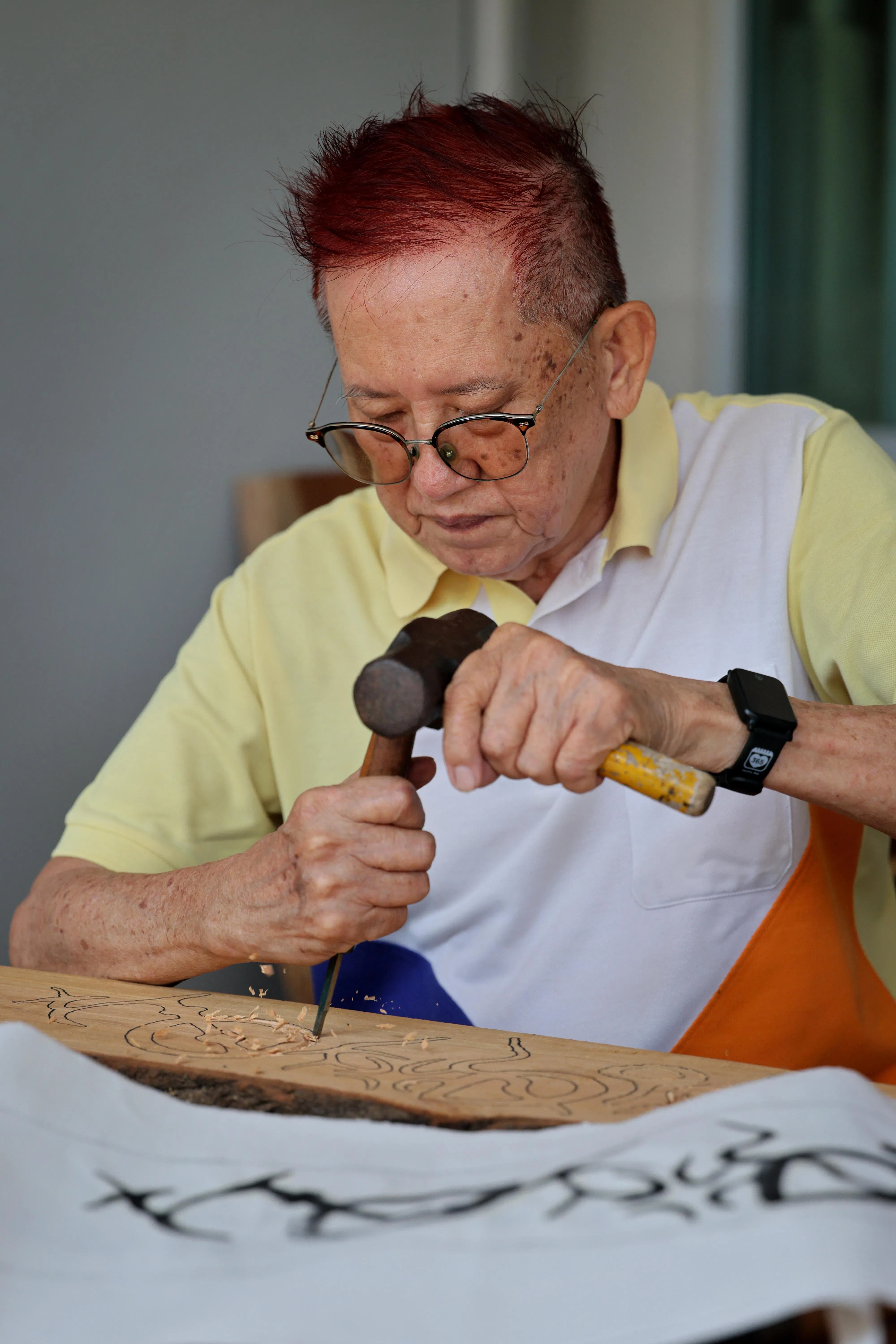
Each seemingly effortless tap and cut rests on careful consideration of the calligraphic brushwork and even the grain of the wood. Cheh says: “When we receive a sign commission, whether the lettering is by Mr Yong or another calligrapher, we both first look closely and study it, to understand how the calligraphy is expressed and where its spirit lies. We do not simply pick up the work and start carving. We begin only after we have understood it properly.”
Their move into sign-making began with their collaboration. Yong says: “At first, he did carving and I did calligraphy. They were two different things. But when we came together, I needed someone to carve my work, and he needed calligraphy to carve. So we joined forces and set up the gallery. What we really wanted to make was art.”
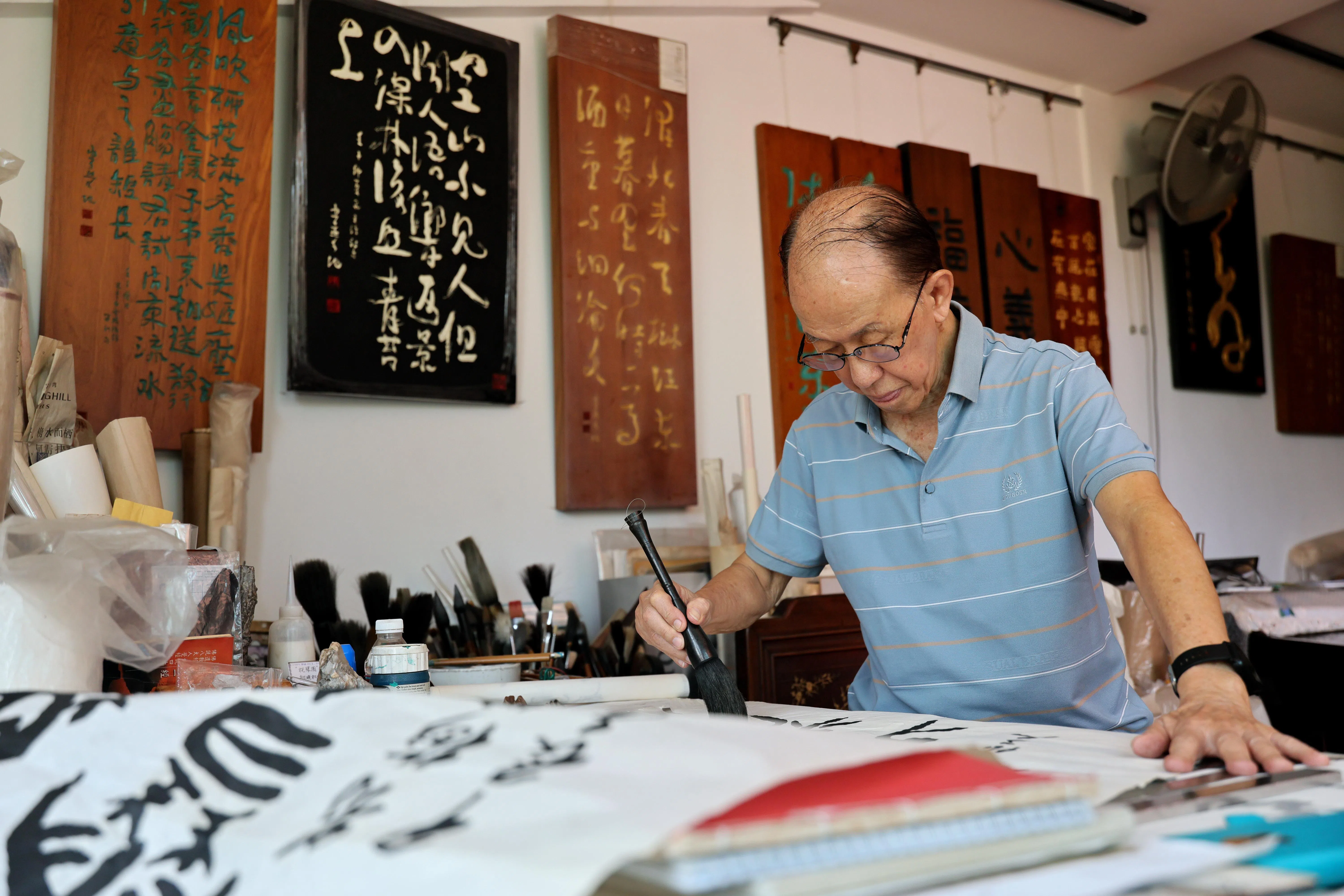
Yong finds beauty even in the many old signs along the streets, some damaged and others worm-eaten. To him, the signs carved from calligraphy by earlier generations are beautiful: they are not merely products, but works of art.
That led him to think: “Why can’t we make them? We can do it too. Our idea was to make them artistic, just as we would compose poetry.”
As older craftspeople gradually retired, customers still seeking such work turned to the pair. Yong says some people also ask why they should pay more and wait longer for handmade work when machines can do the job.
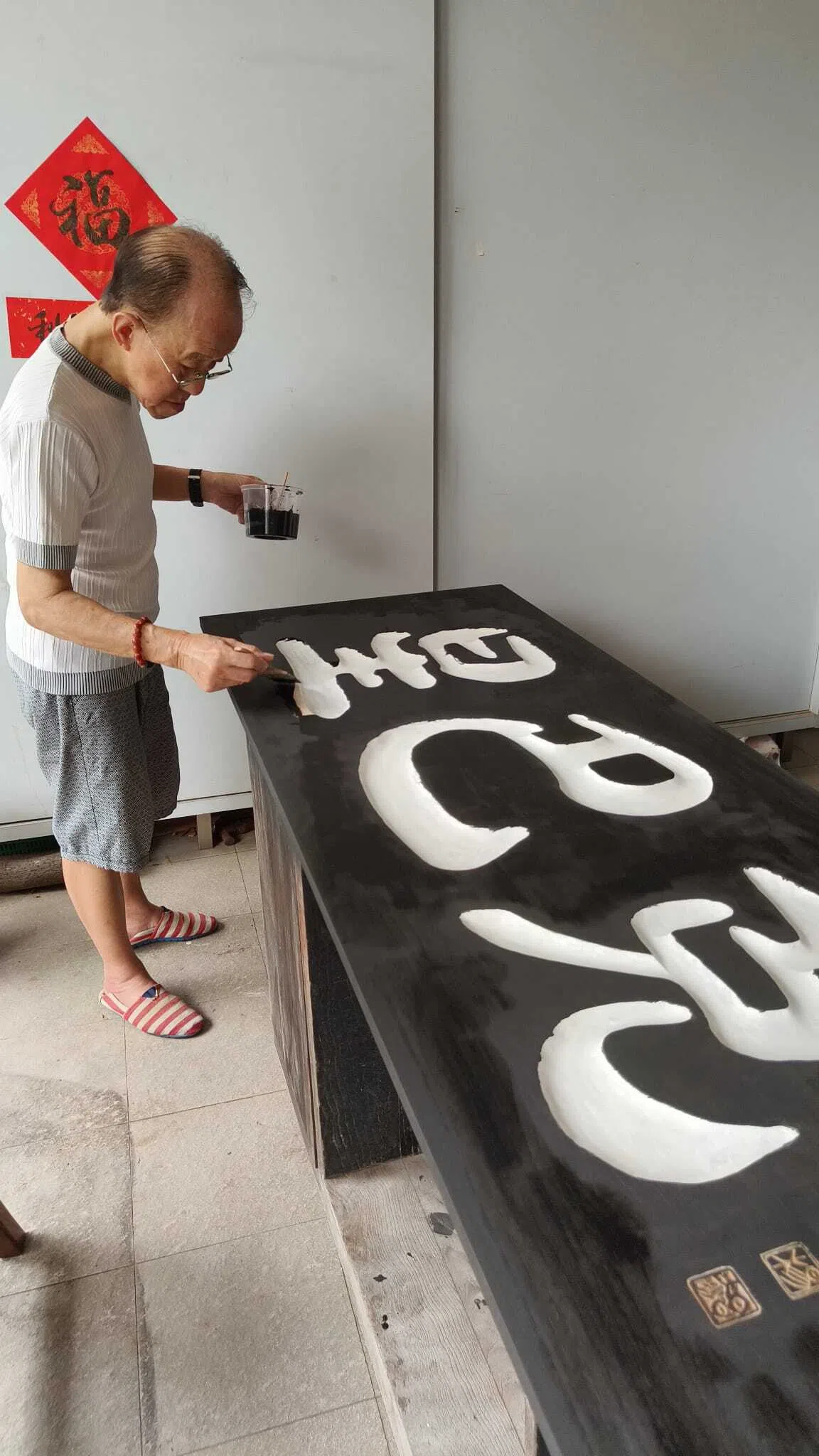
“They can make one in two or three days. We need a week or two, sometimes a whole month,” Yong says. Their work is guided by calligraphy, he explains. Cheh is not simply a carver: he also practises calligraphy and understands the rise and fall of the brush, its movement and changes in pressure. Yong, meanwhile, writes with the grain of the wood in mind.
Yong adds that from writing to carving, the two work closely together, putting feeling into the wooden plaques. That is what sets their work apart.
Neither is interested in volume. Cheh says: “Two or three orders a month is already very good. We do not want too many, or to put too much pressure on ourselves. If you rush handmade work and turn it into a commodity, it loses its artistic quality.”
Drawn to a glow that LEDs cannot replicate
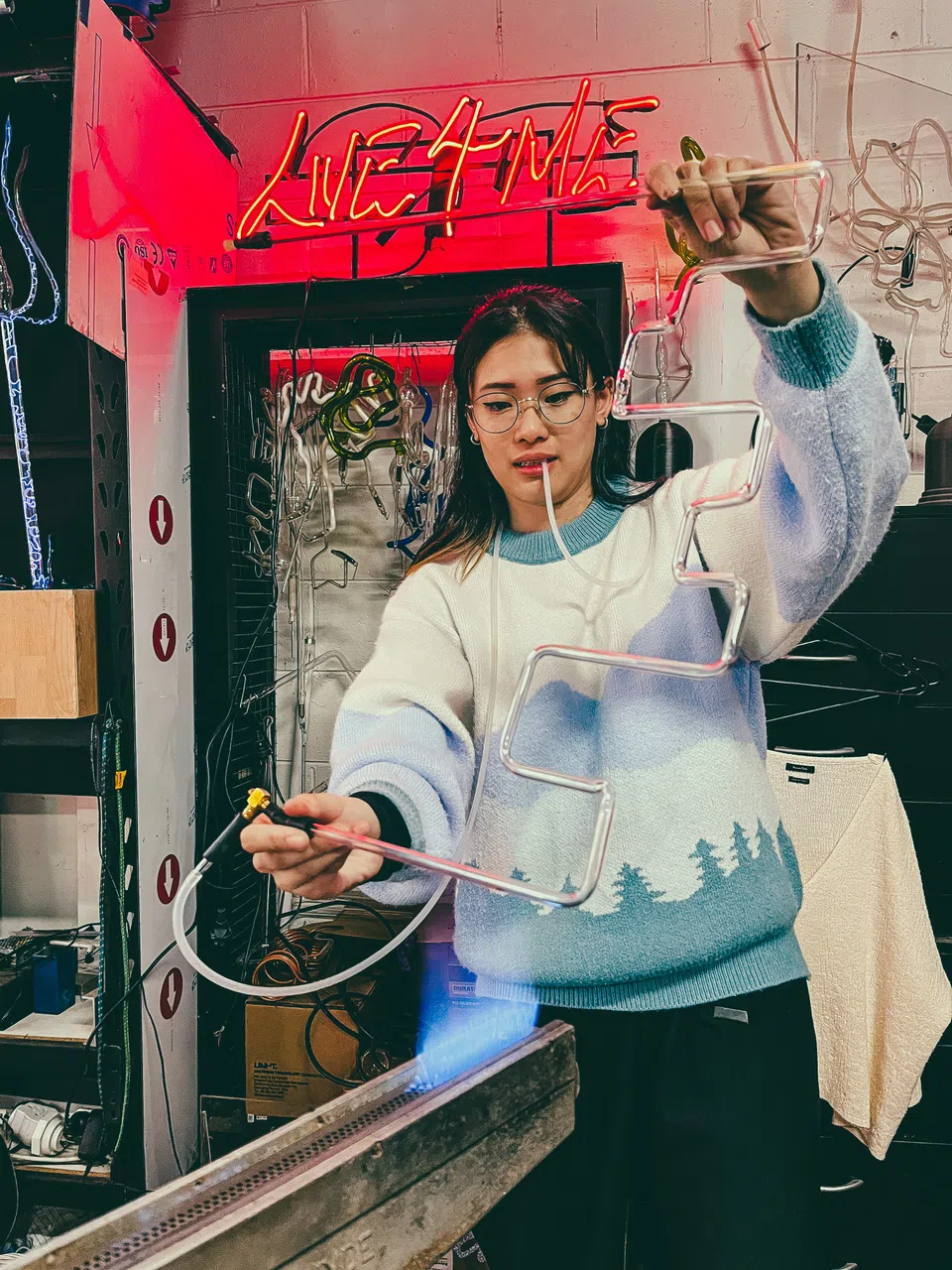
Colourful neon signs once lit up Singapore’s nightscape. Light artist Megan Foo, 31, who works mainly with glass neon and uses the handle @maegzter, likewise puts artistic expression first.
Rather than the number of orders she completes each month, what matters more to her is whether a project allows her to be creative and express her personal style.
She always makes clear at the outset that she is not a commercial sign-maker. “My focus is entirely using light as a medium for creative expression to bring artistic visions to life. Because my practice focuses on creative collaborations rather than commercial volume, it operates very differently from a regular sign shop. For me, it’s about cultivating a steady, growing flow of meaningful projects throughout the year.”
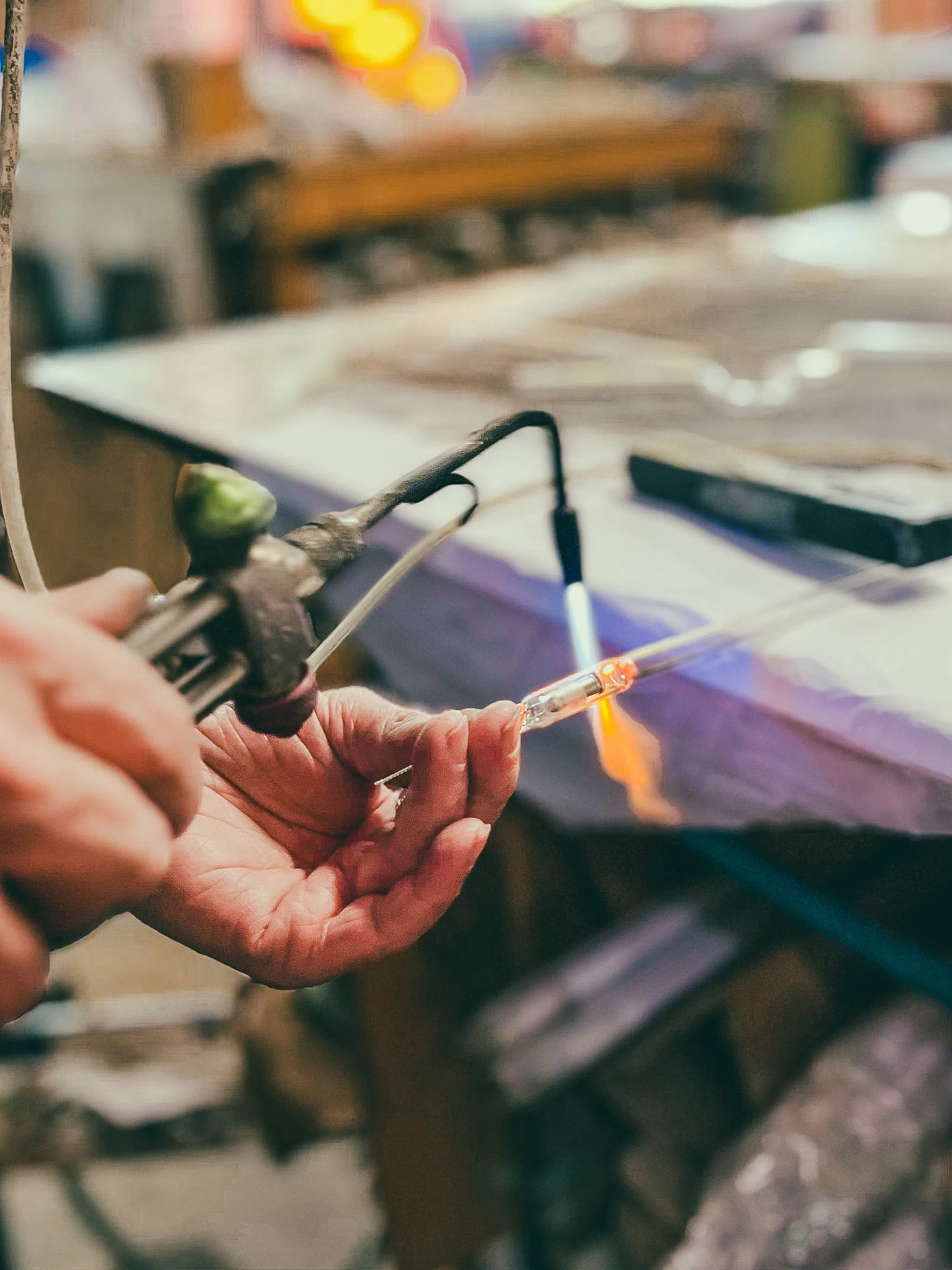
Foo recalls her first hands-on experience with glass neon in Australia in the summer of 2023. She says: “I remember being drawn to the warm flame in the crisp climate, completely mesmerised by how a simple flame was able to transform the solid glass. When I finally held the material myself and gave it a go, I found it unexpectedly therapeutic and fell in love immediately.”
Previously a marketing professional, she had always dreamed of becoming an artist. In 2024, after six years at the same company, she felt ready for a new challenge and decided to change careers, devoting herself to art full-time.
As with any new venture, there was much to sort out at the beginning. Working through each issue was a fresh and exciting challenge. Her first hurdle in learning the craft was finding an experienced neon master willing to take on an apprentice.
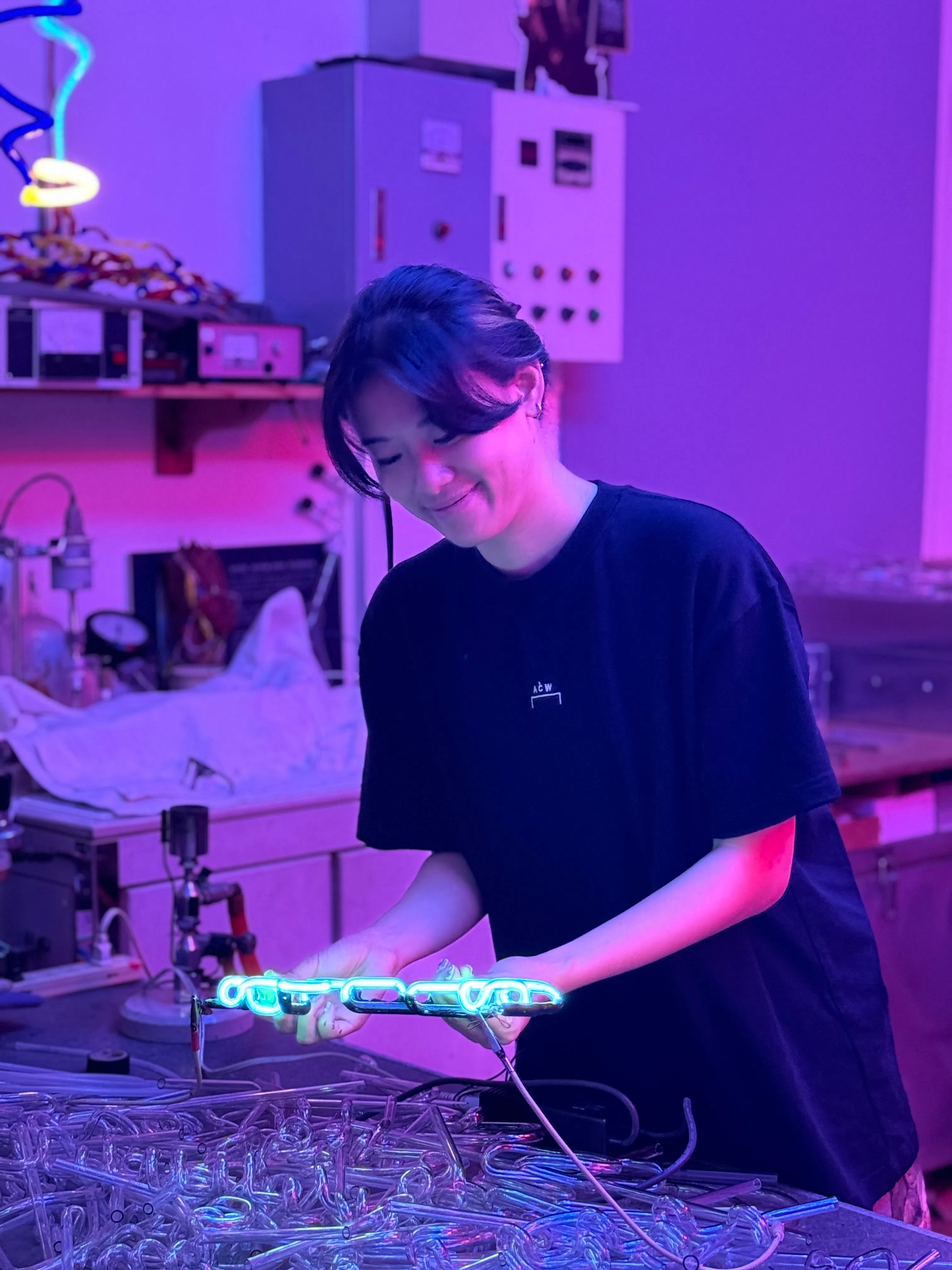
“This search took me to Hsinchu, Taiwan, where I immersed myself in the medium (that I had to learn entirely in Mandarin Chinese). Returning home to Singapore brought its own obstacles; after chasing down countless leads, a stroke of pure luck and serendipity finally connected me with an elusive local neon master I had previously struggled to track down.” The veteran craftsman became a mentor she deeply values. They continue to work closely together on projects today.
Foo’s clients range from corporate brands to individuals commissioning bespoke pieces. Most discover her through social media. Her work consists mainly of artistic collaborations, with clients typically commissioning custom conceptual pieces and her involvement in the design beginning at the initial idea stage. These works are usually installed as art in commercial spaces or galleries, becoming visual focal points.
As for why clients still choose handmade glass neon, she believes traditional glass neon has a distinctive glow that LEDs cannot replicate. Many are drawn to its warmth and the unique atmosphere it creates as it lights up a space. She says: “Ultimately, they are not just paying for a light; they are investing in the soul of the medium.”
Foo says the most common misconception among clients is that traditional glass neon is equivalent to mass-produced LED lighting, leading them to underestimate the time and cost involved. “However, I always enjoy having conversations that pull back the curtain on the craft and my work, and explain the intricate, time-consuming process of the art. Once clients understand the level of craftsmanship required, they start to understand why this medium is such a special and worthwhile investment.”
Preserving the warmth of hand lettering
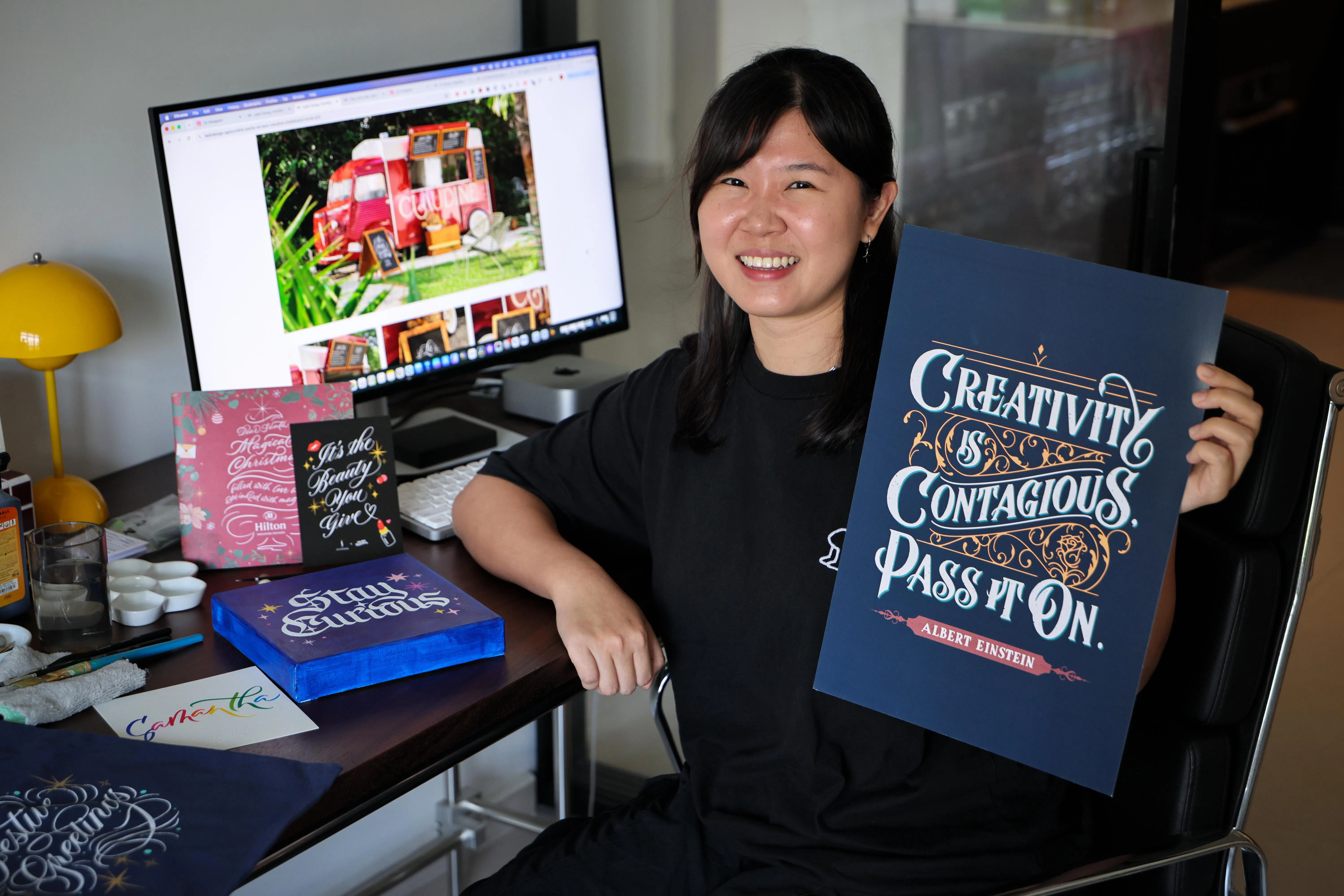
Whether on shop signs, display boards or freestanding signs, lettering is indispensable. Former accountant Leah Chong, 32, who uses the handle @leahdesign, left her job in 2018 and gave herself six months to try making a living from art.
Her thinking at the time was: “Even if I could not make it after six months, I could just find another job. It was okay. Those six months turned into eight years.”
In 2015, while still at university, she happened to discover Western calligraphy. During classes, she would copy the lettering used in the headings of her lecture notes. She later tried cursive script and taught herself through books, gradually turning her hobby into a career.
Today, calligraphy, hand lettering and illustration are like three tools in her toolkit, which she can apply to all kinds of surfaces. From shop boards and walls to lipsticks and glassware, anything with a surface can become a canvas for her work.
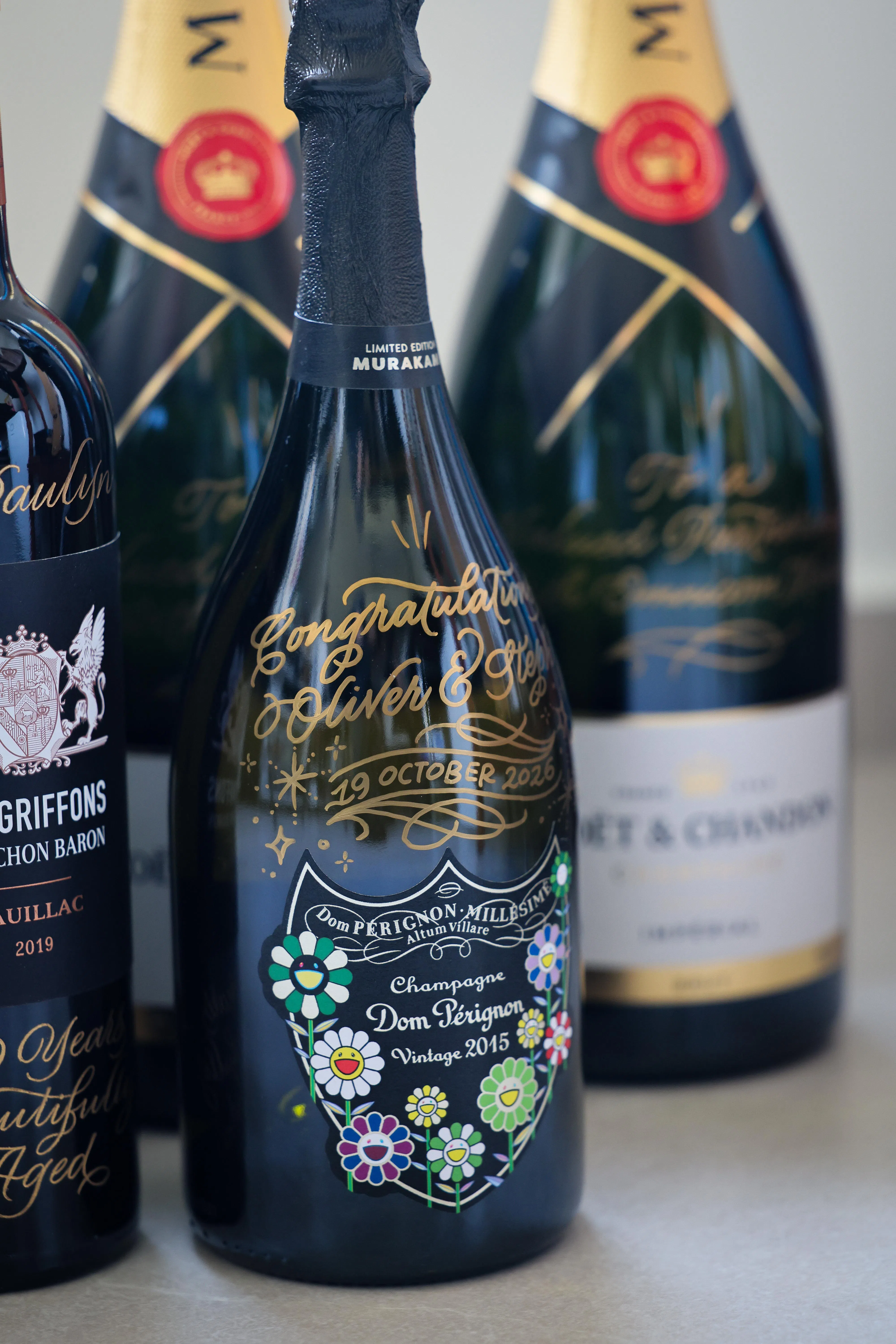
Demand for personalised wine bottles is relatively steady. “It is also more directly for consumers, rather than B2B. Someone may want a wedding gift for a friend, a birthday gift or a housewarming gift. The price point is more accessible too.”
Murals and signs are less frequent commissions, and she is more selective about accepting them. Chong says: “They involve more work, so the price point is usually higher. I am also more selective, because it is very backbreaking and labour-intensive. Usually, after finishing a mural, I need a massage!”
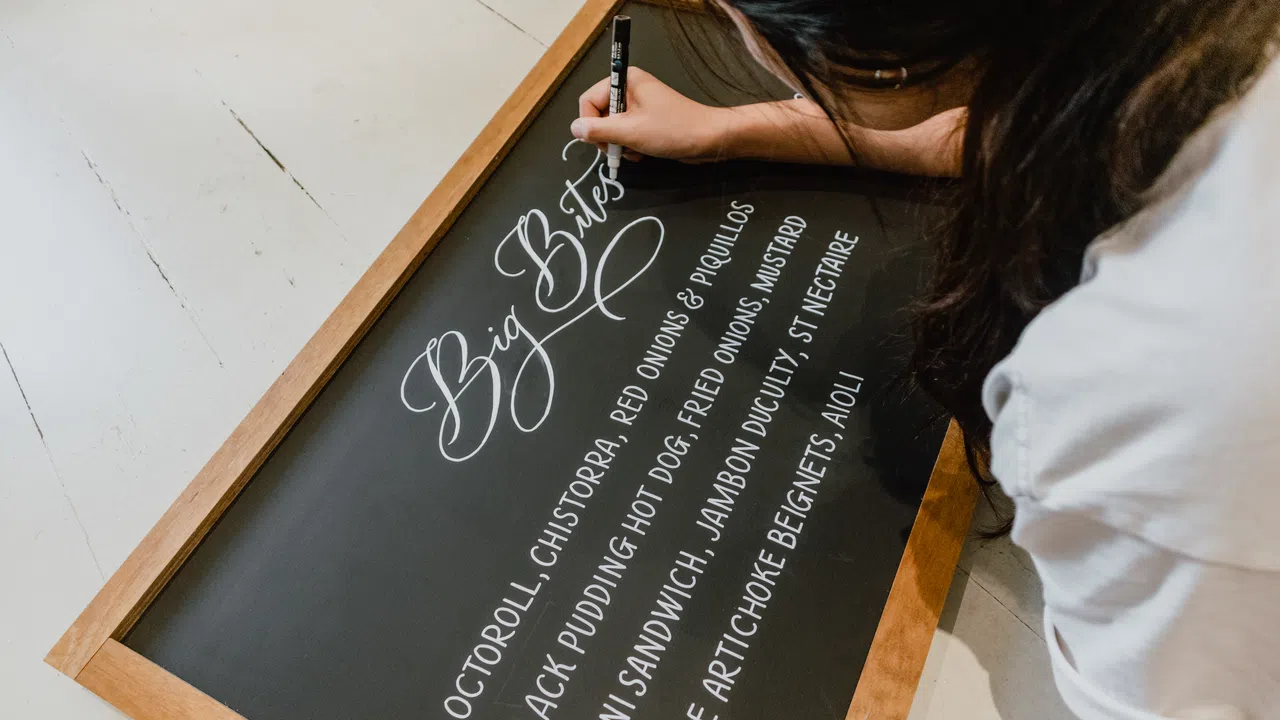
For her, blackboard work is among the simpler, more straightforward commissions. “It is usually the very large-scale ones, where I need to climb ladders, that are more labour-intensive. They are not as frequent as my other services.”
Clients often choose hand-painted work to beautify a space, make it more welcoming or give an old space a fresh look. Discussing what makes it distinctive, Chong brings up the concept of “qi”, or energy, in Chinese calligraphy.
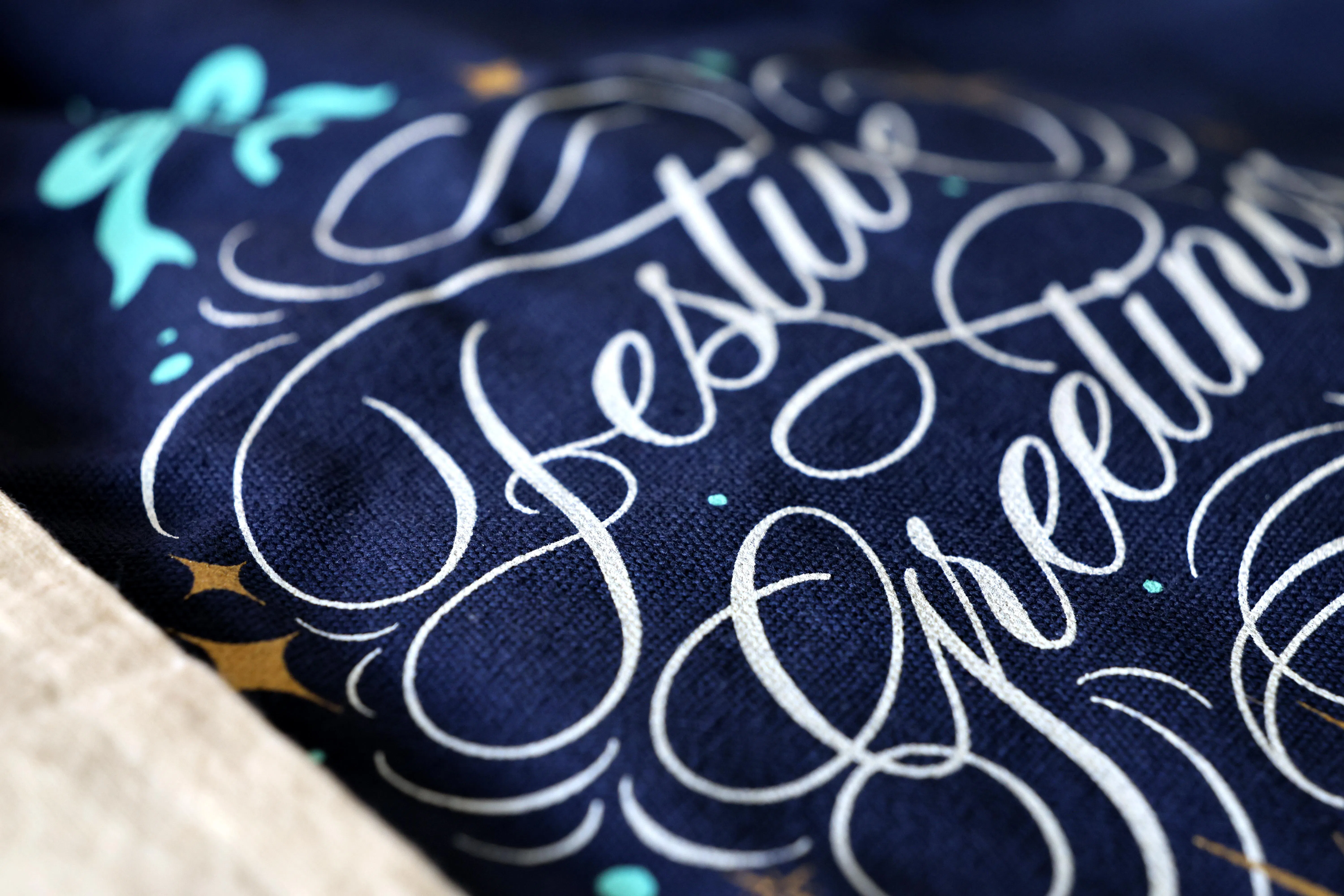
She says: “When you compare two pieces, sometimes you can see that one has more life, because the strokes have energy. When you paint an actual stroke in a mural, you can see the qi in it, see that the painting has life. It feels different, more inviting than a flat piece of vinyl. It means a human did it. There is a bit of human connection there.”
Chong adds that “qi” is the vitality of calligraphy: rhythm and flow breathe life and energy into the strokes, making them more expressive. “Li” concerns the strength, pressure and control of the brush, making the strokes look solid and confident. The two complement each other, giving the work greater presence and enhancing the atmosphere of a space.
Chong still sees many possibilities to explore in calligraphy and hand lettering. Different techniques and new surfaces give her the satisfaction of learning. She says: “I just feel happy when I can work with my hands and bring beauty to the world.”
Keeping crafts alive takes a stubborn few
Times are changing, and so are Singapore’s familiar streetscapes. Fewer people now know how to make the handmade signs and display boards once commonly seen, including plaster-relief signs.
On preserving these skills, Cheh says: “The rarer something is, the more precious it becomes, isn’t it? It takes a small number of stubborn people to preserve it well. You need people like that to produce good work.”
That phrase, “a small number of stubborn people”, captures these creators’ commitment to their craft and their work.
Foo points out that working with traditional glass neon in Singapore means not only bearing the high costs of rent and specialised tools, but also investing time and effort in mastering the craft. Yet across Asia, very few experienced masters are willing to take on apprentices and pass on their skills.
She says: “Despite these barriers, I hope to build a future where this heritage craft is preserved and celebrated as a vibrant, living art form, instead of being allowed to quietly fade away.”
