

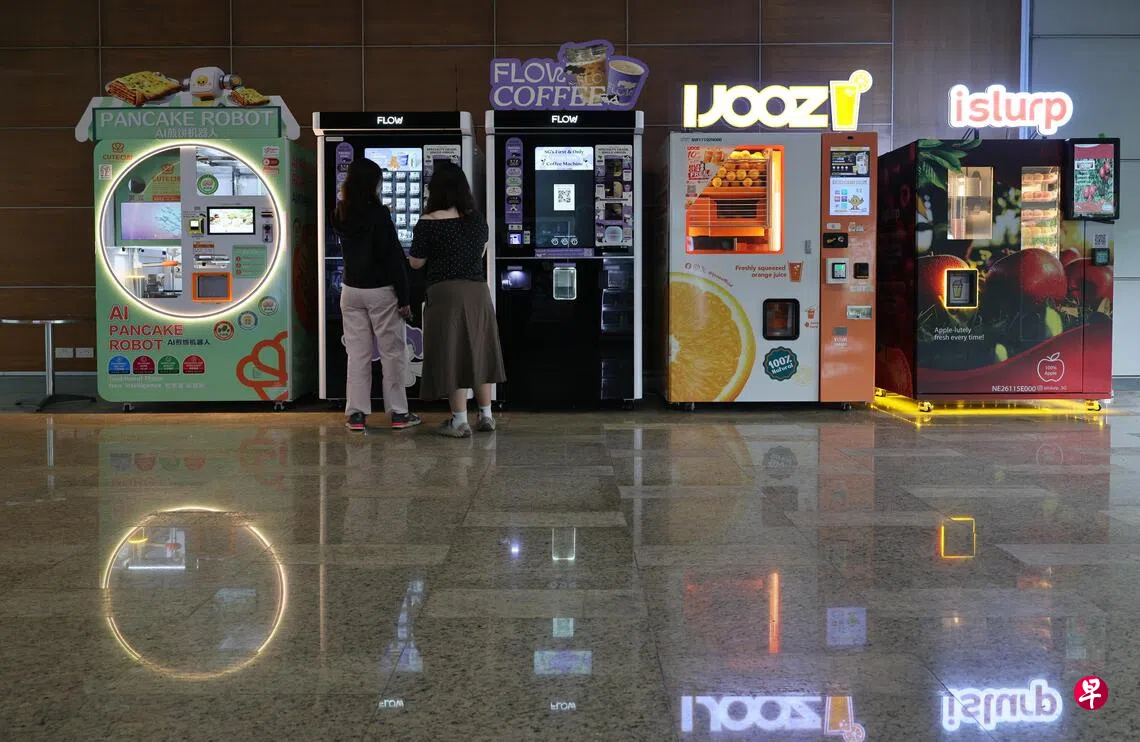
Fancy a pancake for breakfast or afternoon tea? Simply order one at a vending machine. Through its glass panel, you can watch the machine pour batter precisely onto a round griddle and spread it evenly, then pick up and crack an egg, add crispy crackers and fold the pancake before serving it. The process takes about three to four minutes.
Occupying about 1 square meter, the Cute AI Pancake Robot is one of the newer artificial intelligence (AI) vending machines in Singapore, making food fresh to order.
More food vending machines have been popping up across local malls, office buildings and neighbourhood shops. Besides operating like miniature supermarkets selling sandwiches and bottled drinks, they can serve piping-hot rice and noodles, freshly squeezed juice and handcrafted bakes. They are quietly taking care of city dwellers’ three meals daily.
Every step in full view
Beijing-based, Singapore-registered Weikai Artificial Intelligence Technology Pte Ltd introduced the Cute AI Pancake Robot vending machine to Singapore in 2025. Fully stocked, each machine can make 100 pancakes. Options include a classic pancake (S$3.80) and a double-egg pancake (S$4.80), with a choice of signature sauce, mildly spicy sauce or tomato sauce.
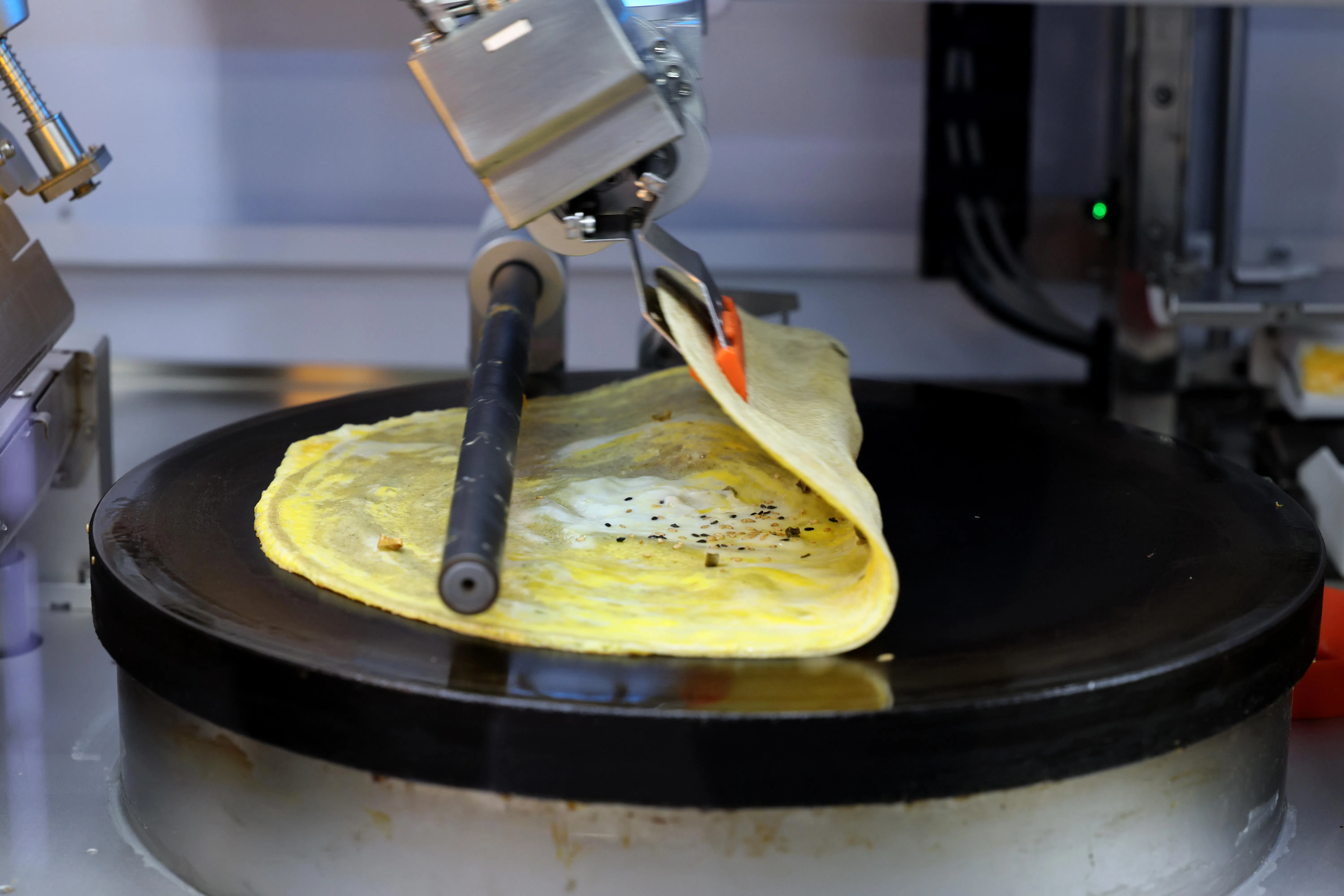
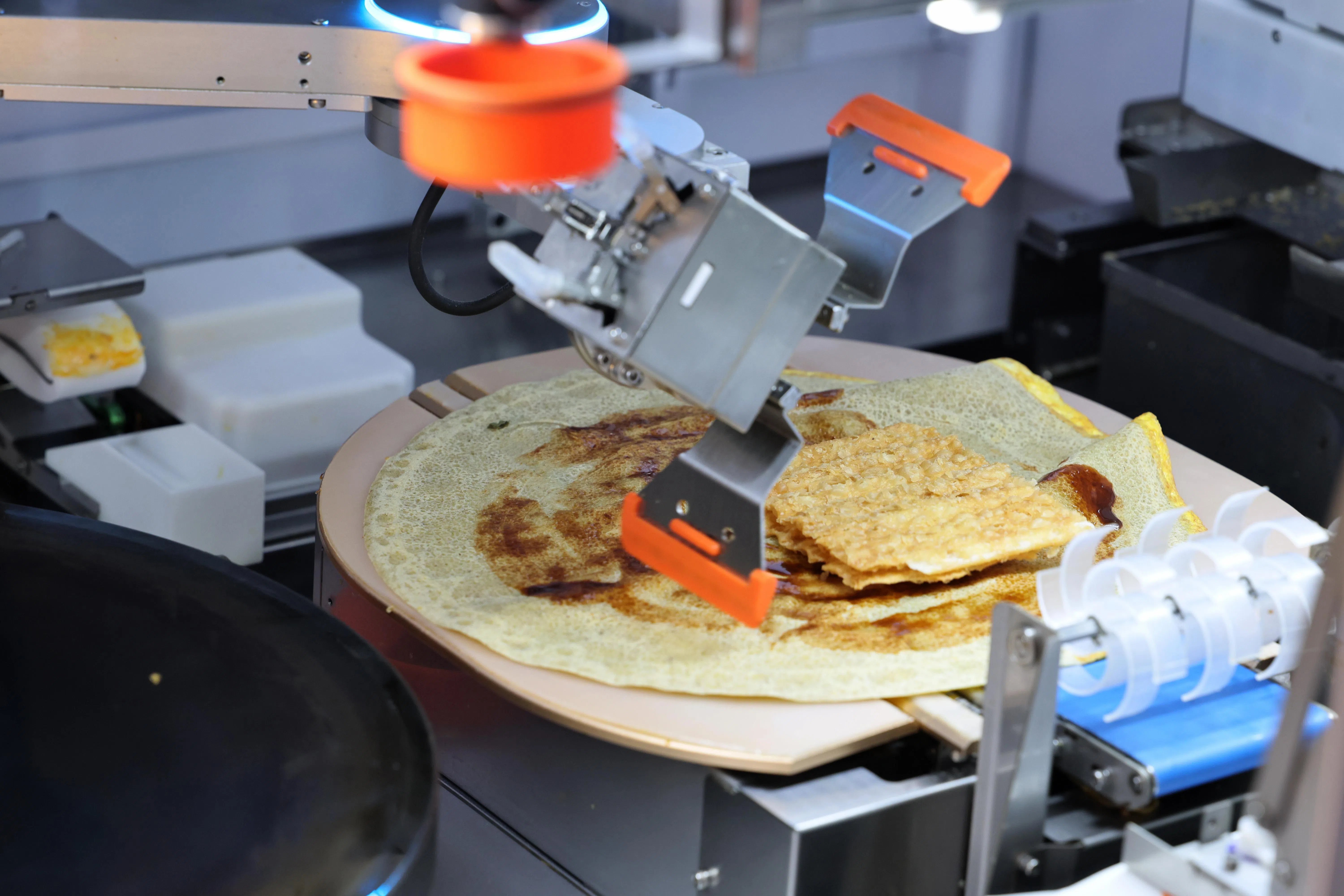
Weikai Artificial Intelligence Technology director Yuan Yan Min said jianbing guozi, a savoury pancake, is a snack from Tianjin, China. The vending machine’s strengths are its ability to replicate the hand movements used to make the pancakes and to operate around the clock.
The process also offers a visual spectacle, with every step clearly visible to diners. The machine is stocked with fresh, bacteria-free eggs from Malaysia. Continual technical improvements have ensured that eggshells do not fall into the pancakes when the eggs are cracked. Water is added to the multigrain mung bean flour to make the batter only after an order is placed.
The machine was first introduced at night markets, and its operations have expanded rapidly over the past few months. There are now more than 30 machines, in locations including industrial estates, malls and neighbourhood shopping areas.
Comparing demand for vending machines in Singapore and China, Yuan said this business is actually less common in China, where labour and rental costs are lower. Singapore, by contrast, has high shop rental costs, manpower shortage and limited late-night dining options. A robot that operates 24 hours a day, year-round, addresses precisely these market needs.
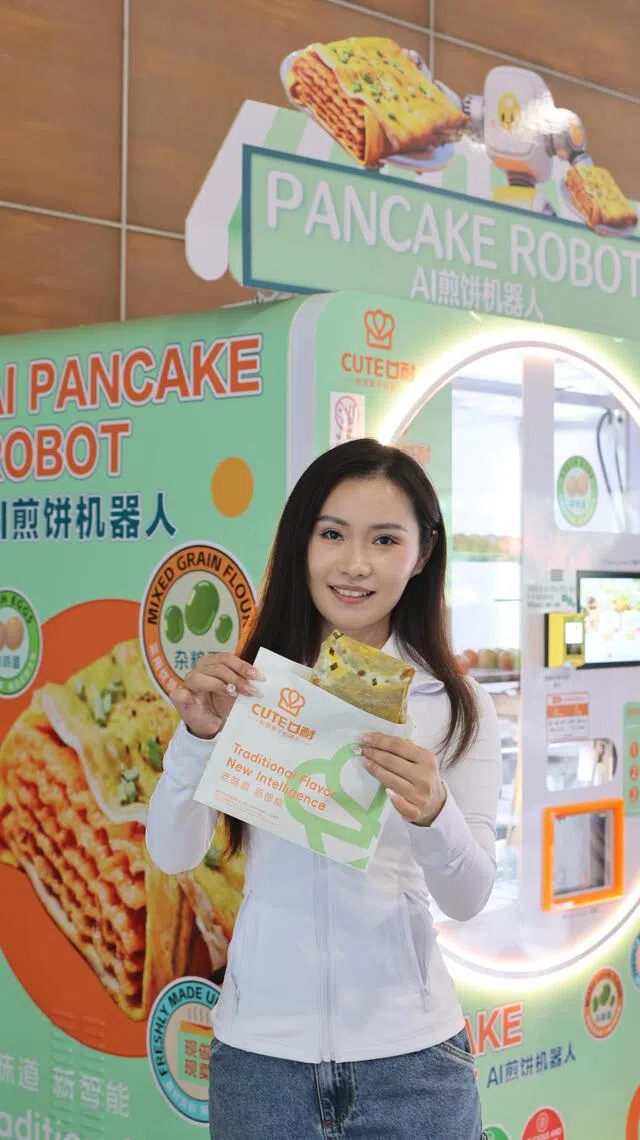
The team keeps refining its recipes to suit Singaporean tastes. Yuan said: “Authentic Tianjin pancakes from northern China are savoury, but diners in Singapore like a touch of sweetness.”
Yuan sees room for growth in vending machines that prepare food to order. “Some local hawkers are getting older, while the younger generation is unwilling to become chefs or even cook at home. Yet everyone still wants hot food. Who will cook for us in future?”
A complement to hawker centres
Among local vending machine operators, ChefGenie, an AI-powered automated kitchen platform offering a range of cuisines, is one of the pioneers in hot meals.
Since installing its first InstaChef automated hot-food kitchen at the National University of Singapore’s (NUS) University Town in 2023, ChefGenie has expanded rapidly. It now has more than 300 vending machines at educational institutions, healthcare facilities, office buildings and other locations across the island.
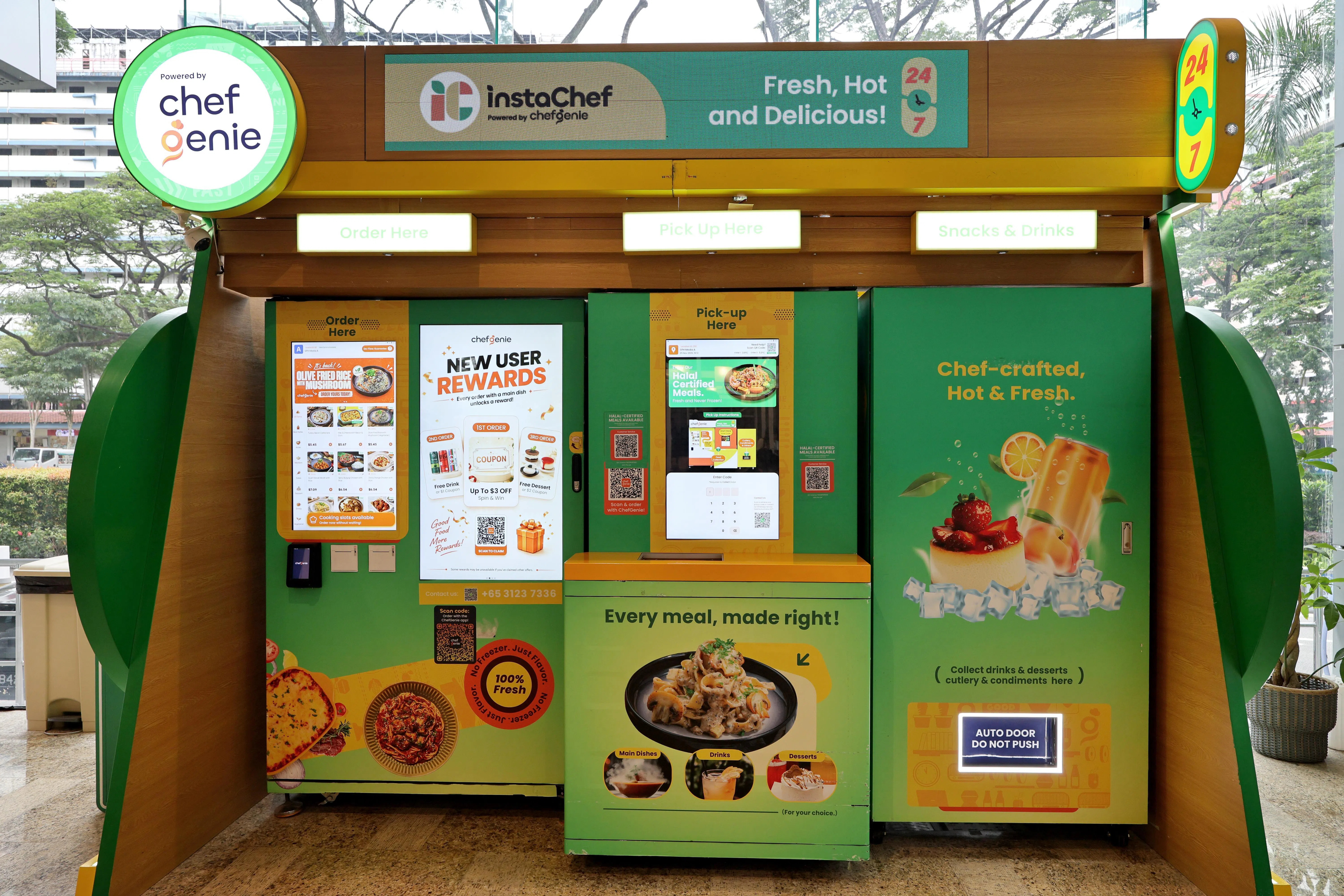
Pre-cooked meals are stored in the machines at controlled temperatures and heated only when ordered. Priced from S$4 to S$8, comparable to typical food court meals, they are intended as an everyday dining option that complements traditional hawker centres.
Marketing director Zhou Wen Jing said in an interview that most food outlets have fixed opening hours, whereas ChefGenie offers the convenience of hot meals at any time. Customers can order at the machine or through a mobile app.
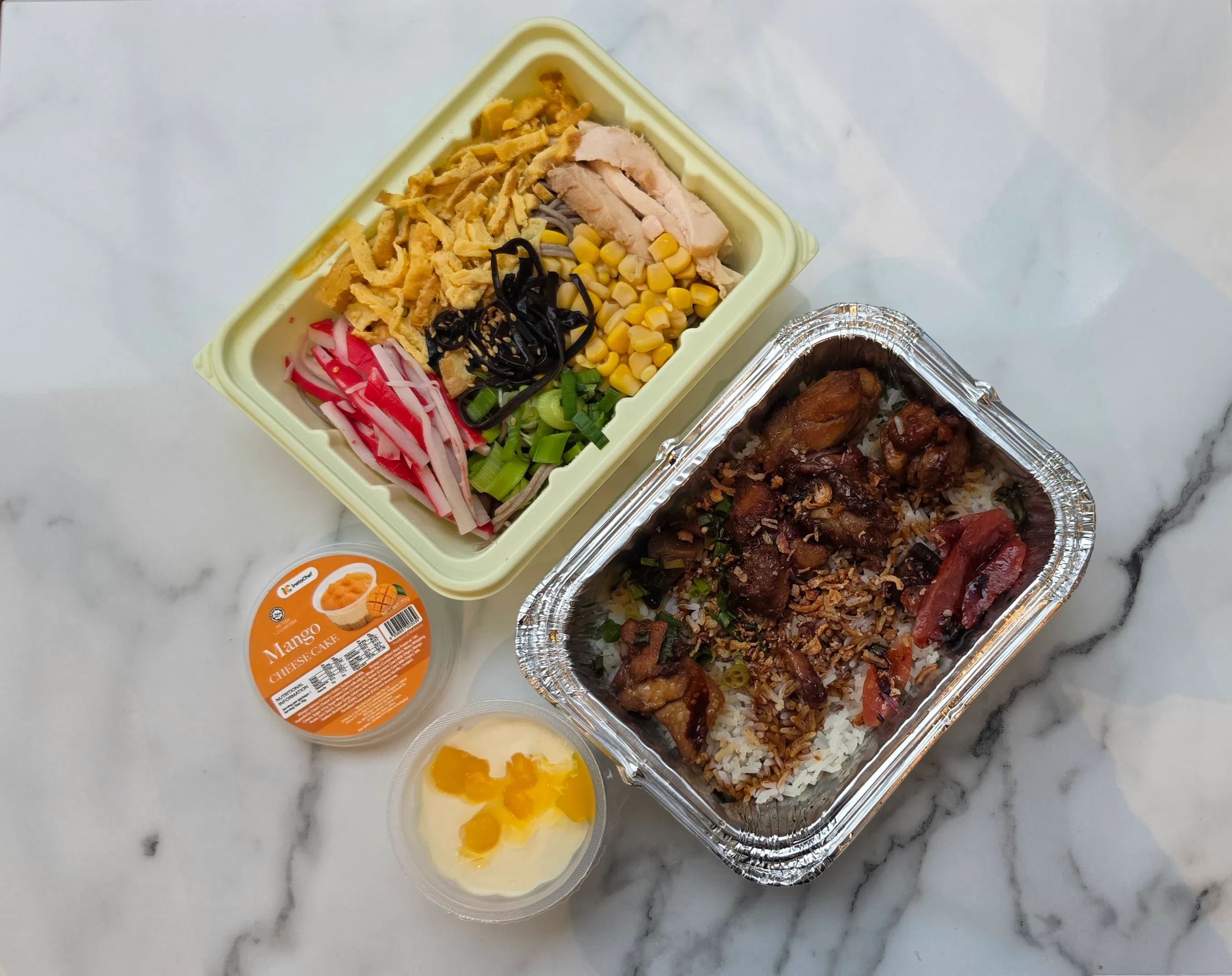
To ensure food quality and flavour are retained, the food research and development team carefully selects dishes suited to automated heating, refining recipes, chilled storage conditions and the machines’ heating settings. The varied menu spans Asian and Western dishes, including pasta, Japanese chicken rice bowls, nasi lemak and dry mee siam.
ChefGenie uses AI and big-data algorithms to improve the efficiency of its operations and food preparation, reducing manpower needs and food waste. Built-in systems record data such as meal-box inventory and sales, notifying the operations department when replenishment is needed. They also analyse diners’ meal preferences and spending behaviour to tailor menus to different locations, and schedule meal deliveries according to peak periods and popular locations.
With support from Enterprise Singapore, ChefGenie launched a six-month pilot in 2025. Eight local food businesses took part, including Warong Pak Sapari, known for its mee soto and mee rebus; Springleaf Prata; Shihlin Taiwan Street Food; Japanese ramen chain Takagi Ramen; pizza brand Eat Pizza; and The Hainan Story.
These businesses sold selected signature dishes through automated kitchens and vending machines. Zhou said: “The pilot gave us practical data on customer demand, dish performance and the suitability of different operating points. We found that not every restaurant dish is suitable [for sale through vending machines], and some dishes require a longer R&D cycle to ensure quality. We have therefore strengthened the dish-testing process.” Drawing on that experience, the company will continue exploring suitable partnerships.
Giving independent businesses greater visibility
While some operators are expanding their machine networks, Hypha vending machine founder Serene Ong focuses on raising the visibility of independent businesses. She advocates a hybrid retail model combining online and offline channels.
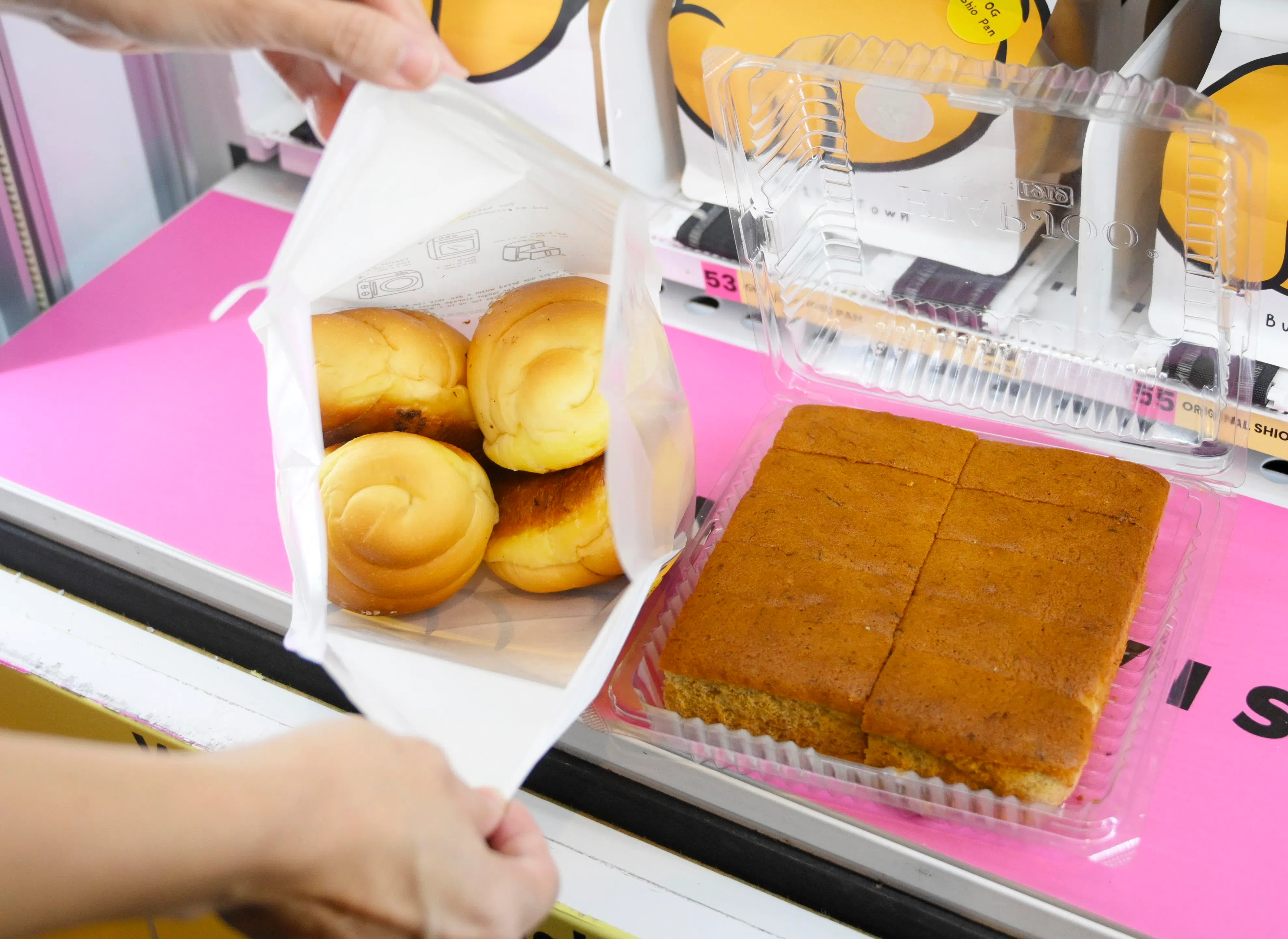
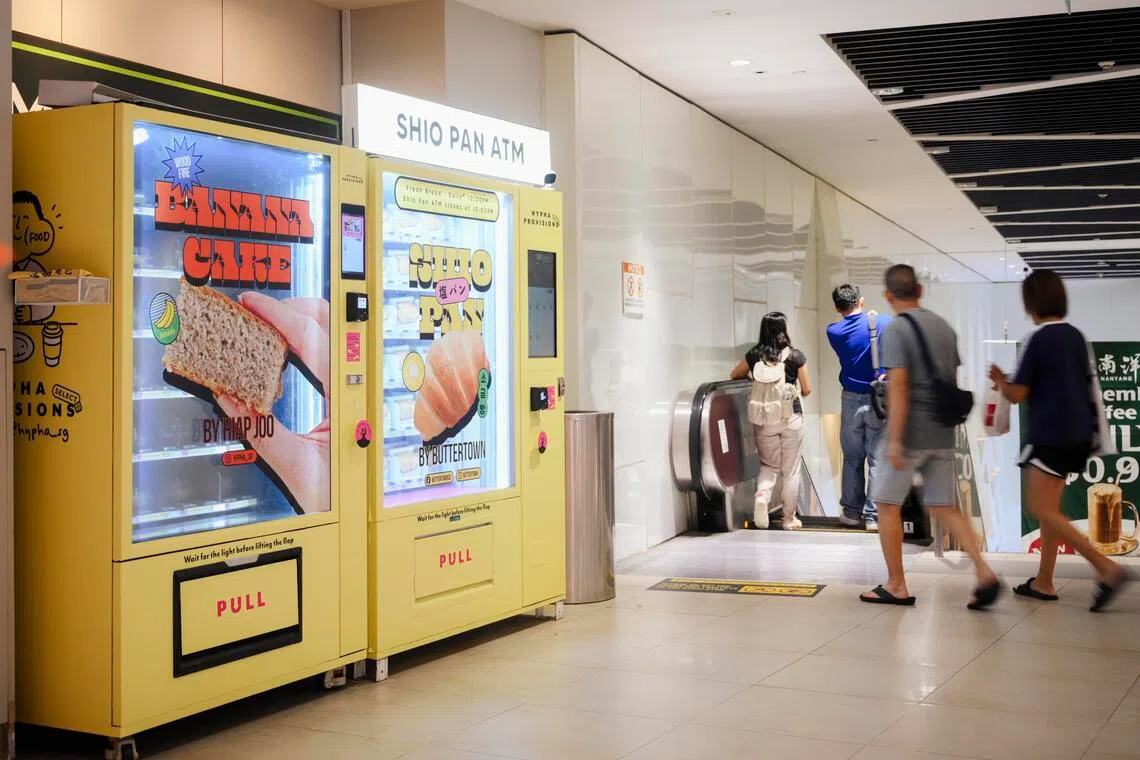
When Hypha started in 2024, it first placed a vending machine at Senja Hawker Centre, selling only banana cake from Hiap Joo Bakery, a century-old business in Johor Bahru, Malaysia. It proved popular with customers. Another machine later began selling Japanese salt bread, or shio pan, from Butter Town, to a similarly enthusiastic response.
Ong believes there is strength in numbers. Clustering several Hypha Provisions Select vending machines together can attract customers through their collective presence while better showcasing the variety of food on offer. “A single vending machine has less drawing power. Passers-by might glance at it and walk on, or simply not feel like eating that particular item that day. Putting machines with products from different brands side by side to form a food zone makes them more appealing.”
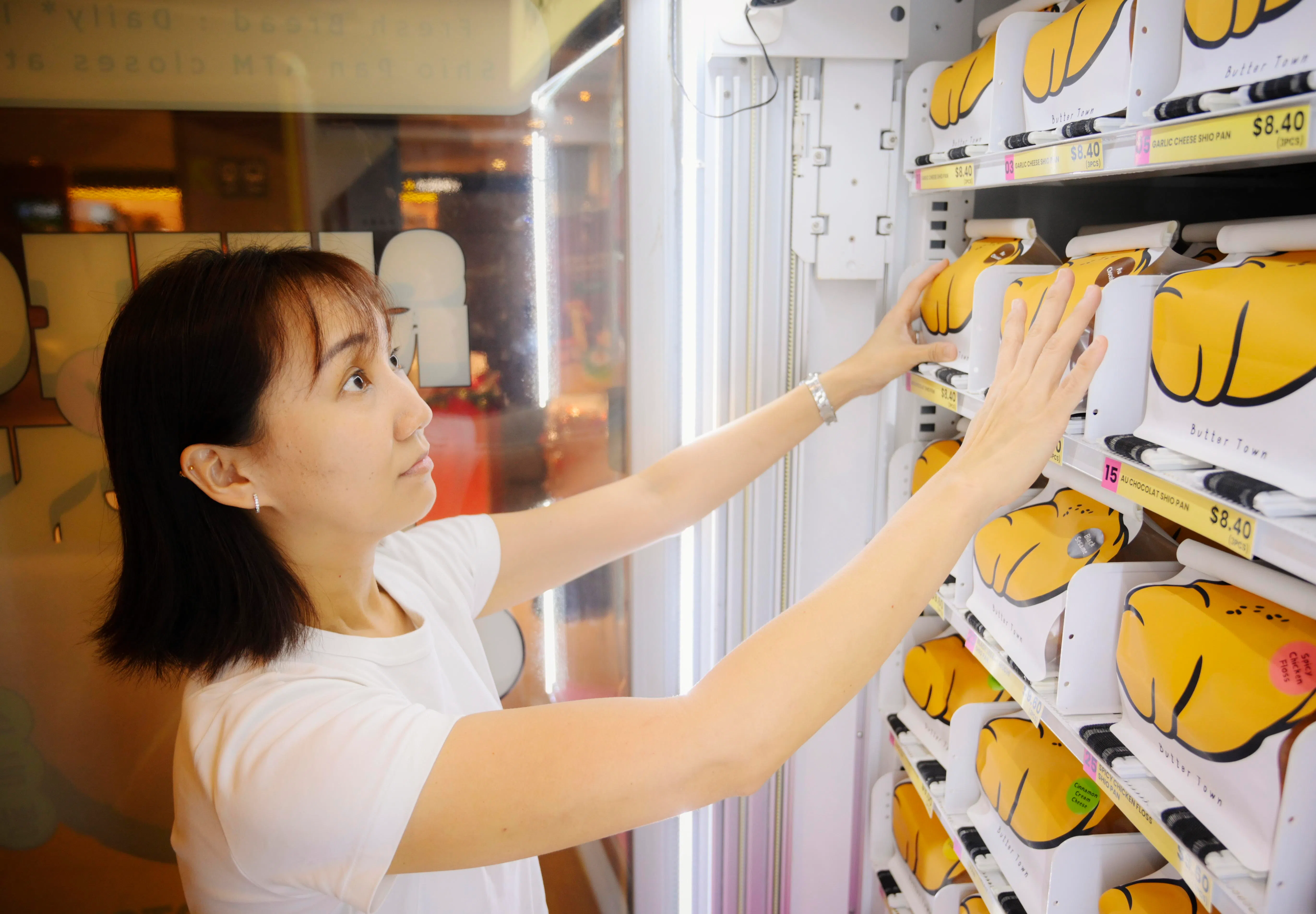
Guided by the same belief in mutual support, Ong recently opened a physical shop called Hypha Provisions in Raffles Place. It brings different food and beverage brands under one roof, allowing customers to discover a range of products, including bakes, snacks and kombucha, in one visit. It also helps participating brands understand market demand, serving as an incubator and testing ground before they enter the vending machine market.
Ong said: “I think the food and beverage industry is about people. While technology and automation can help businesses reduce their reliance on manpower, they can never fully replace human warmth and connection. When I go down to check on the vending machines, for example, customers see someone there and come forward to queue or ask questions.”
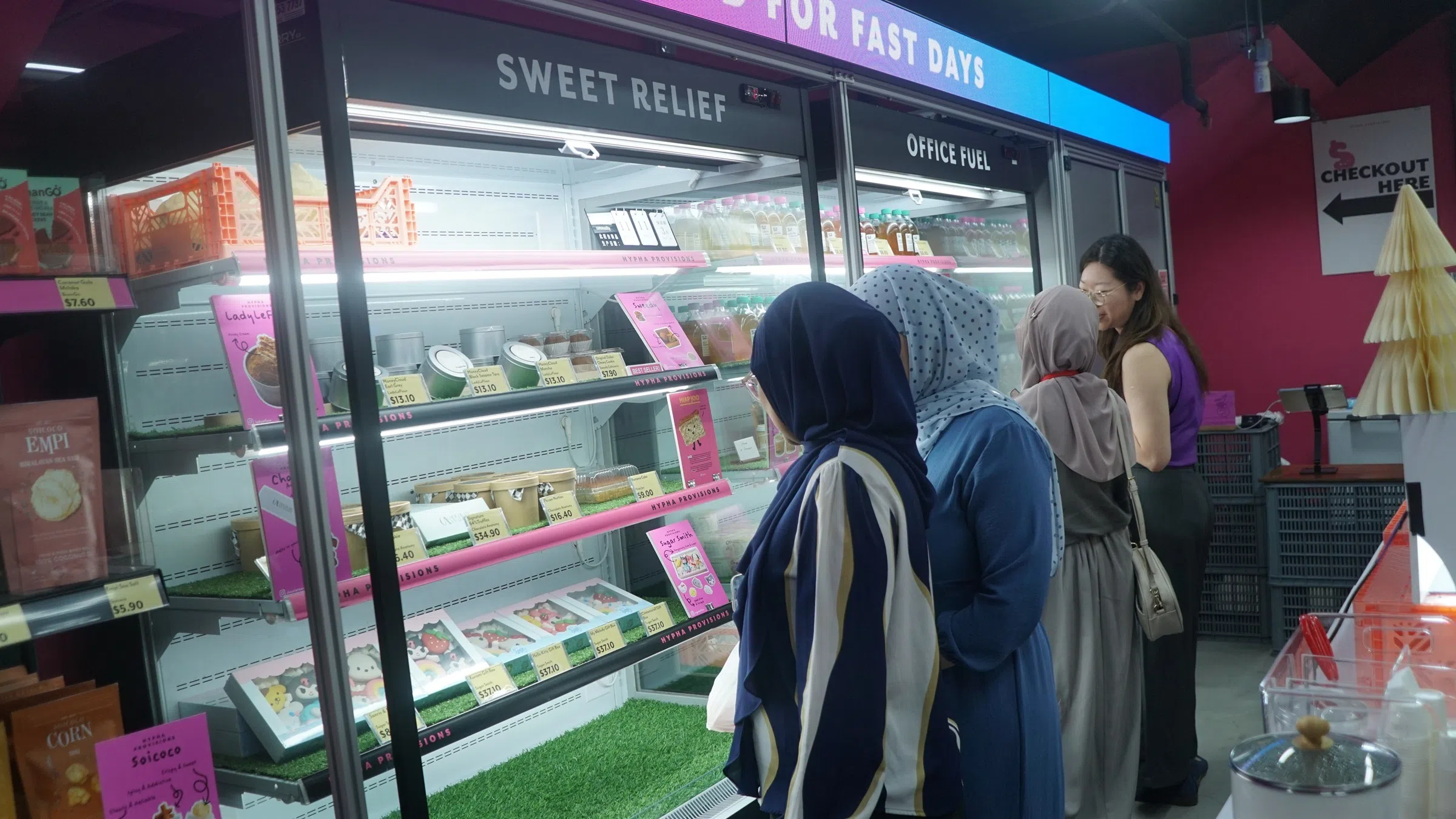
She noted that while some people see vending machines as an easy business to enter, their operating model differs from that of physical shops. Cold-chain logistics, real-time customer service and other work behind the scenes all require a team.
Blind-box format adds an element of fun
This coming December, Hypha will set up a new vending machine zone at an exit of HarbourFront MRT Station, offering bakes to office workers and tourists. One participating local bakery brand, Two Bakers, has moved from physical shops to vending machines.
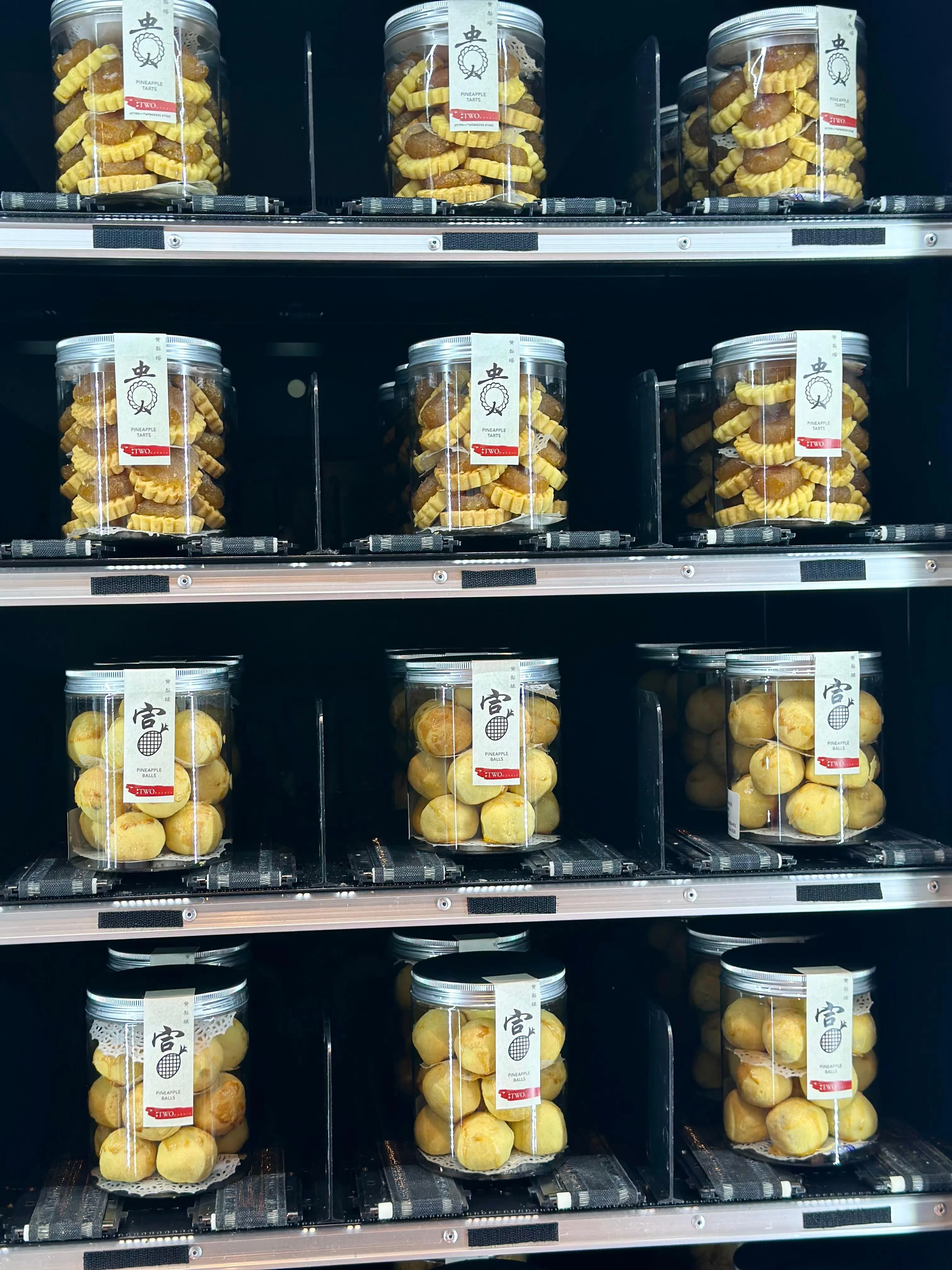
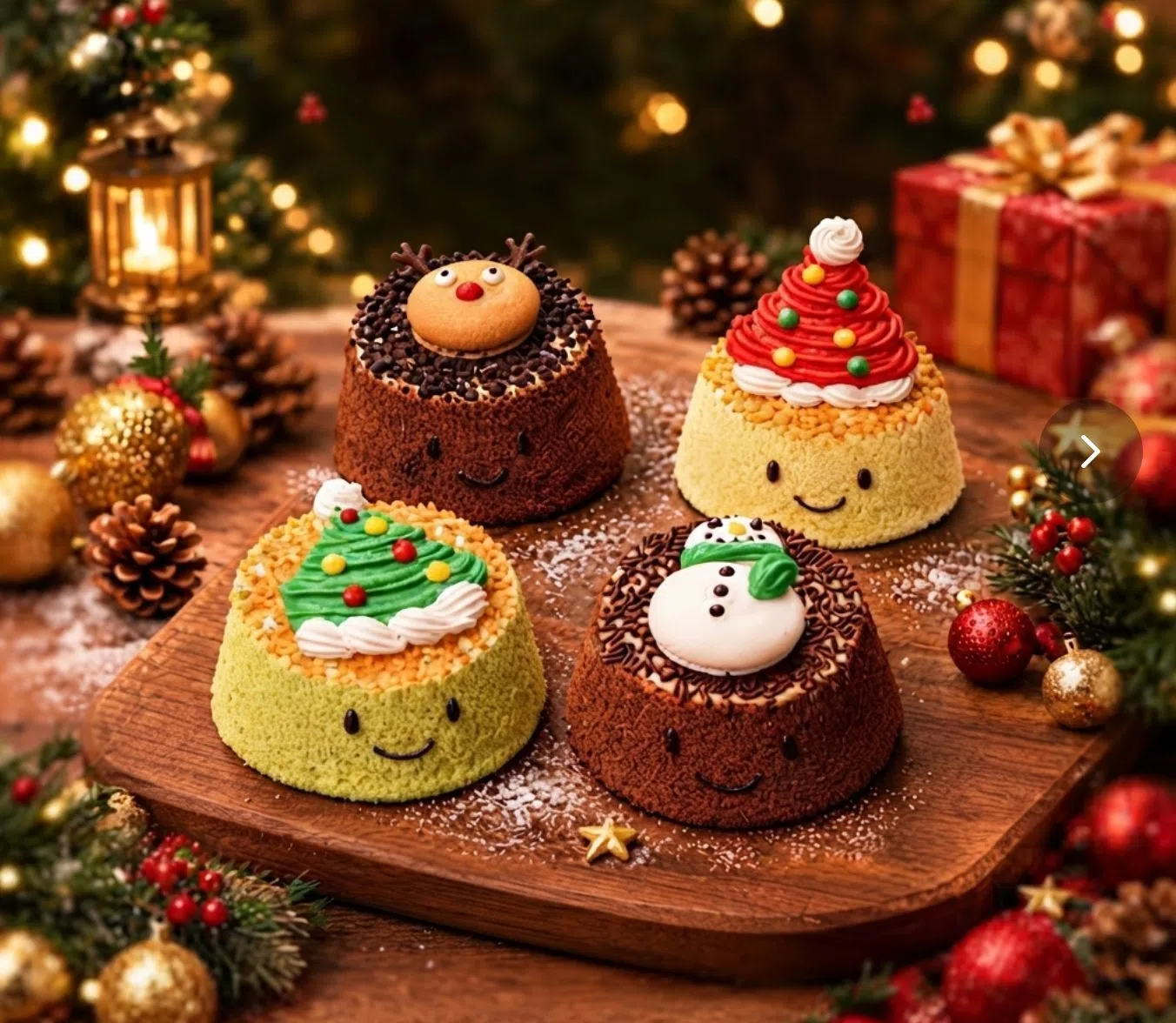
After 11 years in business, Two Bakers, which specialises in French pastries, closed its physical shops in 2025 because of rising rents and manpower costs, then moved to a shared kitchen and a business-to-business (B2B) model. Founder Erica Yap began selling through vending machines for a few months in early 2026. Besides pineapple tarts, she developed mini chiffon “prosperity cakes”, priced at S$7.80, with nostalgic Singapore flavours.
For this collaboration with Hypha, both the cake designs and the retail approach offer something new. The cakes bear a signature smiley face, hoping to bring a smile to customers too. Yap said: “We hope to offer city dwellers an emotional supply station. Whether they are feeling down or angry, want a small gift for someone or simply a teatime treat for themselves, they can buy this comforting, smiley-faced dessert at any time.”
To add an element of fun, the vending machines will use a blind-box format, dispensing flavours at random. For the year-end festive season, the machines at HarbourFront MRT Station will sell mini chiffon prosperity cakes with Christmas designs.
From a business perspective, vending machines may have a lower barrier to entry, but running them has its challenges. Baked goods contain no preservatives and have a short shelf life. Operators must monitor machine temperatures precisely to ensure freshness, while managing stock effectively to reduce food waste.
Looking at it from the consumer’s perspective, Yap noted that Singapore offers abundant and convenient food choices. “For bakes, there are cake shops in malls too, so competition is considerable. Neighbourhoods also have plenty of hawker centres and food courts. Many people initially try vending machine food out of curiosity, but how to sustain that interest is something worth thinking about and exploring.”
Consumers concerned about food quality and hygiene
Diner Zhang Xiao Min, 34, buys heated food from vending machines only when she is busy at work and wants a quick meal. She said: “The taste is quite acceptable, but it is not as satisfying as eating at a physical outlet.” She hopes to see more machines offering teatime treats or fried snacks.
Adrian Cheong, 50, who works in the city centre, said: “I rarely buy food from vending machines. Only once, I went to a hospital at night and there was little food available, so I bought a heated sandwich from a machine. I have nothing against vending machine food, but I do not have much need for it in my daily life, as there are plenty of dining options around my workplace.”
Tan Cheng Kok, 65, believes vending machines can offer greater convenience. “Competition in the food and beverage business is especially fierce now, and we keep hearing about outlets closing. We will probably see more and more vending machines in future. For me, what matters most is that the food is good quality and not too expensive.”
Consumers are also concerned about hygiene and freshness. In October and November 2026, Shin Min Daily News reported separate cases in which readers who bought freshly squeezed orange juice from vending machines found insects and unidentified black substance respectively in their cups. The customer in the latter case experienced diarrhoea and dizziness the following day.
Responding to those reports, a Singapore Food Agency (SFA) spokesperson said operators of vending machines that process food must obtain an SFA licence and clean and maintain their machines regularly. “Food safety is a shared responsibility. While SFA puts in place and enforces regulatory measures, food vending machine operators must also play their part by observing good food hygiene and preparation practices, and ensuring their machines are clean and properly maintained.”
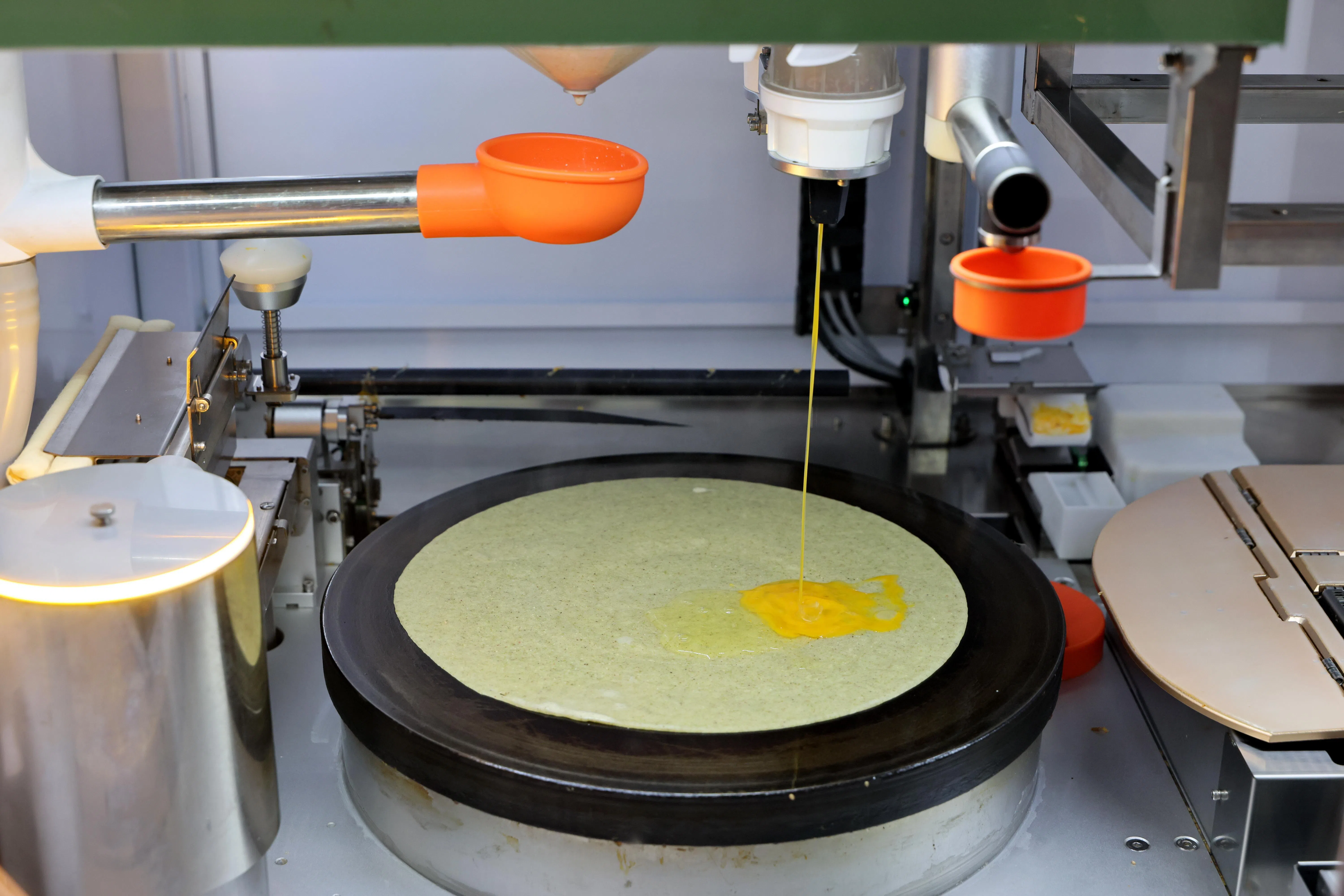
The Cute AI Pancake Robot automatically cleans its griddle three times every 15 minutes, scraping away any residual liquid. Staff also replace the oiling cloth and dismantle and wash the moulds daily to keep the machine’s interior clean and hygienic.
ChefGenie has strict protocols to maintain appropriate temperatures and keep food fresh. Its smart system monitors shelf life and automatically stops selling expired food. The team cleans the inside of the machines every two weeks, carries out a deep clean monthly, and conducts regular inspections and pest control. The central kitchen retains food samples daily to allow food safety traceability if necessary.
The public can find food hygiene information about vending machines on SFA’s Instagram account. Problems with vending machines can be reported to SFA at sfa.gov.sg/feedback.
A reporter’s taste test: Eggy pancakes and claypot rice with wok hei
I tried a variety of foods from vending machines. For breakfast, an oat milk mocha (S$5.50) from a Flow Coffee machine and a pancake (S$3.80) from the Cute AI Pancake Robot were ready within three to five minutes.
Through the machine’s glass window, I could watch the pancake being made and even smell the egg cooking. The crispy cracker filling had a satisfying crunch, while the signature sauce was savoury with a touch of sweetness. I personally prefer a texture closer to min jiang kueh, a thick pancake, or waffles. More flavours and pancake options in future would be welcome.
At lunchtime, I ordered hot claypot rice (S$7.62) from ChefGenie. The wait was longer, at around seven to eight minutes or more, but one advantage was the option of a set meal with dessert and a drink. The claypot rice was piping hot, well-defined rice grains, tender chicken, and a subtle hint of wok hei (breath of the wok).
The banana cake (S$9) and Japanese salt bread (S$9.60 for four) I bought from a Hypha vending machine challenged the assumption that vending machine bakes must be dry and hard. The banana cake was moist and dense, while the salt bread was soft yet chewy, with a savoury aroma. I happened to arrive just as the person-in-charge had restocked the machine, so they were, quite literally, fresh on the shelf.
Buying from all these machines was straightforward. ChefGenie also has an app through which customers can contact customer service directly if they encounter problems.
