

Theatre, as an art form that responds to society, has an urgent need to speak out on environmental issues. Yet its transient nature also demands constant creation and replacement between one curtain call and the next. The official launch of the Singapore edition of the Theatre Green Book in 2026 provides performing arts practitioners with a practical guide. Over the past two years, two local productions, Scenes from the Climate Era and The Forest Heroes, have addressed environmental issues. How have they put green principles into practice in their productions?
The trade-offs of old sets and second-hand clothes
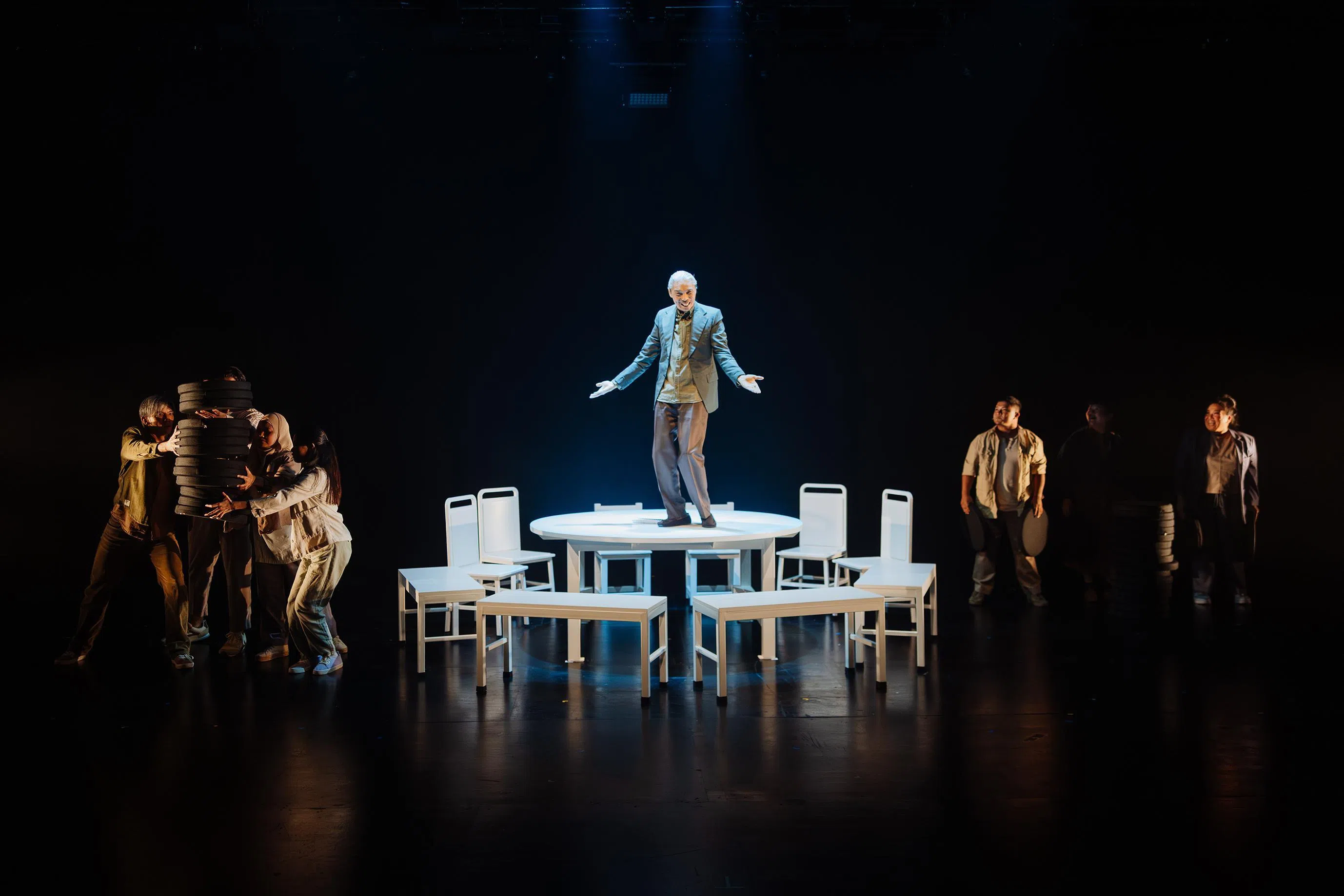
Ellison Tan Yuyang, director of Scenes from the Climate Era, said that the pieces for the production were almost entirely sourced from the basement of Esplanade-Theatres on the Bay, where set components from past productions are stored. But sets are usually designed for specific productions. To give these existing materials, with their different colours and textures, a second life, the team painted all the selected components white.
As for costumes, the team worked with circular fashion platform The Fashion Pulpit. It also pledged to donate any new clothes bought during the process to the platform’s clothes-swapping programme after the run.
Nine Years Theatre told Lianhe Zaobao (LHZB) that the programme for The Forest Heroes used Forest Stewardship Council (FSC)-certified paper, indicating that the products came from well-managed forests. This means efforts are made during tree planting and harvesting to protect wildlife habitats and the forest environment, allowing forests to continue growing healthily.
Despite the good intentions behind green practices, putting them into action involves many trade-offs in the details and difficult decisions. Tan cited the challenge of putting together costumes for eight actors with different body types. Despite close collaboration with the clothing platform, second-hand items from it ultimately accounted for only 30% to 40% of the costumes. The rest still had to be bought elsewhere.
Green practices can also significantly change conventional production processes. Tan said: “You do have to convince your designers to work in a way that might not be their usual process, and that the timeline can actually be longer than usual.”
But what is “usual”? Could green practices become the norm? Set designer Lim Weiling and lighting designer Faith Liu Yong Huay, who have advocated green practices in their work for years, believe that when only a handful of people in a production team champion the cause, persuading everyone to take the “more troublesome approach” is naturally more challenging.
Meanwhile, international Broadway and West End productions are regularly brought to Singapore, leaving audiences with no shortage of high-quality productions to choose from. Tan posed this question: “When we present a work that challenges that concept, we also have to be mindful of the experience and perception that we are giving to the audience –– can they look beyond [their pursuit of high-quality shows] and engage with the work in a way that's meaningful to them?”
The challenges of storage and a hot, humid climate
Industry practitioners all brought up the challenge of storage. Wild Rice’s founding artistic director Ivan Heng said: “High storage costs make it difficult to preserve sets, while Singapore’s humidity can damage costumes and cause mould.”
Tan explained that sets may not be kept “because the theatre company is unable to afford or find storage for it” or that they do not foresee restaging the show. “The raw materials of these set pieces do also go through wear and tear especially quickly with our climate.”
Singapore has equipment rental companies such as The Propz Company, Ctrl Fre@k and The Light Project, and someone in the theatre community will always know whom to approach to borrow particular furniture, costumes, sound or lighting equipment. If there is room for improvement, she hopes the industry can secure a dedicated, temperature-controlled space for storing props.
Heng also noted that reusing materials involves storage, transport and specialist manpower costs. Nevertheless, Wild Rice maintains several warehouses to store platforms, furniture, costumes and other props, and is committed to extending the lifespan of these items.
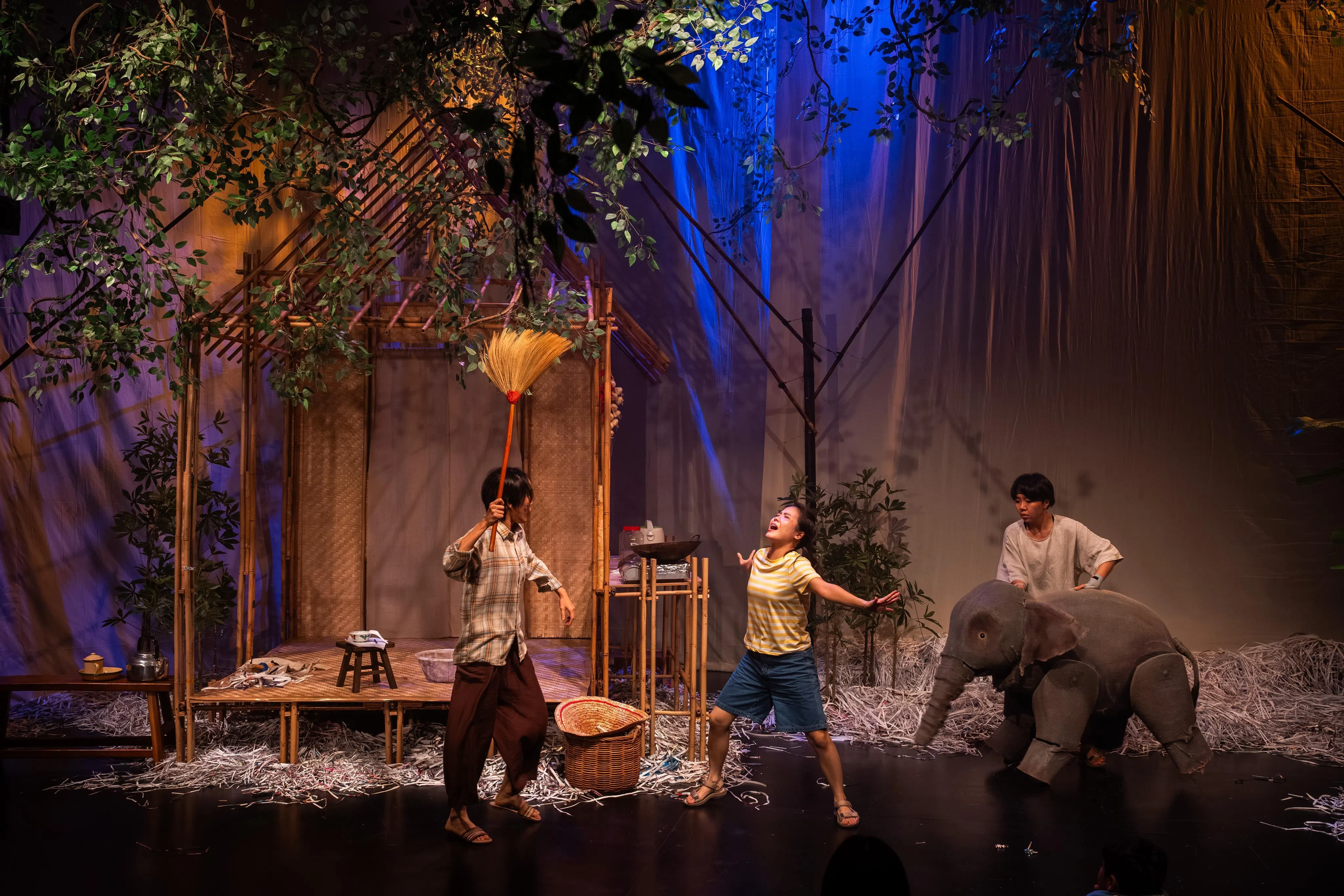
Lim Weiling, who began working in theatre on an amateur basis in the 1990s, sees environmental awareness as a civic responsibility and a fundamental principle of theatre work. Often, however, the best solution has to be found within each production’s particular budget and schedule. For The Forest Heroes, for instance, she considered paper and plastic for the plant props. Using second-hand paper would first require time and manpower to collect it, and it might not be durable. She ultimately chose plastic, which would keep its shape throughout the run and could be reused in future productions, extending its useful life. Zero-waste considerations also informed the decisions, but the company eventually decided to discard the bamboo used to make props because it had grown mouldy.
As a case study, the production highlights several issues: storage space, the choice of production materials and, in Singapore’s hot and humid environment, whether keeping the air-conditioning running is non-negotiable if props are to be protected from mould and damage.
Drawing on her extensive theatre experience, Lim knows which props and materials different companies own, enabling them to borrow from one another when needed. But she also believes that resources were scarcer in the past, making reuse and thrift a natural part of theatre-making. Now that society is more affluent, thrift is no longer the sole guiding principle.
Reusing props means considering the manpower, space and cost needed to dismantle and rebuild them. Today, with online shopping so convenient, quick and cheap, buying replacements can seem a simpler solution — if carbon footprint is left out of the equation.
Striking an energy-saving balance at 25 degrees Celsius
Liu raised the possibility of decentralising air-conditioning systems. She noted that some performance spaces use central air-conditioning, which is switched off after performances and outside operating hours to reduce cooling energy consumption. But this can cause sets and props to grow mouldy. Or, as the temperature rises after the power is switched off, ice on cooling equipment can melt and leak, damaging lighting equipment.
Ravi Sivalingam, assistant chief executive officer (Operations) at Esplanade-Theatres on the Bay, said its latest Green Mark assessment showed that cooling accounted for the largest share of its energy consumption and was also its biggest environmental footprint.
Maintaining a comfortable environment in a large performing arts centre in a tropical climate requires substantial electricity, making efficient management of cooling systems a top operational priority. Air-conditioning in all public areas is set at 25 degrees Celsius. Outside operating hours, it is switched off in non-critical areas. Round-the-clock cooling is maintained only where temperature and humidity control is needed to protect critical spaces, systems and equipment.
Arts House Group, which manages historic performance spaces including The Arts House, Victoria Theatre and Victoria Concert Hall, Stamford Arts Centre and Aliwal Arts Centre, makes sustainability an important consideration in managing arts venues and organising festivals. The group is working towards the Green Mark certification from Singapore’s Building and Construction Authority. Other practical green measures include keeping air-conditioning at 25 degrees Celsius, installing recycling bins and providing water dispensers to reduce single-use plastics.
A spokesperson said: “For our festivals, we seek to use more sustainable materials for collaterals, production and onsite branding where feasible. This includes using environmentally friendly materials for printed flyers, onsite branding and exhibition panels, as well as reusing exhibition panels from previous editions where appropriate to minimise material consumption and reduce waste.”
Speaking about everyday conservation practices, Heng said: “These may seem like small measures, but across hundreds of rehearsals and performances every year, they can make a meaningful difference.”
Building sustainability into design
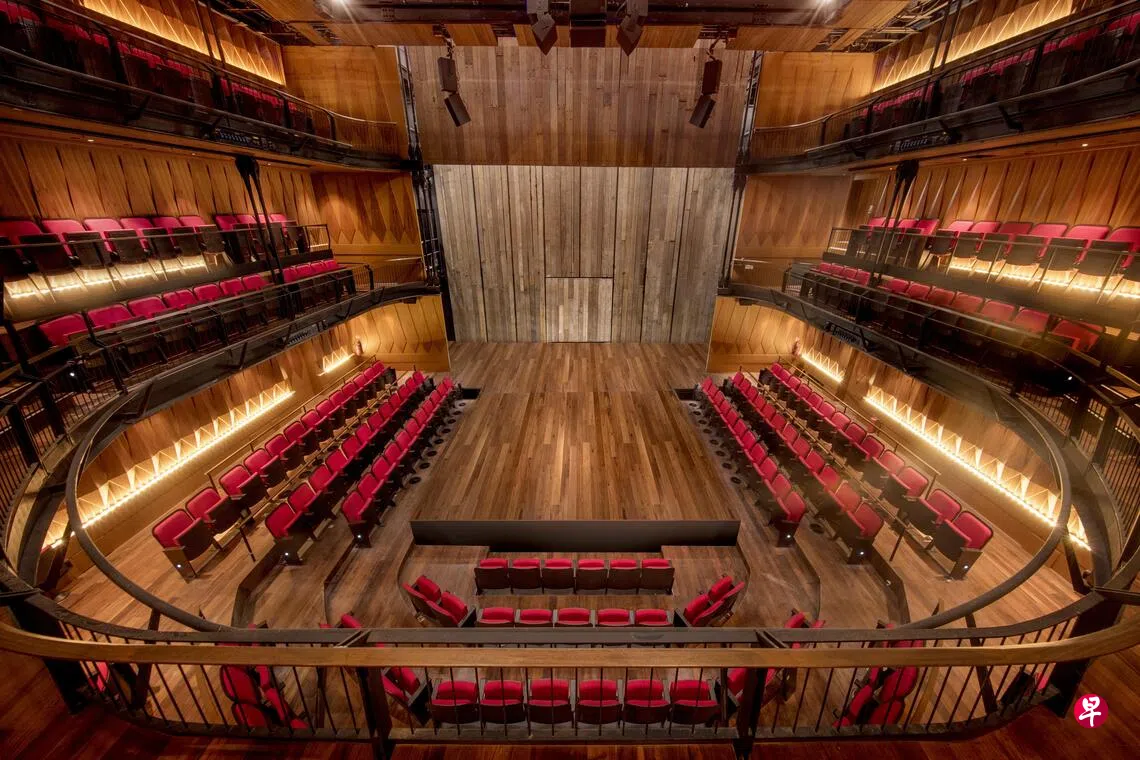
Located in Funan mall, Wild Rice works closely with mall manager CapitaLand to manage its air-conditioning and ventilation systems in line with Green Building standards. Sustainability principles also inform the theatre’s design. Heng noted that its thrust stage, surrounded by seating on three sides, not only brings actors and audiences closer together but also reduces reliance on large, complex sets compared with a conventional proscenium stage.
We've long been inspired by the Chinese opera tradition of using one table and two chairs to conjure entire worlds. This philosophy informs our practice. — Ivan Heng
As the head of an independent theatre company, Heng sees imagination as the most precious renewable energy source. “We've long been inspired by the Chinese opera tradition of using one table and two chairs to conjure entire worlds. This philosophy informs our practice.”
He believes that sometimes the simplest means can create the most powerful theatrical magic.
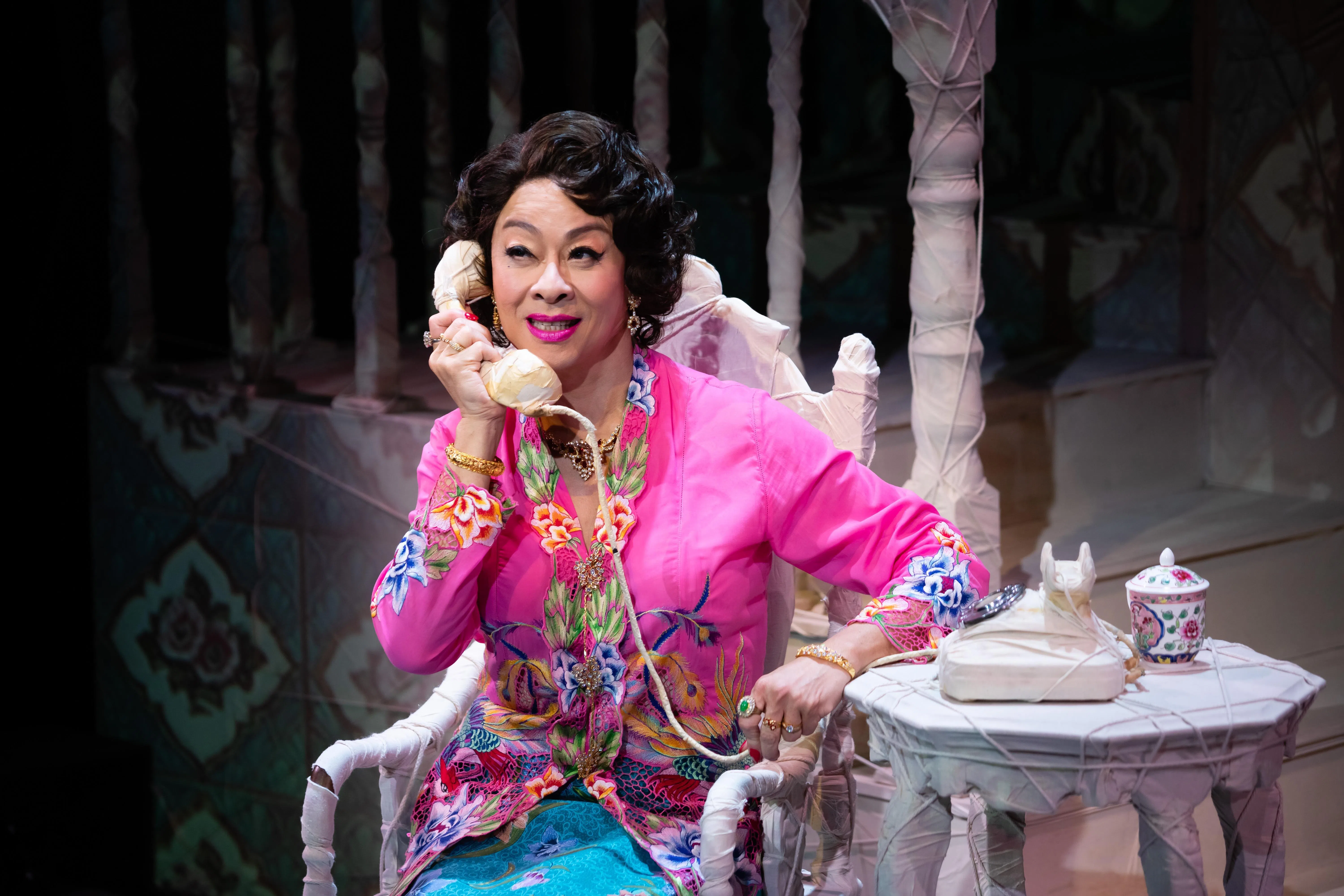
Having its own theatre is a key factor in Wild Rice’s ability to reuse set components. These include the staircase and platforms made for the 2019 production of Emily of Emerald Hill, which have appeared repeatedly in other productions over the years. The theatre’s interior walls also reuse timber from traditional opera stages. The theatre itself thus tells a story of creative reuse, conveying the message that sustainability can also be a way of honouring the past.
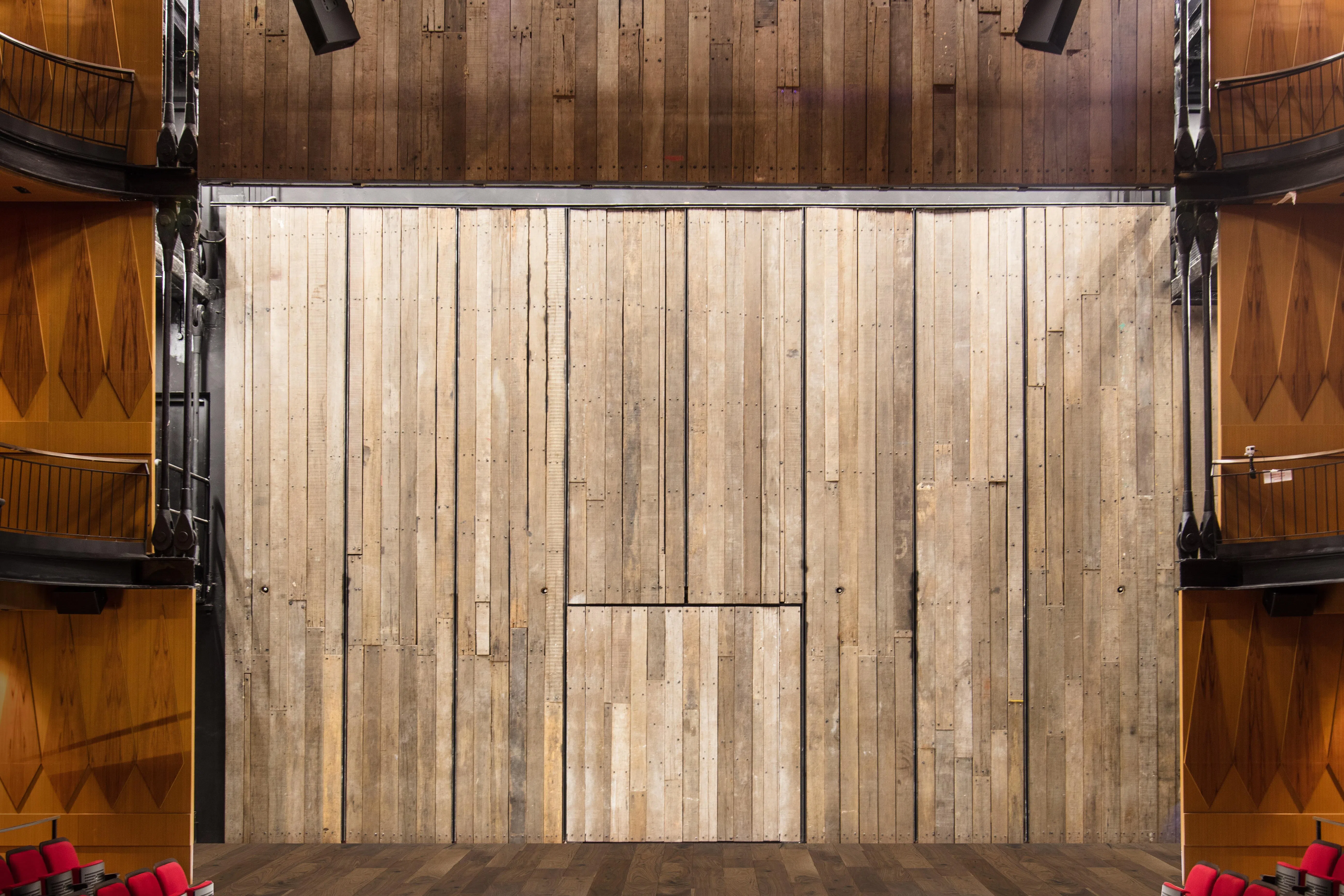
Heng said Wild Rice’s production teams are increasingly conscious of reducing waste and repurposing resources. The earlier these discussions begin, the more creatively sustainability can be integrated into the design.
Sivalingam noted that going green is not the cheaper option for sets, props and costumes. Certified sustainable set materials, reclaimed timber and biocomposites are already scarce in regional supply chains, and are particularly expensive in Singapore. Storing large sets for future revivals is also often affordable only for well-resourced organisations. Most arts groups and production suppliers operate under the combined constraints of tight budgets, limited market availability and commercial considerations.
Even Esplanade-Theatres on the Bay’s backstage areas, loading bays and temporary storage spaces are designed primarily for the rapid movement of production items, with long-term storage a secondary function. The centre therefore takes a highly considered approach to procurement, ensuring that every piece of equipment it buys and stores is fully utilised.
Sivalingam shared that for productions developed by Esplanade-Theatres on the Bay, such as its PLAYtime! series, programming teams plan future revivals in advance and explicitly include reusability in their design briefs.
Everyday props, furniture and costumes are the easiest items for performing arts groups and production organisations to rent or borrow from one another. Compared with complete stage sets, basic components such as ready-made stage risers, blackout ucurtains and wooden flats are easier to share and reconfigure across productions.
Recently, puppet and prop designer Daniel Sim set up a theatre rental platform, originally named Theatre Rental Portal. It allows theatre companies, independent practitioners and other organisations to list their props, furniture, lighting or sound equipment in an online resource directory, facilitating rentals and resource-sharing.
Heng said: “[Sustainable practice is] a shared responsibility, from directors and designers to technicians and stage managers. Ultimately, we're creating theatre for future generations, and we owe them a future worth creating for.”
